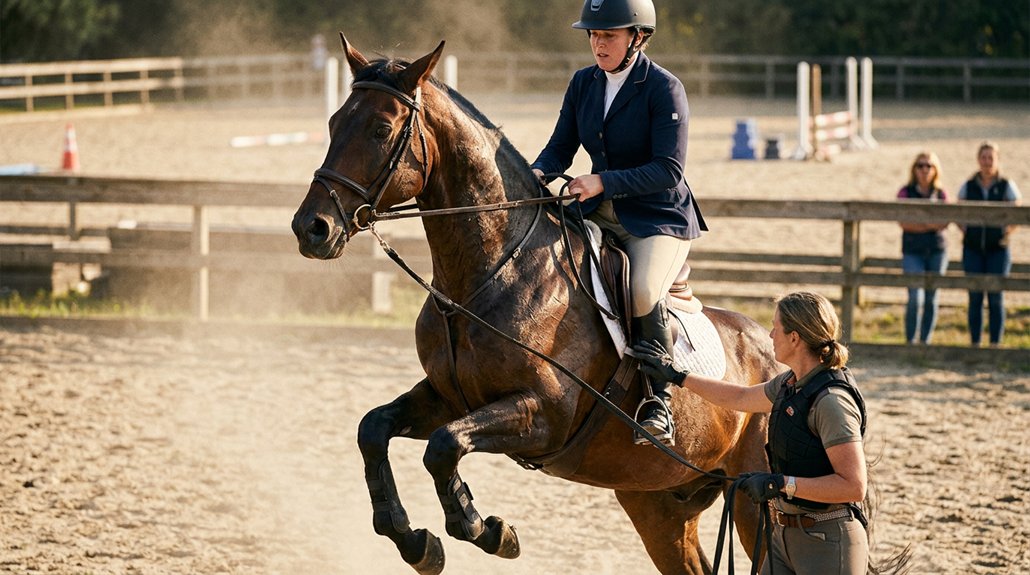
Behavior issues in horses often spring from pain, environmental stressors, or insufficient social interaction. Over two-thirds are connected to pain or fear of pain, highlighting the importance of regular health assessments. Stereotypic actions like cribbing result from stress, while aggression might arise from fear or past trauma. Proper environmental management and feeding routines can mitigate these issues. Training methods emphasizing positive reinforcement are vital. By exploring further, you’ll discover more about addressing these complex behaviors effectively.
Key Takeaways
- Environmental stressors and insufficient social engagement lead to stereotypic behaviors like cribbing and weaving.
- Pain or fear of pain, often linked to health problems, causes over two-thirds of behavioral issues.
- Hormonal changes and past traumas can result in aggressive behaviors.
- Dietary imbalances and stress contribute to eating disorders like pica and anorexia.
- Poor environmental management, including inadequate enrichment and social dynamics, triggers anxiety and stress-related behaviors.
Identifying Key Behavioral Issues in Horses
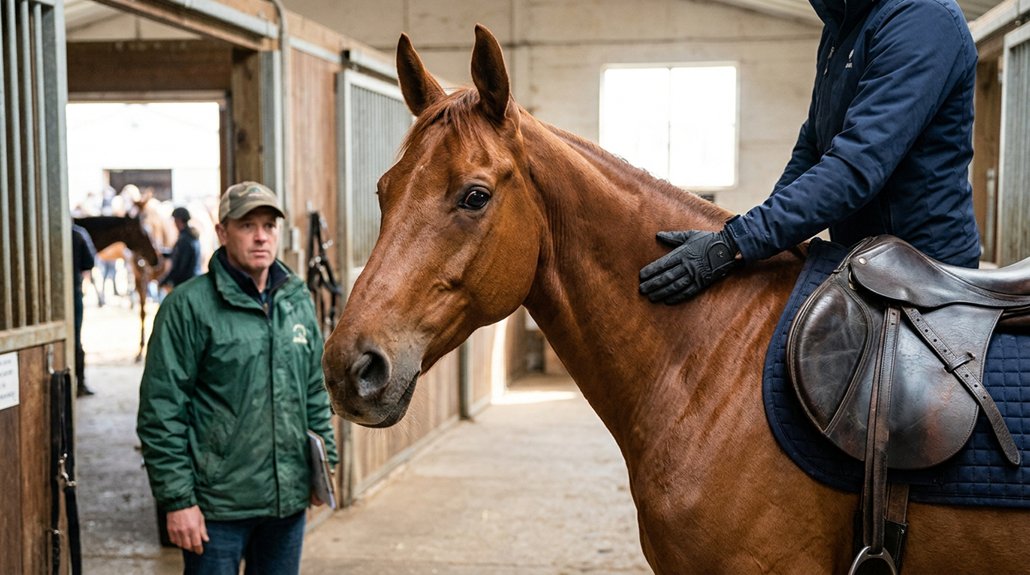
When observing equine behavior, identifying key issues is crucial to ensuring a horse’s well-being and ideal performance. Common signs like cribbing and weaving often emerge from environmental stressors, confinement, or insufficient social engagement, manifesting as repetitive, stereotypic behaviors. Your understanding of interaction strategies can help mitigate such behaviors by enriching the environment and allowing more social contact. Aggression, on the other hand, can be triggered by fear, hormonal changes, or past trauma, observed through ear pinning or threats to kick. Here, behavior modification is essential—adopting training techniques that reduce fear responses. Eating disorders like pica and anorexia may be due to stress or dietary imbalances. Address these through nutritional adjustments coupled with behavior modification to improve overall health and performance.
Physical Health Concerns Behind Behavioral Changes
You’re likely aware that over two-thirds of behavior issues in horses stem from pain or fear of pain, underscoring the importance of identifying underlying health problems. To properly address these changes, it’s crucial to assess signs like girthiness or pulling back when tied, which could result from ill-fitting tack or conditions like ulcers. Additionally, hormonal fluctuations can impact behavior, requiring regular review of the horse’s physical health to guarantee any ongoing changes are recognized and managed effectively.
Identifying Underlying Health Issues
How often do you consider that a horse’s unwanted behavior might be a reflection of physical discomfort rather than a simple attitude problem? A significant number of equine behavior issues, over two-thirds, are linked to pain. Subtle pain indicators often lead to behavioral misinterpretations. It’s essential to differentiate between genuine temperament issues and discomfort-driven actions.
| Pain Source | Behavioral Indicator | Common Misinterpretation |
|---|---|---|
| Ill-fitting tack | Bucking | Disobedience |
| Girth discomfort | Biting | Aggression |
| Gastric ulcers | Pulling back | Stubbornness |
Horses instinctively mask their pain, often showing high head carriage or tail swishing. Professional evaluations using diagnostic anesthesia and imaging are key to accurately pinpointing pain. Recognizing these signs can lead to effective pain management, improving both demeanor and performance.
Impact of Hormonal Changes
Although often overlooked, hormonal changes in horses can markedly impact their behavior, manifesting in a variety of concerning ways. Hormonal fluctuations are common during reproductive cycles and can lead to a host of issues. In stallions, low testosterone might result in aggressive behaviors or reduced libido. Mares, affected by these shifts, may experience nymphomania or even silent heat, complicating breeding efforts. Silent heat, specifically, underscores potential hormonal health concerns affecting reproductive management. For geldings, late castration or cryptorchidism can cause unexpected aggression due to retained testicular tissue. Addressing severe behavioral changes sometimes requires hormonal treatments, like adjustments in light exposure or medication. Understanding these dynamics is essential for effective management and maintaining equine welfare.
Environmental and Husbandry Influences on Behavior
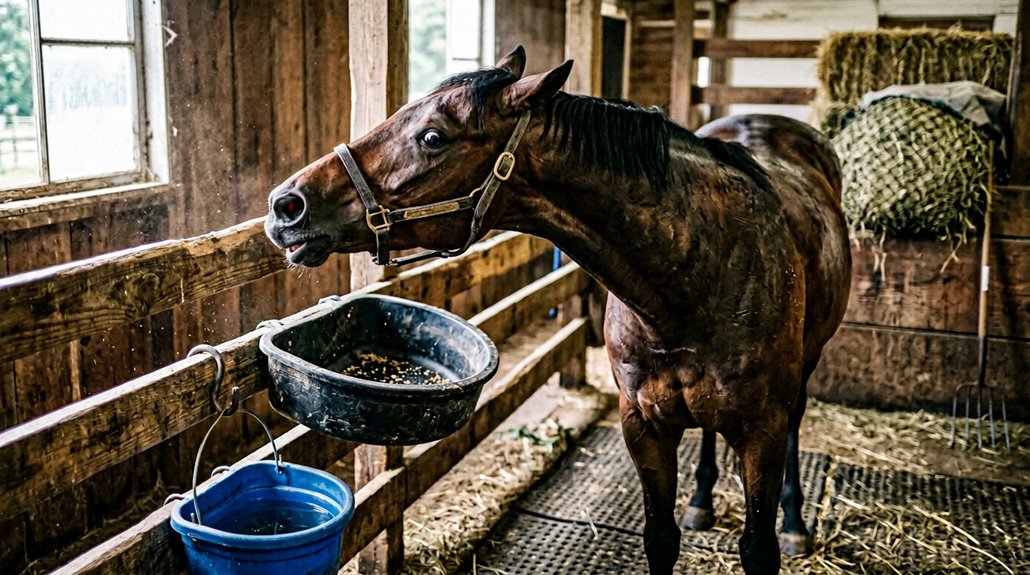
When you consider the factors contributing to equine behavior, it’s evident that the environment and husbandry practices play fundamental roles. Stressed horses often develop problematic behaviors when faced with environmental stressors like confinement or lack of social interaction. To mitigate these issues, focus on:
- Husbandry Practices: Regular feeding routines with high-roughage diets can prevent wood chewing and pica.
- Environmental Enrichment: Providing toys and foraging opportunities aids in reducing boredom, keeping horses mentally engaged.
- Herd Dynamics: Carefully manage social structures to avoid anxiety-related behaviors caused by changes like separating horses or newcomers.
- Outdoor Time: Ensuring adequate exercise and interaction with other equines is essential, as insufficient outdoor time can worsen stress-related behaviors.
Implementing these strategies is important for cultivating a healthy environment conducive to positive equine behavior.
Understanding Stereotypic Horse Behaviors
Equine behavior is deeply intertwined with their environment and care, and stereotypic behaviors such as weaving, cribbing, and pacing are no exception. These repetitive actions arise when horses face confinement, lack social interaction, or insufficient physical exercise. Weaving involves the horse’s neck and body moving side-to-side, often seen in stall-kept horses without stimuli or companionship. Cribbing, characterized by biting and air-sucking, can cause dental and stomach issues. These behaviors are coping mechanisms for stress or boredom, highlighting the need for environmental enrichment. To address them, integrate behavioral modifications such as increasing exercise, enhancing social contact, and improving living conditions. By doing so, you’ll reduce frustration and anxiety, promoting a healthier, happier horse.
Addressing Sexual Behavior Issues in Horses
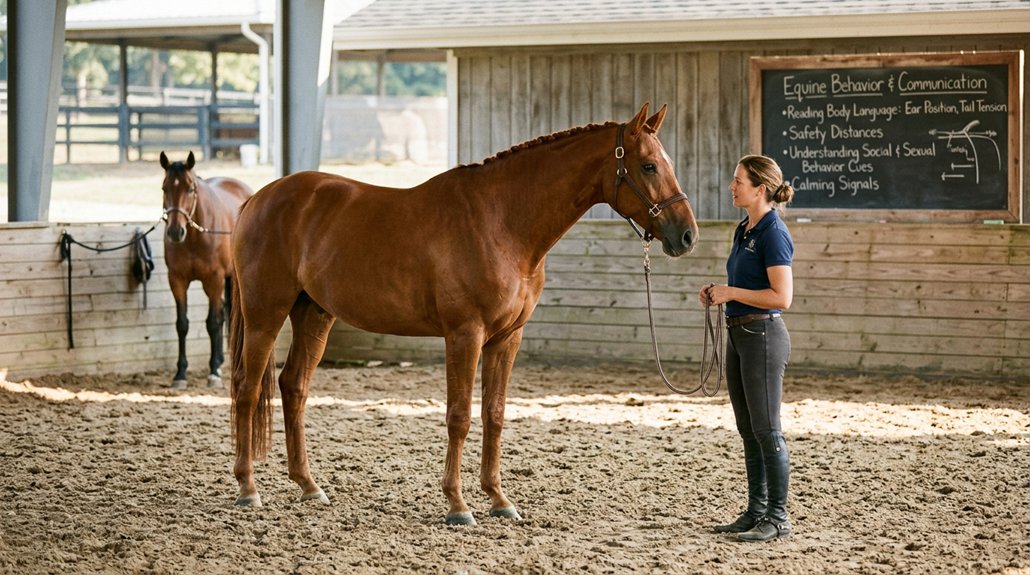
Why do sexual behavior issues in horses warrant attention? These behaviors can greatly impact horse management and safety. Hormonal imbalances often trigger these issues, with stallions experiencing low libido due to decreased testosterone, and mares displaying nymphomania from hormonal fluctuations. Breeding complications arise with mares not showing strong heat signs, complicating both breeding management and timing. Aggression in geldings, particularly after late castration or cryptorchidism, increases risk to handlers and other horses. Addressing these issues effectively demands careful attention and often veterinary intervention.
Sexual behavior issues in horses can impact management and safety, often requiring veterinary attention and careful management.
Consider these points:
- Hormonal Treatments: Consult with veterinarians for possible interventions.
- Breeding Management: Adjust practices to cope with silent heat challenges.
- Behavior Monitoring: Regularly observe your horse for changes.
- Environmental Factors: Maintain stress-free conditions to minimize issues.
How Training Methods Affect Your Horse’s Behavior
Understanding how training methods impact your horse’s behavior is essential for promoting positive outcomes and reducing problematic actions. Employing positive reinforcement can greatly improve behavior by encouraging desired actions and decreasing stress levels. Training consistency, tailored to your horse’s needs, helps build trust and fosters an environment for learning, minimizing fear-related reactions. Conversely, relying too much on negative reinforcement or punishment can instill fear, complicating responsiveness and trust. Gradual desensitization techniques are key in helping horses manage potentially frightening situations, resulting in more relaxed behavior under stress. Incorporating mental enrichment and structured training that includes social interaction supports mental well-being. Such practices diminish stereotypical and unwanted behaviors, promoting an overall healthier and more harmonious relationship with your horse.
When to Call in the Horse Behavior Experts
When faced with persistent horse behavior problems that defy conventional training techniques, calling in experts may become essential for a thorough resolution. Behavior modification can be complex, especially if the issues stem from factors like pain, fear, or stressful environments. Here’s when you should consider expert intervention:
Expert intervention is crucial for horse behavior issues beyond conventional training methods.
- Persistent Aggression: If aggression continues despite attempts with common training techniques.
- Severe Anxiety: When anxiety affects your horse’s daily life, professional help can provide solutions.
- Extreme Fears: Experts can tailor interventions for phobias or exaggerated fears beyond typical responses.
- Interfering Behaviors: Unwanted actions during handling or riding, hinting at deeper issues.
Involving behavior specialists can pinpoint medical concerns and encourage collaboration with vets, ensuring a holistic approach.
Frequently Asked Questions
What Type of Abnormal Behavior Is the Most Common in Horses?
The most common abnormal behavior in horses is cribbing, driven by stress indicators and anxiety signals. You’ve likely seen this learned behavior, alongside aggression triggers from confined spaces and weaving from poor environmental conditions, affecting equine wellness.
What Is “I Love You” in Horse Language?
In horse communication, “I love you” involves equine emotions through soft eye contact, relaxed body language, and bonding signals like gentle nuzzles. Social interactions include mutual grooming, while vocalizations, like soft nickers, also convey affection. You’ll notice these gestures.
What Is the 1/2/3 Rule in Horses?
Imagine a delicate dance of harmony in horse behavior: the 1/2/3 rule reveals how horse training harnesses social interaction to minimize stress. Environmental factors shape these dynamics, enhancing mental health and reducing behavior issues in equine welfare.
What Are the First Signs of Cushing’s in Horses?
You’ll notice early symptoms of Cushing’s in horses through changes in coat condition like hirsutism, increased thirst and urination, and lethargy. Diagnosis methods include blood tests measuring ACTH levels to confirm the disease’s presence.
Conclusion
Understanding the tapestry of equine behavior requires a keen eye and a compassionate heart. You’ve explored how physical health, environment, and training shape your horse’s actions. Remember, every hoofbeat carries a story, and stereotypic behaviors or sexual issues are chapters seeking resolution. Don’t hesitate to call in experts when the script becomes hard to decipher. Your journey with your horse is a continuous education in harmony, where science and empathy intertwine to compose a symphony of understanding.