Owning a horse is a significant financial commitment, with ongoing costs ranging from feeding to healthcare. Monthly expenses can rival luxury vehicle maintenance, with boarding alone costing $600 to over $2,500. Equipment investments add up, and veterinary care averages $300 to $700 annually. While costs are substantial, many find the emotional benefits worthwhile. Ultimately, balancing passion with financial realities is essential, and there’s much more to discover about optimizing this rewarding investment.
Key Takeaways
- Owning a horse offers emotional benefits, stress relief, and personal growth despite financial demands.
- Costs include significant monthly boarding fees and routine veterinary care, often exceeding $30,000 yearly.
- Initial expenses range widely, with horse purchase prices from $50 to over $1,000,000.
- Feeding and healthcare costs vary seasonally, affecting yearly budgets of $1,200 to $2,500.
- Cost-saving strategies include buying used equipment and participating in co-op boarding systems.
What You Should Know About Owning a Horse Financially
When considering horse ownership, understanding the financial commitment is essential. In the current horse market, gauging equestrian trends reveals a growing concern over costs. Monthly expenses for boarding alone can range from $600 to over $2,500, influenced by location and services. Feed and supplements add $100 to $400 to your budget. Routine veterinary care averages $300 to $700 per year, but don’t ignore potential emergency healthcare expenses requiring an adequate fund. Equipment like saddles and bridles might require an initial investment between $300 and $7,000+ before you even address ongoing upkeep. With 86% of individuals believing horse ownership costs are escalating, ensuring your finances align with equestrian aspirations is vital. Analyze every impact to decide if the equestrian lifestyle suits you financially.
Initial Costs: What to Expect When Buying a Horse
Acquiring a horse involves a diverse range of initial costs that can vary substantially based on several factors. Initial expenses start from $50 for a basic horse and go up to seven-digit figures for elite breeds. You need to take into account pre-purchase examinations which might include veterinary travel fees, radiographs, and blood tests. Essential equipment costs add up: saddles range from $1,500 to over $7,000, while bridles, tack, and grooming gear will run you $300 to $1,000. Competitive owners also face additional upfront costs for training and health management.
| Expense Type | Cost Range |
|---|---|
| Horse Purchase | $50 – $1,000,000+ |
| Pre-purchase Exam | Varies |
| Saddle | $1,500 – $7,000+ |
| Bridle & Tack | $300 – $1,000 |
| Competitive Training | Additional Costs |
This level of commitment is a long-term investment.
Home vs. Boarding: Which Costs Less?
How much money will you spend on keeping your horse at home versus boarding it? Boarding costs vary widely, from $600 to over $2,500 monthly for full-care, or $250 to $500 for partial or self-care options. In contrast, home care incurs significant upfront costs like land acquisition and barn construction. Although home care might seem appealing, keep in mind the 62% of horse owners who choose this option often grapple with both time and economic demands. You’ll need to commit 15–20+ hours weekly for home care, compared to 8–12 hours when boarding. Additionally, market conditions and maintenance costs can heavily influence your expenses. Given these variables, thorough budgeting becomes essential in determining the most cost-effective solution for you.
Feeding and Nutrition Costs: Budgeting for Your Horse
When budgeting for your horse’s feeding and nutrition, anticipate monthly costs ranging from $100 to $400, primarily influenced by the quality of hay and necessary supplements. Variability in feed prices, driven by market conditions, can affect your annual expenses, which typically fall between $1,200 and $2,500. To optimize feeding costs while ensuring your horse’s health, regularly consult with a veterinarian and adapt to any changes in hay prices.
Cost of Quality Hay
Budgeting for your horse’s feeding and nutrition requires a keen understanding of the costs associated with quality hay, as prices can fluctuate greatly based on location and type. Hay quality variations mean you should expect prices to hover between $100 and $400 monthly, depending on your horse’s dietary needs. These fluctuations make thorough research vital. Additionally, seasonal pricing impacts can greatly affect your feeding budget, often necessitating a flexible spending strategy. Annually, you might spend between $1,200 and $2,500, depending on factors like size and specific dietary requirements. Engaging with a veterinarian for nutritional consultation guarantees your horse’s dietary needs are met effectively, but anticipate these costs as a substantial part of long-term ownership planning.
Importance of Supplements
Some horse owners may underestimate the significance of supplements in their horse’s diet, but these can play a essential role in maintaining ideal health and performance. Integrating the right supplement types—whether it’s joint support, digestive aids, or coat enhancers—can optimize your horse’s diet, ensuring all nutritional gaps are filled. Nutrient timing is equally important; providing supplements at the right moments can enhance absorption and effectiveness, directly impacting your horse’s well-being.
Consulting with veterinarians to tailor supplements to your horse’s needs and activity levels often complements the base feeding costs, potentially reducing veterinary expenses related to poor nutrition. Despite monthly hay and grain costs ranging from $100 to $400, the additional investment in supplements can safeguard your horse’s health, justifying the expense within your budget.
Variations in Feed Prices
Supplements can markedly enhance your horse’s health, but feed costs are a fundamental aspect of budgeting for horse ownership. Monthly expenditures for feed can range between $100 and $400. The wide variance is due in large part to hay price fluctuations and the impact of feed quality, which differ by location and market conditions. To optimize your budget, it’s essential to research local hay types and market trends thoroughly. Seasonal changes also greatly influence hay availability, often driving up costs. Consulting veterinarians helps tailor your horse’s dietary needs, ensuring you’re investing in the right feed quality. Bedding choices, such as wood shavings or sawdust, experience price shifts and should also be considered to maintain an effective annual budget.
Healthcare Expenses: Ensuring Your Horse’s Well-Being
When you own a horse, routine veterinary visits are non-negotiable, with annual costs ranging from $300 to $700, or approximately $25 to $60 monthly. Essential farrier care, vital for maintaining hoof health, adds another $40 to $125 each month, depending on the frequency of visits every 4 to 8 weeks. Anticipating these costs, along with unexpected expenses like vaccinations and emergency care, is key to maintaining your horse’s well-being while effectively managing your budget.
Routine Veterinary Visits
Routine veterinary visits are a non-negotiable component of equine healthcare, typically costing between $200 and $500 annually, dependent on the horse’s specific needs and health status. By embracing veterinary innovations and focusing on preventive healthcare, you can mitigate future costs and enhance your horse’s well-being. These routine check-ups often encompass physical exams, vaccinations, and deworming.
Here’s a cost framework for clarity:
| Routine Service | Typical Cost | Frequency |
|---|---|---|
| Physical Examination | $50 – $100 | Yearly |
| Vaccinations | $75 – $120 | Bi-annual/Annual |
| Deworming Protocols | $20 – $50 | 3-4 times/year |
For competitive horses, additional tests might rise. Planning ahead guarantees that you’re prepared for these essential expenses, focusing on your horse’s long-term health.
Essential Farrier Care
If you’re committed to ensuring your horse’s overall health, managing essential farrier care is indispensable. Monitoring hoof health is paramount; regular farrier visits, scheduled every 4–8 weeks, cost between $50 and $250. This equates to approximately $40 to $125 monthly, depending on your horse’s unique needs. Trimming and shoeing aren’t just routine—they’re fundamental preventive measures against lameness and infections. Neglecting this can lead to painful conditions, impacting performance and increasing long-term costs. By adhering to a consistent farrier schedule, you promote ideal hoof growth and support your horse’s athletic performance and longevity. Indeed, while these expenses can accumulate, budgeting for them is essential for your horse’s overall well-being, ensuring they remain healthy and active.
Investing in Equipment: What You Need to Start
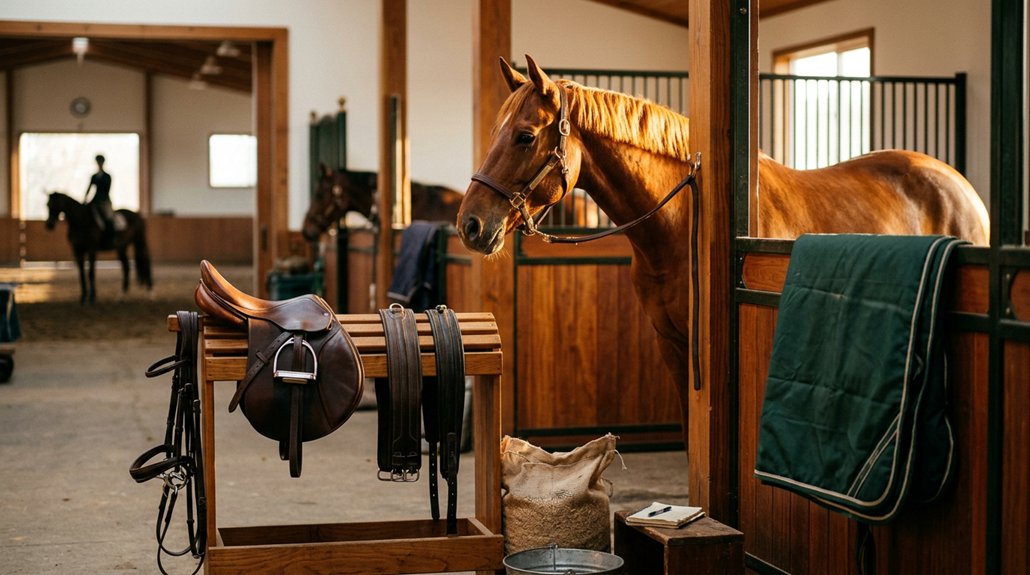
Starting your journey into horse ownership involves a notable initial investment in essential equipment, and the costs can add up quickly. Saddle selection alone might set you back between $1,500 to over $7,000, making it a vital part of your financial planning. Grooming essentials, like brushes and combs, aren’t free either, ranging from $500 to $1,000. Consider the maintenance equipment costs; a reliable tractor or large mower is often necessary for barn upkeep. Transportation options further complicate your budget, as a used truck for towing can start around $45,000. If you frequently attend events, professional hauling at $1.50 to $3.00 per mile will be another factor for your initial setup and long-term expenses.
Balancing Passion With Financial Realities in Horse Ownership
While the allure of horse ownership can be compelling, it is vital to critically analyze the financial realities that accompany this passion. Horse ownership qualifies as a costly passion project, often requiring meticulous financial planning. With boarding alone costing $600 to $2,500+ monthly, potential costs can exceed $30,000 annually. Many horse enthusiasts are surprised by supplementary expenses like routine veterinary care, which can range between $300 and $700 annually. It is important to strategically balance passion with finance.
| Expense Category | Cost Range |
|---|---|
| Full-Care Boarding | $600 – $2,500+/mo |
| Veterinary Care | $300 – $700/yr |
| Hoof Care | Included in annual |
| Total Potential Spend | $30,000+/yr |
Understanding these costs provides clarity, making financial planning indispensable to sustaining your equine passion.
Cost-Saving Strategies for Horse Enthusiasts
You can strategically cut costs by choosing affordable, high-quality used riding equipment, which often saves you hundreds compared to new options without sacrificing performance. Data shows that DIY horse care solutions, such as managing your horse’s grooming and basic health needs, reduce expenses, potentially lowering annual out-of-pocket costs by thousands. By effectively utilizing these strategies, you not only make horse ownership more manageable but sustain quality care and engagement with your equestrian passion.
Affordable Equipment Choices
For horse enthusiasts working to manage expenses without compromising quality, exploring affordable equipment options is essential. Consider these strategies to reduce costs while maintaining saddle quality and proper tack fitting:
- High-Quality Used Saddles: Purchasing gently-used saddles can save up to 50% compared to buying new. Prioritize items fitted specifically to your horse to avoid unnecessary stress or injuries.
- Collaborative Buying: Co-op boarding offers shared chores and bulk-buy options for feed and bedding, cutting overall costs considerably.
- Work-Off Programs: Local stables often offer services for reduced board costs. This exchange can greatly lower your monthly financial load.
- Community Consultations: Seek advice from fellow equestrians and online groups for affordable equipment solutions tailored to your horse’s specific needs.
DIY Horse Care Solutions
How can horse enthusiasts cut costs without sacrificing quality in care? Engaging in DIY projects for horse facilities often leads to substantial savings. Building fences and stalls yourself can considerably reduce initial setup and maintenance expenses. Collaborating with other horse owners to share resources, such as equipment or buying hay in bulk, can also decrease ongoing costs. DIY feeding solutions allow you to craft feed blends tailored to your horse’s needs, ensuring satisfaction without breaking the bank. Additionally, opting for recycled bedding options minimizes waste and costs continuously. Implementing a work-off arrangement at boarding facilities might lower your monthly board by hundreds. Education in care and management further reduces expenses by preventing unnecessary veterinary bills through proactive measures.
Emotional Benefits and Challenges of Horse Ownership
Emotional fulfillment often emerges as a defining aspect of horse ownership, providing experiences many describe as transformative. Owning a horse builds deep emotional connections that can alleviate stress and enhance mental health. The relationship nurtures:
- Emotional Connection: Developing a meaningful bond with your horse acts as a stress relief mechanism, contributing to overall well-being.
- Community Bonding: Riding and caring for horses strengthens ties, fostering lasting friendships and support networks.
- Personal Growth: The responsibility impact of caring for such a majestic animal enhances discipline and purpose in your daily routine.
- Financial Sacrifice: Although significant, many owners find the emotional benefits outweigh the financial costs, making it a worthwhile investment.
This pursuit, albeit costly, promises personal rewards that many find invaluable.
Deciding on Horse Ownership: Is It Right for You?
Considering horse ownership? Analyze costs and personal commitment before deciding. Annually, expect $3,000 to $12,000 for basic care, excluding facility needs, as only 38% board horses. A substantial time investment is required: 15–20 hours weekly at home or 8–12 hours for boarded horses. Evaluate ongoing veterinary and hoof care obligations:
| Expense Type | Cost Range | Frequency |
|---|---|---|
| Veterinary | $25 – $125 | Monthly |
| Farrier | $50 – $250 | Every 4–8 weeks |
| Boarding/Care | $3,000 – $12,000 | Annually |
| Time (Home) | 15–20 hours | Weekly |
| Time (Boarded) | 8–12 hours | Weekly |
Joining the equestrian community offers valuable support and can make financial and time commitments manageable.
Frequently Asked Questions
What Is the 1/2/3 Rule for Horses?
The 1/2/3 rule for horses suggests allocating one-third for initial purchase, half for annual care like feeding and horse care, and one-sixth for emergencies, considering riding equipment, training costs, and other related expenses in your budget.
How Much Does It Realistically Cost to Own a Horse?
Owning a horse realistically costs between $3,000 and $12,000 annually. You should budget for vet expenses, feeding costs, boarding fees, and equipment maintenance, plus insurance premiums and healthcare, with fluctuations based on your care choices.
What Is “I Love You” in Horse?
Picture a horse’s nuzzle as its version of “I love you,” using equine affection. Horse communication involves warmth through gestures like nuzzling, whinny greetings, and following you, transforming care costs into emotional rewards worth every penny.
Can You Ride a Horse With Epilepsy?
Yes, you can ride horses with epilepsy, but consult a vet for epilepsy management. Analyze medication costs and guarantee riding safety by monitoring the horse’s behavior, providing training, and maintaining a stable environment to mitigate risks.
Conclusion
Deciding whether to own a horse is like balancing on a financial tightrope. Initial costs can exceed $5,000, with ongoing expenses, such as $1,500 annually for feeding alone, contributing to a significant financial commitment. While health care can average $500 annually, boarding may add $4,000. Though horses can deliver unparalleled emotional rewards, weigh the cost against your budget. By applying smart cost-saving strategies, you can turn this passion into a fiscally responsible venture.