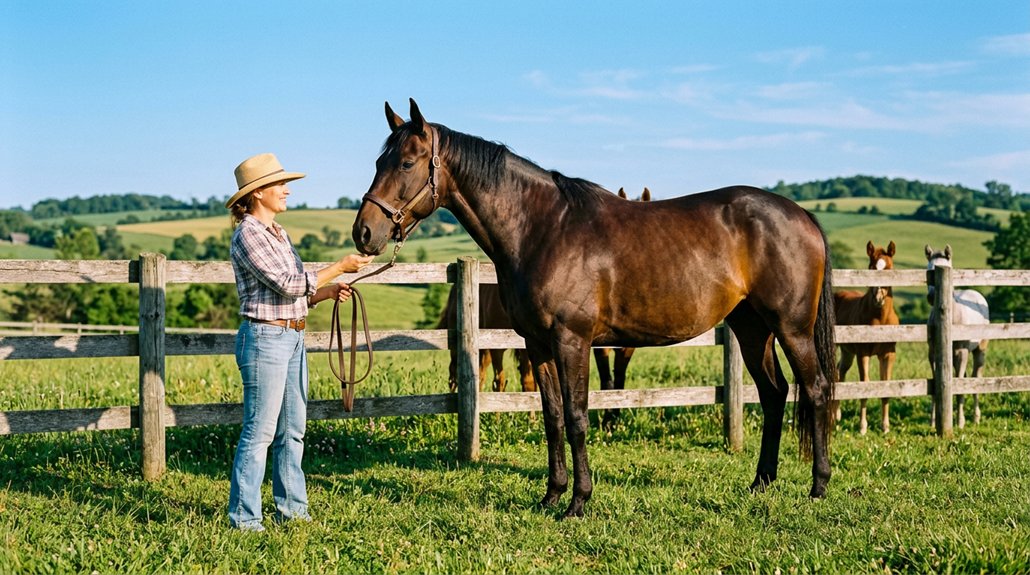
When choosing your first horse, prioritize a calm, mature horse aged 8 to 15 with height between 14 to 16 hands for best control. Opt for trainable breeds like American Quarter Horses or Morgan Horses. Geldings tend to exhibit stable behavior, perfect for beginners. Conduct thorough health checks and verify the horse can carry about 20% of your weight. Understanding behavioral compatibility and training readiness is essential, and there’s much more to explore for a rewarding equestrian journey.
Key Takeaways
- Choose mature horses aged 8 to 15 for predictable and calm behavior, ideal for first-time owners.
- Prioritize breeds like American Quarter Horse and Morgan Horses known for their calm demeanor and versatility.
- Opt for geldings over mares to avoid mood unpredictability from hormonal fluctuations.
- Ensure the horse’s height is between 14 to 16 hands for manageable control and training ease.
- Conduct a pre-purchase veterinary exam to identify any health issues or injuries.
Must-Know Traits and Experience Levels for Beginner Horses
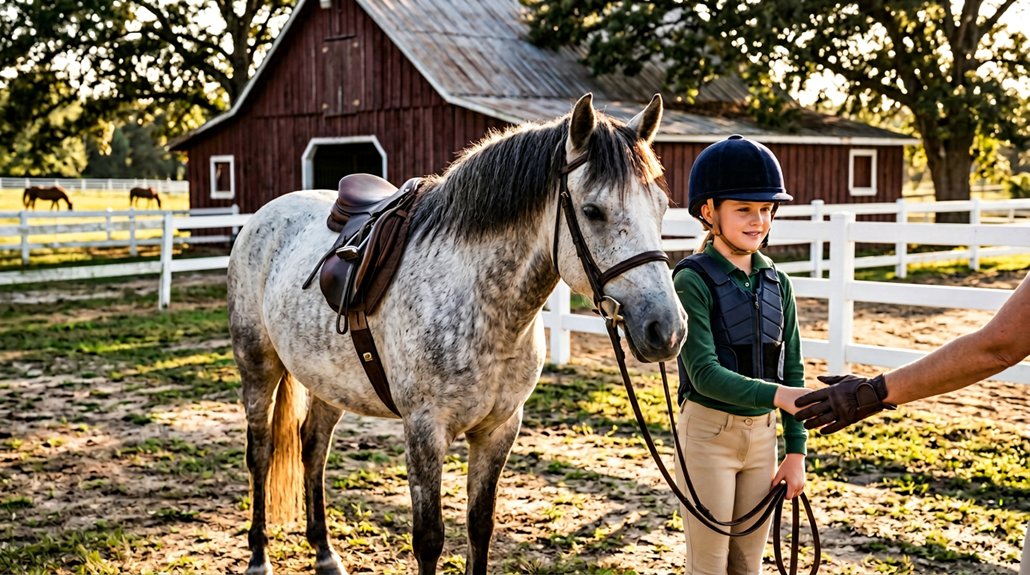
When considering your first horse, it’s vital to understand the traits and experience levels that make a horse suitable for beginners. A calm, patient temperament is paramount, offering safety and fostering effective learning. Ideally, look for horses between 14 to 16 hands high; this provides manageable control, boosting rider confidence. Mature horses, specifically those aged 8 to 15 years, tend to exhibit predictable behavior, ensuring reliability for novice riders. Central to this choice is trainability—horses quick to learn and responsive to cues ease the training process, essential for steady rider development. Prior to purchase, you should dedicate time to assess potential horses’ behavior and compatibility, as this interaction enhances the initial training techniques and sets the foundation for long-term rider confidence.
Top Breeds for Novice Horse Owners
Choosing the right horse breed for a novice owner is an integral part of the journey toward a harmonious equine partnership. The American Quarter Horse, with its calm demeanor and versatility, is ideal for multiple training techniques. It excels in disciplines such as trail riding while making horse nutrition manageable due to its moderate size. Morgan Horses provide a smooth ride with their friendly nature, perfect for beginners in both English and western riding. For a unique experience, the gentle Tennessee Walking Horse offers comfort with its distinctive running-walk gait. Intelligent and loyal, Appaloosas boast versatile training capabilities. Ultimately, Paint Horses, known for their striking coat patterns, combine a gentle nature and high trainability, ensuring intuitive engagement with novice riders.
Gelding vs. Mare: Which to Choose for Beginners?
When evaluating horses for novice riders, understanding the temperament and behavioral differences between geldings and mares is essential. Geldings are typically more placid and consistent in demeanor, often providing a forgiving experience for beginners, whereas mares may present unpredictable moods due to hormonal fluctuations. Prioritizing temperament over gender with the guidance of an experienced trainer can guarantee a successful match, promoting safety and learning for first-time owners.
Temperament and Behavior Differences
Although selecting the ideal horse for a novice can be intimidating, understanding the temperament and behavioral nuances between geldings and mares provides vital insights for first-time owners. Gelding advantages include their calm demeanor and consistent temperament, resulting from castration, which typically makes them an excellent choice for beginners seeking reliability. By contrast, mare characteristics reflect hormonal cycles that can influence behavioral unpredictability, potentially challenging inexperienced riders. Additionally, geldings exhibit superior manageability within group settings, minimizing aggressive tendencies and fostering safe interactions. Despite these general distinctions, novices should prioritize evaluating individual temperament and training history. Some mares may demonstrate remarkable stability, and personality dynamics can outweigh gender-based assumptions. Consequently, in-depth analysis of each horse remains essential to making informed acquisition decisions.
Suitability for Novice Riders
For novice riders evaluating their first equine companion, the choice between a gelding and a mare necessitates careful consideration of both behavioral and physiological attributes. Geldings, being castrated males, typically exhibit a calmer temperament, easing the implementation of horse training techniques. Their steadier demeanor makes them preferable for managing feeding schedules since they aren’t influenced by hormonal fluctuations, which mares experience due to reproductive cycles. Mares can be prone to mood swings, impacting predictability in novice handling scenarios. Studies show beginner-friendly breeds like American Quarter Horses often include more geldings, enhancing selection flexibility. Ultimately, geldings are associated with forgiving attitudes, superior stability, and ease in training settings, making them ideal for inexperienced riders aiming for effective equine management and predictable riding experiences.
How to Pick the Right Size and Strength for You
When selecting your first horse, rider-horse compatibility regarding size and strength is essential to guarantee a safe and enjoyable experience. You’ll want to take into account the difference between ponies and horses, as smaller equines can offer better handling and confidence-building for children or smaller adults. Pay attention to matching the horse’s weight and build with your own, keeping in mind that the rider’s weight should ideally not exceed 20% of the horse’s weight, allowing both safety and comfort during rides.
Rider Horse Compatibility
Selecting the right horse for your needs involves more than just preference; it’s essential to verify the size and strength of the horse align with your physical attributes and experience level. Evaluating the horse’s height, generally between 14 to 16 hands for beginners, is imperative to ease mounting techniques. Understanding saddle fitting is vital for physical compatibility and balanced control. If you’re a heavier rider, consider robust breeds like the American Quarter Horse for added stability and strength. Novice riders should prioritize manageable horse builds that promote confidence. Smaller breeds, like the Haflinger, provide less intimidating options for younger or smaller individuals. Furthermore, prioritize horses with gentle temperaments, such as Morgans or Paint Horses, to enhance rider safety and comfort.
Pony Versus Horse
Evaluating your physical compatibility with a horse flows naturally into the discussion of choosing between ponies and horses. Ponies, standing 14.2 hands or shorter, provide distinct pony benefits for children and smaller riders due to their manageable size and strength. Conversely, horses present certain horse challenges, offering a more spirited ride suitable for larger, experienced riders. Consider these five points:
- Rider size and weight: Ponies suit smaller, lighter riders.
- Rider experience: Novices often find ponies less intimidating.
- Versatility: Ponies can carry adults, ideal for family riding.
- Intended use: Horses excel in rigorous adult disciplines.
- Confidence building: Starting on ponies boosts skills for beginners.
Balancing your needs and experience guarantees a harmonious match between rider and steed.
Managing Horse Size
Successfully managing horse size is vital for guaranteeing a safe and enjoyable riding experience. When selecting a horse, it’s important to assess horse dimensions relative to rider size ratio. Generally, larger horses (15 hands and above) may pose handling challenges for smaller or novice riders. Conversely, horses under 14.2 hands offer greater manageability and build novice confidence. Evaluate the horse’s build to confirm it can support up to 20% of your weight; improper size ratio can lead to equine discomfort or injury. Also, consider temperament and training, which are pivotal irrespective of the horse’s size. Calm, well-trained horses offer a safer option. Finally, account for physical strength requisite in managing heavier draft breeds, which may overwhelm beginners compared to lighter breeds.
Essential Health Checks and Compatibility Tests
When acquiring your first horse, a thorough vetting process is essential to guarantee the animal’s health and compatibility with your needs as a beginner rider. Conduct a pre-purchase veterinary exam—this is crucial to identify any hidden health issues or injuries that could impair performance or longevity. Exam importance cannot be overstated, as reviewing the horse’s complete health history, including vaccinations, deworming records, and prior treatments, guarantees consistent care. Evaluating the horse’s body condition score, ideally between 4 and 6, verifies it’s healthy. Assess behavioral compatibility by observing trial rides for calm and patient demeanor. Confirm the horse responds well to basic commands to validate existing training.
Prioritize a vet exam and health history check to ensure your first horse fits your beginner needs.
- Pre-purchase veterinary exam
- Health history review
- Body condition scoring
- Behavior assessment
- Training evaluation
Resources for New Riders: Books, Blogs, and Clubs
Having assured your horse’s health and compatibility, ensuring you’re well-equipped with knowledge and a supportive community becomes paramount. Start by exploring “The Complete Beginner’s Guide to Horse Care,” which offers invaluable insights into horse grooming and foundational riding techniques, specifically tailored for novice owners. Immerse yourself in equine blogs like “The Horse Blog” and “Horse Nation” for expert tips and anecdotal experiences that enhance practical understanding.
Consider joining community-driven resources like the United States Pony Club, where you’ll access guidance, structured lessons, and equestrian events. Connect with global enthusiasts through online forums such as Horse Forum or Reddit’s r/Horses to exchange knowledge and support. Attend workshops hosted by local equestrian centers to refine your skills and gain direct interaction with seasoned professionals.
Frequently Asked Questions
What Is the Best Horse for Beginner Owners?
As a beginner owner, you’d benefit from the American Quarter Horse for its calm demeanor. Consider breed recommendations like the Tennessee Walking Horse if smooth gait preferences are your priority, ensuring a comfortable, adaptable ride. Prioritize trainability and temperament.
What Is the 1/2/3 Rule for Horses?
The 1/2/3 Rule advises selecting a horse aged 10+, with 2+ years of solid training, and exposed to 3+ riding disciplines. This guarantees safer horse behavior for learning riding basics, offering predictability and stability for beginners.
What Is the 20% Rule for Horses?
The 20% rule for horses is like a guiding lantern in darkness, ensuring their diet comprises mostly fiber and forage. It helps balance your horse’s temperament and supports training basics, safeguarding against colic and laminitis.
What to Know as a First Time Horse Owner?
As a first-time horse owner, emphasize horse care by understanding training basics, budgeting needs, and health considerations. Recognize breed temperament’s impact and consider professional riding lessons to enhance your skills and guarantee a successful, rewarding equestrian experience.
Conclusion
As you begin your journey into horse ownership, ensuring you choose wisely is like hitting the nail on the head. Prioritize breeds known for their docile nature and opt for a gelding over a mare for easier handling. Match your horse’s size and strength to your comfort level, and don’t skip essential health checks. Use available resources like books and blogs to deepen your understanding. Armed with this technical knowledge, you’ll be ready for a rewarding experience.