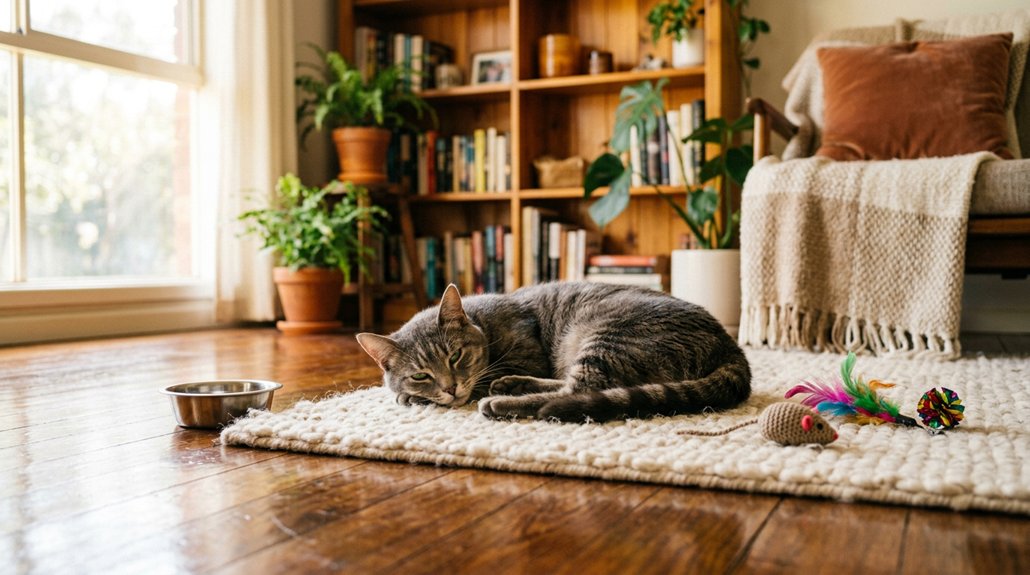
Adopting a cat now can be incredibly rewarding, offering therapeutic benefits, like reducing stress and anxiety, while providing companionship. Make certain your home is cat-proofed with safe spaces and essentials like litter boxes and toys. It’s crucial to understand the long-term commitment, from regular vet visits to fostering a harmonious environment with any children or pets. Choose a breed or age compatible with your lifestyle. Discover exactly why and how this decision can improve your well-being.
Key Takeaways
- Evaluate your home for cat-proofing and safety to ensure a suitable environment for a new pet.
- Consider your daily routine to ensure you can dedicate time to cat care and interaction.
- Research and select a cat breed compatible with your lifestyle and household dynamics.
- Prepare for the long-term commitment of cat ownership, including regular veterinary visits and providing emotional support.
- Assess the therapeutic benefits of cat companionship for reducing stress and improving overall well-being.
Is Your Home Ready for a Cat?
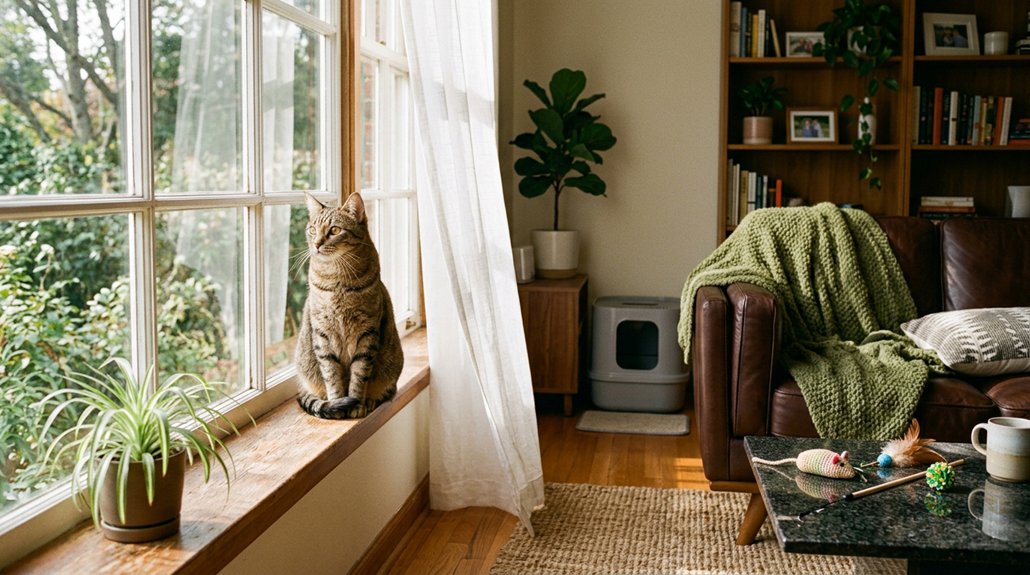
Before welcoming a feline friend into your home, it’s important to ask: is your living space ready? Start by evaluating your home’s cat proofing essentials and space requirements. Guarantee the environment is safe from hazards, like exposed wires or toxic plants. With space being essential, a cat needs adequate room to explore and relax, along with designated areas equipped with necessary supplies such as a litter box, scratching posts, and quality cat toys.
Think about your household dynamics. If you have young children or pets, it’s important they’re prepared for a new, furry family member. Evaluate your daily routine; guarantee you can provide time for care and play. A smooth changeover begins with a prepared, welcoming environment, fostering your cat’s well-being and comfort.
Discover the Reality of Cat Ownership
While the idea of having a cat may be appealing, it’s vital to understand the full spectrum of responsibilities that come with cat ownership. Adopting a cat involves more than just providing food and shelter. The adoption process itself includes evaluating your readiness to handle diverse cat behavior, especially if your new feline friend is from a shelter and possibly traumatized. You’ll need patience and knowledge to help them adjust, fostering an environment where they feel safe and loved. Additionally, regular veterinary visits and vaccinations are essential, demanding financial and time commitments. With cats living up to 15 to 20 years, make sure you’re ready for a long-term relationship. Remember, a well-informed adoption benefits both you and your furry companion.
Choosing the Right Cat for You
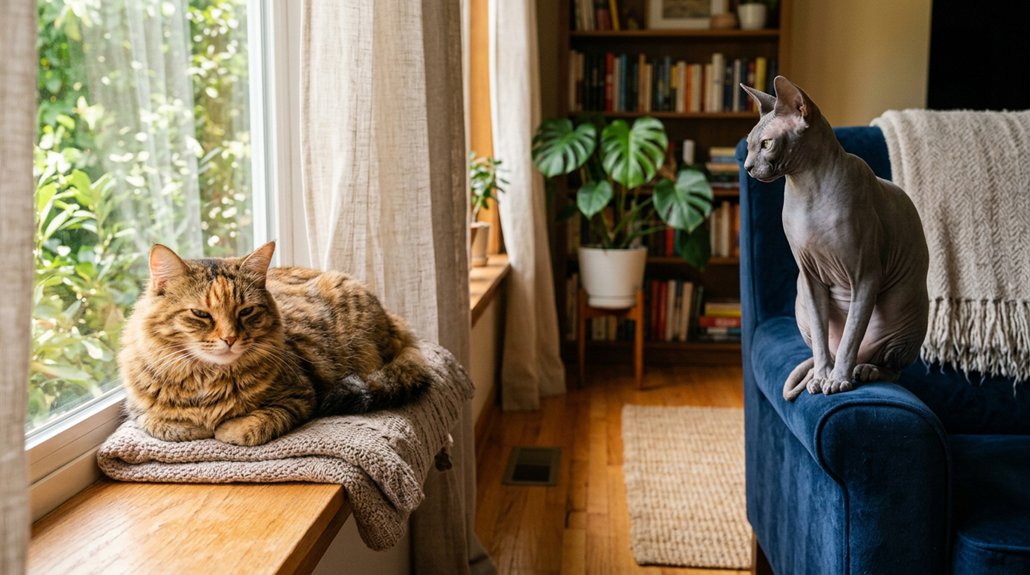
How do you find the right cat to suit your life? By understanding cat breeds and their personality traits, you can make an informed decision. Work full-time? Consider an independent breed; they thrive alone. Families with kids might appreciate well-socialized cats, known for their gentle nature. Always assess the cat’s age and temperament—kittens need time and patience for socialization, while adult cats offer more predictable behavior. Your home environment matters too; specific breeds adapt better to apartments or houses. If you have existing pets, guarantee compatibility as some breeds integrate more smoothly with others. Shelters and adoption counselors are invaluable resources, offering insights into energy levels, playfulness, and trainability. Their expertise guarantees your chosen feline matches your lifestyle perfectly.
See How Cats Boost Your Well-being
When considering the benefits of cat ownership, it’s important to recognize the profound impact these animals can have on your well-being. Cats are more than just pets—they’re therapeutic companions. Their presence can markedly boost your mental health by reducing stress and anxiety levels. The calming sound of a cat’s purr is known to promote relaxation and lower blood pressure. Additionally, daily interactions provide emotional support, combatting loneliness with their steadfast companionship.
Consider these points:
- Cats’ playful and curious nature enhances overall happiness and life satisfaction.
- Studies link pet ownership to potential heart health improvements by mitigating stress-related conditions.
- Daily structure provided by caring for a cat can improve emotional resilience.
Incorporating a cat into your life might just be the perfect boost for your emotional well-being.
Steps for a Smooth Transition to Cat Ownership
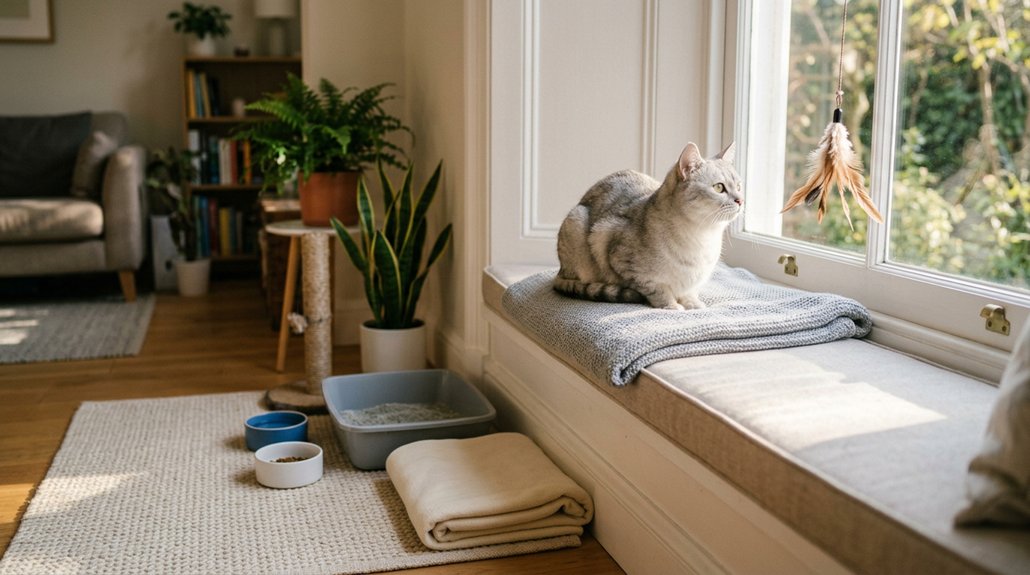
Having acknowledged the positive effects cats have on well-being, the next consideration is preparing for cat ownership to guarantee both you and your new feline friend start off on the right foot. Begin by making your home cat-friendly with litter box essentials, food, and toys. Scheduling a veterinary check-up soon after adoption is essential to monitor your cat’s health, as stress might cause post-adoption illnesses like upper respiratory infections. Gradual introduction to your home is important—allow your cat to explore and feel secure in their new environment. Establish a consistent feeding schedule and playtime routine, necessary for adaptation and stability. Engage in regular socialization to build trust, particularly if your cat is shy, and deepen your budding relationship.
Frequently Asked Questions
What Is the 3 3 3 Rule for Adopting Cats?
The 3 3 3 rule for adopting cats guides you through cat acclimation, explaining that during the first three days, weeks, and months, patience is key. Following these adoption tips, you’ll foster a healthy adjustment and bond.
What Is “I Love You” in Cat Language?
In cat language, “I love you” means slow blinking, purring, head-butting, and nuzzling are all signs of feline affection. With evidence-based understanding, these behaviors highlight how cats communicate trust and contentment, ensuring you’re healthily bonding.
Can Cats Lower Cortisol?
Absolutely, cats can lower cortisol. You might think it sounds too good to be true, but evidence shows feline companionship offers stress relief, reducing cortisol and boosting oxytocin, which fosters an emotionally healthier environment.
Can People With Autism Adopt?
Yes, people with autism can certainly adopt cats. It’s essential that you’re aware of autism’s emotional support benefits. Be certain to assess your lifestyle and consider fostering first to guarantee compatibility with your own unique needs.
Conclusion
Adopting a cat might feel like adding a new chapter to your life story, where the protagonist—a feline friend—brings unexpected joy and comfort. Research from the CDC shows that pets can lower blood pressure and reduce stress, highlighting their role in our well-being. Picture a cozy evening, a purring cat by your side, offering warmth and companionship. If your home and heart are ready, consider embracing this furry addition, enhancing your narrative with happiness and health.