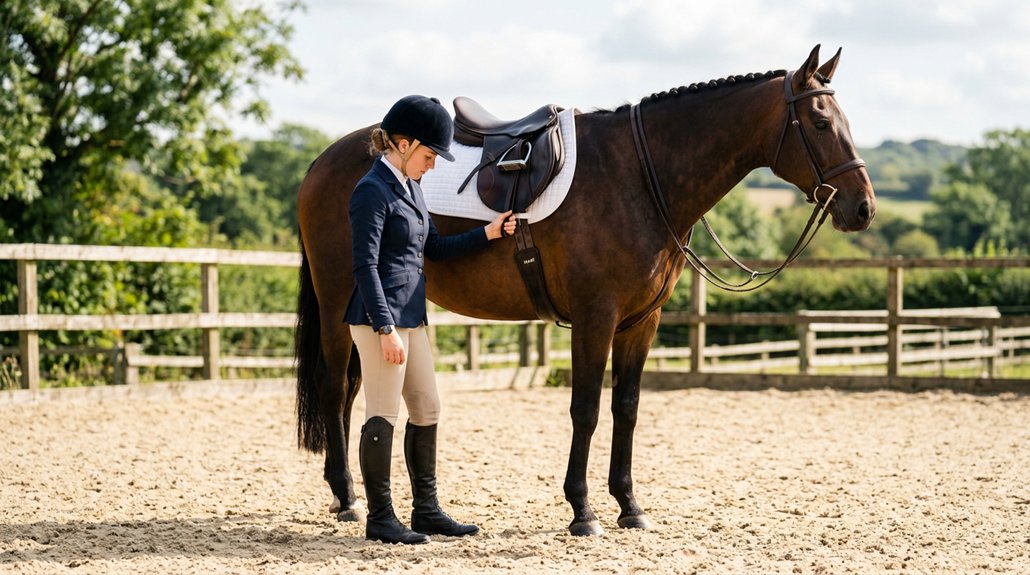
Preparing for your first horse requires gathering key supplies like grooming tools, feeding equipment, and a first aid kit. Assess your riding skills and align your lifestyle with horse care demands. Budget for the initial purchase and ongoing expenses, including unexpected costs. Set up a secure, comfortable environment with proper fencing and a clean barn. Establish a daily routine for feeding, grooming, and health monitoring. Discover the deeper aspects of creating a harmonious relationship with your horse.
Key Takeaways
- Gather essential horse care supplies like grooming tools and first aid kits for ongoing maintenance and emergencies.
- Assess your riding skill and align lifestyle with your horse’s needs to ensure a compatible match.
- Budget for both initial and ongoing horse care expenses, including contingencies for unexpected veterinary costs.
- Establish a clean, secure, and comfortable setup for your horse with proper barn conditions and secure fencing.
- Implement a daily routine of feeding, grooming, and health monitoring for your horse’s well-being.
Gather Essential Horse Care Supplies
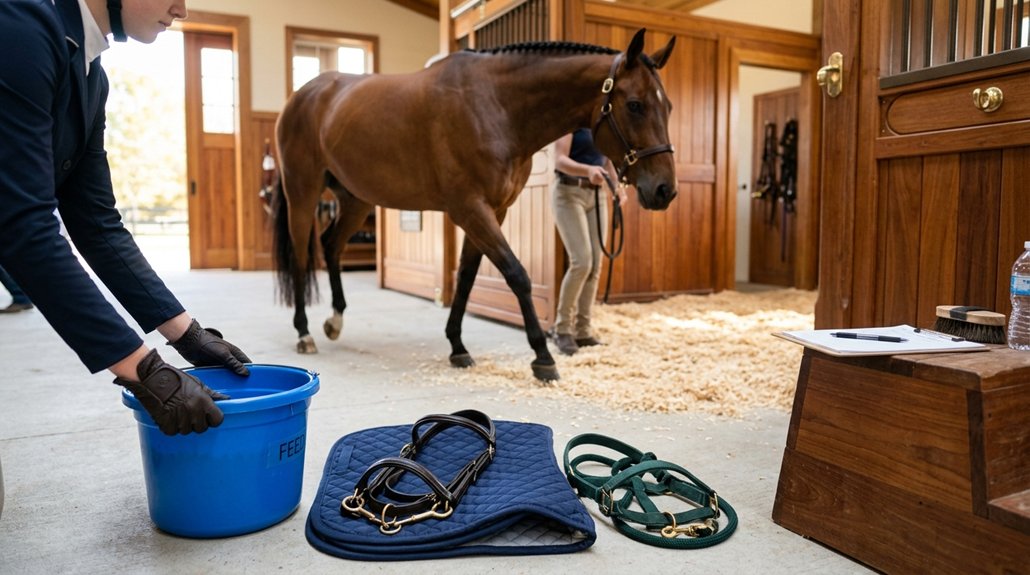
Before welcoming your first horse, it’s important to gather all necessary horse care supplies to guarantee their well-being and to facilitate daily care routines. Prioritize grooming tools like various brushes, a hoof pick, and a curry comb. These items are critical for maintaining your horse’s coat and hooves in prime condition. Equally significant is the feeding equipment, which includes water buckets, hay nets, and feeding tubs. These make certain your horse has a balanced diet and constant water access. Incorporate a first aid kit with bandages, antiseptics, and hoof care tools to address minor injuries promptly. Finally, secure a halter, lead rope, and cross ties for effective handling during grooming and stable care. Each piece serves a specific, indispensable role.
Evaluate Your Compatibility With Horse Ownership
Evaluating your compatibility with horse ownership is a critical step that necessitates a thorough examination of multiple factors. Start by gauging your riding skill level; limited experience might mean you’re not fully prepared for ownership, possibly suggesting leasing first. Align your lifestyle with your riding goals, confirming you can commit ample time for training and companionship. Consider a horse’s personality in relation to your own temperament—choosing a calm, compatible horse can greatly enhance your experience. Professional insight from a trainer can offer valuable evaluation of your readiness and goal alignment. Balancing financial readiness without delving into specific costs, confirm strategically planning for both initial and continuous care. This introspective evaluation effectively confirms a rewarding journey into horse ownership.
Plan Your Budget for Horse Care
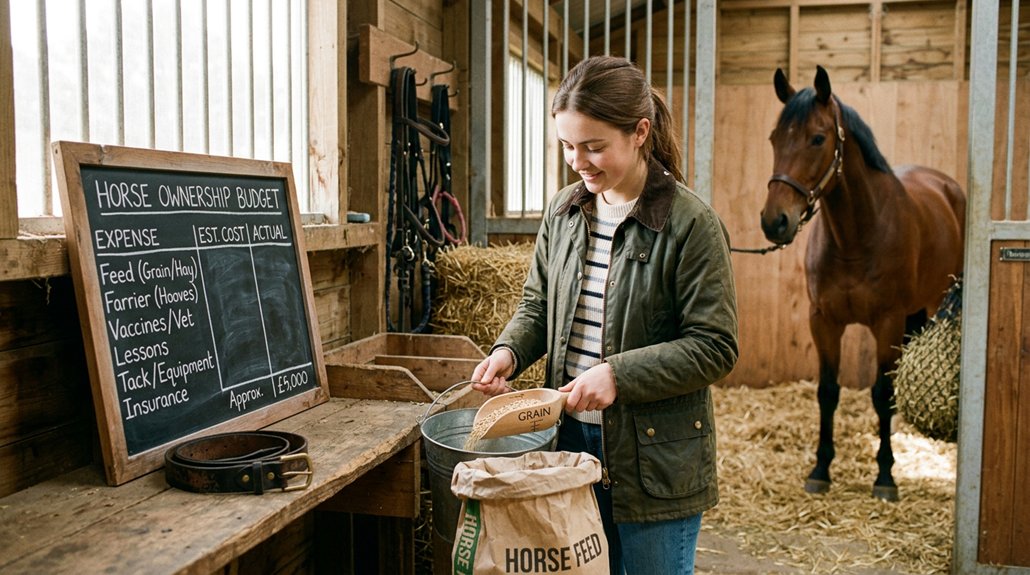
While initiating the journey of horse ownership, it’s imperative to meticulously plan your budget for horse care. Start with initial expenses such as the purchase price, which can fluctuate based on breed, age, and training, ranging from a few thousand to tens of thousands of dollars. Ongoing costs need careful attention too, typically spanning $300 to $1,500 monthly, covering feed, boarding, veterinary care, and farrier services. Don’t overlook the importance of a contingency fund—allocate about 10-15% of your budget for unexpected veterinary emergencies. Additionally, consider horse insurance, which ranges from $300 to $600 annually. Factor in equipment costs for saddles and grooming supplies, accumulating to several hundred dollars, ensuring thorough care for your horse’s well-being.
Ensure a Safe and Comfortable Setup
Establishing a safe and comfortable setup for your horse is vital to its health and happiness. Start by confirming the barn is clean, dry, and offers ideal stable ventilation to shield your horse from harsh weather and respiratory issues. Secure fencing is essential, employing robust materials to prevent escapes and eliminate hazards like sharp objects or gaps. Carefully design turnout areas that allow for daily exercise and safe grazing, promoting natural behaviors and nutrition. Your feeding area should safeguard hay and grain from moisture and pests, ideally using slow-feeding nets for digestion benefits. Finally, maintain a well-organized tack room, prioritizing accessible, safety-proofed supplies. This all-encompassing setup guarantees your horse’s environment is secure, nurturing, and conducive to ideal well-being.
Master Key Daily Care Techniques
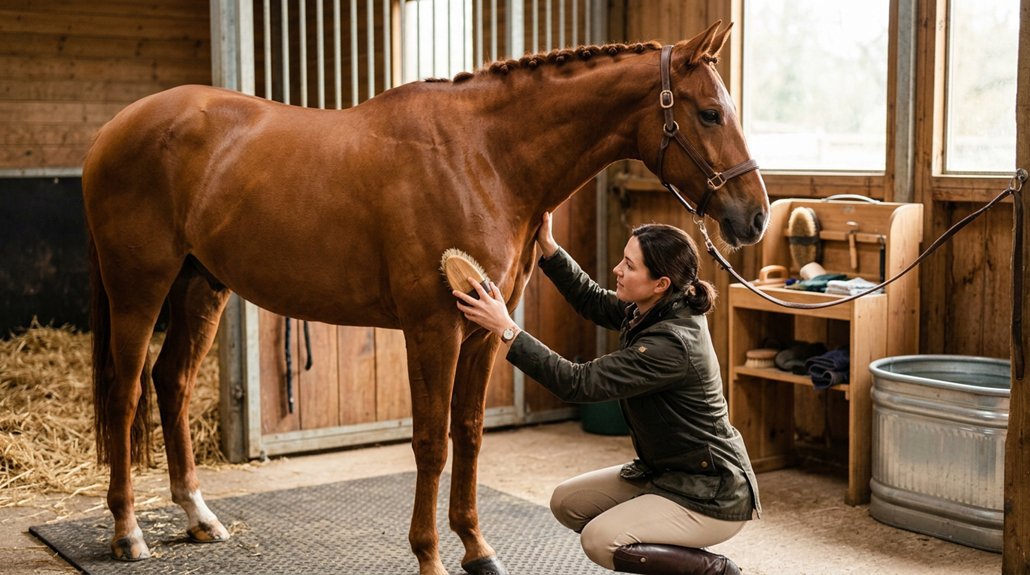
Once your horse’s setup is secure and nurturing, mastering daily care techniques is the next step to ensuring ideal health and well-being. Start by crafting a routine encompassing feeding, watering, grooming, and exercising to support both physical and mental wellness. Daily grooming tips include utilizing curry combs and hoof picks to enhance coat health and prevent hoof issues. Consistent health monitoring basics require observing any signs of distress, lameness, or behavioral changes. Keep water access constant; clean water buckets daily to minimize health risks. Prioritize maintaining a clean, muck-free stable to avert potential health hazards. This structured approach not only mitigates risks but fosters a robust bond between you and your equine companion, paving the way for a healthy equestrian relationship.
Frequently Asked Questions
What Is the 1/2/3 Rule for Horses?
The 1/2/3 rule suggests feeding horses 1% body weight in hay, 2% total feed, and 3% in forage daily. Balancing this supports horse behavior positively, aiding training techniques by ensuring peak health and energy levels.
What Is “I Love You” in Horse Language?
“I love you” in horse language? If only they had words! It’s shown through body language like nuzzling, vocalizations such as nickers, and grooming techniques—simple bonding activities demonstrating affection through trust and consistent eye contact.
How to Prepare for Your First Horse?
Start by mastering horse care and riding basics. Understand feeding schedules and grooming techniques. Research breeds, assess readiness, and create a budget that covers purchase costs, ongoing care, and emergencies. Your preparation guarantees a smooth changeover.
What Are the 3 F’s for Horses?
The 3 F’s for horses are Feed, Focus, and Fitness. Coincidentally, your horse’s feeding habits, grooming routine, exercise needs, and regular health checkups tie directly into each. Address these to guarantee peak health and happiness.
Conclusion
You’ve navigated the essentials for your first horse, but are you truly ready for the adventure that awaits? With the right supplies, budget planning, and a safe setup, you’re well on your way. Remember, mastering daily care techniques isn’t just a task; it’s a trust-building exercise with your new companion. Owning a horse is a significant commitment, but with preparation and insight, it can be one of the most rewarding experiences of your life.