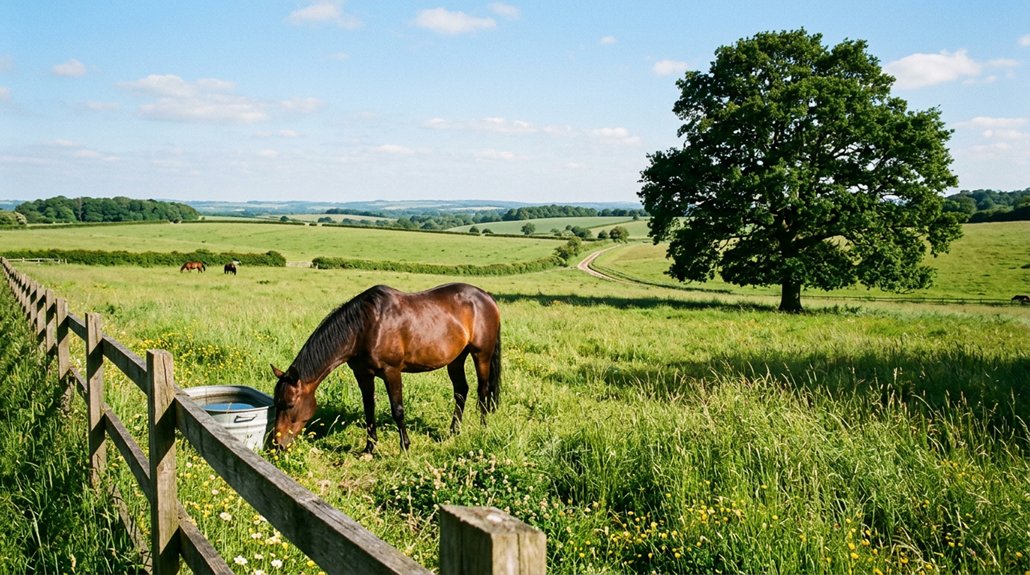
To own a horse, allocate 1 to 2 acres of pasture per horse for adequate grazing and exercise. Larger breeds or active horses may need more. Consider the quality of pasture and local zoning laws, which can vary considerably. Proper pasture management helps maintain vegetative cover and reduces feed costs. Analyze your land layout to optimize space for your horse’s health. Discover more insights on zoning and financial planning to guarantee successful horse ownership.
Key Takeaways
- Allocate 1 to 2 acres of pasture per horse, starting with 2 acres for the first horse.
- Larger or more active horses typically require at least 2 acres each.
- Zoning regulations may require specific acreage, often beginning at 2 acres for the first horse.
- Implementing rotational grazing can reduce total land needed while maintaining pasture quality.
- Regional climate impacts acreage requirements, with arid areas needing up to 38 acres per horse.
How Much Land Does a Horse Need?
How exactly do you determine the right amount of land for a horse? A general guideline is to allocate 1 to 2 acres of pasture per horse, with the first needing 2 acres. Subsequent horses require an extra acre each to prevent overgrazing, an essential aspect of horse care. Make sure your pasture maintains a minimum of 50% vegetative cover and a grass height above 3 inches for nutritional adequacy. Grazing rotation proves important here, as it allows plant recovery, preserving pasture quality. In areas where pasture is scarce, like dry lots, provide at least 400 square feet per horse and supplement with feed. Regulations may vary regionally, especially in the Eastern and Southern U.S., demanding careful land management.
The Ideal Acreage for Your Horse: Tailoring to Size and Activity
One of the most essential aspects of horse care is understanding the ideal acreage tailored to your horse’s size and activity level. Begin by evaluating the horse size and exercise requirements. Larger breeds or active horses need more space for grazing and movement, typically starting at 2 acres per horse. Consider the pasture type—lush, high-quality pastures might reduce the acreage required. Meanwhile, a detailed land evaluation should include grazing habits and space management, guaranteeing efficient land layout. Some regions might necessitate more land due to management practices and grass types. Remember, while 0.1 acres might suffice for basic exercise like walking, trotting and cantering need that 1.5 to 2 acres. Tailor your land layout wisely to promote ideal health.
Zoning Regulations: What Do You Need to Know?
Maneuvering the complexities of zoning regulations for horse ownership requires an astute understanding of local ordinances. Zoning variations can dramatically affect your horse-keeping plans, as requirements differ from one area to another. For instance, the City of Avon mandates two acres for the first horse and a quarter-acre for each additional one, highlighting the differences in livestock restrictions across municipalities. There’s no uniform state law in Ohio, which makes local consultation paramount, especially where some regions prohibit livestock entirely. Properties over five acres often escape strict township regulations, offering more flexibility. Still, guarantee compliance with fencing, shelter, and registration requirements. Engaging an Equine Lawyer can provide invaluable guidance, helping you navigate local ordinances and avoid legal issues with your equine venture.
Financial Planning: Balancing Costs With Acreage
Steering through zoning regulations is just one piece of the puzzle in horse ownership; the financial planning aspect cannot be overlooked. Mastering financial forecasting and expense tracking is essential in ensuring monthly board, training, and lesson client incomes aptly cover the costs of feeding and caring for your horses. Consider the initial investment in zoning permits and fees, significant in calculating the total financial outlay. Effective management of acreage plays a key role; properly maintained pastures reduce the need for costly hay and supplements. If financial resources dwindle, selling excess horses might be necessary to keep expenses aligned with your budget. Regularly cleaning manure and upholding good land management prevents potential neighbor disputes, safeguarding your property’s value.
Pasture Management: Achieving Healthy Forage
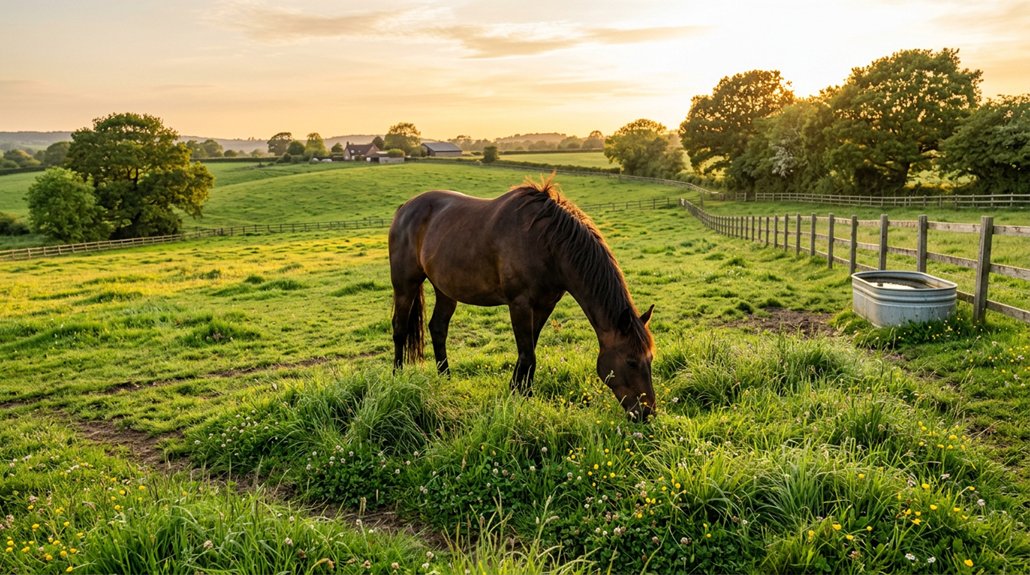
To achieve healthy forage, you’ll need to strategically implement rotational grazing techniques, ensuring that grass height stays above 3 inches to prevent overgrazing and allow for pasture recovery. Maintaining soil health is vital, so conduct regular soil tests and apply the right fertilizers to optimize nutrient availability and forage yield. Additionally, effectively managing weed growth is essential, as it prevents unwanted plants from competing with your pasture grass, thereby enhancing the overall productivity of your grazing areas.
Rotational Grazing Techniques
Although managing pastureland effectively might seem intimidating, rotational grazing techniques can considerably simplify the process and enhance pasture management for horse owners. By utilizing pasture rotation, you allow each section to recuperate, maintaining healthy forage levels and preventing overgrazing. Ideally, divide your land into at least two sections and let each rest for a minimum of 21 days after grazing.
This approach offers several grazing benefits, importantly the reduction in overall land needed per horse. With effective rotational management, high-quality pasture conditions could accommodate up to one horse per acre. Additionally, maintaining at least 50% vegetative cover is crucial for maintaining soil quality and minimizing erosion, while also interrupting the parasite cycle by limiting horses’ exposure to larvae present in manure.
Maintaining Soil Health
Mastering rotational grazing sets the stage for an effective pasture management strategy, where maintaining soil health becomes essential to achieving vibrant forage. Soil testing is a vital step to reveal nutrient deficiencies, guiding effective fertilization strategies. Healthy roots thrive in conditions that rotational grazing fosters, allowing for effective pasture recovery. Ensuring at least 50% vegetative cover, combined with a precise grazing height above three inches, protects against soil compaction and fosters vigorous growth.
Implementing drainage systems prevents waterlogging, protecting soil structure. Pair these strategies with overseeding to sustain productive pastures. Here’s a detailed approach:
| Practice | Benefit |
|---|---|
| Soil Testing | Identifies nutrient deficits |
| Rotational Grazing | Enhances root development |
| Proper Drainage | Protects soil structure |
| Overseeding | Optimizes pasture yield |
| Grazing Management | Prevents overgrazing |
Managing Weed Growth
How can you guarantee a pasture remains free from invasive weeds while promoting healthy forage? Begin by applying effective weed identification techniques to spot and remove intruders before they spread. Utilizing thorough pasture maintenance strategies guarantees your land stays productive and weed-free.
- Mow Regularly: Scheduled mowing halts weed proliferation by catching them before they seed, allowing beneficial forage to dominate.
- Rotate Grazing: Rotational grazing gives grass recovery time, reducing overgrazing and preventing weeds from establishing.
- Enhance Soil Health: Administer regular soil tests and fertilize appropriately to bolster grass growth, guaranteeing it’s competitive against weeds.
Keep forage height above three inches for essential vegetative cover. Such tactics create a sustainable environment, suppressing weeds, and fostering vigorous pasture growth.
Why Your Horse’s Shelter Matters After Pasture Management
A well-designed and adequately sized shelter is an essential complement to effective pasture management, ensuring that horses remain in optimum health and comfort year-round. The ideal shelter design considers size, structure, and materials. Each horse needs at least 150 square feet with high ceilings for ventilation and movement. Choosing the right type of shelter, like a barn or run-in shed, hinges on your land management practices and the number of horses you keep.
Equally important are drainage solutions to prevent flooding and mud around shelters—common culprits of equine health issues. Proper grading and the installation of gutters or French drains can efficiently redirect water, enhancing both the infrastructure and your horse’s well-being. Ultimately, these efforts preserve the synergy between pastures and shelters.
What to Do When You Don’t Have Enough Space for Grazing
When space is limited, creating dry lots or sacrifice areas for your horse can be a practical solution, but you must guarantee these areas are supplemented with adequate feed. Implementing rotational grazing can efficiently utilize available land, preventing overgrazing and maintaining pasture quality. Additionally, optimizing nutritional supplements with strategic consultation can fulfill dietary needs, guaranteeing your horse remains healthy even with minimal grazing space.
Consider Dry Lot Options
- Allocation: Guarantee at least 400 square feet per horse, enabling movement and socialization without pasture degradation.
- Maintenance: Regularly remove manure to maintain hygiene and avoid health issues related to waste buildup.
- Nutritional Support: Since dry lots replace grazing pastures, supplement your horse’s diet with adequate hay or feed to fulfill their nutritional needs.
These measures guarantee both the protection of your land and the well-being of your horse.
Implement Rotational Grazing
Release the potential of your limited land by implementing rotational grazing—an efficient method to maximize pasture use when space is at a premium. By strategically moving your horses between divided sections, or paddocks, you allow each area to rest and regenerate, benefiting from pasture rotation. This practice not only preserves pasture quality but also promotes healthier vegetation as grazed areas recover. Aim to maintain at least 50% vegetative cover and keep forage height above 3 inches, which reduces the risk of overgrazing. Even small areas, like dry lots, become manageable with this approach. You’ll find that rotational grazing reduces the land required per horse, optimizing forage use to sustain equine health with minimal reliance on larger pastures. Regular management guarantees long-term grazing benefits.
Optimize Nutritional Supplements
Maneuvering limited grazing space compels you to strategically optimize your horse’s nutrition through high-quality supplements. Ensuring nutritional balance is key, especially when pasture access falls short. Focus on the following:
- Supplement Types: Incorporate concentrated grains or specialized feeds that offer essential nutrients. These efficiently address dietary needs when natural grazing is scarce.
- Forage Intake: Aim for fiber-rich options like hay, ensuring at least 1-2% of your horse’s body weight daily to safeguard digestive health in lieu of adequate pasture.
- Mineral Support: Introduce vitamins and balanced mineral supplements to bridge gaps left by limited forage availability, preventing deficiencies.
Stay vigilant for signs of deficiencies and engage with an equine nutritionist to fine-tune your feeding strategy, ensuring your horse thrives even with restricted grazing.
How Region Affects Horse Land Needs
When considering how much land you need to provide for a horse, recognizing the impact of regional variations is essential. Regional differences dictate space requirements, from the Eastern U.S. with its lush pastures needing about 2 acres per horse to the arid West where dryland pastures can demand up to 38 acres. Your management strategies must adapt to these conditions. For instance, climate impact and irrigation needs are critical in the South and Midwest, affecting forage preferences and grazing patterns. Nutrient availability varies with pasture types, and land sustainability hinges on effective practices tailored to each locale. Whether managing moisture in the East or optimizing sparse resources in the West, understanding these distinctions guarantees your horses thrive across diverse environments.
Long-Term Horse Land Planning: Preparing for Future Changes
To effectively plan for the future of horse land use, you must consider not only the present needs but also anticipate changes in your local community’s zoning ordinances. Monitoring zoning trends and community development initiatives is essential as they directly impact the number of horses you can keep per acre. Here’s how to approach long-term planning:
- Understand Land Capacity: Allocate 2-3 acres per horse to prevent overgrazing, ensuring sustainable land use.
- Engage Locally: Involve yourself in local planning committees to gain insights on zoning changes affecting horse ownership.
- Implement Management Strategies: Use rotational grazing and regular pasture health assessments to maintain land conditions.
Frequently Asked Questions
How Much Land Do You Need to Legally Own a Horse?
You’ll need to check local regulations because they vary widely. Generally, at least two acres per horse provides adequate horse housing and pasture management. Additional horses often require more area for exercise and sustainable grazing practices.
What Is the 1/2/3 Rule in Horses?
The 1/2/3 rule contrasts simplicity with necessity in horse care by advising 1 horse needs 2 acres and 3 essentials: shelter, fencing, water. It balances pasture management by addressing both spatial and resource requirements for ideal horse health.
What Is the Number One Killer of Horses?
Colic is the number one killer of horses, linked to inadequate equine nutrition and poor horse health management. Monitoring feed changes, ensuring hydration, and understanding colic signs are essential for prevention and maintaining ideal equine well-being.
Is 2 Acres Enough Land for a Horse?
Yes, 2 acres is enough if you practice proper pasture management and guarantee adequate grazing space by rotating pastures. Regularly monitor grass height, maintain vegetative cover, and manage resources efficiently to prevent overgrazing and promote pasture health.
Conclusion
Owning a horse is like tending to a living symphony, where every acre is a note in harmony with your steed’s soul. Just as a melody flourishes with each crescendo and rest, your land must echo its needs, from lush pastures to sturdy shelters. Consider zoning laws as the conductor, guiding you through financial scores and regional variations. Even if space is limited, plan wisely to guarantee your equine dream doesn’t fade into a distant echo.