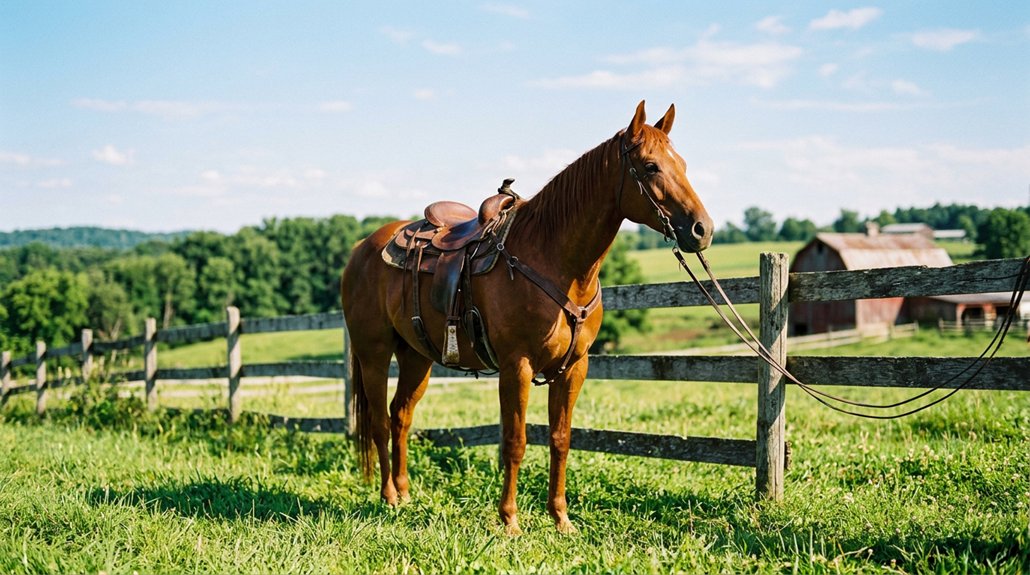
You can own a horse without owning land by utilizing boarding facilities, which handle key tasks like grazing, feeding, and exercising. You’ll need to factor in costs such as boarding, feed, veterinary care, and farrier visits. It’s vital to research and visit local facilities to choose the right care package for your budget and lifestyle. Leasing a horse can also be a cost-effective introduction to ownership. Explore further to understand how to guarantee your horse’s well-being in these settings.
Key Takeaways
- Leasing a horse is an option for experiencing ownership without full financial commitment.
- Boarding facilities allow horse ownership without needing personal land.
- Boarding options vary, including full care and self-care services, with associated costs.
- Financial planning is essential due to boarding fees and routine care expenses.
- Regular visits are necessary for feeding, care, and mental interaction with the horse.
Can You Own a Horse Without Land?
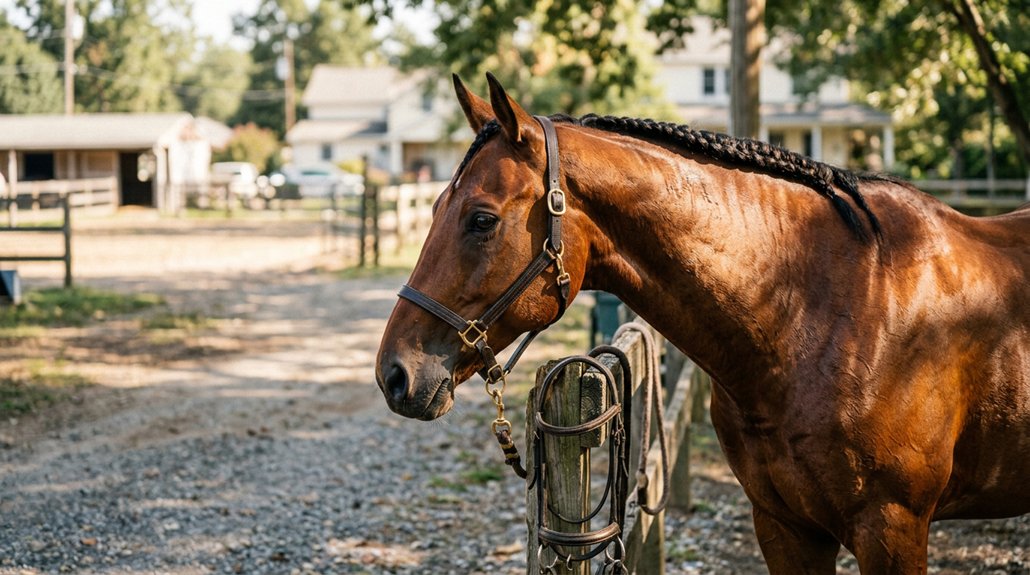
If you’ve ever dreamed of owning a horse but don’t have land, don’t worry—it’s entirely feasible. Horse ownership without your own land involves exploring land alternatives like boarding facilities. These facilities handle essential tasks such as grazing, feeding, and exercising your horse. Whether you choose full or self-care services, understanding these offerings is crucial. Places like Shining Spur Stables or Horseshoe R Arena in the Lawton area provide a range of services tailored to meet diverse horse care needs. A smart step is to factor in financial responsibilities, considering ongoing boarding fees and other care expenses. Alternatively, leasing a horse offers a taste of ownership, helping you evaluate your commitment without the full financial burden initially.
Exploring Horse Boarding as a Land-Free Option
When you’re contemplating horse ownership without owning land, how can horse boarding offer a feasible solution? Horse boarding facilities enable you to own a horse without needing personal land, providing essential boarding services such as feeding, grazing, and daily horse management. Here’s what to reflect on:
Horse boarding lets you relish horse ownership without needing land, ensuring care and management for your equine companion.
- Service Levels: Choose between full-service options, where everything is managed for you, and self-care, which requires more personal involvement.
- Local Options: Facilities like Shining Spur Stables provide amenities like riding arenas and training lessons, ensuring a thorough experience for both horse and owner.
- Research & Recommendations: Quality varies, so detailed research and personal recommendations are critical for finding local facilities that meet your needs and guarantee your horse’s well-being.
This way, you can enjoy horse ownership minus the land ownership.
Evaluating Leasing Methods Before Full Commitment
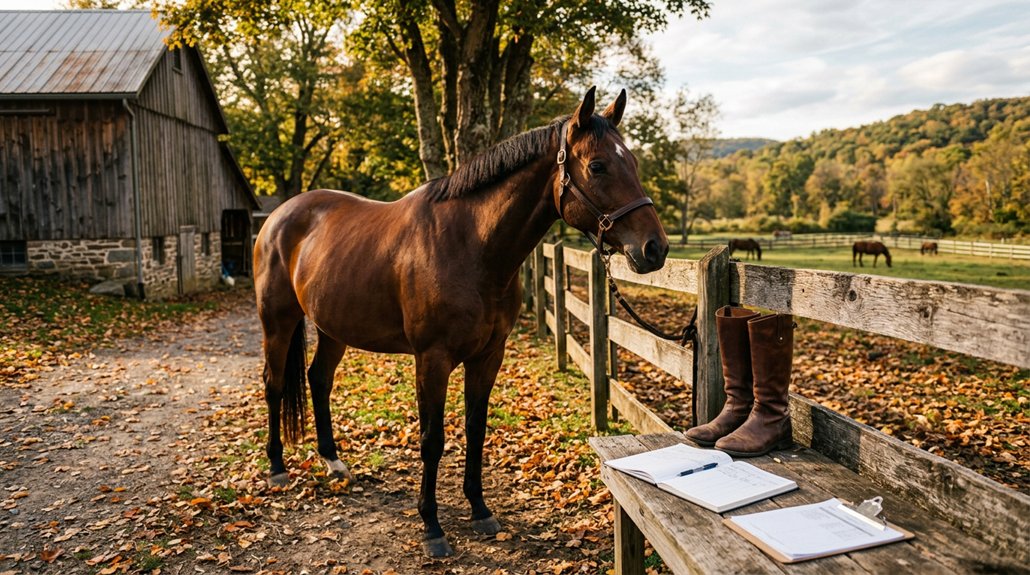
Before diving into the extensive commitment of horse ownership, evaluating leasing methods can provide a rewarding and insightful experience that alleviates some pressure. Leasing options—ranging from partial to full—allow you to explore horse suitability tailored to your preferences and lifestyle. A partial lease offers specific riding sessions ideal for determining compatibility and experience, without full ownership’s burdens. Full leases, in contrast, encompass all care responsibilities like feeding and vet visits, offering a profound glimpse into what’s involved daily. This practical pathway highlights whether you’re truly ready for ownership and provides an avenue to try various horse characteristics—be it gender, breed, or temperament. Additionally, leasing reduces financial risk while presenting shared responsibilities to enhance your overall horse experience.
What Are the Costs of Horse Ownership?
Venturing into horse ownership carries considerable financial commitments that extend beyond the initial acquisition. The initial costs can start at around $5,000, influenced by factors like the horse’s quality, breed, and training. However, owning a horse isn’t just about the purchase. Ongoing expenses can accumulate quickly:
Horse ownership involves significant financial commitments beyond the initial purchase, including ongoing maintenance and healthcare expenses.
- Essential Needs: You’ll need to take into account boarding fees, which vary based on care level, along with feed, supplements, and bedding costs.
- Healthcare: Regular veterinary care, dental checks, and necessary insurance are critical; unexpected health issues can add unforeseen costs.
- Maintenance: Horses require consistent farrier visits for hoof care, profoundly impacting your annual budget depending on your horse’s needs.
Proper financial planning guarantees you’re prepared for these enduring responsibilities.
Finding the Best Boarding Facility for Your Horse
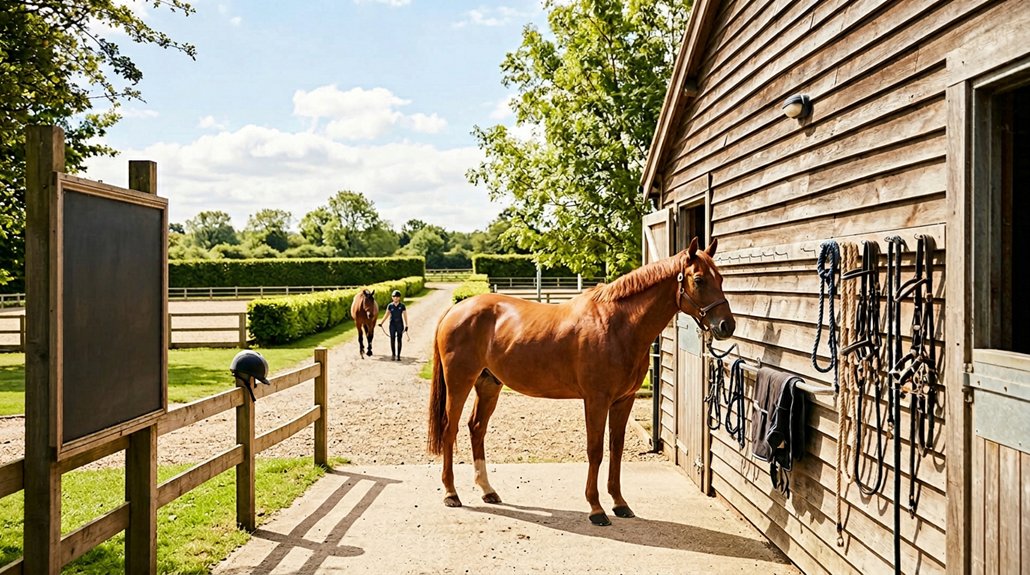
How do you guarantee the boarding facility you choose meets both your horse’s needs and your budget? Start by researching local boarding facilities, focusing on boarding facility types that fit your lifestyle and budget. Visit these places to inspect care options, turnout environments, and amenities. Consider recommendations from fellow horse owners as they can divulge firsthand experiences. Here’s a look at common care packages you’ll encounter:
| Facility Type | Care Options |
|---|---|
| Full Care | Feeding, exercising |
| Partial Care | Some owner involvement |
| Self-Care | Owner provides care |
| Pasture Boarding | Basic shelter only |
Costs can differ dramatically, so clearly understand each package’s inclusions. Comparing various services guarantees your choice aligns perfectly with your financial and equestrian expectations.
Ensuring Your Horse’s Well-Being in Non-Land Settings
When ensuring your horse’s well-being without owning land, it’s imperative to select a quality boarding facility that prioritizes abundant daily turnout, as ample pasture time is essential for their physical and mental health. You’re committing daily to your horse’s care, which includes staying vigilant about their nutrition and hydration since even minor lapses can affect their overall well-being. Opt for facilities that support a healthy diet through readily available forage and clean water, supplemented with high-quality hay when pasture access is limited, ensuring your horse remains robust and content in a non-land setting.
Quality Boarding Facilities
When selecting a facility, keep these priorities in mind:
- Guarantee ample turnout time, ideally 24/7 access to pasture, for your horse’s mental and physical health.
- Research local options like Shining Spur Stables and Horseshoe R Arena to find services that suit your needs.
- Personal visits and recommendations are invaluable for evaluating care quality and facility environment.
Your horse deserves the best, no matter where they reside.
Daily Care Commitment
While quality boarding facilities offer a secure environment, your role in daily care remains indispensable to guarantee your horse stays happy and healthy. Conduct regular visits for feeding, grooming, and mucking out stalls—an essential part of daily commitment. Craft consistent exercise routines to compensate for limited turnout, as they’re important for physical and mental stimulation. Daily interaction guarantees your horse’s mental well-being, promoting a stable, joyful demeanor. Plan veterinary and farrier care, essential for maintaining hoof and overall health. Remember, this endeavor can span two decades, demanding unwavering dedication. A proactive approach to scheduling, combined with attentiveness, guarantees that your horse thrives, even without land.
| Task | Frequency | Importance |
|---|---|---|
| Feeding | Twice daily | Nutritional balance |
| Grooming | Daily | Health and hygiene |
| Stall cleaning | Daily | Sanitation |
| Exercise routines | Daily | Physical fitness |
| Veterinary care | Scheduled visits | Health maintenance |
Nutrition and Hydration Needs
Even in the absence of expansive land, meeting your horse’s nutrition and hydration requirements remains a cornerstone of their well-being. Smart feeding strategies are essential, especially when pasture grazing isn’t an option. Provide high-quality hay to guarantee they receive adequate fiber and protein. Use hay nets to simulate natural foraging. To address water needs, consider robust hydration solutions:
- Constant Water Access: Ascertain fresh water is always available, with horses needing up to 20 gallons daily in hot weather.
- Watering Systems: Implement reliable systems in boarding scenarios to prevent dehydration.
- Supplementing Diet: Use vitamins like Vitamin E to make up for nutritional deficiencies.
Frequently Asked Questions
Can I Own a Horse With No Land?
You can own a horse without land by exploring boarding options that suit your needs. Horse leasing is also worth considering, offering a chance to gauge commitment levels. Remember to factor in costs for boarding, vet care, and equipment.
Do Horses Cost $100,000?
Yes, horses can indeed cost $100,000, especially if you’re considering top-tier breeds or competitive show horses. Remember, horse ownership costs extend beyond initial price, with significant equine care expenses adding to the lifetime financial commitment.
What Is “I Love You” in Horse?
In equine communication, “I love you” is demonstrated through gentle 19th-century-style courtship behaviors: a horse’s nuzzle, soft eyes, or groom-like nibbles. These heartwarming interactions reveal deep affection, proving there’s more than meets the horse’s gaze.
Can You Ride a Horse With Epilepsy?
Yes, you can ride a horse with epilepsy, but focus on horse care and riding safety. Consult a vet for guidance, recognize seizure signs, use proper training methods, understand equine behavior, and manage seizures responsibly.
Conclusion
Owning a horse without land is like steering a ship through vast, uncharted waters—it requires careful navigation and thoughtful planning. Embrace the boarding option or explore leasing methods to test these waters before diving in. Consider the costs, find a boarding facility that feels like a second home, and prioritize your horse’s well-being. With the right guidance and preparation, you can savor the equestrian journey without tethering yourself to expansive pastures.