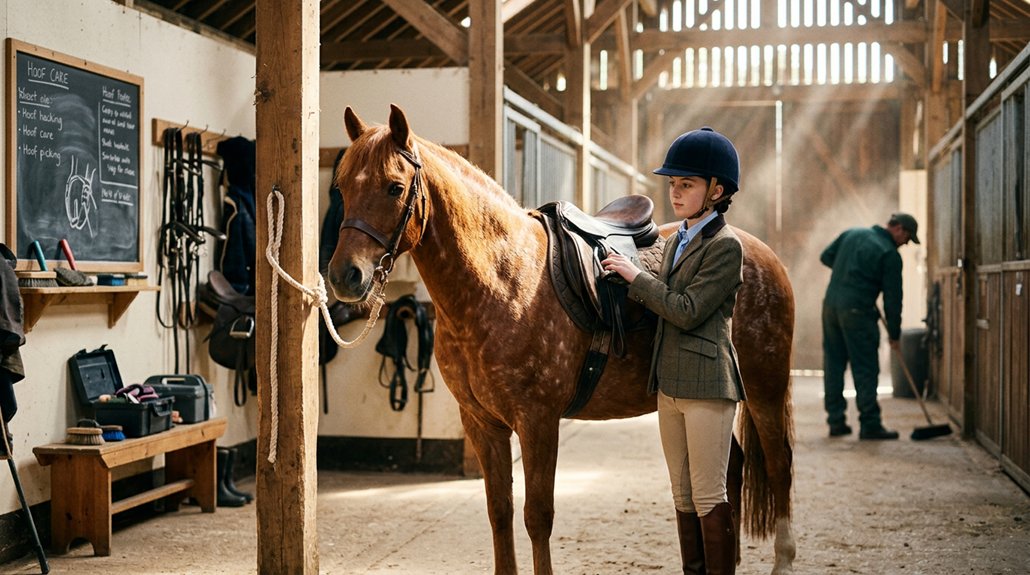
Before buying your first horse, assess your riding skills and define your goals, whether for leisure, competition, or companionship. Consider the extensive financial commitment beyond just the purchase price, and make certain you’re ready for the daily care tasks like feeding and grooming. Engaging with the equestrian community and considering horse leasing first can provide valuable insights. It’s essential to select a horse that matches your riding style and temperament. There’s plenty more to explore on this journey.
Key Takeaways
- Evaluate your riding skills and consider leasing a horse for trial experience before purchasing.
- Understand the long-term financial and time commitments involved in horse ownership.
- Define your riding goals and ensure they align with the horse’s temperament and training.
- Conduct thorough veterinary checks to assess potential health issues before purchasing a horse.
- Engage with experienced professionals and the equestrian community for valuable insights and support.
Quick Start Guide to Horse Buying
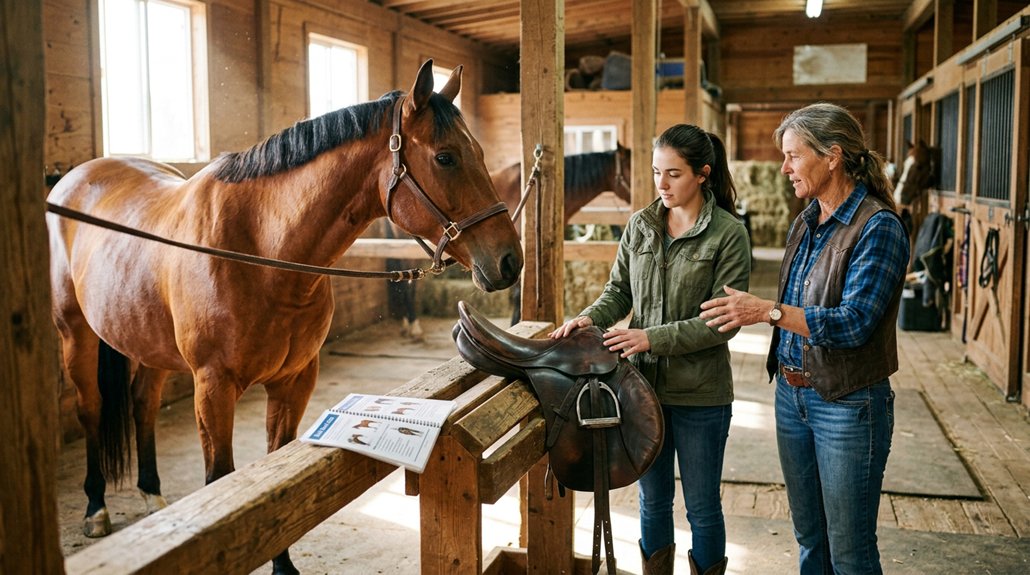
Starting on the journey to buy your first horse can be thrilling yet intimidating, but with a step-by-step approach, you’ll navigate it with confidence. Begin by evaluating your riding skill level. Consider horse leasing before purchasing—it’s a great way to gain experience and measure your commitment. Engage with the equestrian community for valuable insights and support. Understanding the financial commitment is essential; horse ownership involves costs beyond the initial purchase, such as feed and veterinary care. Conduct thorough veterinary checks, including a pre-purchase exam, to uncover potential health issues. Compatibility is key; match your horse’s temperament and training with your skill and goals. Don’t hesitate to connect with trainers and veterinarians for guidance to guarantee informed, responsible decisions.
Defining Your Horse Ownership Goals and Motivations
As you initiate your horse ownership journey, make sure to clearly identify your riding goals, whether they’re geared towards leisurely weekend rides, competitive events, or therapeutic use, as this clarity will guide your choices in selecting and training your horse. Assess your daily commitment and readiness for the responsibility, ensuring you’re prepared for the significant time and financial investment required to care for your equine companion. Finally, explore and understand the emotional and financial aspects of horse ownership, recognizing that joy and fulfillment often accompany this journey, while also considering the resources needed to support both you and your horse.
Understanding Personal Riding Goals
Have you ever paused to ponder what truly drives your passion for horse ownership? Understanding your personal riding goals is essential to a fulfilling equestrian journey. Whether it’s leisure riding through serene landscapes or invigorating competition focus in various equestrian disciplines, aligning your goals with your personal motivations is key. Here’s a helpful way to start:
- Identify your primary focus: Is it trail riding, competing, or simply enjoying riding adventures?
- Analyze your companionship needs: Are you seeking a bond with a horse as your gentle pace partner?
- Set specific goals: Do you aim to excel in a particular equestrian discipline or enjoy varied activities?
- Reflect on personal motivations: Determine why those goals resonate with you to guarantee the best horse match.
Assessing Daily Commitment Needs
When considering horse ownership, it’s crucial to evaluate how your daily schedule can accommodate the demanding needs of caring for a horse. You’ll need to establish a consistent routine for feeding, grooming, exercising, and checking on your horse’s well-being. Recognize the long-term commitment you’re making, as horses can live for decades. Here’s a quick checklist to guide you:
| Tasks | Frequency | Time Commitment |
|---|---|---|
| Feeding | Daily | 30 minutes |
| Grooming | Daily | 30 minutes |
| Exercise | Several times a week | 1 hour |
| Health Check | Weekly | 15 minutes |
Identifying your motivations—be it leisure, competition, or companionship—will determine the care requirements. Establish connections with a supportive network to help handle the emotional and physical demands.
Exploring Financial Responsibilities
Caring for a horse involves considerable time and effort, and it’s equally important to understand the financial implications involved. Don’t let the initial purchase fool you; it’s often the smallest part of horse ownership costs. Recognize these ongoing expenses:
- Boarding Costs: Depending on your location, monthly expenses can vary considerably. Pasture board might cost $200-$600, while full-care boarding ranges from $500-$2,500.
- Training Fees: Regular training helps in maintaining your horse’s health and behavior, adding to your budget.
- Veterinary Care: Allocate funds for regular check-ups, vaccinations, and unexpected costs related to emergencies.
- Insurance: It’s wise to include insurance to protect against unforeseen events and mitigate potentially hefty bills.
Plan wisely to balance enjoyment with responsibilities and long-term commitments.
Assessing Your Riding Skills and Readiness for Horse Ownership
Although starting on horse ownership is exciting, it’s essential to accurately assess your riding skills and overall readiness to guarantee a successful experience. Begin with honest ride evaluations to understand your current level. If you’re still progressing, consider leasing a horse first; it’s a great way to build competence and confidence. Engaging a professional trainer is invaluable—they’ll provide insights into your readiness and help with skill progression. Improve by participating in regular riding activities, like group trail rides, to boost confidence. Practical experience is key, so get hands-on by volunteering at a barn to learn about horse care routines. Be sure you grasp safety protocols and prepare for riding challenges, as there’s more to ownership than simply having fun.
Budgeting: Financial Commitments of Horse Ownership
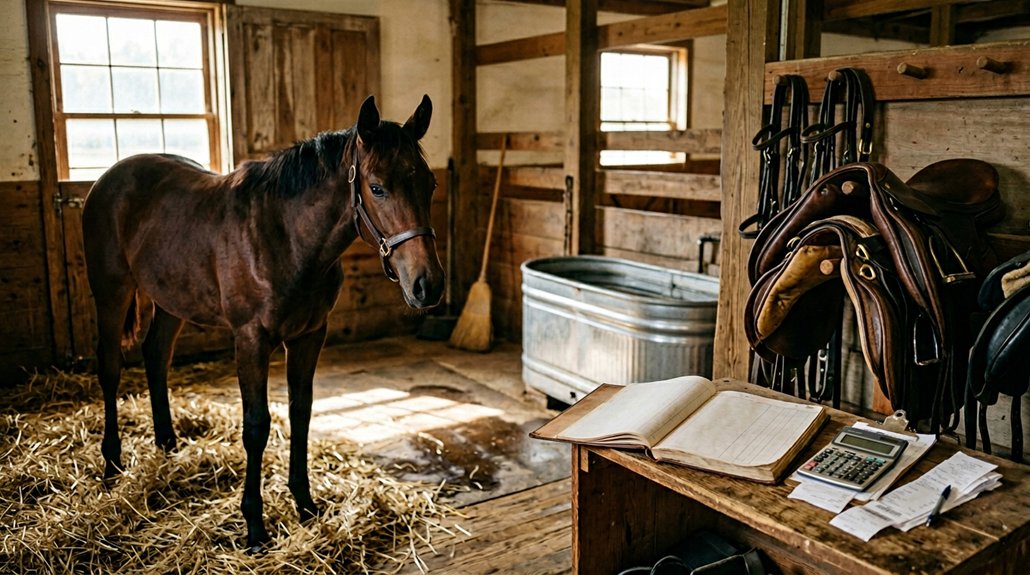
Initiating horse ownership involves more than just the excitement of acquiring a new companion; it’s crucial to reflect on the financial commitments that come with it. The initial purchase price is only a fraction of the total expense. Here’s a list of what to contemplate:
- Upfront Costs: Beyond buying the horse, you’ll need to budget at least $1,000 for basic tack and equipment.
- Boarding: Monthly boarding ranges from $200 to $2,500, based on location and care type, whether pasture or full-care.
- Ongoing Expenses: Allocate funds for continuous medical care, regular vet visits, and unforeseen emergencies.
- Insurance: Consider coverage to protect against financial losses due to health issues or accidents.
Budgeting properly guarantees you’re prepared for the joys and responsibilities of horse ownership.
Guaranteeing Adequate Horse Care
While establishing a sustainable budget for owning a horse is important, guaranteeing your horse receives the highest standard of care is equally significant. Your responsibility involves consistent health monitoring, which includes recognizing distress signs and addressing health issues promptly. Adopt effective grooming techniques, such as regular brushing and hoof care, to keep your horse in peak condition. It’s essential to understand your horse’s nutritional needs and establish a feeding routine that supports its health and wellbeing. Don’t forget about regular veterinary care—vaccinations and dental checks are non-negotiable. Quality stable management is critical; secure safe fencing, proper shelter, and access to ample exercise areas. A reliable routine for manure management and stall cleaning will protect against health risks.
Select the Perfect Horse Match
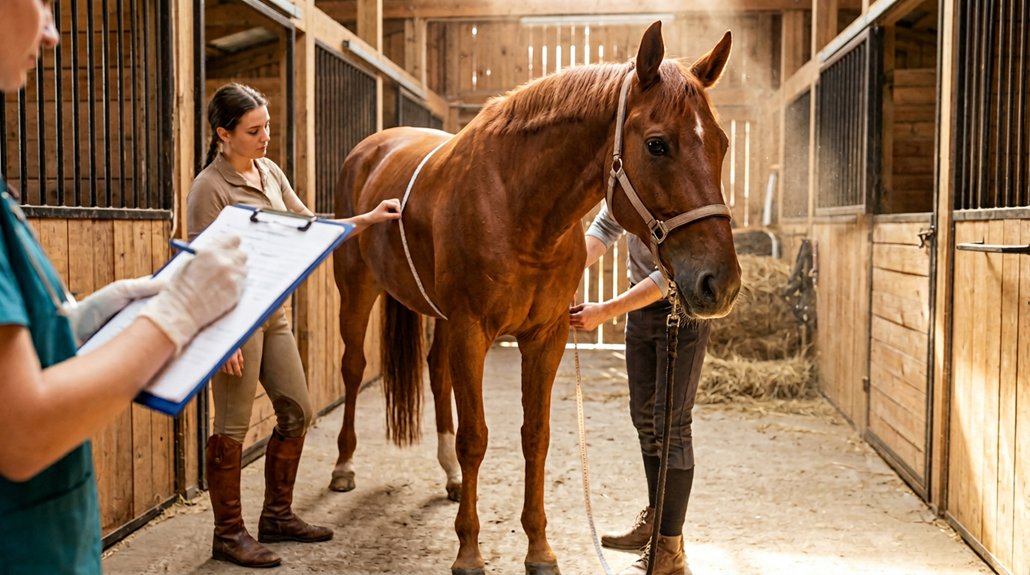
Starting on the journey to select the perfect horse match involves a blend of practical assessment and personal intuition. Understanding horse temperament and age assessment is essential to making the right choice. Here are important steps to guide you:
- Temperament: Identify a calm horse temperament that fits your personality and riding goals, especially if you’re a beginner.
- Age Assessment: Consider if a younger, less trained horse aligns with your commitment or if an older horse with established skills fits better.
- Health Evaluation: Conduct a pre-purchase veterinary exam to spot lameness or health concerns that might hinder performance.
- Test-Riding: Visit and ride your potential horse to observe responsiveness and interaction, ensuring a good fit with your style and experience.
Frequently Asked Questions
What Is the 1/2/3 Rule for Horses?
The 1/2/3 rule is about horse care, balancing riding basics with essential activities. It suggests 1 hour of riding, 2 hours of groundwork, and 3 hours of social interaction daily for a well-rounded and healthy horse.
What to Know When Buying a Horse for the First Time?
When buying your first horse, prioritize breed selection fitting your riding preferences. Plan a budget for ownership, including shelter and insurance. Conduct health inspections and assess training. Stay supportive; horses demand commitment and lifetime care.
What Is “I Love You” in Horse?
“I love you” in horse translates through equine communication; 70% of a horse’s messages are via body language. Observe their behavior—nuzzling, soft eyes, and gentle nudges are their heartfelt expressions of affection and connection.
What Is the 20% Rule for Horses?
The 20% Rule guarantees you don’t overspend on horse ownership. Keep equine care costs within 20% of your monthly income. This helps sustain financial health, covering emergencies and maintaining a happy, healthy horse-life balance.
Conclusion
Starting on horse ownership is both rewarding and demanding. Imagine Sarah, a passionate rider who took the plunge. She defined her goals, assessed her skills, budgeted carefully, and guaranteed proper care. By weighing these aspects thoughtfully, Sarah found her perfect equine companion. Like Sarah, if you approach this journey with preparation and dedication, you’ll enjoy a fulfilling bond with your horse. Remember, it’s about building a partnership that enriches your life and theirs.