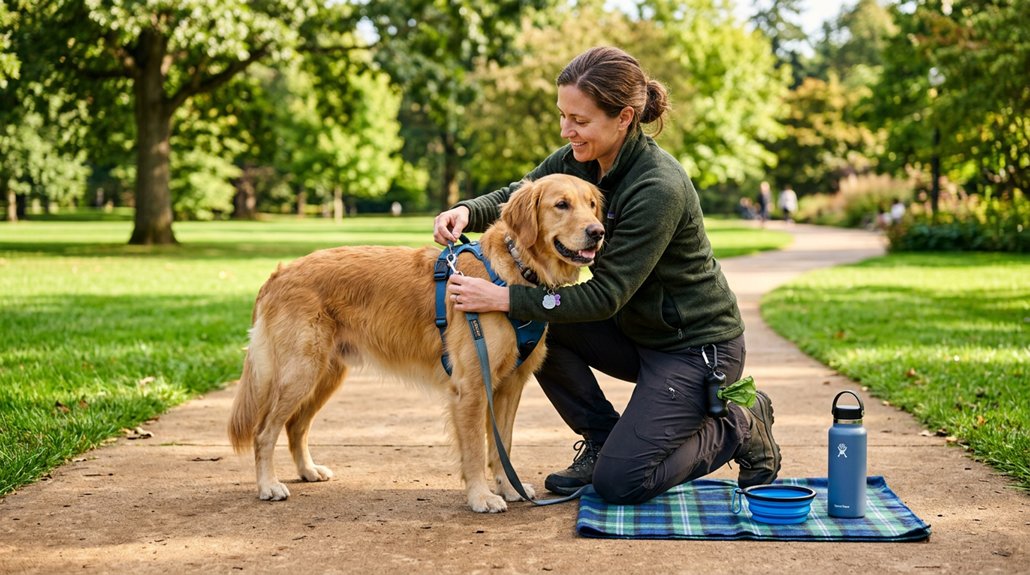
You’re a responsible dog owner when you prioritize your dog’s health through regular vet visits, a balanced diet, and ample exercise. Ensuring a safe environment with puppy-proofing and updated identification is key. Invest in training and enrichment to boost discipline and cognitive growth. Daily bonding through interactive play and grooming strengthens your emotional connection. Respect boundaries and provide emotional stability for a happier, healthier dog. Discover more ways to deepen your commitment to your furry friend.
Key Takeaways
- Ensure regular vet visits for early detection and management of health issues.
- Maintain a balanced diet tailored to your dog’s age, breed, and health needs.
- Provide daily exercise aligned with your dog’s energy levels and age.
- Implement effective parasite control measures for protection against fleas, ticks, and heartworm.
- Engage in ongoing training and socialization to foster positive behavior and mental stimulation.
Ensure Your Dog’s Health and Well-Being
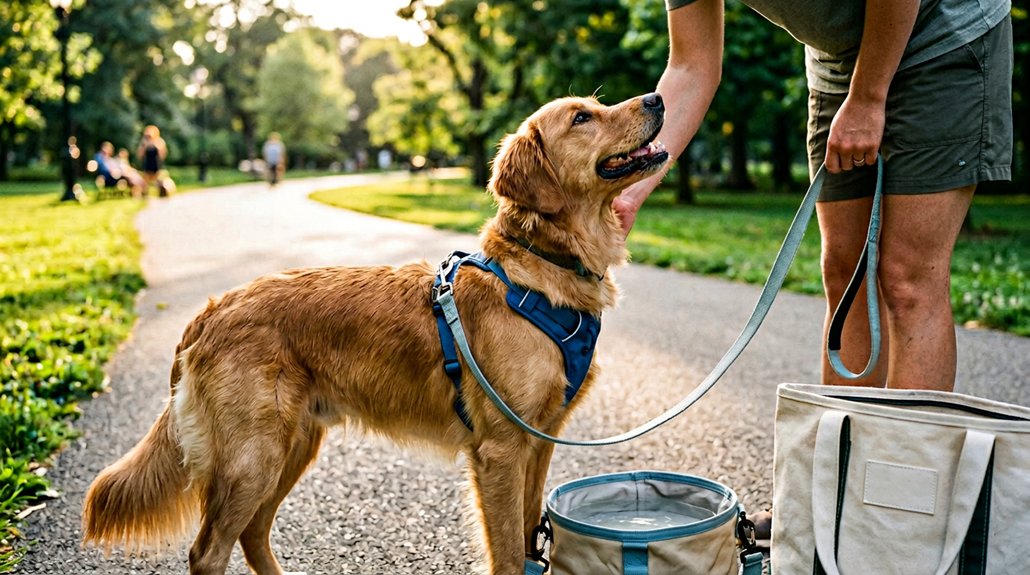
Guaranteeing your dog’s health and well-being hinges on a thorough approach to their care. Responsible owners prioritize regular vet visits, allowing veterinarians to detect emerging health issues early. This proactive surveillance maintains your dog’s wellness. A balanced nutrition plan is equally critical; it should be customized based on your dog’s age, breed, and specific health conditions to guarantee ideal growth and prevent diet-related ailments. Integrating exercise into daily routines aligned with your dog’s energy levels and age fosters robust physical and mental health. Consistent grooming practices like brushing, nail trimming, and dental care prevent hygiene-derived complications. Effective parasite control measures are essential, safeguarding your dog against fleas, ticks, and heartworm with preventative treatments. Consider these strategies as foundational to your dog’s overall health.
Create a Safe and Secure Environment
Creating a safe and secure environment for your dog requires meticulous planning and execution. Prioritize puppy proofing essentials by removing or securing hazards such as electrical cords, toxic plants, and small objects. Establish a designated, puppy-proofed area to allow safe exploration, thereby mitigating risks of injury or ingestion of harmful items. When managing secure outdoor spaces, reinforcing fences and gates is paramount to prevent escapes, enhancing your dog’s safety during play. Confirm identification tags and microchips are current, optimizing the probability of reunion if your dog goes missing. Additionally, provide safe resting spaces with comfortable bedding in quiet areas, facilitating a stress-free atmosphere. This prudent approach promotes your dog’s physical safety and emotional well-being, aligning with responsible pet ownership standards.
Invest in Ongoing Training and Enrichment
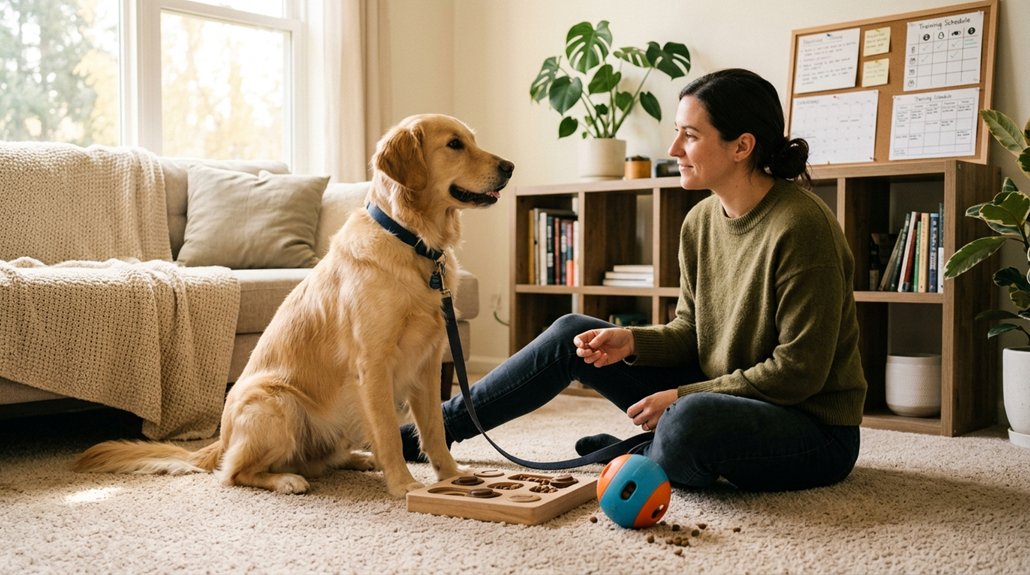
As you establish a secure environment for your dog, it’s also important to focus on investing in ongoing training and enrichment. Enroll your dog in obedience classes to enhance discipline and responsiveness by consistently reinforcing commands. Utilize mental stimulation through interactive toys to prevent boredom while fostering cognitive development. Incorporate agility training to nurture physical and mental growth, ensuring a well-rounded canine companion. Additionally, regular workshops and socialization opportunities help prevent behavioral issues by keeping your dog engaged, adaptive, and confident.
| Activity | Benefit | Frequency |
|---|---|---|
| Obedience classes | Improved discipline | Weekly |
| Interactive toys | Cognitive development | Daily |
| Agility training | Physical and mental growth | Bi-weekly |
| Socialization | Confidence and adaptability | Regular playdates/workshops |
Engage and Bond With Your Dog Daily
Engage actively with your dog each day to foster a strong bond that underpins their overall health and happiness. Playtime activities are important, providing mental stimulation and physical exercise necessary for well-being. Opt for interactive games that cater to your dog’s breed instincts, enhancing the bonding process. Additionally, varied walking routes offer not just physical exercise, but also new stimuli, critical for cognitive development and socialization skills. These walks encourage communication and build trust as you navigate different environments together. Incorporate daily grooming routines, such as brushing and dental care, which serve dual purposes: reducing anxiety levels and enhancing comfort. Training sessions are fundamental too, establishing command hierarchy and promoting positive behaviors, bolstering both relationship dynamics and your dog’s compliance.
Offer Emotional Support and Stability
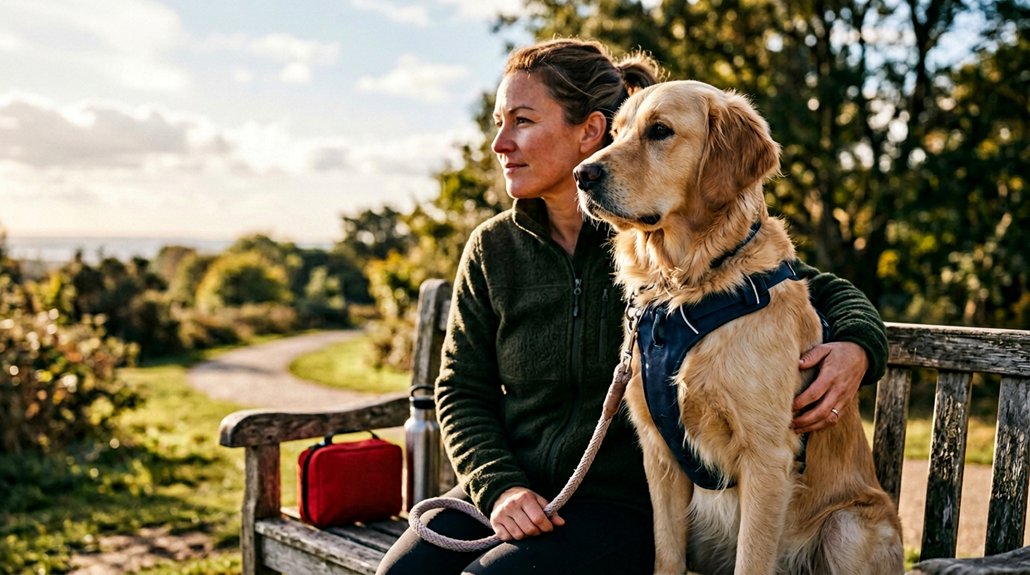
Although many people underestimate the emotional acuity of dogs, these animals possess a remarkable ability to sense and respond to their owners’ emotions, serving as natural emotional support beings. Offering emotional support and stability enhances the instinctive connection and emotional awareness between you and your dog. Here are three ways to guarantee this:
- Engage in prolonged eye contact: This simple act deepens trust and emotional connection.
- Respect physical boundaries: When your dog leans against you, it’s their expression of affection and desire for security.
- Create a nurturing environment: A safe, loving space promotes their emotional well-being and stability.
Engagement in regular activities, like play and snuggling, not only satisfies your dog’s emotional health but fortifies the human-canine bond.
Frequently Asked Questions
What Is the 7 7 7 Rule for Dogs?
The 7-7-7 rule for dogs involves initial socialization in the first seven weeks, essential for positive dog behavior. Follow with seven months of consistent training techniques. Commit to seven years of health management and continued socialization.
How Do You Know if You’re a Good Dog Owner?
You’re a good dog owner if you’re knowledgeable about positive reinforcement, commit to daily exercise, guarantee a balanced diet, and schedule regular grooming. Evidence shows consistent routines and care markedly enhance your dog’s physical and mental health.
Do Dogs Forgive You for Yelling at Them?
Yes, dogs often forgive you for yelling, but your responsibility as an owner is to focus on positive communication and training techniques. Consistent trust-building and recognizing their emotional response leads to healthier dog behavior and relationship.
What Is “I Love You” in Dog Language?
In dog language, “I love you” is expressed through behaviors like tail wagging, eye contact, and leaning. These actions reflect intrinsic dog communication and canine emotions, illustrating their trust and emotional closeness with you.
Conclusion
In the tapestry of pet ownership, being a responsible dog owner means weaving together health, safety, training, bonding, and emotional stability. Prioritize vaccinations and vet visits to keep your dog fit as a fiddle. Create a danger-free environment where your pet feels secure. Consistent training refines behavior, while daily interactions strengthen the bond. Finally, offer emotional support, acting as a steadfast anchor in your dog’s life. Together, these elements cultivate a harmonious and nurturing relationship.