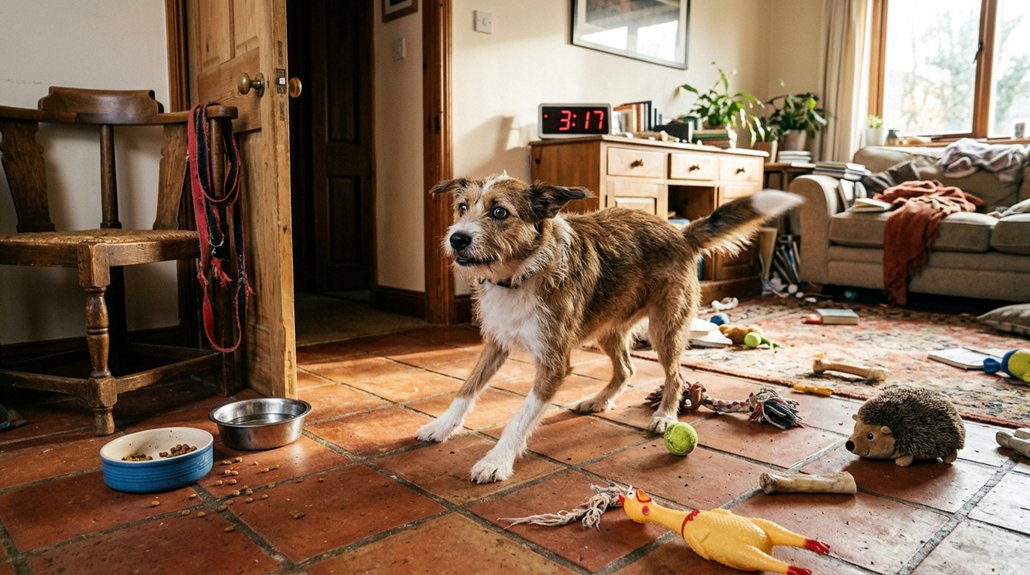
Without a routine, your dog may experience heightened anxiety and display destructive behaviors like excessive chewing and barking. Such instability can lead to digestive problems, hinder potty training, and complicate your dog’s impulse control. A predictable schedule is essential for their emotional well-being and effective training. Establishing regular routines fosters stability, trust, and a focused learning environment. By embracing structured habits, you’ll help your dog thrive. Discover how to create a supportive and predictable environment for your pet.
Key Takeaways
- Inconsistent routines lead to increased anxiety and erratic behaviors such as incessant whining and pacing.
- A lack of structure can result in destructive behaviors like chewing due to unmanaged stress.
- Excessive barking and hyperactivity often arise when dogs are overstimulated and lack a daily routine.
- Irregular meal times may cause digestive issues and hinder potty training progress.
- Dogs without routine struggle with impulse control, complicating training and behavior management efforts.
Why Routines Are Essential for Dogs
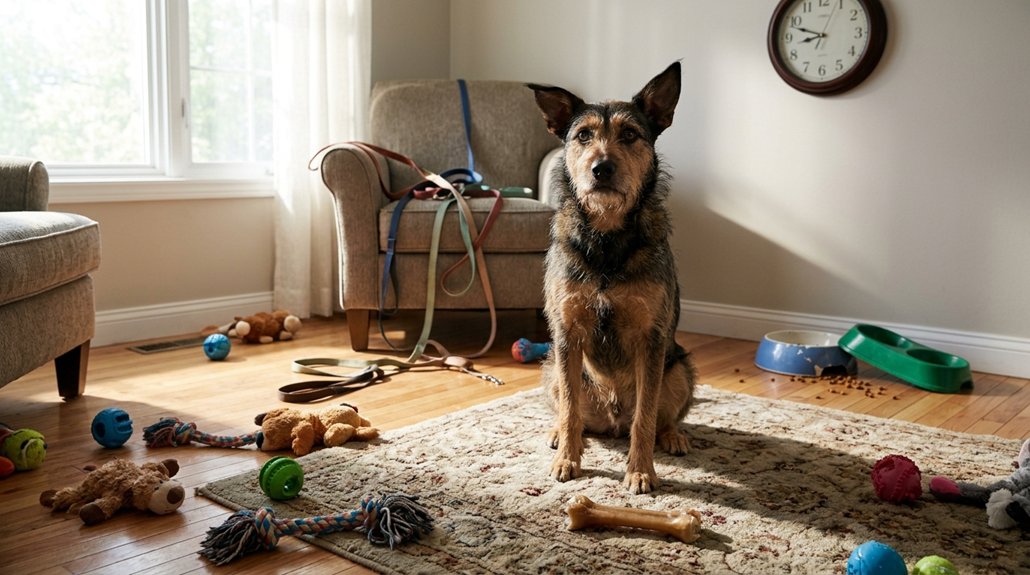
A predictable daily routine is essential for a dog’s emotional and physical well-being. When your dog knows what to expect, it reduces anxiety and supports positive reinforcement of learned behaviors. Consistent schedules help bolster their sleep quality, ensuring they’re well-rested and less prone to stress-induced whimpering or restless pacing. A set routine assists in synchronizing their digestive systems, preventing the discomfort of erratic eating patterns and promoting stable appetite. The regularity of feeding times and walk schedules eliminates overstimulation and boredom that could otherwise manifest as excessive barking or hyperactivity. By establishing and maintaining a structured lifestyle, your dog will feel secure, and their environment will become a cornerstone for stability, allowing positive outcomes in both behavior and emotional health.
Spotting Routine-Lacking Dog Behaviors
While a routine creates stability and security for your dog, the absence of one can lead to observable and concerning behaviors. You might notice behavioral indicators such as erratic pacing, incessant whining, and destructive tendencies like chewing. Elevated anxiety symptoms often manifest without a structured schedule, causing episodes of excessive barking or heightened hyperactivity. Inconsistent meal times can result in digestive upheaval or regression in potty training, especially affecting puppies and senior dogs. Training becomes problematic as well; without routine, your dog might respond unpredictably to cues, complicating your interactions and attempts at teaching. Additionally, impulse control struggles are common, leading to broader behavioral problems. Recognizing these signs is essential to address underlying issues tied to a lack of routine.
Taming Excessive Barking and Chewing
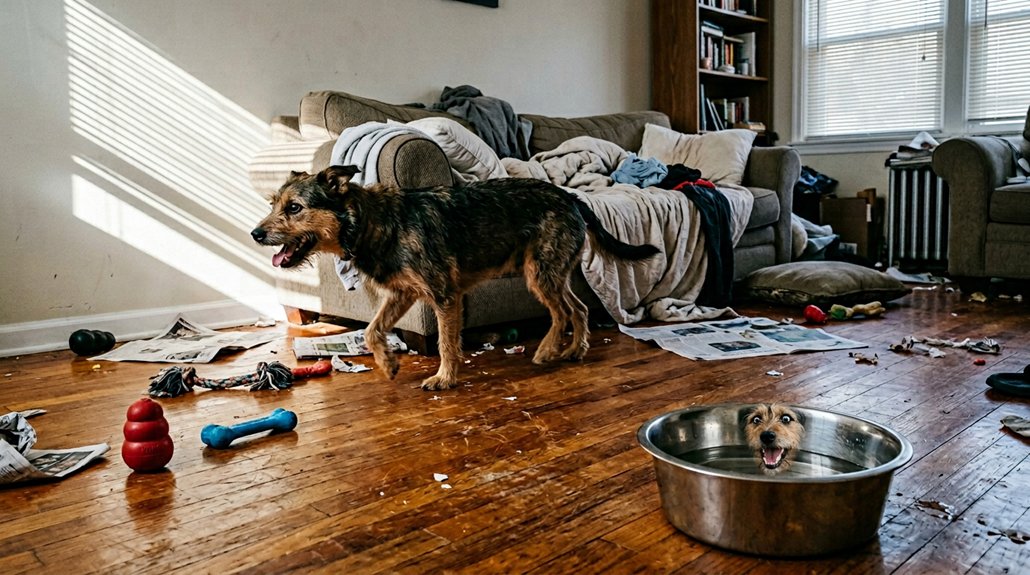
Recognizing that excessive barking and chewing often stem from underlying anxiety, a consistent routine becomes indispensable in curbing these behaviors. Dogs crave predictability; erratic schedules introduce confusion, resulting in maladaptive responses like barking. Identifying barking triggers—such as mail delivery times or visitors—enables preemptive adaptation of their environment to soothe anxiety. Similarly, offering structured chewing alternatives like durable toys mitigates boredom-driven furniture destruction.
Establishing fixed times for meals, walks, and play not only reduces stress but enhances a sense of security. Inconsistent reinforcement muddles training efficacy, further intensifying unwanted behaviors. A planned schedule is your tool to alleviate your dog’s stress and regulate their actions.
| Routine Element | Impact on Behavior |
|---|---|
| Meal Times | Decreases anxiety |
| Walks | Reduces barking triggers |
| Play Sessions | Provides chewing alternatives |
| Sleep Schedule | Enhances security |
Boost Training With Routine Consistency
Establishing a routine characterized by consistency is paramount to enhancing your dog’s training efficacy. By implementing a structured regimen, you create a predictable environment that solidifies training effectiveness through behavior reinforcement. Routine consistency guides your dog in comprehending expectations, promoting the development of desirable habits. Regular reinforcement of commands within these structured sessions guarantees your dog efficiently links specific actions to consequences, thereby optimizing your training productivity. Furthermore, the repetitive nature of such routines bolsters trust, as your dog begins to perceive you as a reliable figure, which reinforces your bond and establishes a tranquil learning atmosphere. Dogs accustomed to robust routines exhibit superior impulse control and improved focus, paving the way for substantial behavior stability and overall responsiveness.
Calm Anxious Dogs With Predictable Schedules
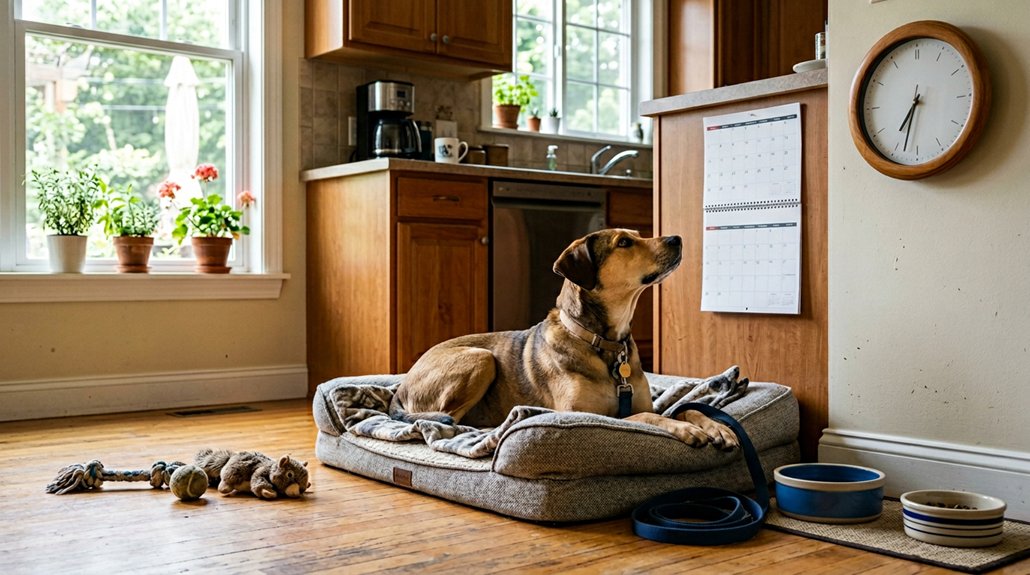
When managing your dog’s anxiety, adopting predictable schedules can be incredibly beneficial in mitigating stress. Predictable playtime and scheduled training create a secure environment for your pet, reducing stress-induced behaviors like barking or pacing. Consistent routines instill a sense of stability, which is essential for dogs with natural anxiety or those from unstable backgrounds. By aligning activities such as mealtimes and walks, you help regulate their circadian rhythms, enhancing both behavior and overall well-being.
Dogs flourish under structured schedules, as they foster confidence and familiarity with their surroundings. Having clear expectations allows your dog to acclimate better to changes or new situations. Implementing a predictable routine isn’t just about maintaining order; it’s about nurturing a peaceful, balanced life for your furry companion.
Routines for Better Digestion and Weight Control
While maintaining a sense of routine can seem trivial, it plays a crucial role in your dog’s digestive health and weight management. Scheduling consistent feeding times regulates their digestive system, minimizing the risk of bloating and constipation. Overeating is curtailed by structured meals, important in thwarting obesity and its accompanying health complications, such as joint issues and heart disease. Furthermore, coupling regular meals with exercise routines guarantees ideal weight management, promoting overall well-being. Maintaining a stable feeding schedule also alleviates stress-induced digestive issues that arise from erratic lifestyles. Predictable meal times lead to regular bowel movements, enhancing potty training effectiveness and reducing accidents indoors. Implementing these practices can profoundly impact your dog’s longevity and quality of life.
Strengthen Bonds With Routine
By establishing consistent daily activities such as walks, training, and playtime, you’re providing your dog with a reliable environment that enhances trust and emotional bonding. Predictable routines foster security and allow your dog to anticipate interactions, leading to a stronger, more cohesive relationship. Additionally, engaging in these structured moments reduces distractions, encouraging better communication and understanding between you and your pet.
Consistent Activities Foster Trust
Establishing a consistent routine is essential for nurturing trust between you and your dog, as it offers stability that enables a stronger bond. Trust building relies on predictable, consistent interactions that foster a secure environment. When you engage in regular activities like daily walks or play sessions, you’re reinforcing your dog’s trust and instilling confidence. These routines meet their physiological and emotional needs, cultivating a sense of safety and anticipation. A dog aware of its predictable environment is likely to be more resilient and adaptable in unforeseen circumstances, enhancing overall emotional stability. By partaking in shared, positive experiences, you help your dog develop a deeper attachment and guarantee they view you as a reliable, attentive companion dedicated to their wellbeing.
Enhance Bonding Through Routine
Predictability in daily interactions is a cornerstone for fostering a secure canine relationship, setting the stage for profound emotional engagement. By establishing a consistent routine, you provide your dog with regular bonding activities like walks and playtime, essential for developing trust and a deep emotional connection. Consistency allows you to focus on your pet rather than distractions, reinforcing that bond with undivided attention. Scheduled feeding, training, and play guarantee your dog feels valued and secure, promoting their emotional and social well-being. Additionally, a predictable routine benefits overall stress management, improving shared experiences. Personalizing these activities enriches the time you spend together, making each moment both fulfilling and meaningful, and solidifying the foundational relationship you share with your dog.
Actionable Tips for Dog-Friendly Routines
To guarantee a harmonious routine for your dog, gradually implement changes in their daily schedule to help them adjust without stress. Invest in tailored activities like interactive play and puzzle toys, which cater to both their physical and cognitive needs. Consistency is key, but remain adaptable to evolving circumstances, as this agility will assure your dog remains secure and confident in any environment.
Gradual Routine Changes
When your dog faces the challenge of adapting to routine changes, it is crucial to proceed gradually to mitigate stress and enhance the adaptation process. Adjustment strategies involve slowly introducing changes over a 2-4 week period. Focus on one routine aspect, such as food or exercise, ensuring gradual progression and consistency in training sessions. This meticulous approach enriches routine benefits by reinforcing learned behaviors and enhancing stability. Incorporate enjoyable elements, like toys, for added engagement and comfort.
| Adjustment Aspect | Introduce Over Time | Enhance with |
|---|---|---|
| Mealtime | 2-4 weeks | Favorite Food Toy |
| Exercise | 2-4 weeks | Fun Activities |
| Training | Consistent | Reinforcement |
| Playtime | Gradual Change | Interactive Toys |
| Restfulness | Regular Routine | Relaxation Ritual |
Monitor your dog’s adaptation and adjust as needed for ideal well-being.
Tailored Activities
Adapting a dog’s routine over time creates a harmonious balance between stability and adaptability, setting the stage for targeted activities that resonate with your dog’s unique needs. Begin by evaluating your dog’s energy preferences; are they high-energy, requiring extensive physical engagement, or more relaxed, needing gentle stimulation? Tailored activities, such as interactive play sessions and mental puzzles, help them stay focused and prevent cognitive stagnation. Regular training exercises reinforce established commands while introducing novel challenges, boosting your dog’s cognitive agility. Socialization, through organized playdates or trips to dog parks, fosters essential interpersonal skills, alleviating anxiety. Make sure you incorporate downtime, vital for preventing overstimulation. Crafting a carefully balanced routine enhances your dog’s overall well-being, guaranteeing they thrive both mentally and physically.
Consistency and Adaptation
While guaranteeing consistency in your dog’s routine is essential for reducing anxiety, flexible adaptation is equally important to accommodate inevitable changes in lifestyle or environment. By establishing habitual behavior through a structured routine, you provide your dog with a predictable environment, promoting security and reducing stress. However, routine evaluation is key. Assess and adapt their schedule to incorporate enjoyable activities that suit their preferences, enhancing engagement and fostering a strong bond.
Introduce changes gradually over 2-4 weeks to facilitate smoother adjustments, minimizing confusion. Consistent reinforcement of positive behaviors during this process strengthens your dog’s understanding of expectations, resulting in improved behavior and impulse control. Flexibility guarantees comfort, enabling your dog to thrive amidst lifestyle shifts without compromising their sense of security.
How to Ease Into New Routines With Your Dog
As you introduce new routines for your dog, begin by implementing small, manageable changes to prevent your pet from feeling overwhelmed. Tailor these changes by incorporating new activities that match your dog’s specific energy levels, ensuring they’re both enjoyable and achievable. Utilize positive reinforcement to consistently reward desired behaviors. This clinical approach increases adaptability and encourages enthusiasm for the new routine. Here’s a structured strategy:
| Routine Component | Action |
|---|---|
| New Activities | Select interest-based |
| Positive Reinforcement | Use treats, praise |
| Align with Needs | Adjust for energy |
| Household Involvement | Consistent cues |
Involving every household member creates stability, reinforcing consistent rules that contribute to a harmonious environment. Monitoring progress, you’ll likely observe that most dogs adapt within 2-4 weeks.
Maintaining Flexibility in Structured Schedules
In managing your dog’s routine, balancing consistency with change is essential for their psychological health. Ensuring routines are flexible helps your pet adapt to new situations while maintaining environmental stability—a key factor in reducing anxiety and enhancing behavioral stability. By offering a structured yet adaptable schedule, you facilitate an environment where your dog feels secure and confident, ready to navigate inevitable shifts with minimal stress.
Balancing Consistency and Change
Balancing consistency and change within a dog’s routine demands both attentiveness and flexibility. Implementing routine variations alongside a stable framework achieves ideal balance. By maintaining a consistent core schedule, you instill security and predictability, essential for reducing canine anxiety. However, introducing environmental enrichment through enjoyable, adaptable activities caters to your dog’s unique preferences, promoting mental stimulation and engagement. Gradual changes facilitate acclimatization, minimizing stress-induced behaviors or confusion. Recognizing the importance of flexibility in structured plans allows room for adjustments that benefit both you and your dog. It’s about finding a harmonious approach where consistency meets adaptability, ensuring your pet thrives within a dynamic yet stable environment. Such adjustments not only enhance your dog’s well-being but also solidify your bond.
Adapting to New Situations
Adapting to new situations demands a delicate balance between maintaining established routines and exercising flexible scheduling to accommodate changes. Dogs face adjustment challenges that can heighten anxiety triggers, manifesting in stress-related behaviors like pacing and whining. However, a structured schedule with built-in flexibility can mitigate these disruptions. Confirm meal and potty times are consistent, providing anchors during unfamiliar adjustments such as travel or the arrival of new family members.
| Adjustment Challenge | Anxiety Trigger | Coping Strategy |
|---|---|---|
| New Environment | Unfamiliar Surroundings | Retain Key Routines |
| Travel | Change in Location | Flexible Scheduling |
| New Family Member | Altered Dynamics | Gradual Introduction |
Maintaining routine elements while allowing adaptable areas fosters security. It reassures your dog, reducing anxiety and confusion as they navigate new experiences.
Frequently Asked Questions
What Happens if a Dog Has No Routine?
If your dog lacks routine, you’re likely seeing behavior issues, anxiety disorders, and training challenges. Bonding difficulties may arise, as inconsistency can heighten anxiety, disrupt learning, and weaken the trust essential for a healthy, balanced relationship.
What Is the 7 7 7 Rule for Dogs?
Did you know that structured daily activities can reduce dog behavior issues by 30%? The 7 7 7 rule involves seven minutes each of play, training, and engagement, fostering mental stimulation and emotional stability for your pet.
How Do You Say “I Love You” in Dog Speak?
In canine communication, you say “I love you” through consistent vocal expressions of affection and praise. Your tone matters; use warm, positive words during interactions. Add physical affection like petting and maintain stable routines for reassurance.
What Is a Silent Killer in Dogs?
A silent killer in dogs involves conditions like bloat, cancer, or kidney disease. Managing canine anxiety, training challenges, and stress is essential. Without it, behavioral issues, health decline, and compromised emotional stability could mask these life-threatening conditions.
Conclusion
In the grand tapestry of pet care, weaving a consistent routine creates a harmonious life for your dog. Without it, you’re steering a ship in turbulent waters, and your furry companion feels the unease. Establishing structure not only curtails disruptive behaviors and alleviates anxiety but also forges a stronger bond between you and your pet. Remember, while maintaining routines is essential, a bit of flexibility keeps the journey enjoyable. Your dog deserves this balance for a happier, well-adjusted life.