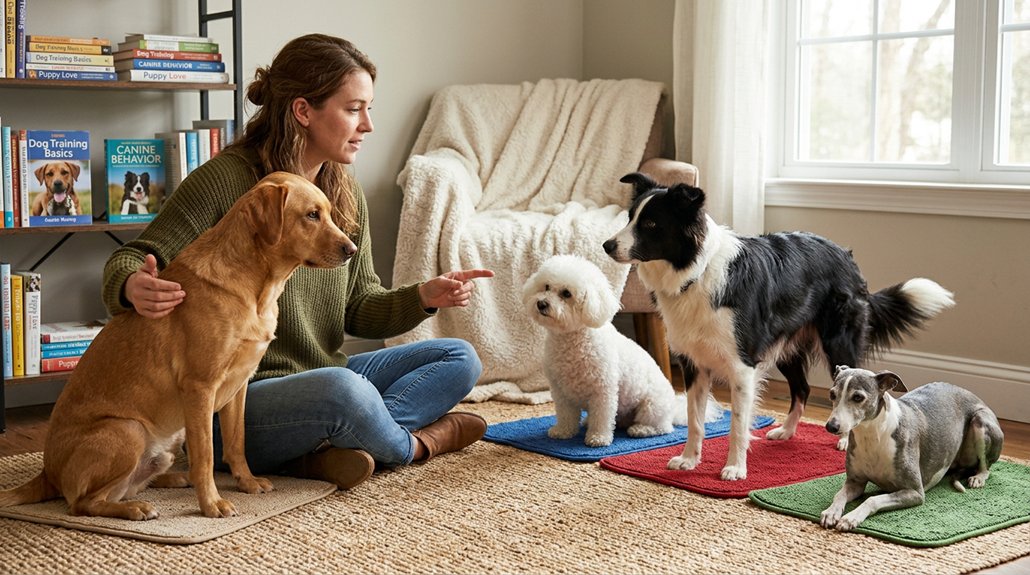
Select a dog breed matching your experience by evaluating grooming needs, training capacity, and activity levels. Novice owners should choose low-maintenance breeds like Cavaliers and Pugs, while intermediate familiarity aligns with manageable options like Labrador Retrievers. Experienced owners excel with high-energy breeds like German Shepherds needing advanced training skills. Assess compatibility with your lifestyle, living environment, and behavioral expectations. Continue to gain insights into choosing the ideal breed tailored to your experience and circumstances.
Key Takeaways
- Assess your lifestyle and time availability to match with a breed’s energy and training needs.
- Consider your grooming capabilities to select a breed with maintenance requirements you can manage.
- Evaluate your living space and family dynamics to ensure compatibility with the dog’s environment and interactions.
- Match your experience level by choosing breeds with temperament traits that suit your training proficiency.
- Use interactive tools to align personal habits and preferences with suitable dog breeds.
Find Your Level of Experience
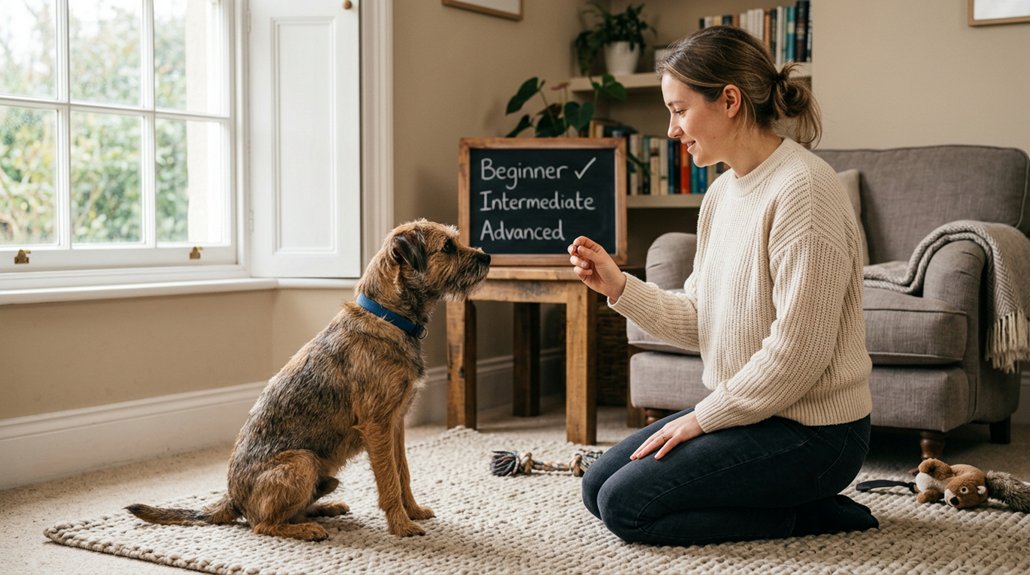
How do you gauge your experience with dogs? Conducting an experience assessment is vital in determining your suitability for various dog owner types. Are you a novice, intermediate, or experienced owner? Novices often prefer breeds with calm temperaments, such as the Cavalier King Charles Spaniel, which aligns with their limited handling expertise. For intermediate owners, choosing breeds like the Labrador Retriever, known for moderate activity and trainability, is advisable. These breeds offer manageable challenges, refining your proficiency. Meanwhile, experienced owners might excel with high-energy breeds like the German Shepherd, requiring advanced training skills. It’s important to evaluate your grooming capacity and time availability for training, ensuring your selected breed matches your lifestyle and capabilities, promoting harmonious coexistence.
Low Grooming and Training Breeds
Selecting a dog breed with low grooming and training requirements is crucial for those seeking a manageable pet ownership experience. Low maintenance breeds like the Cavalier King Charles Spaniel, Basset Hound, and Pug offer minimal grooming needs. Breeds such as the Maltese and Italian Greyhound require only sporadic baths and brushing, maintaining coat health efficiently. Mixed breeds complement these traits as they often exhibit stable temperaments, ideal for novices.
For training tips, focus on breeds with a predisposition for basic obedience. Pugs, with their amiable nature and limited exercise requisites, respond well to foundational training, perfect for apartment living or reduced activity environments. Selecting these breeds guarantees less grooming burden and fosters a harmonious relationship for inexperienced owners.
High-Energy Dogs for Active Owners
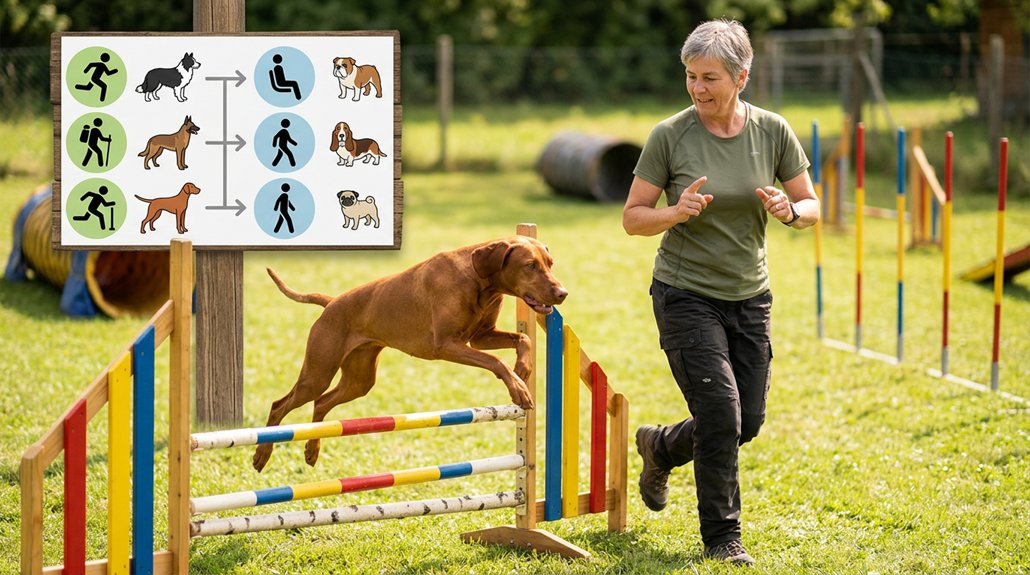
While low-maintenance breeds offer convenience, high-energy dogs cater to individuals with active lifestyles and specific exercise regimes. Breeds like Border Collies and Labrador Retrievers thrive on regular, intense exercise. Typically requiring at least one hour of vigorous physical activity daily, these dogs excel in outdoor activities such as running, hiking, or participating in dog sports like agility. To maintain peak well-being, high-energy breeds demand both physical and mental stimulation. This means you should incorporate interactive toys and structured training sessions to keep your dog engaged. Owners must have a disciplined schedule, ensuring frequent physical outings. Prior to adoption, evaluate the dog’s temperament and energy level to ascertain compatibility, aligning your lifestyle with this enthusiastic companion’s dynamic needs.
Match Dogs to Your Lifestyle
When considering a canine companion, it’s critical to align your choice with your lifestyle to guarantee mutual well-being. Assess your daily activity level: select low-energy breeds for sedentary routines or high-energy breeds if active. Factor in family dynamics; some dogs, like the Golden Retriever, are amicable with children, while others may require solitude. Consider your living environment—compact breeds suit apartments, whereas spacious homes with yards can accommodate larger, energetic dogs. Travel considerations are essential; frequent travelers should opt for breeds adaptable to change or with minimal separation anxiety. Don’t overlook grooming obligations; breeds like Poodles require extensive maintenance, impacting time resources. Evaluate compatibility with existing pets to promote a harmonious, integrated household.
Evaluate Your Dog’s Behavior

To accurately evaluate your dog’s behavior, begin by identifying specific behavioral patterns such as energy levels and reactivity to stimuli. Assess temperament traits by observing whether the dog displays anxiety, aggression, or calmness in varying scenarios. Additionally, carefully observe social interactions to determine the dog’s level of sociability and adaptability in different environments.
Identify Behavioral Patterns
Understanding your dog’s behavioral patterns is integral for gauging their temperament and aligning their training needs with your expertise. Observing playful behaviors is essential to evaluating their energy levels and social engagement. Conversely, recognizing anxiety signs, such as excessive barking or destructive tendencies, indicates potential stressors or inadequate environmental adaptation. Monitor your dog’s response to external stimuli like loud noises or other animals; this assessment reveals their adaptability and can highlight potential training challenges.
Understanding these behavioral contingencies guarantees you’re prepared to manage:
- New challenges: Adjust your training approach to suit their demeanor.
- Bonding moments: Strengthen the human-animal connection through targeted socialization.
- Peace of mind: Facilitate a harmonious home by addressing behavioral anomalies.
Assess Temperament Traits
Observing behavioral patterns provides a preliminary understanding of your dog’s personality, but evaluating temperament traits explores deeper into their intrinsic nature. Temperament assessment involves systematically analyzing responses in varied contexts, such as training efficacy, human interaction, and adaptability across environments. Behavioral evaluation requires acute observation of signs—aggression, nervousness, or affection—that dictate compatibility with different experience levels. Diverse breeds predict temperamental tendencies; for instance, service dogs often exhibit calmness and intelligence, while terriers are noted for spirited energy. Interactive assessments—playtime or training sessions—facilitate prediction of reactions in specific situations. Precision in these evaluations guides effective matchmaking, ensuring owner-dog synergy and fostering mutual flourishing. Prioritize temperament congruence to optimize cohabitation success and enhance quality of life for both companion and caregiver.
Observe Social Interactions
How do dogs reveal their social competence? Carefully observing interactions with other pets and people is essential to understanding a dog’s socialization skills. Social cues such as hesitation or aggression can signal the need for an experienced owner who can manage and modify these behaviors. Conversely, dogs demonstrating friendly, outgoing demeanor and positive play behavior tend to be well-socialized, making them ideal for first-time owners or families. It’s crucial to assess responses to diverse environments and stimuli to gauge adaptability and fit within your lifestyle.
- Witnessing your dog’s first playdate joyfully cohabiting with new furry friends can be heartwarming.
- Feeling pride as your dog confidently navigates new gatherings and environments represents successful adaptation.
- Experiencing concern if your dog shows aggression towards strangers emphasizes the need for guidance.
Choose the Right Dog Breed
When selecting the appropriate dog breed, it’s essential to assess your lifestyle compatibility and the dog’s energy levels. Utilize tools like breed selection quizzes to match your daily activity patterns with a breed’s behavioral traits and exercise requirements. Consulting professionals, such as veterinarians or dog trainers, can further aid in evaluating which breeds align with your handling skills and experience threshold.
Assess Lifestyle Compatibility
Selecting the appropriate dog breed involves evaluating your lifestyle compatibility with the breed’s inherent characteristics. Evaluate your daily exercise routine and assess your living space. A small apartment might necessitate a breed with limited exercise needs, while a spacious home with a yard could accommodate a breed requiring more physical activity. Analyze grooming preferences; some breeds necessitate daily grooming, aligning with your predisposition to manage such obligations. Consider your dog training expertise and behavior management experience. Novices might lean towards calm, trainable breeds. Utilizing tools such as interactive quizzes can provide data-driven insights for aligning lifestyle habits with suitable breeds.
- Prioritize harmony between dog’s exercise needs and your schedule
- Match grooming responsibilities to personal care capacity
- Align dog’s living space requirements with your home environment
Evaluate Energy Levels
Ever wondered about the critical role a dog’s energy level plays in its compatibility with your lifestyle? Evaluating energy levels is paramount. High-energy breeds, characterized by their puppy energy, such as Border Collies, demand extensive physical and mental engagement. They necessitate more than an hour of vigorous exercise daily. Conversely, breeds like Basset Hounds demonstrate lower energy profiles, manageable with brief walks and minimal playtime. Your ability to meet these needs is integral. Breed characteristics should align with your activity capacity. Consider your experience; energetic breeds require more proficiency in training. If you maintain constant activity, Labradors or German Shepherds might suit you. Conversely, for a sedate lifestyle, Cavalier King Charles Spaniels match well. Prioritize ensuring energy compatibility.
Frequently Asked Questions
How Does Age Impact a Dog’s Training and Behavior Adaptability?
Age influences a dog’s training and behavior adaptability greatly. Puppies require thorough puppy training as their cognitive development is ongoing. Adult temperament tends to be more established, necessitating tailored strategies for modifying existing behaviors or reinforcing desired conduct.
What Are the Health Considerations When Choosing a Dog Breed?
Did you know 60% of large breeds develop hip dysplasia? Consider genetic predispositions and breed specific illnesses. Consult studies on prevalent diseases. Evaluate long-term health care costs and potential veterinary needs for your potential companion.
How Do I Manage Common Behavior Issues in Dogs?
To manage common behavior issues, implement precise leash training to guarantee control and direction. Utilize consistent techniques for barking control, involving operant conditioning and reinforcement strategies. Always monitor progress clinically and adjust methods as needed for maximum results.
What Are Effective Ways to Socialize a New Dog?
Envision this: your dog’s social life thriving like a well-oiled machine. Regular visits to dog parks offer controlled environments while organized playdates facilitate gradual habituation to diverse stimuli, promoting robust social behaviors and improving adaptive responses effectively.
How Important Is Diet in Maintaining a Dog’s Health and Temperament?
Diet’s essential for a dog’s health and temperament. Meeting nutritional needs affects physiological balance, while consistent feeding schedules regulate behavior. Proper nutrition guarantees ideal development, stabilizes mood, and prevents disorders, promoting overall well-being and behavioral stability in canines.
Conclusion
Ultimately, selecting a dog that aligns with your experience level isn’t just about breed characteristics but understanding behavioral dynamics. Evaluate your lifestyle and gauge your readiness for training or high energy. Dog ownership theories suggest that congruency between owner activity levels and canine energy can improve well-being for both parties. When analyzing potential companions, consider grooming demands, behavioral tendencies, and energy requirements. This careful evaluation guarantees a harmonious relationship and a fulfilling shared existence with your canine companion.