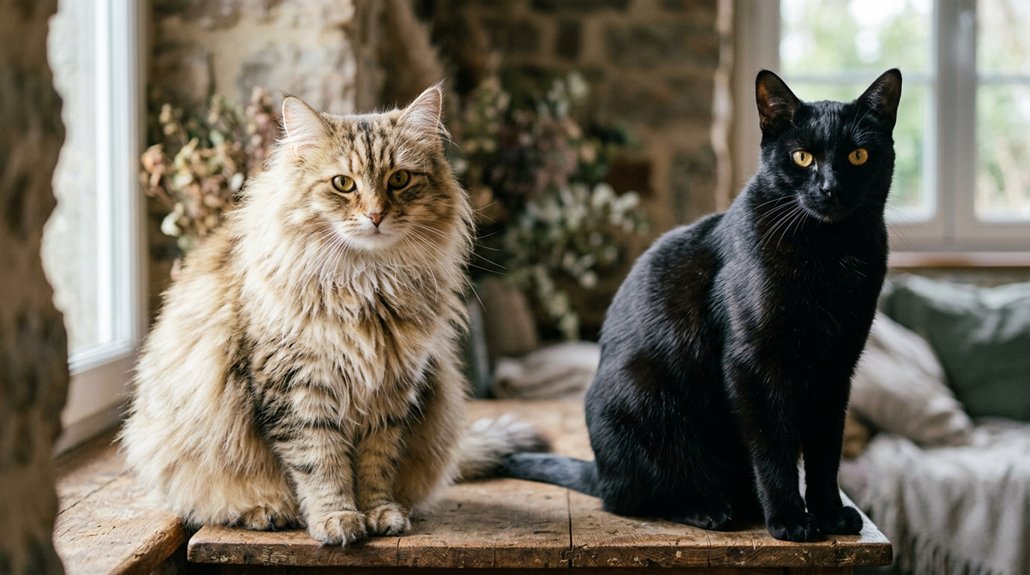
Choosing between long-haired and short-haired cats depends on your lifestyle and grooming preferences. Long-haired cats require daily grooming to prevent health issues like matting and hairballs, while short-haired cats need weekly care to manage shedding. Temperament is more influenced by genetics and upbringing than fur length. Each fur length comes with unique care needs impacting both you and your cat’s welfare. Explore further to guarantee you pick the right feline companion for your home.
Key Takeaways
- Long-haired cats require daily grooming, while short-haired cats need weekly maintenance to manage shedding and maintain coat health.
- Short-haired cats have fewer health risks related to matting, but both types benefit from regular grooming to prevent digestive issues like hairballs.
- Long-haired breeds are ideal for colder climates, whereas short-haired breeds adapt well to various environmental conditions.
- Short-haired breeds, such as American Shorthairs, are typically more playful, while long-haired breeds tend to be calm and affectionate.
- Choose a breed based on lifestyle; long-haired cats need more grooming time, while short-haired cats offer lower-maintenance care.
Grooming Your Shorthair or Longhair: What You Need to Know
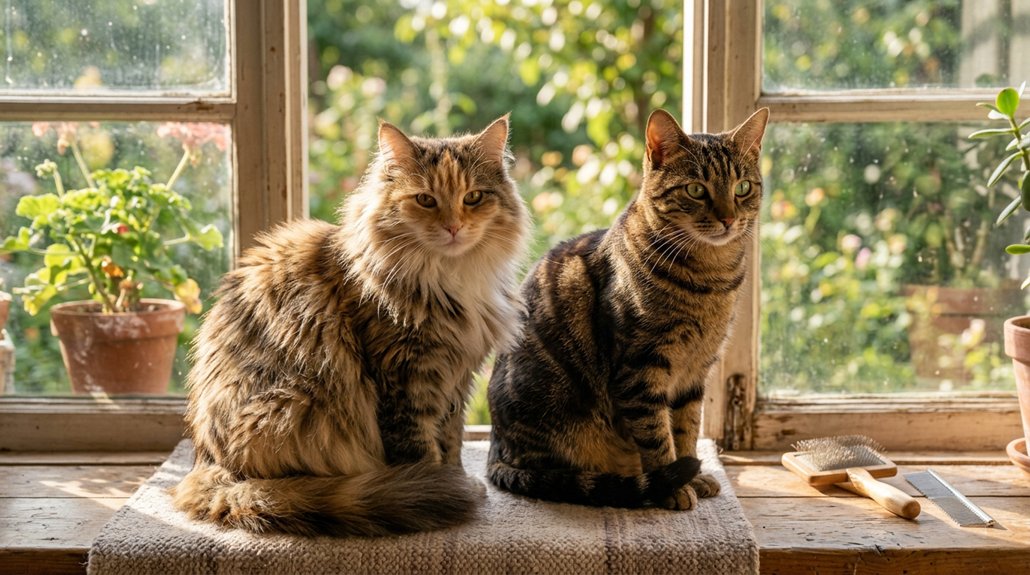
Grooming is essential for maintaining the health and comfort of both long-haired and short-haired cats, each with distinct needs. For long-haired cats, daily grooming is vital to prevent painful mats and tangles. Employ suitable grooming tools such as wide-toothed combs and de-shedding tools for effective coat management. Short-haired cats, while requiring less frequent grooming, still shed considerably. Incorporate a weekly grooming schedule using appropriate brushes to manage shedding and minimize loose fur in your home. Regular grooming not only guarantees coat health but also fosters a positive bond with your feline through interactive sessions. Neglecting these routines can lead to discomfort and necessitate veterinary intervention, emphasizing the importance of a diligent grooming regimen tailored to your cat’s specific needs.
Temperament and Personality: Unraveling the Truth About Fur Length
The temperament and personality of a cat are shaped far more by genetics, age, and upbringing than by the length of its fur. While it might be tempting to assume that long-haired cats are consistently relaxed in demeanor, or that short-haired breeds naturally exhibit playful interactions, scientific evidence doesn’t support such direct correlations. Rather than fur length, here are the factors that truly influence personality:
Cat personality is influenced by genetics, age, and upbringing, not by fur length.
- Genetics: They play a pivotal role in defining whether your cat will be calm or vivacious.
- Age: Kittens often display more energy, which can ebb as they mature.
- Upbringing: Socialization and environment heavily impact behavioral traits.
- Breed Traits: Consideration of breed-specific traits can guide expectations.
Personal preference should focus on how these elements influence a potential bond with your feline friend.
Managing Shedding: Long vs. Short-Haired Cats
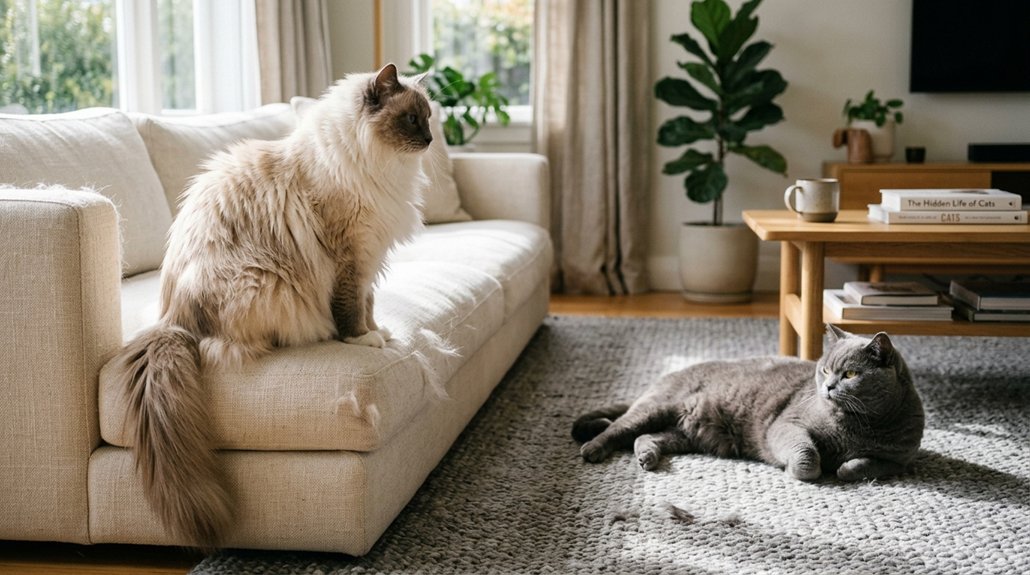
When considering the management of shedding between long-haired and short-haired cats, it’s vital to understand the differences in how each type contributes to household fur accumulation. Long-haired cats typically shed more visibly, creating significant clumps, while short-haired breeds like the American and British Shorthair might shed smaller amounts but do so more frequently. Understanding these shedding patterns is key to choosing appropriate grooming techniques. For long-haired cats, daily brushing is essential to manage shedding and prevent matting, potentially avoiding health issues such as bezoars. Short-haired cats, although not free from shedding, generally require less frequent care, typically weekly grooming. Regardless of fur length, regular grooming supports animal welfare by reducing dander impact, benefiting both cats and their owners.
Health and Home: Fur Length Matters
Understanding the impact of fur length on the health and home environment of your cat is paramount. Long-haired cats demand vigilant grooming frequency due to their higher risk of matting, which could escalate to fur related health concerns, like digestive issues if ingested. Alternatively, short-haired cats, with a weekly grooming routine, usually circumvent these challenges. Consider the following:
- Grooming Needs: Long-haired cats necessitate daily grooming; short-haired breeds thrive with less.
- Cleaning Demands: Long-haired cats shed in visible clumps, unlike the subtler shedding of their short-haired counterparts.
- Health Risks: Digestive issues linked to hairballs are a concern with longer fur.
- Hygienic Maintenance: Hygiene trims for long-haired cats guarantee cleanliness, reducing waste-related concerns often seen in this breed.
Finding Your Feline: Which Breed Is Right for You?
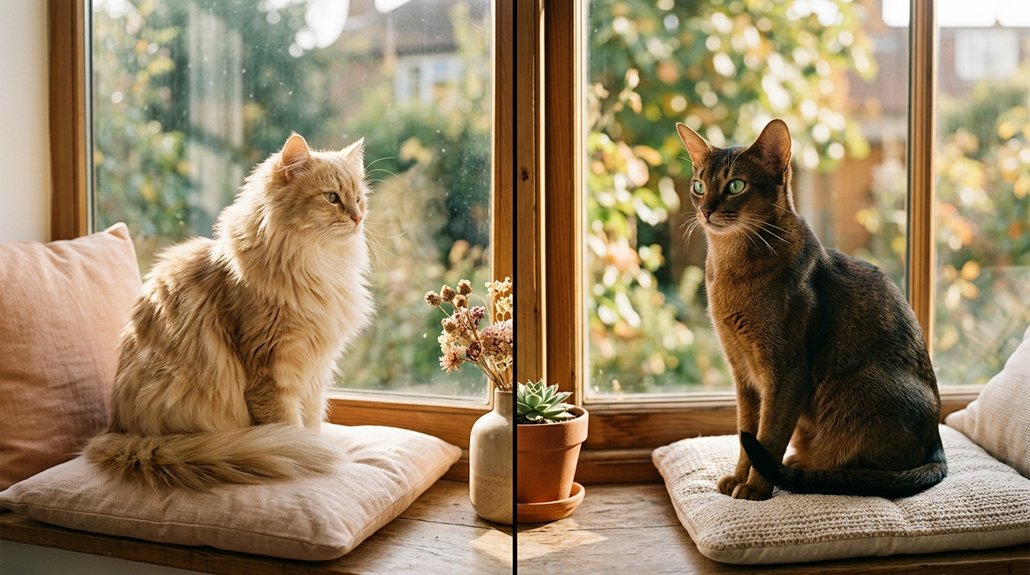
Choosing the right cat breed, whether long-haired or short-haired, impacts your living environment and your ability to meet the pet’s care needs. Lifestyle considerations are essential; long-haired cats, like the Maine Coon, demand daily grooming, while breeds such as the American Shorthair only need weekly attention. Breed comparisons extend to climate adaptability—long-haired breeds offer insulation for cold areas, whereas short-haired cats thrive in warmth. Personality and activity levels also guide your choice, as playful American Shorthairs differ from the calm, affectionate British Longhairs.
| Aspect | Long-Haired Cats |
|---|---|
| Grooming | Daily |
| Climate | Cold-friendly |
| Shedding | High |
| Personality | Calm (e.g., British Longhair) |
Your final choice should align with your environment and care capacity.
Frequently Asked Questions
Are Long-Haired Cats Nicer Than Short-Haired Cats?
You can’t definitively say long-haired cats are nicer than short-haired ones. Their grooming needs don’t determine temperament. Personality traits vary individually, depending largely on upbringing and environment, not coat length, as animal welfare research frequently highlights.
What Is the 3-3-3 Rule for Cats?
The 3-3-3 rule describes cat acclimation in phases: first three days for stress adjustment, three weeks seeing increased exploration and interaction, and three months showing full feline behavior, enhancing understanding of their animal welfare needs.
What Is the Calmest Breed of Cat?
Imagine tranquility wrapped in fur; that’s your British Shorthair, Persian, Ragdoll, or Maine Coon. These calm feline breeds possess gentle cat personalities, ideal companions in many settings. Experience peace and love, guided by evidence and animal welfare principles.
What Annoys Cats the Most?
What annoys cats most are loud noises and sudden movements. These factors can trigger anxiety, disrupting their sense of security. Clinically, consistent exposure can impact their well-being, so ensuring a calm environment is essential for feline welfare.
Conclusion
Imagine the gentle brush gliding through luxuriously long fur or the quick swipe across a sleek, short coat. Each offers its own grooming demands and unique charm. Whether it’s managing tufts of shed fur or appreciating the personalities behind the whiskers, fur length impacts your home and the health of your feline companion. With evidence-based insight, let your understanding guide you in choosing between these enchanting creatures, ensuring a harmonious match for both you and your cat.