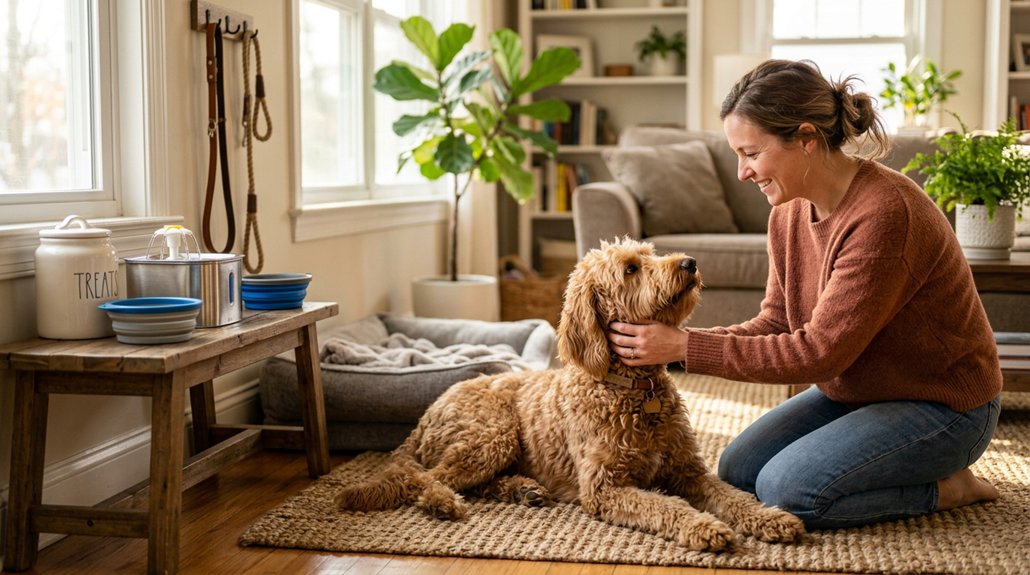
To make life easier with your dog, create a dog-friendly home setup by designating playspaces and securing hazardous items. Stick to consistent routines for feeding, exercise, and grooming while using smart products for efficiency. Keep your dog’s mind and body active through daily walks and engaging toys. Emphasize reward-based training to tackle behavior challenges. Strengthen your bond with shared activities and quiet moments. Discover how these strategies transform daily life with your furry friend.
Key Takeaways
- Designate a safe playspace with essential items like food, water, and bedding for easy access and comfort.
- Establish consistent daily routines for feeding, exercise, and grooming to reduce anxiety and improve health.
- Use smart tools like automated feeders and rolling food bins to simplify and organize feeding.
- Incorporate mental and physical activities using interactive toys and structured walks to keep your dog active.
- Employ positive reinforcement and shared activities to build a strong bond and promote good behavior.
Create a Dog-Friendly Home Setup
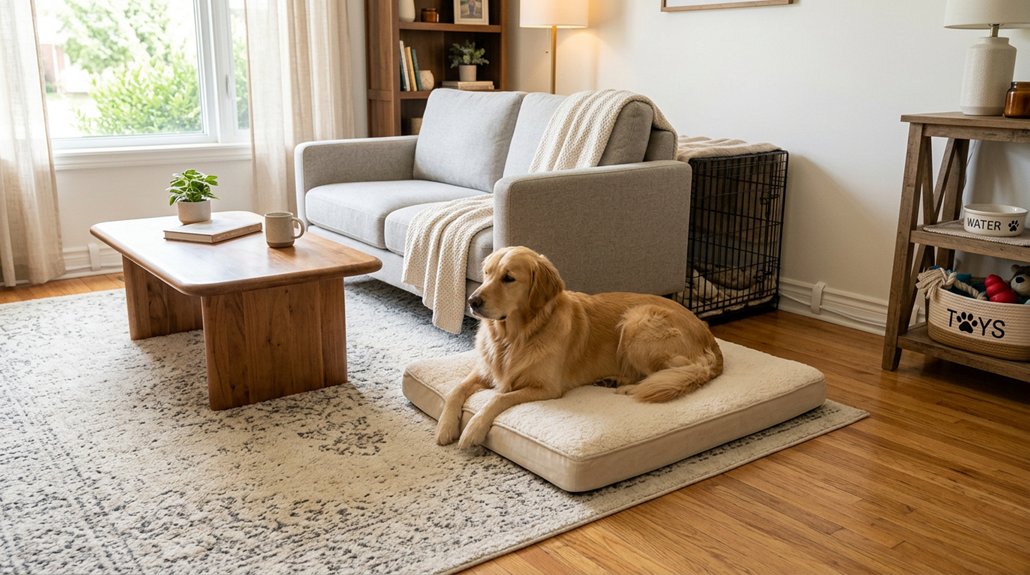
When welcoming a dog into your home, it’s essential to establish a dog-friendly environment that guarantees their safety and comfort. Start by allocating a designated playspace where your dog can feel secure and have easy access to dog-proofing essentials, such as food, water bowls, and bedding. Make your home safer by removing hazardous items and securing trash bins to prevent accidents and discourage scavenging. At entry points, use microfiber floor mats to capture mud and fur, making cleanups simpler. Protect furniture with covers and choose washable rugs to maintain your home’s décor while safeguarding against pet damage. Finally, incorporate interactive and puzzle toys to make sure your pup remains mentally stimulated, fending off boredom and minimizing behavioral issues.
Stick to Consistent Daily Routines
To make life with your dog smoother, start by establishing consistent morning rituals that provide structure and predictability. Setting a fixed mealtime schedule is essential, as it allows your dog to anticipate when to eat, reducing anxiety and promoting better digestion. Consistent routines aren’t just about feeding; they encompass everything from exercise to grooming, ensuring your dog remains healthy, well-behaved, and content.
Establish Morning Rituals
Ever wondered why your mornings feel chaotic? Establishing a morning ritual with your dog can transform this time into calm, bonding moments. Start with a morning meditation—spend a few quiet minutes together, setting a peaceful tone. This ritual reduces anxiety and strengthens your bond. Here’s a structured routine:
| Activity | Time (Approx.) |
|---|---|
| Morning Meditation | 5 minutes |
| Walk | 20 minutes |
| Playtime | 10 minutes |
| Feed | 5 minutes |
| Training Session | 10 minutes |
Repetition is your ally. Consistent morning rituals rely on familiar environmental cues, like keeping the leash by the door, ensuring your dog knows what to expect. Regular mental and physical activities engage your dog, setting them at ease. Stick to this routine, and watch stress evaporate.
Set Mealtime Schedule
A consistent mealtime schedule is foundational to your dog’s health and well-being. By feeding your dog at the same times daily, you regulate their digestion and minimize issues like hunger-induced anxiety. Start by meal portioning correctly—confirm they’re getting the right amount—not too much or too little. Using proper food storage solutions keeps the food fresh and safe, promoting a healthy diet. A reliable routine instills a sense of security and reduces begging since your dog knows when to expect food. Plan feeding twice a day for adults, making it predictable for both you and your dog. This schedule aids time management, allowing busy owners to integrate feeding seamlessly alongside other daily activities. Your dog’s stable routine confirms their contentment and health.
Apply SMART Techniques With Environmental Cues
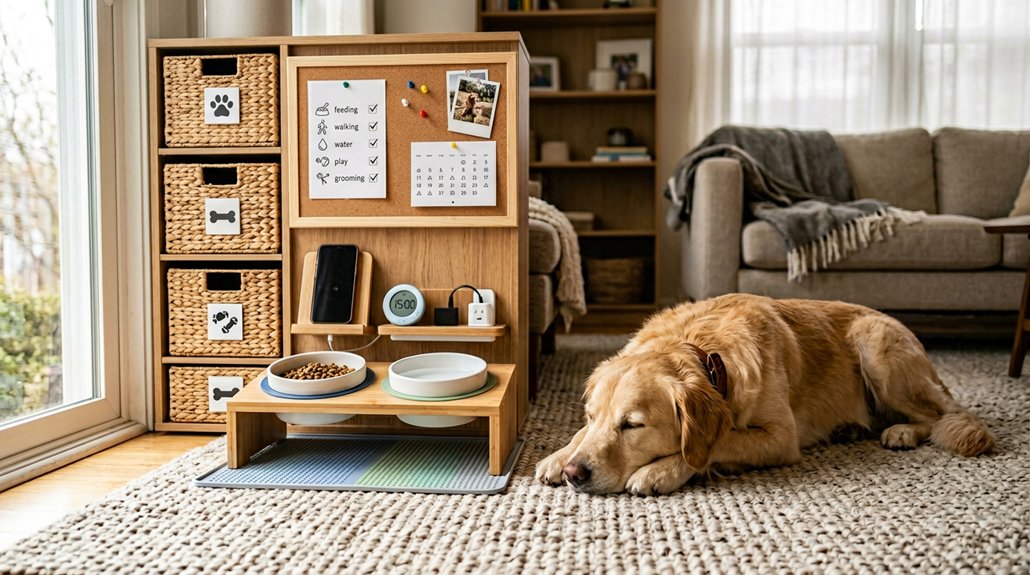
Harness the power of SMART techniques by integrating environmental cues into your dog’s training routine. This strategy allows for immediate behavior reinforcement, enhancing learning and compliance. Utilize specific locations or objects as environmental cues to guide your dog, such as a mat near the dishwasher. This helps station them during busy times, reducing verbal command reliance and fostering independence. By consistently applying these cues, your pet will develop a clear understanding of household expectations, leading to improved harmony.
| Environment | Cue | Behavior |
|---|---|---|
| Kitchen | Mat near dishwasher | Calm stationing |
| Living Room | Dog bed | Quiet resting |
| Front Door | Doorbell | Sit and wait |
Embrace this efficient approach to create a well-behaved dog, easing your daily life.
Keep Your Dog’s Mind and Body Active
To keep your dog’s mind and body active, establish a daily exercise routine that includes at least two to three structured walks. Supplement this with stimulating indoor activities, like using enrichment toys and engaging in interactive games that challenge their cognitive skills. Regular socialization, through playdates or visits to the dog park, guarantees they stay mentally alert and emotionally balanced.
Stimulating Indoor Activities
Engaging your dog’s mind and body indoors is not just beneficial—it’s essential for their happiness and health. Incorporate interactive games and mental workouts to keep them stimulated. Puzzle feeders and snuffle mats can satisfy foraging instincts while providing mental challenges. Rotating toys weekly prevents boredom and keeps your pup engaged. Organize hide and seek games with treats or toys to promote problem-solving and exercise their natural hunting instincts. Stuff a Kong toy with peanut butter or frozen treats for prolonged indoor enjoyment. Design a structured indoor routine that combines commands and tricks to enhance their overall wellbeing.
- Interactive Toys: Use puzzle feeders and snuffle mats.
- Weekly Toy Rotation: Keeps interest high.
- Hide and Seek: Encourages problem-solving.
- Kong Toys: Occupies with treats.
Daily Exercise Routine
While indoor activities are fantastic for mental stimulation, maintaining an engaging daily exercise routine is equally important for your dog’s overall health and happiness. To guarantee your furry friend thrives, incorporate exercise variety and strategic walking frequency. Aim for structured walks lasting at least 30 minutes twice daily, preventing behavioral issues. Spice things up with a longer exploratory walk weekly, tapping into their sniffing instincts. Rotate walking routes regularly for new scents and experiences. Leverage off-leash play at local dog parks for socialization. Reserve weekends for adventures like hiking to boost your dog’s physical and mental stimulation.
| Action | Frequency | Benefits |
|---|---|---|
| Structured Walk | Twice daily | Health & Behavior Balance |
| Exploratory Walk | Once weekly | Mental Stimulation |
| Route Rotation | Regularly | Engagement & Freshness |
| Off-leash Play | Local dog park | Socialization & Natural Play |
| Weekend Adventures | Hiking/Exploring | Physical & Mental Fitness |
Simplify Feeding With Smart Products
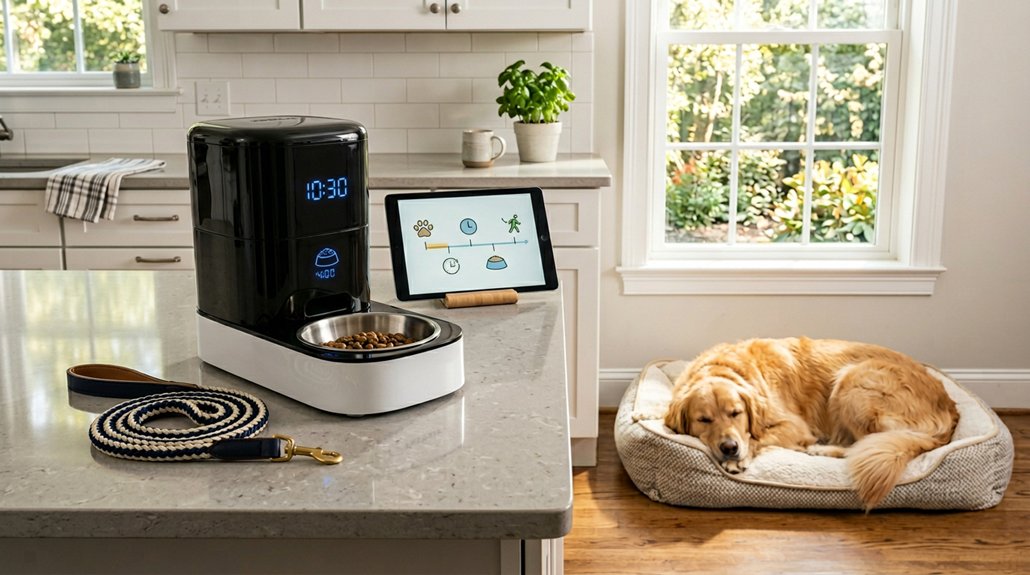
When you’re looking to simplify the daily chore of feeding your dog, embracing smart products can make a significant difference in both efficiency and cleanliness. Harness the power of automated feeders, which dispense meals on schedule, guaranteeing your pet eats at the right times even when you’re not at home. Additionally, proper food storage is essential. Invest in a rolling food bin to prevent clutter and easily access large bags of food. Keep feeding efficient and tidy with these smart solutions:
- Automated feeders: Schedule meals, guaranteeing timely feeding without manual effort.
- DIY elevated feeders: Reduce mess and enhance comfort, especially for medium-to-large breeds.
- Rolling food bins: Simplify storage, allowing for easy access and preventing clutter.
- Dog food delivery services: Make sure you’re always stocked, saving time and effort.
Emphasize Reward-Based Training
A cornerstone of effective dog training is reward-based methods, which emphasize reinforcing positive behaviors to build a strong rapport between you and your furry friend. By focusing on clicker training and behavior shaping, you’ll help your dog understand exactly which actions are desired, guaranteeing more effective communication. Use treats, toys, and praise immediately after your dog performs a good behavior. This timely reinforcement encourages them to repeat these actions, making unwanted behaviors less likely.
To keep your dog engaged and motivated, vary the rewards. A mix of verbal praises, play sessions, and favorite treats guarantees they remain enthusiastic learners. Consistency is key; apply these techniques regularly to observe a substantial improvement in behavior management. This approach will create a happier, more harmonious living environment for both of you.
Strengthen Your Bond Through Shared Activities
Beyond reward-based training, building a deeper connection with your dog involves engaging in a variety of shared activities that enhance companionship. Joint adventures like daily walks and playtime not only meet physical needs but also nurture the bond through teamwork. Incorporate playful training sessions using positive reinforcement, which strengthens communication and mutual understanding. Explore fun activities such as hide and seek or foraging games to stimulate your dog mentally, fostering interactive bonding. Participating in canine sports or classes provides a structured setting for both learning and teamwork, further cementing your relationship. And don’t underestimate the power of quiet, shared moments; cuddling and relaxing together instills security and deepens emotional ties.
- Daily walks and playtime
- Playful training sessions
- Hide and seek games
- Canine sports or classes
Solve Common Behavior Challenges
Addressing your dog’s behavioral challenges can transform your home environment and strengthen your bond with your furry friend. Start by implementing impulse control through stationing behaviors—designate specific spots for your dog during mealtime or busy activities. Positive reinforcement techniques prevent issues like jumping and barking by rewarding good behavior. Incorporate environmental cues to signal desirable actions, fostering independence and reducing anxiety. Regularly rotate toys and introduce mental stimulation activities like hide and seek with treats to combat boredom-related behaviors. Structured training classes reinforce commands, aid anxiety reduction, and build trust. Consistency and patience in these methods will alleviate stress for both you and your dog, ensuring a well-mannered companion and a harmonious household.
Frequently Asked Questions
What Is the 7 7 7 Rule With Dogs?
The 7-7-7 rule means dedicating three weeks to integrate your dog. First, ease their anxiety with calmness, then learn dog behavior and training tips, and finally, set routine adjustments, leash etiquette, exercise needs, and socialization strategies.
What Do I Do if I Can’t Cope With My Dog?
If you can’t cope, explore dog training strategies utilizing positive reinforcement to address behavior issues. Implement stress management techniques like structured routines. Lean on supportive communities or professionals for guidance, ensuring a harmonious bond with your furry friend.
What Is the 3-3-3 Rule With Dogs?
The 3-3-3 rule in dog adoption focuses on the adjustment period. During this, use training techniques to ease stress. Watch for behavioral signs indicating adjustment and actively support your dog’s integration into their new surroundings.
What Is the 10 10 10 Rule for Dogs?
The 10-10-10 rule involves 10 minutes of focused training, enhancing discipline with proven techniques, 10 minutes of active play strengthening your bond, and 10 minutes of relaxation aiding mental wellness. It’s as essential as regular dog grooming.
Conclusion
Living with a dog is like owning a magical portal to a land of joy, but without the right strategies, chaos can ensue! By creating a dog-friendly home, sticking to routines, and using SMART techniques, you can transform your life into a stress-free utopia. Keep your dog’s mind and body active, make feeding a breeze with smart products, and focus on reward-based training. You’ll soon find that solving behavior challenges and strengthening your bond isn’t just easy—it’s life-changing!