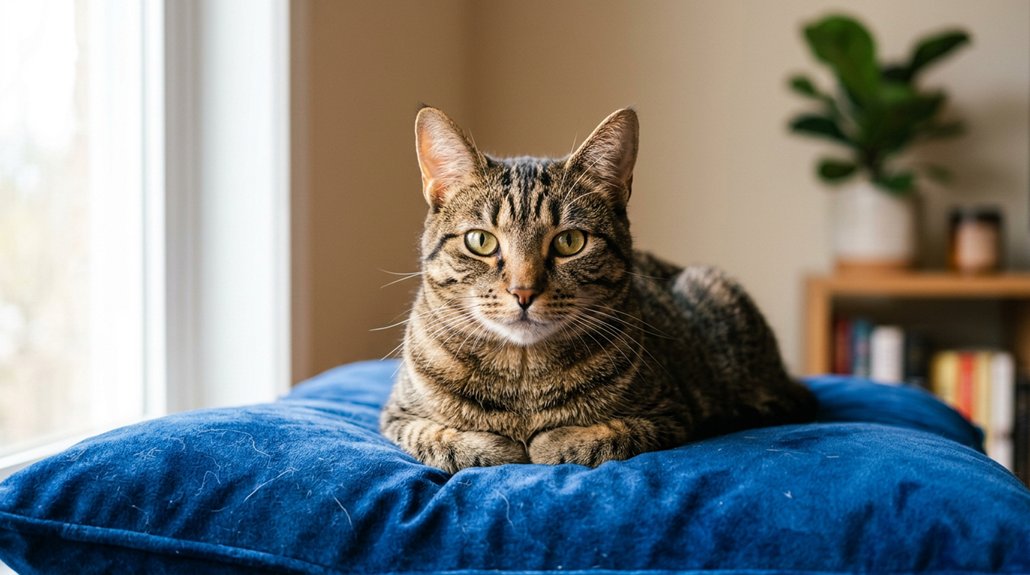
You’ll find that some cat breeds are more responsive to training due to innate characteristics. Abyssinians are active learners, excelling in task-oriented activities. American Shorthairs demonstrate impressive adaptability and respond well to positive reinforcement. Bengals turn play into learning, leveraging their curiosity. Japanese Bobtails thrive on skillful engagement. Maine Coons are especially adept with their intelligence and willingness to please. Discover more about how these breeds benefit from specific training techniques and structured learning.
Key Takeaways
- Abyssinians excel in training due to their high intelligence and playfulness.
- Bengals turn play into learning and benefit from interactive, reward-based sessions.
- Maine Coons are adaptable and eager to please, making training straightforward.
- American Shorthairs respond well to positive reinforcement and trust-based training.
- Japanese Bobtails thrive on structured sessions and mental stimulation for effective learning.
Why Some Cats Are Easier to Train
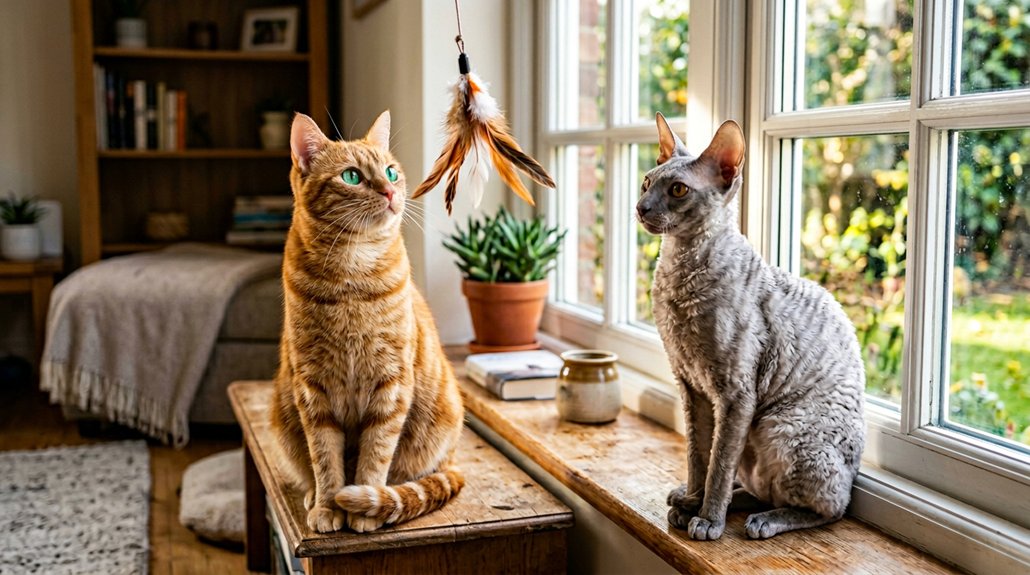
When considering why some cats are easier to train, it’s important to examine specific breed characteristics that contribute to their trainability. Distinct breed differences play a pivotal role, influencing training motivation and effectiveness. Breeds renowned for intelligence and curiosity, such as Bengals, possess an intrinsic proclivity toward learning due to their heightened cognitive engagement. Conversely, the social, affectionate nature of breeds like Siamese enhances their training motivation, as human interaction drives their participation. American Shorthairs demonstrate compatibility with positive reinforcement, which is a critical factor in training efficacy. Additionally, high-energy breeds, such as Japanese Bobtails, exhibit an inherent need for stimulation, facilitating learning through playful methods. Ultimately, early socialization, irrespective of breed, serves as a catalyst, enhancing adaptability to training stimuli.
The Abyssinian: An Active Learner
If you’re considering an Abyssinian, you’ll find that their intelligence and playfulness make them exceptional candidates for training. This breed’s inherent capability for learning is augmented by their sociable nature, making interactive activities like fetch not just feasible but beneficial. Training an Abyssinian is not only about engagement; it’s a strategic approach to harness their high energy levels and improve their overall behavioral health.
Intelligence and Playfulness
Possessing a remarkable blend of intelligence and playfulness, the Abyssinian cat exemplifies an active learner within the feline world. This breed’s high cognitive capabilities and energetic nature make them adept at mastering learning techniques. Regular mental stimulation is essential for keeping their insatiable curiosity satisfied and preventing behavioral issues. These cats excel in activities requiring problem-solving skills or interactive play.
| Characteristic | Details |
|---|---|
| Intelligence Level | High, requiring constant mental engagement |
| Learning Techniques | Effective with positive reinforcement |
| Activity Preferences | Enjoys games like fetch, leash training |
| Energy Levels | Very high; needs structured activities |
Abyssinians’ agility and trainable disposition contribute to their success with skills like walking on a leash, reflecting their capacity for structured learning and task-oriented play. The breed’s predilection for interactive games enhances their inclination to perform, thereby maximizing training efficacy.
Social Interaction Benefits
Though each cat possesses unique social traits, the Abyssinian stands out for its outgoing and affectionate temperament, making it highly adept at leveraging social interactions for training benefits. This breed’s intrinsic sociability facilitates effective engagement strategies, optimizing the learning process. By incorporating consistent positive reinforcement alongside regular interaction, you can enhance their cognitive retention during training sessions. High-energy levels demand dynamic activities; therefore, interactive play serves as a dual-purpose tool—both rewarding the Abyssinian for correct responses and channeling exuberance productively. Understanding their penchant for learning through play and games, you’ll maximize training rewards, reinforcing desired behaviors efficiently. Ultimately, engaging with them not only fulfills their attention requirements but also mitigates boredom-induced behavior, fostering an elevated domestic environment for both cat and owner.
American Shorthair’s Adaptability in Training
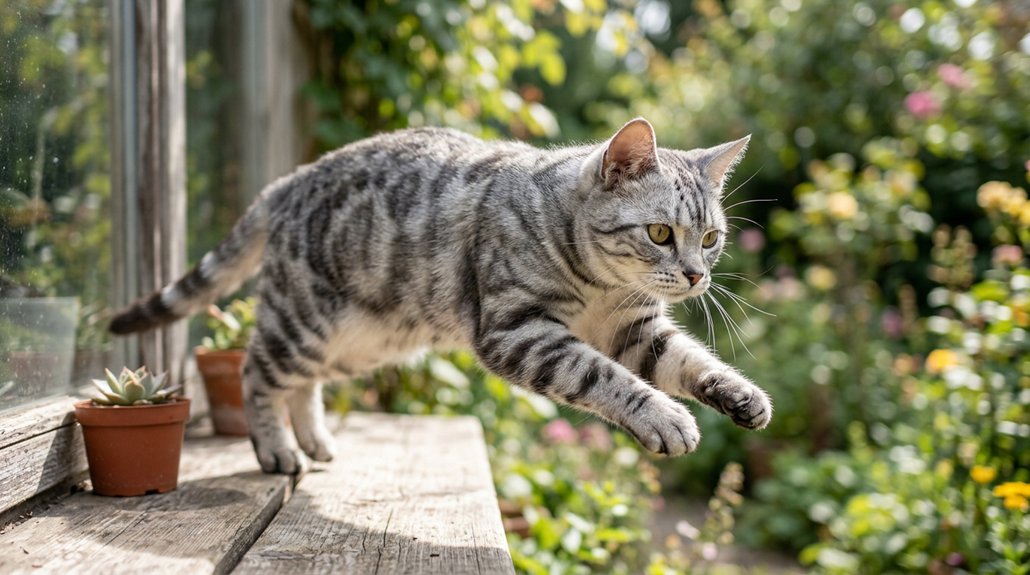
The American Shorthair stands out as a paragon of adaptability in training due to its intrinsic calm and balanced temperament. This breed’s composure creates a stable training environment, essential for behavioral consistency. Unlike more frenetic breeds, American Shorthairs respond effectively to systematic positive reinforcement techniques. You’ll find that their adaptable nature allows them to shift seamlessly between various living settings—from compact urban apartments to expansive rural homes—without compromising their trainability. Their friendly disposition further facilitates robust, trust-based training sessions, ensuring that commands and tricks are mastered with efficacy. Given their average longevity of 12-17 years, you’re afforded an extensive temporal framework for ongoing training and rapport-building, essential for fostering a mutually fulfilling relationship between owner and feline.
How Bengals Turn Play Into Learning
- Interactive toys: Leverage their love for dynamic environments to introduce fetch or puzzle toys.
- Structure play sessions: Engage them with timed activities that incorporate learning commands.
- Positive reinforcement: Use treats or affection during games to instill desired behaviors.
Ultimately, Bengal cat training not only develops skills but fortifies the human-animal bond.
Japanese Bobtails and Their Love for Skills
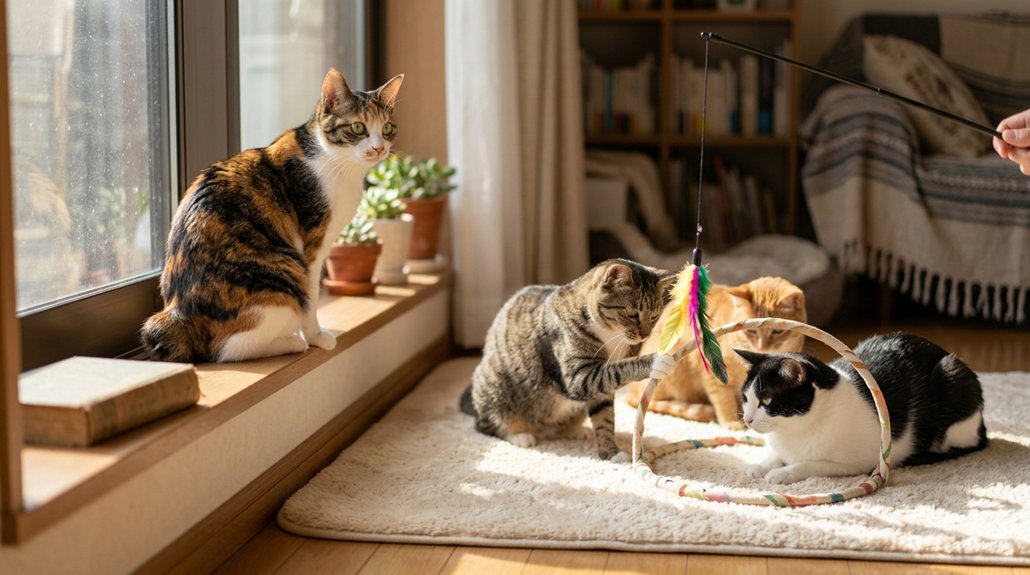
With Japanese Bobtails, you’re interacting with a breed that consistently exhibits high energy levels and a consequential enthusiasm to participate in training sessions. These cats are particularly suited to interactive training methods, absorbing new skills readily through structured play and positive reinforcement strategies. Their strong familial bonds guarantee they remain actively engaged during training, making them ideal companions for households that prioritize active lifestyles and continuous skill development.
High Energy Level
Although often underestimated, Japanese Bobtails exhibit an impressive energy level, scoring an 11 on standardized scales, which indicates their high-octane vigor ideal for active companionship. For effective training, consider structured sessions integrating suitable energy outlets. Their sharp intelligence requires mental stimulation, making interactive play critical. Implement training tips conducive to their sociable disposition; such sessions foster stronger bonds and reinforce behavioral skills. Typically, utilizing praise and rewards catalyzes engagement, ensuring training aligns with their playful persona.
Benefits of Structured Training:
- Enhanced Learning Curve: Task-oriented play bolsters cognitive development.
- Behavioral Reinforcement: Positive interaction strengthens desired conduct.
- Energy Management: Controlled exertion satisfies their kinetic demands.
Incorporate dynamic games in daily routines, transforming them into training milestones.
Interactive Training Methods
Due to their inherent intelligence and energetic disposition, Japanese Bobtails excel in interactive training methods, exhibiting a remarkable aptitude for acquiring new skills. Their responsiveness to clicker training is indicative of their cognitive flexibility and enthusiasm to engage with structured learning tasks. Implementing game-based learning strategies transforms standard training into a stimulating experience, enhancing skill acquisition by keeping the session dynamic and enjoyable. Japanese Bobtails thrive under individualized training scenarios, where the synergistic effect of praise and rewards propels them to perform at their best. Their predilection for fetching toys serves as an excellent conduit for reinforcing positive behaviors, showcasing their capacity for creativity in play. Engaging them in playful yet methodical exercises guarantees maximum utilization of their intellectual and physical capabilities.
Strong Family Bonds
The interactive training methods utilized with Japanese Bobtails not only sharpen their learning aptitude but also play an essential role in strengthening their familial bonds. As they’re known for high energy levels, these cats thrive on family involvement, transforming training into meaningful engagement. Their playful nature guarantees emotional connections through skill practice, bolstered by positive reinforcement. Here are key factors enhancing this dynamic:
- Attention and Affection: Japanese Bobtails seek constant interaction, which strengthens emotional ties with family members.
- Praise and Rewards: These cats respond robustly to positive feedback, which encourages continual learning and cementing family bonds.
- Interactive Play: Skill development becomes enjoyable, offering Japanese Bobtails an opportunity to demonstrate learned behaviors amidst family involvement.
This commitment to family and skill enhances their role as ideal companions.
The Learning-Friendly Maine Coon
A Maine Coon exemplifies a learning-friendly cat breed, characterized by its innate intelligence and gentle demeanor. This feline’s gentle agility allows it to engage in dynamic environments, leveraging its playful intelligence to adapt seamlessly. The Maine Coon’s sharp intellect, honed over years, renders it capable of grasping new tricks with relative ease. Harnessing this intelligence, you can enhance your training sessions by incorporating family activities, which this breed naturally enjoys. Integral to their learning process is the Maine Coon’s enthusiasm to please. They exhibit a pronounced response to positive reinforcement strategies, improving assimilation of commands. Furthermore, their adaptability makes them exceptionally versatile, ensuring they’re suitable companions across diverse living situations. Such traits render the Maine Coon a top choice for engaged pet owners.
Top Training Techniques for All Cats
While the Maine Coon exemplifies a breed inherently predisposed to learning, effective techniques guarantee all cats can be trained proficiently. Clicker training is paramount in establishing a cognitive connection between actions and rewards. It involves precise sound cues—from a clicker—that consistently signal correct behavior. High-value treats further enhance this process, serving as potent motivators. Here’s a strategic framework to boost your cat’s training success:
Clicker training with sound cues and treats enhances cat learning and behavioral connection.
- Consistency: Use uniform cues and commands to fortify understanding and expectation.
- Duration: Implement short, focused sessions of 5 to 10 minutes to mitigate fatigue and sustain interest.
- Positive Reinforcement: Employ rewards instead of punitive measures to cultivate trust and strengthen bonds.
This systematic approach maximizes learning efficiency and behavioral retention in feline training.
Frequently Asked Questions
What Breed of Cat Is the Easiest to Train?
You’ll find the Abyssinian the easiest to train. Focus on interactive, playful breeds and employ effective training techniques like positive reinforcement and engaging games. Their intelligence and lively nature make them perfect for structured training sessions.
What Is the 3-3-3 Rule With Cats?
The 3-3-3 rule guides a cat’s behavior adaptation: three days of hiding, three weeks of exploring, three months to trust. Understanding these phases informs training techniques, acclimating the cat, and enhancing integration with clinical precision.
What Annoys a Cat the Most?
Loud noises greatly disrupt cat behavior, causing distress. For successful training, avoid startling them. Respect their autonomy by not forcing them into situations. Incorporate gentle handling and minimize environmental changes, providing consistency to enhance their comfort and well-being.
What Is “I Love You” in Cat Language?
When a cat slow blinks at you, it’s akin to “I love you.” Studies show 70% of cats display this feline communication. Their purring behavior also signifies contentment, indicating a bond and affection towards you.
Conclusion
Training cats can feel like orchestrating a symphony, where each breed offers unique notes to master. With patience and consistency, breeds like the Abyssinian, American Shorthair, Bengal, Japanese Bobtail, and Maine Coon showcase streamlined learning potential. Utilize techniques that emphasize positive reinforcement and environmental enrichment to guide your feline like a skilled conductor leading a harmonious ensemble. Remember, each cat’s individual traits and instincts ultimately shape their learning journey.