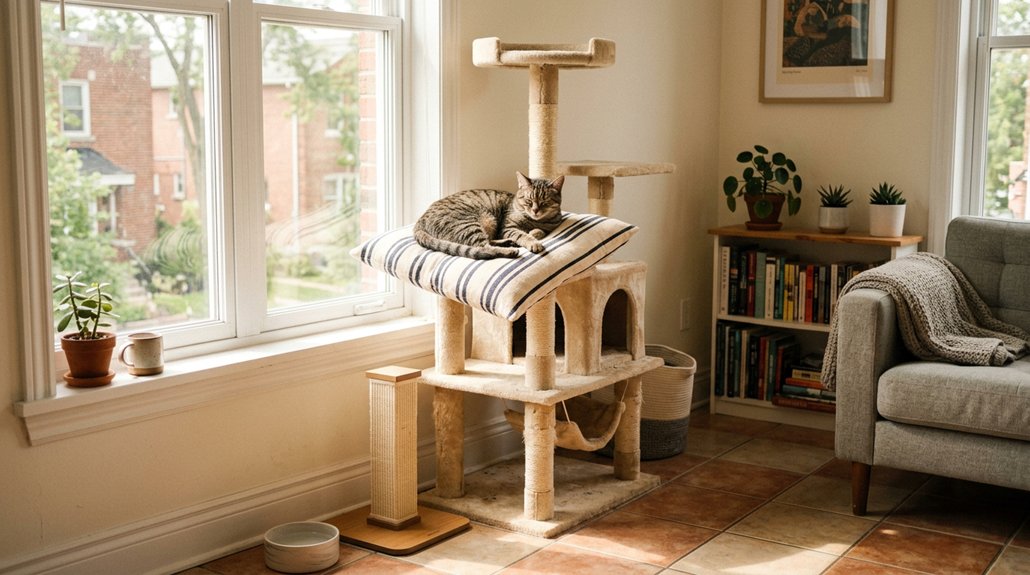
When choosing the best indoor cat breeds for small spaces, focus on those with calm temperaments, low energy, and adaptability to confined environments. Consider the British Shorthair, Russian Blue, Ragdoll, and Scottish Fold, as they exhibit peaceful demeanors ideal for apartment living. Guarantee their comfort with cozy corners, climbing opportunities, and interactive toys for engagement. Establish routines for stability and hygiene with set feeding and litter box times. For further exploration, uncover additional tips that enhance your cat’s well-being.
Key Takeaways
- British Shorthairs are ideal for small spaces due to their calm demeanor and low activity levels.
- Russian Blues adapt well to indoor living with their low-maintenance and quiet nature.
- Ragdolls are suitable for compact apartments as they have a gentle temperament and minimal exercise needs.
- Scottish Folds enhance tranquility in small spaces with their affectionate and quiet temperament.
- Choose breeds that exhibit low energy and independent traits for compatibility with compact living areas.
Criteria for Selecting Apartment-Friendly Cat Breeds
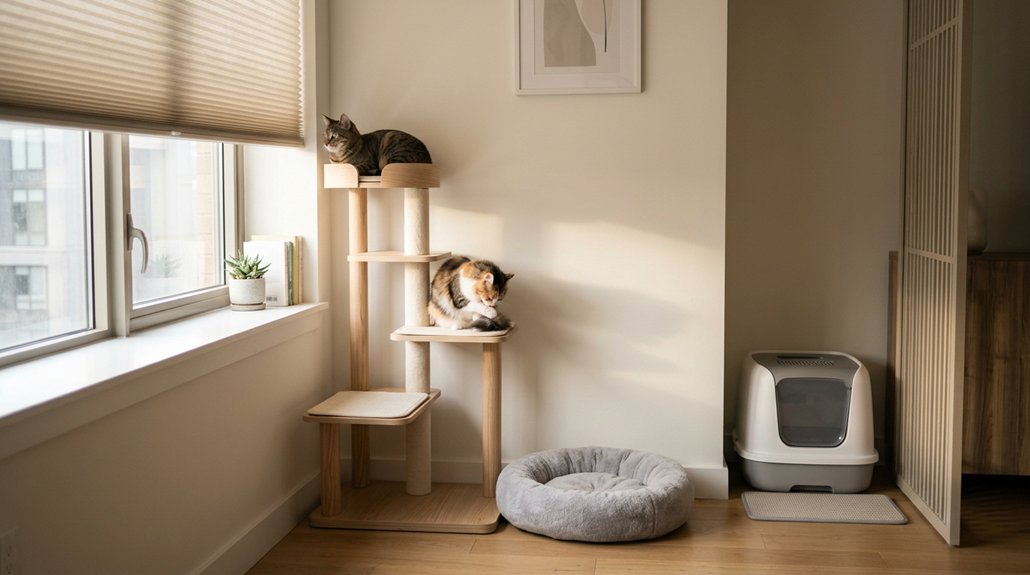
When choosing a cat breed for a small living space, it’s important to evaluate several criteria to guarantee compatibility with apartment life. To begin with, consider the cat temperament. Breeds like Persians, which favor a calm atmosphere, are excellent for quiet environments. Understanding energy levels is also vital; low-energy cats such as Ragdolls, British Shorthairs, and Russian Blues are better suited for compact, quieter settings. Smaller breeds, like Singapura and Burmese, navigate confined spaces with ease and adapt well to indoor living. Additionally, seek independent breeds, such as the Scottish Fold or Exotic Shorthair, which require less attention and can entertain themselves, a significant advantage for busy lifestyles. Ensuring regular veterinary care and a stimulating environment will further support their well-being.
Top Cat Breeds Suited for Small Spaces
Selecting the right cat breed for apartment living is key to ensuring a harmonious environment. Let’s explore some top choices based on cat personalities and breed comparisons:
- British Shorthair: With its calm demeanor, it thrives in compact spaces, thanks to its low activity levels.
- Russian Blue: Known for its low-maintenance and quiet nature, it’s an excellent companion for small homes.
- Ragdoll: Despite its size, its gentle nature and minimal exercise needs suit apartment life well.
- Scottish Fold: Its affectionate and quiet temperament makes it ideal for those seeking a cuddly housemate.
Considering your lifestyle and home size, these breeds bring tranquility to apartments, proving that a cat’s temperament can greatly enhance a cozy living situation.
Setting Up a Compact Apartment for Your Cat’s Comfort
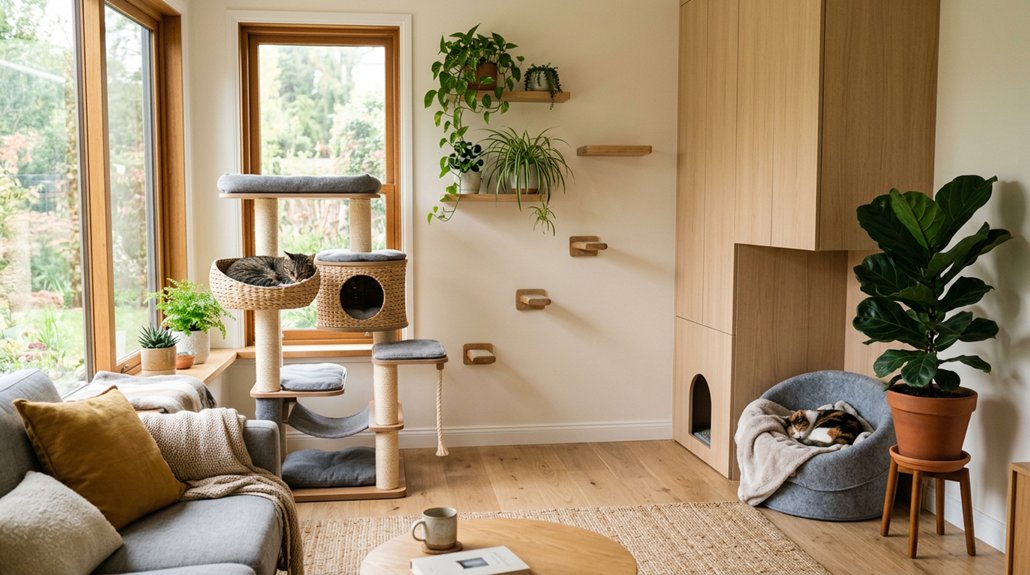
Creating a comfortable and stimulating environment for your cat in a small apartment requires strategic planning and thoughtful design. Start by providing cozy corners with hiding spots and soft perches for security and comfort. Utilize your space efficiently by maximizing vertical climbing opportunities. Install cat trees or shelves to encourage exploration and movement without occupying valuable floor area.
Scratching posts should be placed conveniently to deter furniture damage and to promote natural behaviors. This setup not only helps maintain an organized space but also enhances your cat’s well-being. Finally, keep a consistent daily routine for meals and litter box placement, offering stability and security. These strategies guarantee your feline friend enjoys a harmonious, enriching environment within your compact living space.
Engaging Activities for Keeping Indoor Cats Happy
To guarantee your indoor cat remains happy and healthy, incorporate various engaging activities that stimulate both their body and mind. Interactive toys are fundamental; feather wands or laser pointers encourage physical exercise important for their well-being. Cats require mental stimulation to thrive indoors, which can be achieved through thoughtful activities:
- Vertical Exploration: Install cat trees or shelves to satisfy their climbing instincts and maintain engagement.
- Toys Rotation: Regularly switching toys prevents monotonous play patterns, boosting interest and activity levels.
- Puzzle Feeders: Utilize feeders to challenge their cognitive skills and offer rewards, merging nutritional and intellectual benefits.
- Personal Hideout Spaces: Provide cozy areas for retreat, where cats can experience security and balance relaxation with activity.
These strategies are essential for nurturing a content and stimulated feline companion.
Ensuring a Harmonious Coexistence With Your Apartment Cat
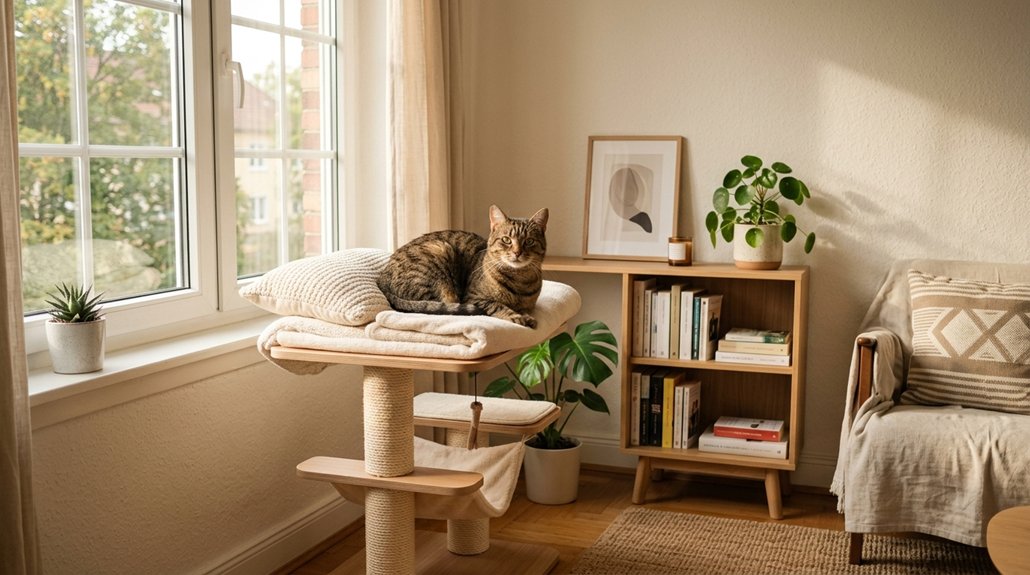
While adjusting to apartment life with your cat, establishing a routine is vital for reducing anxiety and promoting harmonious coexistence. Predictability curbs stress by aligning with natural cat behavior patterns. Set fixed times for feeding and play. In a confined indoor environment, maximize vertical space with climbing structures like cat trees and shelves, facilitating physical activity and mental stimulation. Construct comfortable resting areas, guaranteeing your cat has safe retreats within your compact home. Engage your cat’s senses by rotating interactive toys and offering varied enrichment activities, combating monotony. Maintain the litter box area clean and consistent to uphold hygiene—a significant factor for shared spaces. Implementation of these strategies fosters an enriching environment, nurturing a balanced relationship with your feline companion.
Frequently Asked Questions
What Is the Calmest House Cat?
You’d find the British Shorthair, Ragdolls, and Persians to be among the calmest house cats. Their gentle dispositions and preference for tranquil environments make them ideal companions for those seeking serenity in small, peaceful living spaces.
What Annoys Cats the Most?
Loud noises and unexpected movements are what annoy cats the most. You’re likely to upset them with things like vacuum cleaners, sudden gestures, or if you introduce new pets without giving them time to acclimate.
How Do Cats Say I Love You With Their Eyes?
Cats say “I love you” with their eyes through slow blinks, demonstrating trust and affection. This eye communication fosters feline bonding, as these blinks indicate they feel relaxed and secure with you, showing their emotional connection.
Which Cats Are Cuddly and Friendly Indoor Cats?
You’re looking for affectionate felines with playful purrs. Consider Ragdolls, Birmans, or Burmese. They exhibit sociable behaviors, providing warm companionship and engagement. These breeds are known for their gentle nature, adapting well to indoor environments.
Conclusion
In the intricate dance of apartment living, your indoor cat can thrive as your compact companion. By selecting the right breed and creating a cozy environment, you’ll not only enhance their happiness but also your peace of mind. Engage them with playful activities that ignite their curiosity and intellect, ensuring a harmonious bond. As you navigate this feline partnership, remember—your small space is an oasis, and with the right steps, it becomes a haven for both of you.