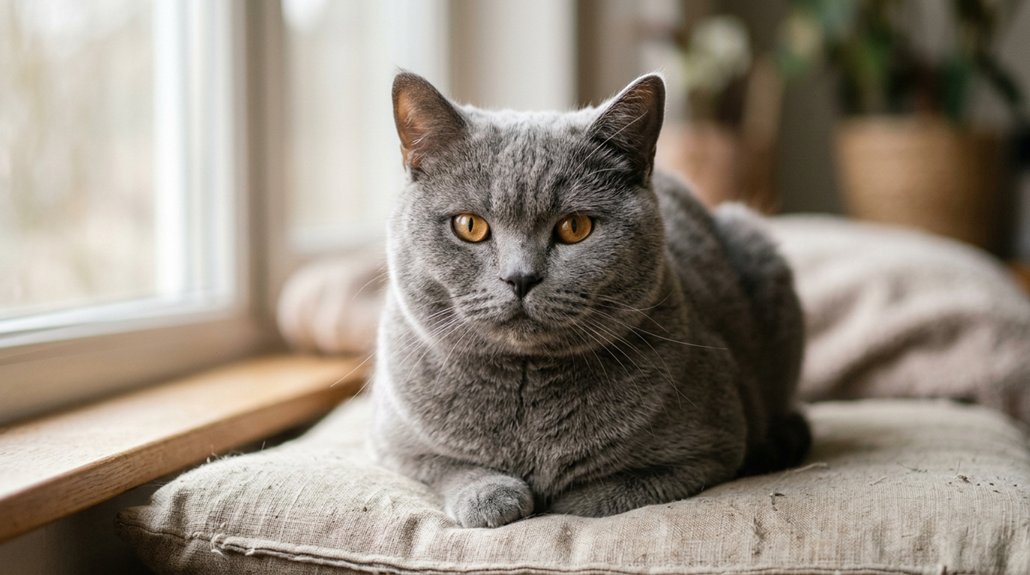
If you’re seeking a serene feline companion, consider quiet cat breeds like Birmans, Chartreux, Persians, Ragdolls, and Exotic Shorthairs. These breeds are known for their minimal vocalization, preferring soft chirps or gentle purrs. They thrive in tranquil environments and are ideal for apartments or homes with sensitive individuals. Their calm demeanor also provides a peaceful presence, reducing auditory distractions. Discover how these gentle breeds can enhance your living space with their peaceful nature and affectionate personalities.
Key Takeaways
- Birman cats are calm and make soft vocalizations, ideal for apartment living.
- Persian cats feature gentle chirps, requiring a tranquil setting and regular grooming.
- Chartreux cats are known for their soft, gentle meows and docile temperament.
- Ragdolls exhibit minimal vocalization with a serene, loving nature, perfect for families.
- Exotic Shorthairs have a mellow temperament and low grooming needs, thriving in peaceful homes.
Why Quiet Cats Make Ideal Pets
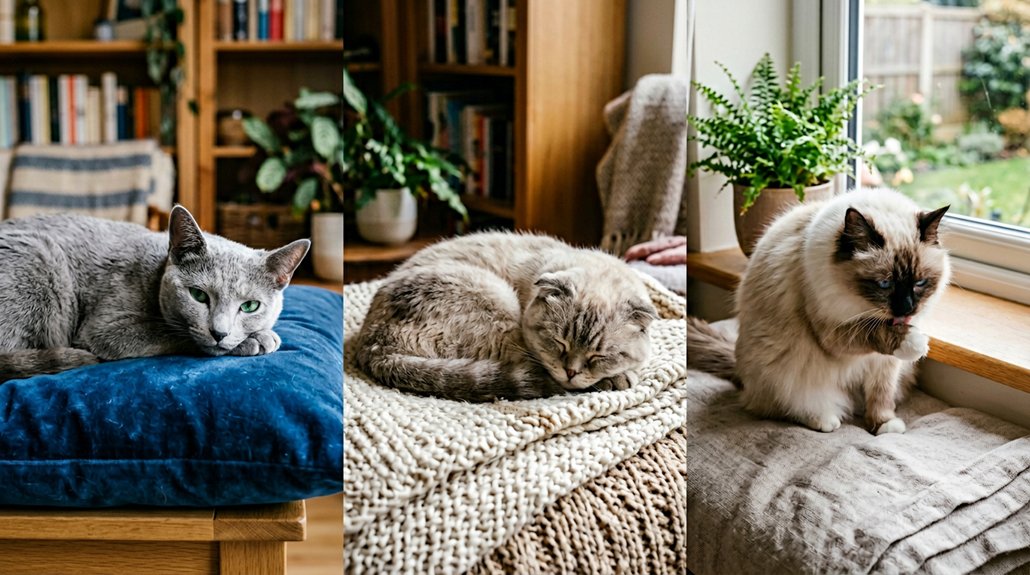
Although various cat breeds possess unique vocal attributes, quiet cats make ideal pets for those seeking tranquility in their homes. These felines exhibit distinct cat personality traits that rely on body language and physical affection, often creating a serene domestic atmosphere. Quiet breed characteristics, such as those found in the Birman or Chartreux, focus on forming strong bonds with their owners while maintaining a calm demeanor. They’re less reliant on vocal communication, favoring gentle interactions and engaging in soft sounds or cuddling. This contributes to a harmonious household environment, especially beneficial for families with sensitive individuals or those residing in apartments. Embracing a quiet cat enriches your home with companionship that doesn’t demand attention through loud meows but rather celebrates gentle, peaceful connections.
The Benefits of Having a Quiet Cat
Choosing a quiet cat breed offers clear advantages, especially in maintaining reduced household noise, which can be essential for those living with sensitive individuals or in shared spaces. You’ll find that these cats excel in non-verbal companionship, fostering a unique bond through physical gestures like cuddles and gentle nudges instead of vocal expressions. This auditory tranquility not only creates a serene living environment but also enhances personal relaxation and focus, making quiet cats a great fit for anyone seeking a calming pet presence.
Reduced Household Noise
When you opt for a quiet cat breed, the reduction in household noise can greatly enhance the tranquility of your living space. These feline companions, with their silent playtime, offer a calming presence ideal for individuals with sensory sensitivities, including children and seniors. Their subdued vocalizations foster a serene environment, decreasing auditory distractions. You’re provided with a peaceful atmosphere conducive to relaxation and concentration. Quiet cats are particularly favorable in apartment settings, where less vocal disturbance benefits both you and your neighbors. This diminished background noise allows for clearer focus on activities like reading, working, and meditating, ultimately supporting mental well-being. By choosing a cat breed that doesn’t meow much, you’re investing in sustained domestic harmony for all inhabitants.
Non-Verbal Companionship
With reduced household noise cultivating a tranquil environment, the next layer of benefit comes from non-verbal companionship offered by quieter cat breeds. These cats excel at forming emotional bonds through silent gestures like gentle purring and affectionate nudging. Such non-verbal communication not only fosters a deeper connection with you but also enhances serenity for those sensitive to noise. Quiet cats’ behaviors—cuddling, following you, or gently head-butting—provide emotional comfort. They don’t need vocal communication to show their affection. This makes them ideal companions in shared spaces or for activities requiring focus, like reading or working. The emotional bonds formed with these cats enrich the pet-owner relationship without the distraction of excessive meowing.
| Benefits | Quiet Cat Traits |
|---|---|
| Increased Focus | Minimal Vocal Distractions |
| Emotional Bond | Gentle, Silent Gestures |
| Comfort | Affectionate Behaviors |
How to Care for Quiet Cat Breeds
To properly care for quiet cat breeds, it’s essential to recognize their unique needs and preferences, which include interactive play and physical affection rather than vocal communication. Ensuring your cat’s well-being involves consistent routines that foster trust and comfort. Here are key points for nurturing these serene companions:
Quiet cats thrive with interactive play, physical affection, and consistent routines that build trust and comfort.
- Grooming Tips: Regular grooming is important for breeds like Persians and Birmans. Frequent brushing prevents matting and keeps their coats healthy.
- Interactive Play: Engage in daily play sessions using toys that stimulate hunting instincts. This not only keeps them physically active but also mentally stimulated.
- Calm Environment: Create a peaceful space with cozy areas where your cat can retreat. A quiet home promotes relaxation, aligning with their tranquil nature.
Monitor health by observing changes in behavior.
Top 9 Quiet Cat Breeds for Peaceful Living
If you’re seeking ideal companions for apartment living, understanding cat breeds that prioritize quiet and non-verbal communication can be invaluable. Breeds like Birmans and Chartreux are known for their gentle interaction styles, conveying affection through subtle gestures rather than loud vocalization. These traits make them low-maintenance yet affectionate pets, perfectly suited for households desiring tranquility.
Ideal Apartment Companions
When selecting a cat for apartment living, it’s important to take into account breeds known for their quiet nature and gentle disposition. These cats adapt seamlessly to smaller apartment spaces and fit well into daily routines, where silence is cherished. To help you make the best choice, consider these breeds:
- Birman: Known for its soft vocalizations and calm demeanor, the Birman offers companionship without overwhelming noise, perfect for peaceful apartment settings.
- Persian: Preferring tranquility, Persians engage in gentle cuddles rather than vocal interactions, ideal for maintaining serenity.
- Cornish Rex: Combining playfulness with reservation, the Cornish Rex interacts with humans quietly, enhancing social yet quiet moments.
Adopting such breeds contributes to a serene atmosphere, allowing you to focus on daily activities undisturbed by excessive meowing.
Non-Verbal Communication Traits
In addition to contemplating quiet cat breeds for apartment living, it’s beneficial to explore their non-verbal communication traits, which offer distinctive ways to connect. Breeds like the Birman and Ragdoll harness body language cues, favoring physical affection and gentle nudging over vocalization. The Chartreux and Persian subtly communicate through soft sounds like quiet meows or chirps, promoting tranquility. Meanwhile, the Havana Brown and Scottish Fold engage through subtle gestures rather than loud noises, reflecting calm demeanor. Importantly, the Selkirk Rex and Exotic Shorthair express affection with non-verbal cues, such as silently following or curling up beside you. Breeds like the Nebelung and Burmese adapt well, expressing needs through gentle actions rather than meows, enhancing peaceful environments.
Low-Maintenance Affection Seekers
While searching for low-maintenance affection seekers in the domain of quiet cat breeds, it’s vital to contemplate their temperament and upkeep needs. Breeds such as the Exotic Shorthair and Selkirk Rex excel in low maintenance grooming, complemented by their mellow temperaments, making them perfect for laid-back settings. Ragdolls and Birmans are renowned for their affectionate behavior, offering peace and companionship with minimal vocal disruption. The Himalayan provides the ultimate soothing presence with its cuddly nature and low noise levels. Consider these attributes:
- Affectionate Behavior – Breeds like the Ragdoll and Birman thrive on human interaction without demanding excessive attention.
- Low Maintenance Grooming – Exotic Shorthairs and Selkirk Rexes require simple care routines.
- Quiet Companions – Breeds like the Himalayan offer undisturbed tranquility in serene households.
Birman: The Relaxed and Loving Friend
The Birman cat breed, renowned for its affectionate nature, is remarkably well-suited for individuals and families looking for a relaxed feline companion. With a sturdy build and silky coat, Birmans are a medium-sized breed known for their striking blue eyes and color-pointed pattern. Their grooming needs are minimal; regular brushing suffices, as their fur rarely mats. Birmans maintain a playful demeanor without loud vocalizations, preferring serene environments.
| Attribute | Description | Characteristics |
|---|---|---|
| Lifespan | 12 to 16 years | Long, fulfilling life |
| Weight | 7 to 14 pounds | Medium-sized, sturdy |
| Temperament | Affectionate, playful | Quiet, gentle demeanor |
These gentle, sociable cats easily bond with children and other pets, making them ideal for family settings.
Meet the Chartreux: France’s Quiet Gem
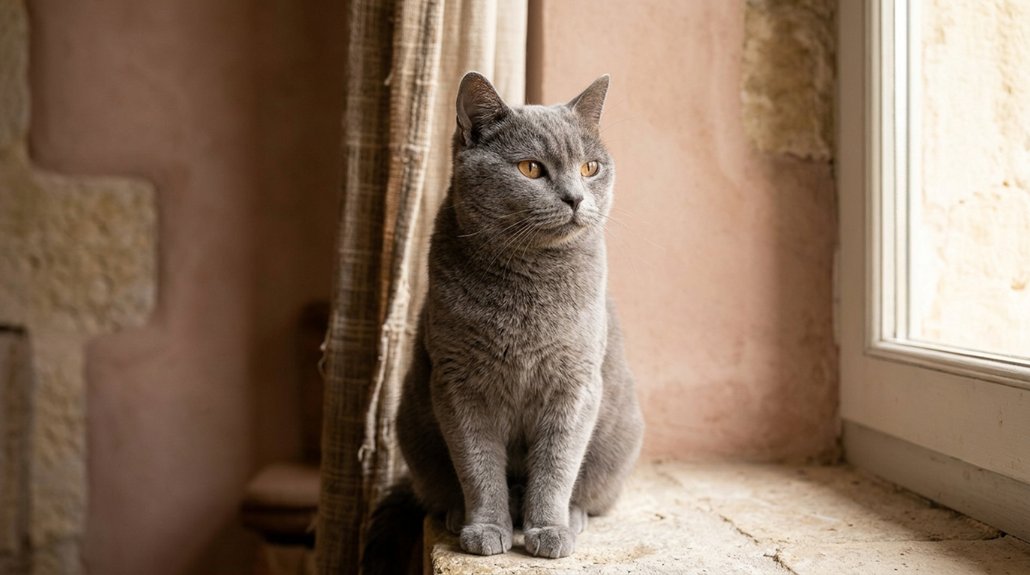
Some might say the Chartreux is a feline masterpiece crafted by nature itself. Rooted in Chartreux history, this distinguished breed is noted for its elegant blue-gray coat. Chartreux characteristics make them ideal family pets due to their affable nature. You’re likely to appreciate their serene presence as these cats prefer soft, gentle meows and expressive body language over vocal demands.
Key Characteristics:
- Temperament: Friendly, docile, and adaptable to apartments.
- Physical Traits: Medium-sized, solidly muscled, blue-gray fur.
- Lifespan and Bonding: Lives 11-15 years, bonds closely with owners.
Living with a Chartreux means enjoying a calm yet intelligent companion who thrives on gentle interaction and mental stimulation. Naturally aloof with strangers, they remain ever loyal to their chosen humans.
Persian Cats: Graceful, Soft-Spoken Companions
Many regard Persian cats as the epitome of grace and tranquility, embodying a gentle presence that complements serene households beautifully. Known for their calm demeanor, they communicate through soft chirps and purrs, reflecting their soft-spoken personality. As a responsible owner, you’ll find that Persian grooming is essential. Their luxurious long fur requires regular attention to prevent matting and maintain their striking appearance. This grooming ritual can strengthen your bond, introducing a gentle routine that Persians find comforting. This breed thrives in stable environments, making them ideal for quiet households. While their friendly nature suits families, they’re initially reserved and require a patient approach to build trust. Their companionship is both simple and profound, leaving a lasting, quiet impact.
Ragdolls: Peaceful and Affectionate Housemates
Known for their serene temperament and loving disposition, Ragdolls serve as delightful companions in tranquil households. Their calm demeanor often involves minimal vocalization, making them ideal for those seeking peaceful pets. However, don’t let their quiet nature fool you; Ragdoll playfulness is gentle and endearing. They enjoy interactive play, thriving in environments with children and other pets.
Ragdolls, with their gentle and serene nature, make ideal companions in peaceful, family-friendly environments.
These feline friends typically weigh between 10 to 20 pounds and have a life expectancy of 12 to 17 years. Their medium-length, soft coat requires regular Ragdoll grooming, which is quite manageable due to their relaxed nature. Consider these reasons Ragdolls stand out:
- Minimal meowing yet engaging play.
- Affectionate, child-friendly nature.
- Easy grooming suits busy lifestyles.
With such qualities, they’re loyal, long-term companions.
Final Considerations for Choosing a Quiet Cat
Having explored the gentle and affectionate nature of Ragdolls, it’s worth considering other quiet cat breeds that offer similar tranquility. Consider adopting a Birman or Persian for their gentle companionship and minimal vocalization. If you’re seeking an adaptable breed, LaPerms and Selkirk Rexes thrive in various living spaces, offering calm environments without demanding excessive attention. Chartreux cats are particularly prized for their soft-spoken nature, perfect for households yearning for serenity. An adult adoption can be advantageous since mature cats, regardless of breed, often exhibit quieter behaviors than kittens, ensuring a peaceful household atmosphere. Engage these cats with regular play and mental stimulation to prevent boredom. Opt for a breed that mirrors your lifestyle and personal preferences to maintain a harmonious household.
Frequently Asked Questions
Which Cat Breeds Meow the Least?
Birman, Chartreux, Ragdoll, Exotic Shorthair, and Persian are gentle feline breeds that meow the least. These low maintenance cats offer soft, calm companionship, using minimal vocalizations and favoring serene interactions, perfect for noise-sensitive home environments.
What Is the 3-3-3 Rule for Cats?
The 3-3-3 rule guides you through your cat’s adjustment: three days to acclimate, three weeks for daily routine adaptation, and three months to reveal true personality. This helps you understand feline adjustment and encourage positive cat behavior.
What Is “I Love You” in Cat Language?
In cat language, “I love you” is expressed through slow blinks, gentle nose bumps, and contented purring. Understanding feline body language and purring meanings helps you recognize these affectionate gestures, signaling trust and deep emotional connection.
What Is a Cat’s Worst Enemy?
A cat’s worst enemy is stress, an absolute tornado to their well-being. It disrupts cat behavior, challenges feline instincts, and can spiral into anxiety or aggression. Routine vet care and a calm environment mitigate these adverse effects.
Conclusion
Choosing a quiet cat is like inviting serenity itself to make a home in your life. As you nurture these peaceful companions, you’ll discover a world of tranquility that whispers gently like a soft breeze. They ask for little while offering much, making them the quiet guardians of your peace. Whether you’re seeking solace or simply a more serene household, a quiet cat breed might just be the silent symphony you need to create harmony in your home.