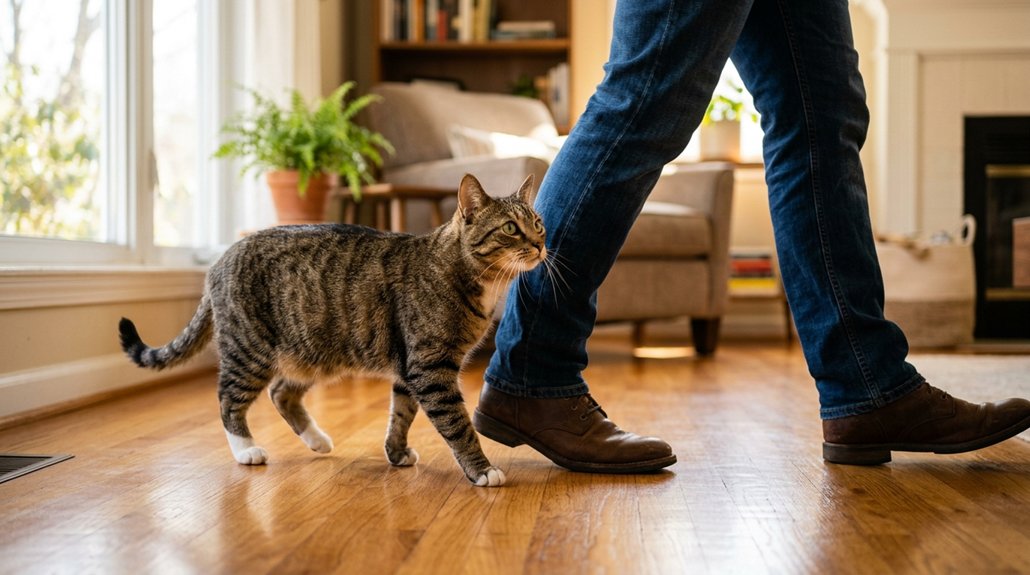
Your cat follows you everywhere due to a combination of strong social bonding, curiosity, and protective instincts. As mealtime approaches, their trailing behavior often signals hunger. Routine and anticipation of feeding strengthen this behavior, while attention-seeking may indicate a need for mental stimulation or a response to stress. Excessive clinginess can also suggest health issues needing evaluation. Explore further to uncover insights into managing these behaviors effectively.
Key Takeaways
- Cats follow for social bonding, seeking security and affection through proximity to their human companions.
- Hunger prompts cats to follow, especially near mealtime, anticipating food and nourishment.
- Curiosity drives cats to explore and observe their humans’ actions and environment.
- Protective instincts may lead cats to monitor their humans’ safety, acting as vigilant companions.
- Established routines and interactions encourage following behavior as cats anticipate predictable patterns.
Why Your Cat Follows You: Key Reasons
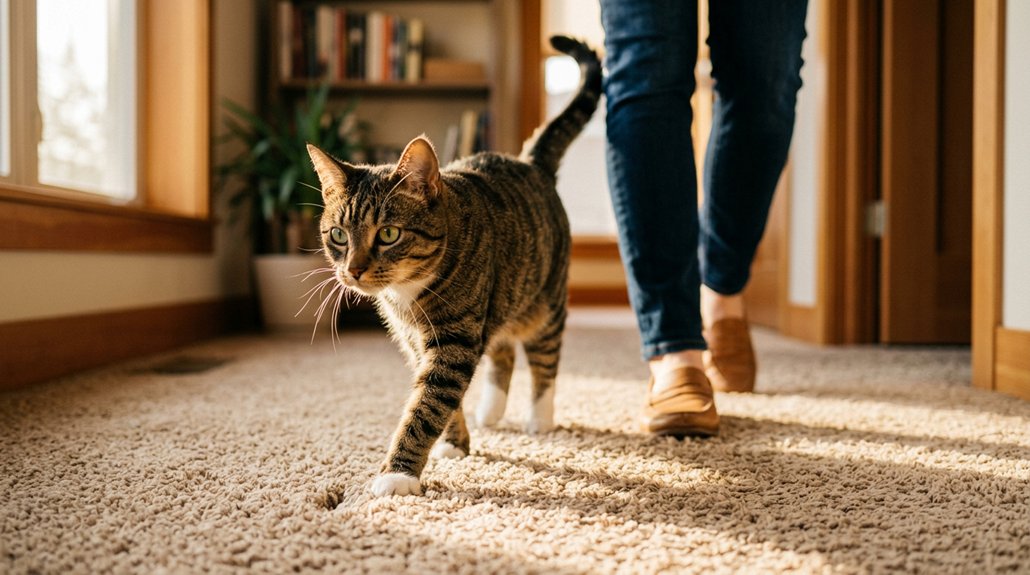
Several key reasons explain why your cat follows you. Strong social bonding often compels your cat to stay near, offering them a sense of security and affection. This bond guarantees they feel valued and safe. Curiosity fuels exploratory behavior as your cat investigates your actions, supplementing their understanding of the environment. Particularly, closed-off areas intrigue them, prompting further investigation. Beyond these, the protective instincts in cats may lead them to monitor your safety, acting as vigilant companions. Additionally, established routines can habituate them to follow, expecting regular interactions such as scheduled play or rest. This behavior intertwines affection, routine, and the intrinsic feline curiosity, highlighting the multifaceted relationships formed between cats and their humans.
Understanding Hunger and Feeding Cues in Cats
Have you ever noticed your cat trailing you around, especially as mealtime approaches? It’s a behavior deeply rooted in their hunting instincts and can often be attributed to hunger cues. Cats aren’t just being curious; they’re signaling their need for food. Here are some points to contemplate:
Cats following you before meals is linked to their hunting instincts, signaling hunger and anticipation for food.
- Natural Timing: Cats’ heightened activity around dawn or dusk mirrors their ancestral hunting instincts.
- Association with Feeding: Many cats associate you with their feeding schedule, leading them to follow in anticipation.
- Managing Behavior: A structured feeding schedule can reduce this trailing behavior and decrease instances of begging.
- Mental Stimulation: Integrating puzzle feeders or treat-dispensing toys stimulates their mind while addressing hunger.
Implement these strategies to better understand and manage your cat’s behavior.
How to Manage Attention-Seeking Cats
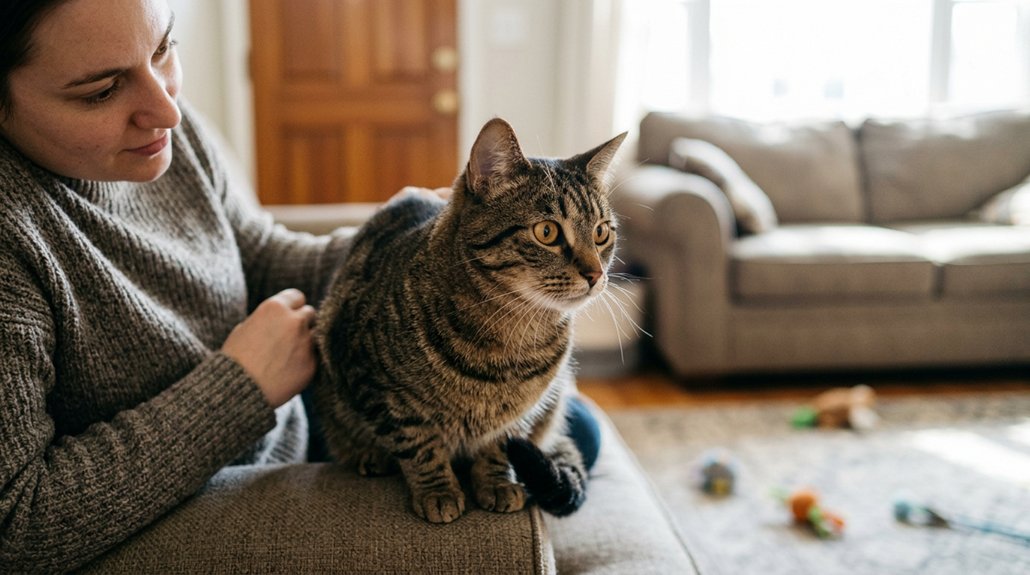
When your cat displays excessive attention-seeking behavior, it’s often a sign that they’re not getting enough mental and physical stimulation. To address this, increase interactive playtime using wand or teaser toys. These activities fulfill your cat’s social needs while reducing their need for attention. Establishing a consistent daily routine for feeding and play provides structure, easing anxiety and promoting security. Offering mental stimulation through puzzle feeders and treat-dispensing toys can keep your cat engaged, mitigating boredom-induced attention-seeking. You should also create a cozy, designated space for your cat, encouraging independence. Gradually practice short separations, helping your cat become comfortable alone. This balanced approach can effectively manage your cat’s attention-seeking tendencies, creating a more harmonious environment.
Spotting Signs of Stress or Illness in Your Cat
A cat’s behavior can be a key indicator of underlying stress or illness. Monitoring these behaviors helps guarantee your feline’s well-being. Stress indicators in cats often manifest as changes in their typical habits, signaling potential health issues. Consider these signs:
- Increased Clinginess: Cats suddenly desiring constant companionship may indicate anxiety or discomfort.
- Altered Appetite or Litter Box Habits: Changes here suggest stress or digestive concerns needing health monitoring.
- Excessive Vocalization or Hiding: Such behaviors can signify stress, necessitating close observation.
- Aggression or Withdrawal: Unusual aggression or decreased social interaction may point to illness.
Regular veterinary check-ups play a crucial role in health monitoring, particularly if there are significant shifts in following behavior. Early detection guarantees prompt care.
Practical Steps to Handle a Clingy Cat
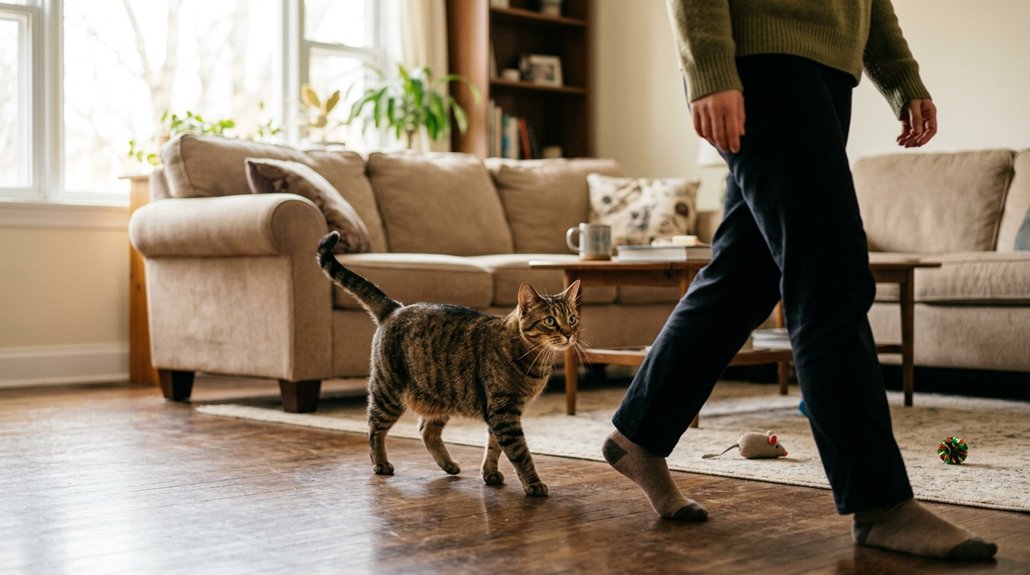
While it’s natural for cats to seek companionship, an overly clingy cat may indicate underlying anxiety or a disruption in their comfort zone. Initiate behavior modification by establishing a consistent routine for feeding, playtime, and grooming, providing a structured environment for emotional support. Engage your cat with mentally stimulating toys, such as puzzle feeders, to fulfill their cognitive needs, reducing dependence on your attention. Create an inviting, designated area where they can relax independently, promoting self-reliance. Gradually introduce short separations, reinforcing calm behavior with praise or treats, to alleviate separation anxiety. If clinginess persists or is coupled with other troubling behaviors, consult a veterinarian or animal behaviorist. This professional guidance can address potential health or deeper anxiety issues effectively.
Frequently Asked Questions
What Does It Mean if Your Cat Follows You Everywhere?
Your cat’s constant following often reflects feline companionship and curiosity. Their territorial behavior means they’re ensuring their environment and you, as part of it, are secure. Sometimes, it might indicate anxiety, hunger, or a potential health issue.
What Is the 3-3-3 Rule for Cats?
The 3-3-3 rule for cats is like a plant’s growth stages: initial stress, exploration, then stability. It outlines the cat adjustment period, offering feline behavior tips for a smoother adjustment to their new environment and emotions.
What Is “I Love You” in Cat Language?
Cats say “I love you” through cat communication and feline affection like purring, slow blinking, bunting, or gifting. Each action conveys trust, affection, and a shared bond scientifically recognized among cats’ ways of forming human-animal relationships.
What Breed of Cat Is the Most Clingy?
Among clingy breeds, the Siamese cat stands out, receiving affection scores of 9.5/10 in numerous studies. Known for affectionate behaviors, their vocalization and need for companionship illustrate why they’re considered such closely attached feline companions.
Conclusion
Understanding why your cat follows you boils down to a mix of instincts, needs, and behavior patterns. If your cat’s shadowing you like it’s attached at the hip, they’re seeking more than just food; they crave attention or may be signalizing a health concern. By identifying hunger cues, managing attention-seeking behavior, and recognizing stress or illness, you’re creating a harmonious environment. Employ practical strategies to manage behavior, ensuring your feline companion feels secure and content.