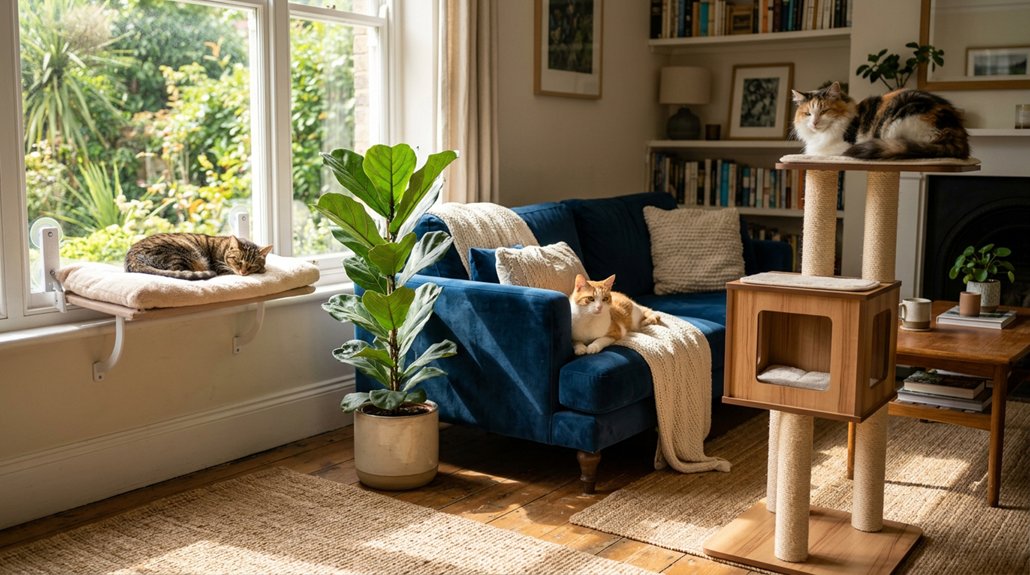
In multi-cat homes, reduce tension by understanding resource competition and social hierarchy. Guarantee equal access to food, water, and litter boxes to minimize territorial disputes. Encourage positive interactions through shared play and grooming. For new introductions, use gradual exposure and scent swapping. Regularly monitor behavior to detect stress signs and make necessary adjustments. Engage cats with stimulating activities and maintain cleanliness to prevent conflicts. For deeper insights, further exploration is in order.
Key Takeaways
- Allocate individual food and water bowls for each cat with one extra to prevent resource competition.
- Use gradual introductions and scent swapping to acclimate new cats and reduce stress.
- Provide distinct zones and personal spaces to minimize territorial disputes among cats.
- Monitor cat interactions for signs of stress and adjust resource distribution as needed.
- Encourage positive behavior with shared play and treat rewards to foster camaraderie.
Why Cats Get Tense and What You Can Do
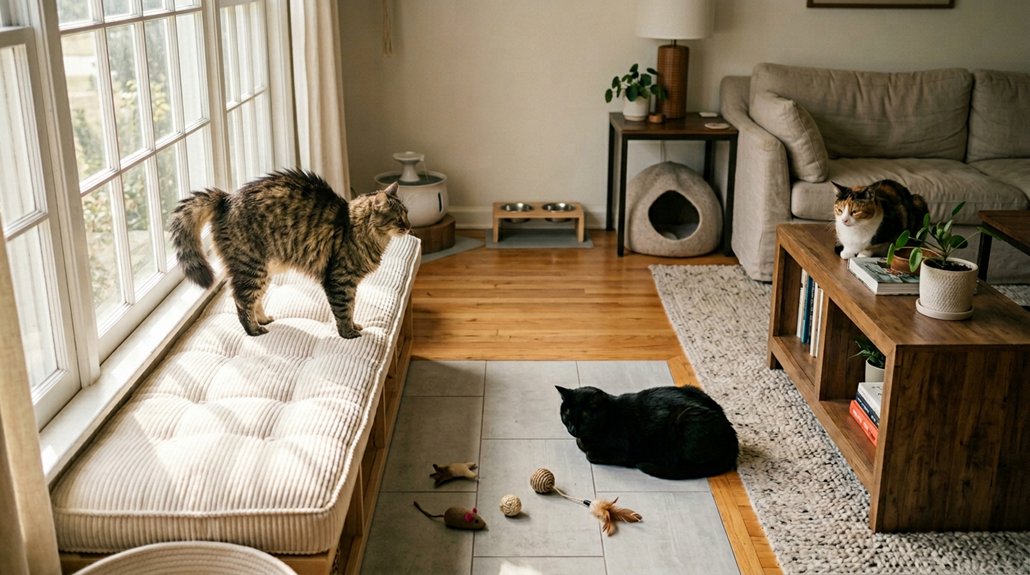
Intercat tension often arises from the competition for resources, such as food, water, and litter boxes, creating rivalry and stress among cats. In multi-cat households, understanding social hierarchy is essential, as it influences access to these limited resources. A disruption, like the introduction of a new cat, can become an anxiety trigger, disturbing the established order and increasing stress levels. Behavioral changes such as avoidance or direct aggression indicate rising tensions, often exacerbated by environmental stressors, including household changes or health issues in one cat. Identifying these anxiety triggers is the first step in mitigating tension. By being observant and responsive, you can better manage the social dynamics in your home to foster a more peaceful coexistence among your cats.
Fairly Distribute Resources Among Cats
To effectively reduce tension in your multi-cat home, it’s essential to allocate resources adequately by providing each cat with their own food bowl, water bowl, and litter box, plus one extra for each type. Position these resources several feet apart in distinct areas to minimize territorial disputes, allowing your cats to coexist peacefully. Additionally, maintaining an appropriate number of scratching posts helps satisfy their natural instincts, further preventing potential conflicts.
Adequate Resource Allocation
Providing adequate resources plays an essential role in ensuring harmony in multi-cat homes. Effective resource availability and distribution can keep your cats content and minimize competition. Implement the guideline of supplying one food and water bowl, one litter box, plus one extra for each cat. This promotes fair access and reduces tension. Strategically position these resources in different areas to enhance individual access. Keep litter boxes pristine; failing to maintain cleanliness can lead to stress-induced behavior changes. Use scratching posts and resting spots throughout the home to give each cat its own territory. Finally, continually observe your cats and adapt resource distribution as necessary. By doing so, you’re actively fostering a peaceful coexistence and reducing stress in your multi-cat environment.
Minimize Territorial Disputes
When aiming to minimize territorial disputes in a multi-cat household, it’s crucial to distribute resources in a way that respects each cat’s need for personal space and autonomy. Effective space management involves placing multiple food and water bowls in separate locations, allowing each cat to access resources without undue competition. Follow the “one box per cat plus one” strategy for litter boxes, strategically positioning them to avoid perceived resource sharing issues. Resource allocation should also include separate scratching posts throughout the home, empowering cats to establish individual territories. Provide various resting spots and elevated perches to maintain stress-free environments. Regular cleaning of shared resources promotes usage, reducing territorial conflicts caused by unhygienic conditions and discouraging resource guarding behavior.
Encourage Positive Cat Interactions
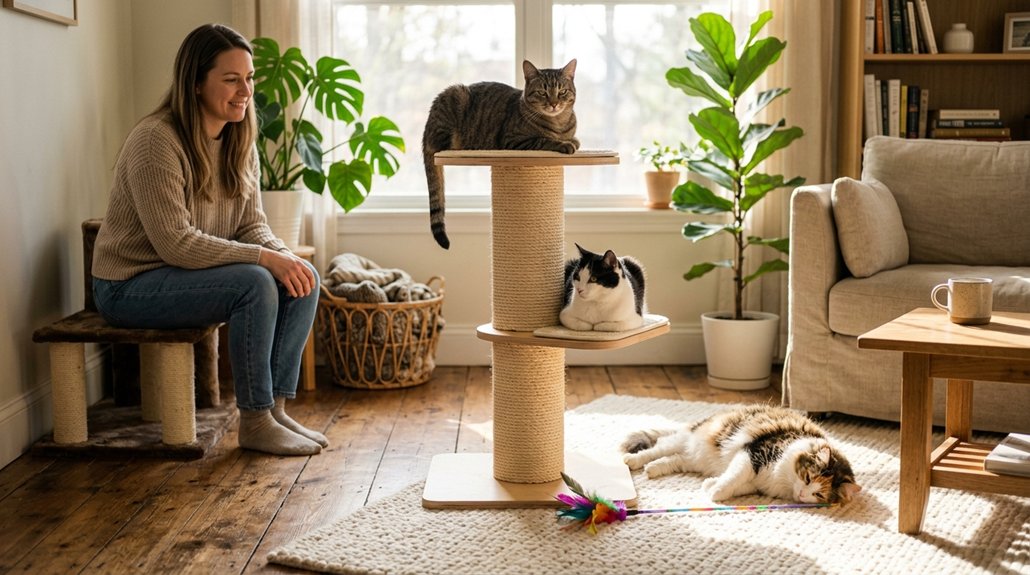
To foster positive interactions among your cats, promote shared playtime with engaging toys that stimulate their natural instincts without fostering competition. You can also encourage gentle grooming sessions, which can enhance bonding and reduce tension. Monitor their body language to guarantee each interaction remains calm and positive, intervening with reinforcement techniques when necessary.
Promote Shared Playtime
Enhancing social interaction in multi-cat homes begins with the strategic use of shared playtime. Utilizing interactive toys such as wand toys and laser pointers can greatly promote cooperation and positive interactions. Supervising these play sessions guarantees that they remain constructive and safe, minimizing aggression. Scheduling these sessions daily helps establish a routine, which is vital for effective socialization.
Food puzzles or treat-dispensing toys that require cooperative play can foster teamwork and create positive associations among the cats. It’s important to observe each cat’s play style and preferences. Doing so allows you to tailor activities effectively, creating a balanced mix of competitive and cooperative play. This approach mitigates social stress, encouraging harmonious living conditions in multi-cat households.
Foster Gentle Grooming Sessions
If you’re looking to reduce tension in your multi-cat household, fostering gentle grooming sessions can be an effective strategy. Regular grooming promotes social bonding, with studies highlighting mutual grooming‘s ability to improve feline relationships and decrease stress. To foster these peaceful interactions, start by using treat rewards as positive reinforcements. It’s important to employ grooming techniques tailored to each cat’s coat type and temperament to maintain a stress-free environment. Initial supervision is critical; watch for signs of aggression and separate if necessary to guarantee comfort.
- Use treats: Incentivize grooming with reward-based treats.
- Choose suitable tools: Select grooming tools adapted to your cats’ needs.
- Monitor interactions: Keep an eye out for stress indicators.
- Encourage hierarchy: Establish shared grooming roles for harmony.
How to Gradually Introduce a New Cat
While bringing a new cat into a home with existing feline residents can initially seem intimidating, implementing a structured introduction process can greatly ease tensions and facilitate smoother interactions. Begin by creating a separate space for the newcomer, guaranteeing essentials like food, water, and bedding are present to minimize stress. Incorporate scent swapping and gradual exposure by allowing visual introductions through a closed door. This method helps resident cats become familiar with the new addition without direct contact.
| Introduction Phase | Key Action | Purpose |
|---|---|---|
| Initial Setup | Create separate space | Minimize stress, guarantee comfort |
| Scent Exchange | Scent swapping | Familiarize through scent, lower anxiety |
| Visual Interaction | Gradual exposure | Enable familiarity without direct contact |
Supervise any face-to-face interactions, aiming for peaceful cohabitation. Patience is key as adjustments may take weeks.
Keep Cats Engaged With Activities and Play
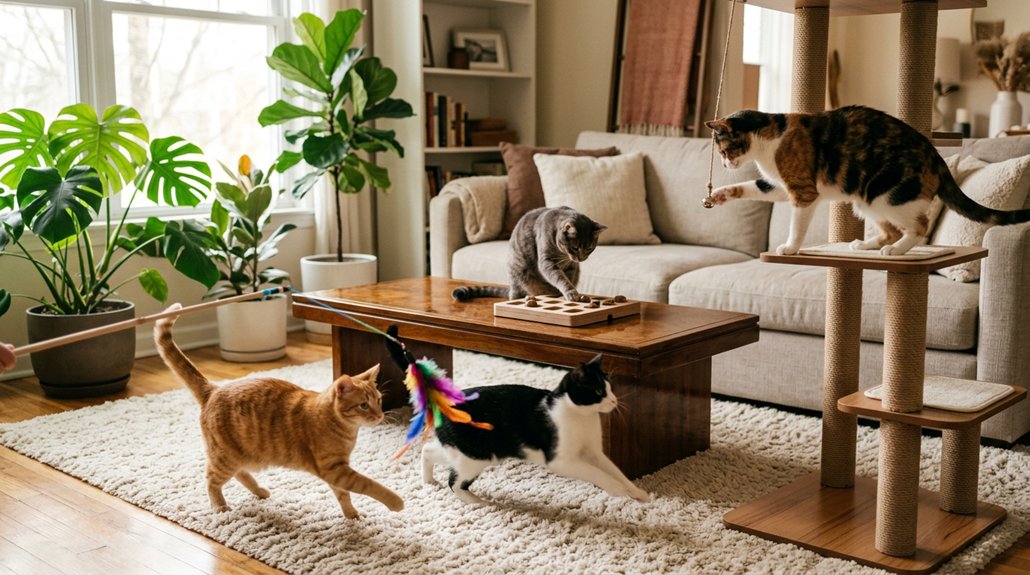
Maintaining a harmonious multi-cat household often depends substantially on effective engagement strategies. Integrating interactive toys and structured play routines can mitigate tensions among your feline companions. Stimulate their natural instincts with toys that mimic hunting, like feather wands or laser pointers, ensuring each cat actively participates in playful dynamics. Food puzzles during meal times provide mental engagement and reduce competition, slowing feeding pace and easing potential discord. Elevated perches and cat trees offer your cats essential climbing and observational spaces, relieving stress and promoting independence.
- Rotate toys regularly to keep the environment fresh and engaging.
- Schedule joint play sessions to foster positive interactions.
- Utilize interactive toys to encourage active participation.
- Elevate play with strategic perches and climbing structures.
Methodical implementation of these strategies enhances peace and camaraderie.
Monitor Cat Behavior and Make Adjustments
Observing your cats’ behavior is essential for identifying and mitigating signs of tension. Behavior observation should focus on subtle cues such as prolonged staring or avoidance, which may indicate stress. Regularly monitor interactions and resource usage to understand dynamics and anticipate conflicts. If tension arises, environmental adjustments are vital. Create distinct zones, ensuring each cat has access to food, water, litter boxes, and personal spaces to minimize competition. Keep an eye on behavioral changes like increased aggression or withdrawal, signaling necessary interventions. Supervised play not only reinforces positive behavior but also provides a controlled environment to watch how cats react towards each other. Timely behavior observation and environmental adjustments can maintain harmony in your multi-cat household.
Implement Long-term Strategies for Peaceful Coexistence
Creating a harmonious environment for multiple cats hinges on effective resource distribution and strategic introductions. Implementing long-term strategies involves not just resources, but also attention to environmental enrichment and stress signs. Consider these elements:
- Resource Allocation: Guarantee each cat has access to multiple food bowls, litter boxes, and resting spots. Use the formula of one resource per cat plus one extra to minimize competition.
- Gradual Introductions: Introduce new cats slowly with visual and scent exposure, allowing adjustment over weeks or months.
- Environmental Enrichment: Provide diverse perches and hiding spots to guarantee cats can retreat to their own territories and reduce conflict.
- Regular Observation: Keep an eye on interactions to spot early stress signs, aiding in timely interventions and resource adjustments.
Strategically implementing these will foster peaceful coexistence.
Identifying When to Consult a Professional
When intercat tension escalates beyond manageable levels, it is crucial to recognize the signs that necessitate consulting a professional. Observing frequent aggressive behavior—such as fighting or sustained hissing—indicates the need for professional support from a certified cat behaviorist. This expert can develop tailored strategies to address such behavioral signs. If chronic stress emerges, manifesting as over-grooming or litter box avoidance, deeper behavioral issues might be present, warranting professional assistance. Even when you’ve attempted gradual introductions and resource management without improvement, professional guidance can reassess household dynamics effectively. Furthermore, consult a veterinarian if a cat’s behavior changes upon introducing a new cat, as health issues might underlie tension. Engaging professionals guarantees your cats receive the necessary evaluation and intervention.
Frequently Asked Questions
How Can I Identify Stress Signs Unique to My Individual Cat?
Observe your cat’s body language for signs like flattened ears or twitching tails. Analyze grooming habits; excessive grooming might indicate stress. It’s crucial to monitor changes and consult resources to differentiate between stress-related behavior and normal actions.
Are There Specific Scents or Pheromones That Help Calm Cats?
Yes, specific scents like catnip can have calming effects on cats. Pheromone diffusers release synthetic pheromones mimicking cat facial pheromones, effectively reducing stress and anxiety. They’re beneficial in multi-cat environments for maintaining harmony.
What Dietary Changes Can Reduce Tension in Cats?
Adjusting a cat’s diet can help reduce tension. Introduce dietary supplements rich in omega-3 fatty acids and vitamins. Implement a regular feeding schedule to establish stability and predictability, which can decrease anxiety and irritability in multi-cat households.
How Does Age Affect Tension Levels in Multi-Cat Homes?
Like a tale of Odysseus battling Cyclopes, age dynamics in multi-cat homes create tension. Kittens might challenge territorial boundaries and elicit frustration from senior cats, whose behavior often focuses on maintaining dominance and routine, leading to conflicts.
Can Music or Sound Therapy Help Relax Multiple Cats in a Household?
Yes, you can use music effects or sound environments to calm multiple cats. Play soothing tunes through speakers. Strategically selected frequencies create a calming ambiance, potentially reducing stress and fostering peaceful coexistence among your cats.
Conclusion
In your multi-cat home, tension might seem inevitable, but implementing these strategies can transform your environment. You might think it’s too hard to keep every cat happy, but by distributing resources fairly and fostering positive interactions, you’ll create harmony. Engaging your cats through play and monitoring behavior are key in making necessary adjustments. Remember, consistent effort and long-term strategies are essential; however, if tensions persist, consulting a professional can provide the tailored guidance you may need.