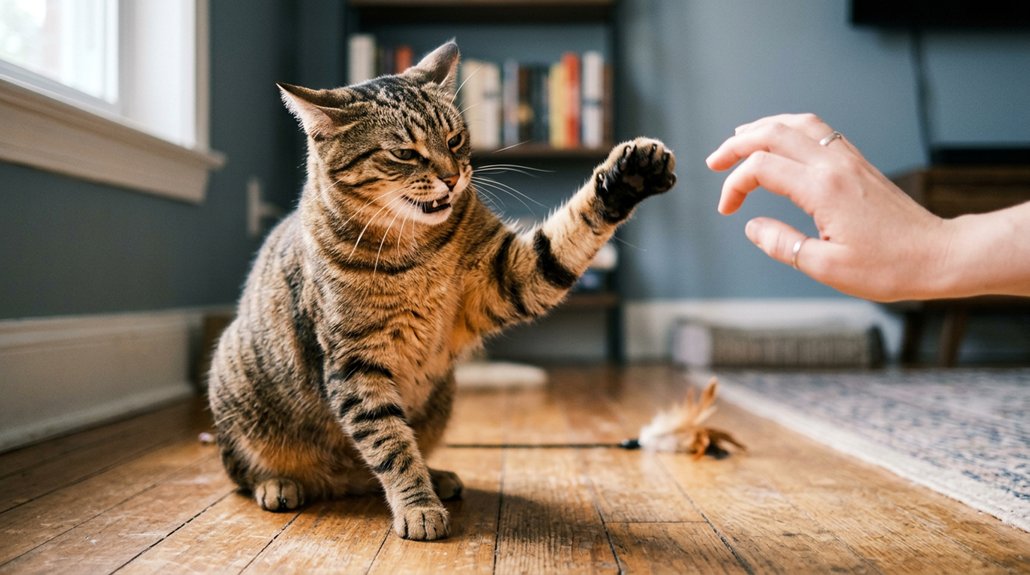
If your cat bites during play, say “ouch” calmly and stop the interaction immediately. Recognize signs of overstimulation like tail flicking or dilated pupils, and create a calm environment afterward. Use interactive toys like wand toys to redirect biting urges away from your hands. Reinforce positive behavior with treats and praise, gradually establishing a routine of gentle play. With patience and consistency, you’ll discover strategies to manage and improve your cat’s play behavior further.
Key Takeaways
- End play immediately and calmly when the cat bites to teach that biting stops fun.
- Use interactive toys like wand toys to redirect biting impulses away from hands.
- Watch for overstimulation signs, stopping sessions at the first indication to prevent escalation.
- Clean and bandage any bites that break the skin to prevent infection.
- Reward gentle play with treats to reinforce positive behavior and discourage biting.
What to Do Immediately If Your Cat Bites
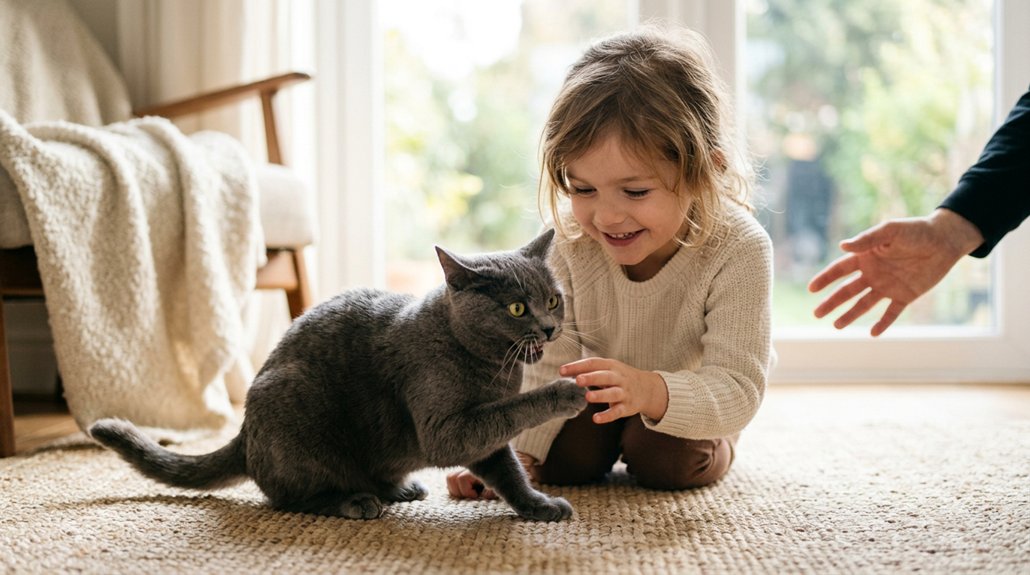
When your cat bites, it’s essential to respond effectively to guide better behavior. With play biting, calmly say “ouch” to show it hurts, then immediately stop the interaction. This pause is a significant part of behavior modification, teaching your cat that biting ends the fun. Avoid using punishment methods like yelling or tapping, as these can break trust and escalate the situation. Instead, removing attention is an effective and gentle response.
If the bite breaks the skin, clean the wound thoroughly with warm, soapy water and apply a sterile bandage. Consistency is key, so make certain all family members respond in the same way to reinforce the message. Additionally, watch for any signs of infection and seek medical care if needed.
Identify Overstimulation Early
To prevent biting, it’s crucial to recognize the early signs of overstimulation in your cat, such as tail flicking, skin twitching, and a sudden stop in purring. Keep an eye on their body language, including tense muscles or flattened ears, and be prepared to end play sessions if needed. Monitoring the duration of interactions and allowing your cat to dictate the pace can greatly reduce the risk of overstimulation.
Recognize Physical Signs
While engaging in play with your cat, it’s crucial to identify early signs of overstimulation to prevent biting incidents. Understanding your cat’s body language and play signals can make a significant difference. Look out for behaviors such as flattening ears, flicking tails, or sudden posture changes; these indicate your cat is nearing its limit. Dilated pupils and rapid tail movement serve as clear indicators that overstimulation is looming. If your cat abruptly stops purring or tenses up, it’s a cue that they need a break. Skin twitching or a rapid shift from relaxed to aggressive play can signal it’s time to halt interactions. Recognizing these signs guarantees a safer and more enjoyable playtime for both you and your feline friend.
Monitor Interaction Duration
Although cats are charmingly playful, their enthusiasm can sometimes lead to overstimulation and biting. Effective play session management is essential in preventing this. Pay attention to your cat’s body language—signs like tail flicking or sudden tension can signal rising overstimulation. Start with shorter play sessions to prevent this and gradually increase playtime as you gauge your cat’s tolerance. This helps identify early warning signs and adjust accordingly. Ending interactions before overstimulation occurs not only reinforces positive behavior but also decreases biting incidents. Regular mood assessments allow you to adjust the duration and intensity of play, aiding in feline boredom prevention and ensuring a satisfying experience for your cat. By managing play sessions wisely, you enhance comfort and reduce biting behavior.
Using Toys to Redirect Playful Bites
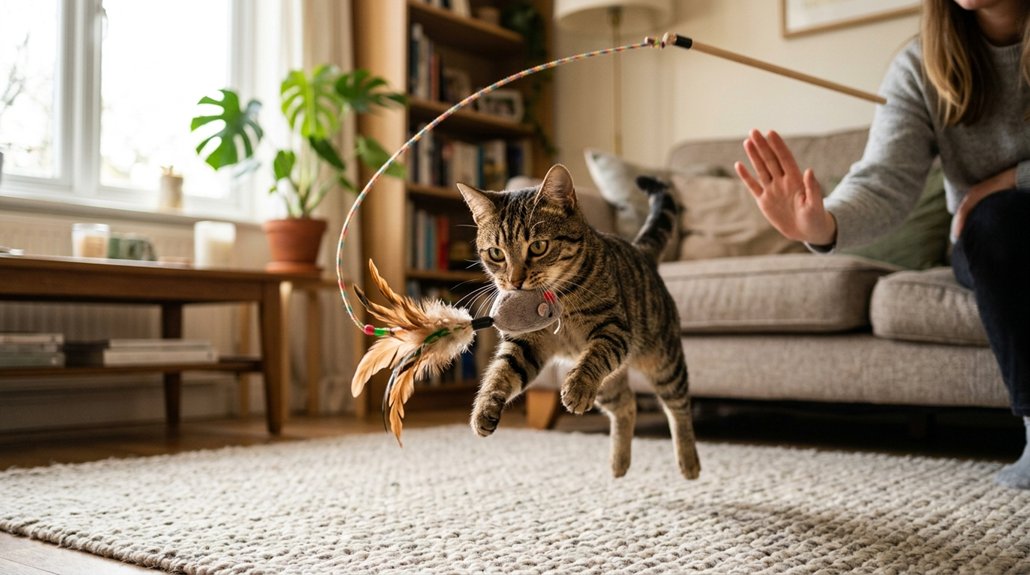
Steering through the challenges of a biting cat can be much easier by strategically using toys to redirect playful bites. Interactive toys, such as wand toys and feather teasers, serve as a healthy outlet by mimicking the motion of prey, allowing your cat to exercise their natural hunting instincts. Rotating different types of toys keeps your feline engaged, minimizing boredom and the tendency to bite out of frustration. Consider incorporating stuffed toys for wrestling to satisfy their urge to pounce and bite safely. It’s important to guarantee all family members refrain from using hands or arms during playtime. Consistent and structured interactive play sessions not only simulate hunting behaviors but also reduce aggressive biting during less organized play.
Encourage Good Play Habits With Rewards
To encourage your cat to play gently, reward positive play behavior with treats or praise, reinforcing calm interactions over time. Using treats for training not only strengthens their good behavior but also builds a stronger connection between you and your pet. By consistently reinforcing these calm behaviors, you’ll help reduce biting tendencies and promote a more harmonious playtime.
Reward Positive Play Behavior
Recognizing and encouraging good play habits in your cat is an essential step in reducing biting behavior. Implement effective playtime strategies by rewarding soft play actions with treats and verbal praise. This positive reinforcement helps reinforce gentle interactions, conveying the message that calm play is favored. When your cat engages with toys instead of your hands, consistently reward them to build a positive association with those behaviors. Use clicker training to mark these positive interactions during play, providing immediate feedback and encouraging non-aggressive behavior. Gradually increase the duration of such sessions as your cat learns the connection between rewards and gentle play. To keep their interest piqued, regularly rotate toys and reward your cat when they opt for toy engagement over biting.
Use Treats for Training
Harness the power of high-value treats to effectively train your cat and encourage good play habits. By utilizing treat types your cat loves, you can redirect their biting behavior towards toys. Consistent reward timing is essential; give treats immediately when your cat plays gently, helping them associate good behavior with positive outcomes. Avoid treating as a bribe; instead, use them to reinforce desired play habits, focusing on these helpful tips:
- Choose high-value treats: Opt for those your cat adores.
- Implement immediate rewards: Reinforce gentle play promptly.
- Progressively complex sessions: Encourage skill growth with rewards.
- Consistency is key: Stick to the training plan.
- Be patient: It may take time for new habits to form.
This method enhances the training process, fostering calmer, bite-free interactions.
Reinforce Calm Interactions
Rewarding your cat for calm interactions is another effective strategy to curb biting behavior. Establish a calm environment by consistently using positive reinforcement—offering treats or praise when your cat plays gently. This helps form positive associations between calm demeanor and rewards. Gradually extend play sessions, ensuring you reward non-aggressive behavior, which builds trust and reduces biting over time. Utilize a variety of interactive toys to keep your cat engaged, minimizing biting driven by excitement or boredom. Remember to communicate with a calm voice and soothing body language, reinforcing good behavior and reducing overstimulation risks. It’s essential for all family members to consistently reward gentle behavior to prevent mixed signals, which can lead to confusion and increased biting tendencies in your cat.
Establishing Safe Interaction Limits During Play
While playing with your cat can be a delightful bonding experience, it’s important to establish safe interaction limits to prevent unwanted biting. Setting clear play boundaries is vital for maintaining harmony. Here are some effective interaction guidelines:
- Use toys instead of hands or arms to discourage treating human body parts as playthings.
- Observe your cat’s body language; signs like a flicking tail or tensed body signal it’s time to pause.
- Opt for short play sessions with interactive toys to mimic hunting behavior and avoid overstimulation.
- Gradually increase playtime, rewarding gentle play with praise or treats to encourage proper behavior.
- Regularly rotate toys to maintain engagement, reducing aggressive tendencies and sparking continued interest.
Control Playtime When Cats Bite
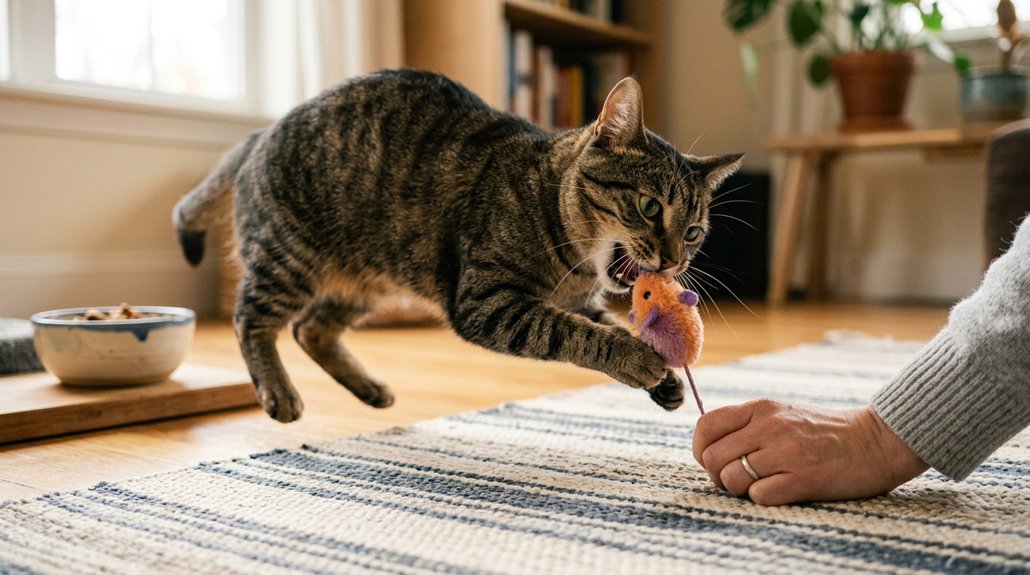
After establishing safe interaction limits during play, it’s important to manage playtime effectively when biting occurs. Start by setting clear playtime boundaries, redirecting your cat’s attention from hands or arms to interactive toys. This encourages healthy play habits and prevents aggression. Recognize early signs of overstimulation, like tail flicking or body tensing, to stop playtime before biting happens. If biting does occur, pause play immediately; this teaches them biting ends the fun. Make sure everyone in the household responds consistently to these behaviors, avoiding mixed signals. Incorporate interactive alternatives during play sessions, ensuring your cat’s energy is properly managed. Regularly engaging in these controlled play sessions decreases the chances of frustration and biting during playtime.
Long-Term Solutions for Play Biting Behavior
If you’re looking to address play biting behavior in your cat over the long term, establishing a structured routine is essential. Consider the following long-term strategies for effective behavioral adjustment:
- Implement consistent playtimes using interactive toys like wand toys and feather teasers to engage their hunting instincts.
- Gradually minimize rough play and refrain from using hands as toys to teach appropriate play boundaries.
- Reinforce gentle play with positive reinforcement, such as treats or praise, to encourage non-biting behavior.
- Monitor for signs of overstimulation—tail flicking or body tensing—and end play sessions to prevent biting incidents.
- Offer and rotate a variety of toys to keep your cat stimulated and reduce the likelihood of boredom-induced biting.
These methods can guide you in managing and minimizing play biting effectively.
Frequently Asked Questions
How Do I Stop My Cat From Biting During Play?
To stop your cat from biting during play, establish clear playtime boundaries by using safe toys like feather teasers. Avoid using hands as toys, and end the session calmly if biting occurs, reinforcing appropriate play behavior.
What Is the 3-3-3 Rule for Cats?
The 3-3-3 rule for cats is about understanding cat behavior and feline communication. It indicates that adjusting takes three days to decompress, three weeks to feel comfortable, and three months to fully settle into a new home.
What Is a Red Flag Behavior in Cats?
You might think aggression’s just play, but sudden biting can indicate stress or pain. Watch for red flags like flattened ears or dilated pupils, signaling a boundary breach in feline communication, demanding careful observation and intervention.
Is It Normal for Cats to Bite You While Playing?
Yes, it’s normal for cats to bite during play due to playful aggression and bite inhibition development. To manage this behavior, don’t use your hands as toys. Instead, opt for interactive toys that encourage safe, playful interactions.
Conclusion
In managing a cat that bites during play, consistency and understanding are key. Wouldn’t it be rewarding to replace those nips with purrs of contentment? By recognizing overstimulation, redirecting with toys, and rewarding good behavior, you can guide your feline friend toward more enjoyable interactions. Setting clear boundaries and maintaining structured playtimes will foster safer play sessions. With patience, you’ll not only curb biting but also strengthen your bond with your furry companion.