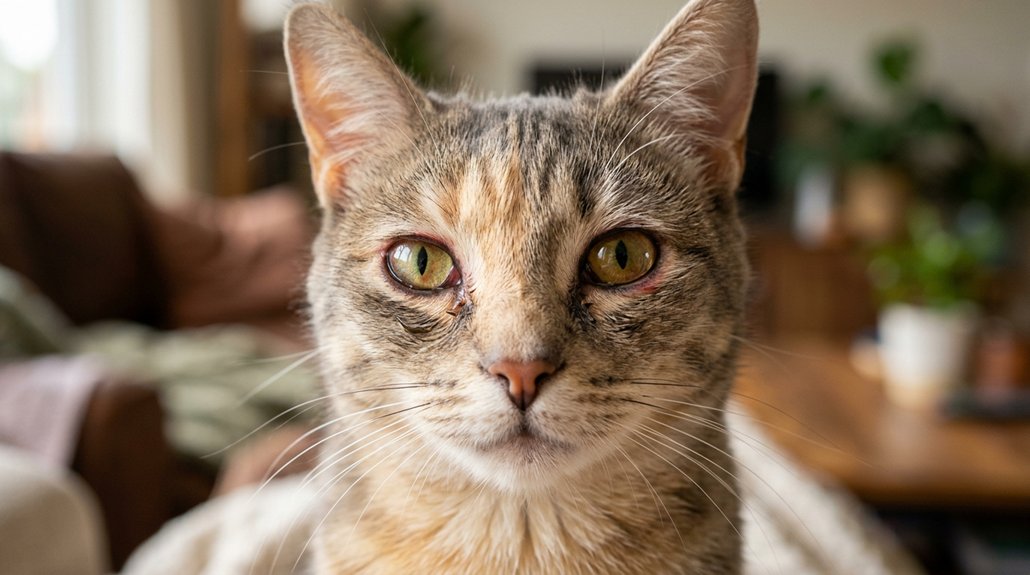
Your cat’s watery or red eyes might indicate various conditions such as conjunctivitis, infections, or allergies. Keep an eye on symptoms like excessive blinking, squinting, or discharge. Clear discharge typically points to allergies, while yellow or green suggests bacterial infections. Environmental factors like pollen or dust might also contribute. It’s essential to seek veterinary advice if symptoms persist beyond a few days. Understanding these signs further could help you guarantee your cat’s ideal eye health.
Key Takeaways
- Watery or red eyes may indicate conjunctivitis, infections, or allergies in cats.
- Clear eye discharge typically suggests allergies, while yellow or green discharge indicates bacterial infections.
- Eye irritation may result from environmental allergens such as pollen and dust.
- Persistent symptoms beyond a few days require veterinary attention to prevent vision loss.
- Home remedies like chamomile tea eyewash provide temporary relief but do not replace professional care.
Identifying Symptoms of Eye Issues in Cats
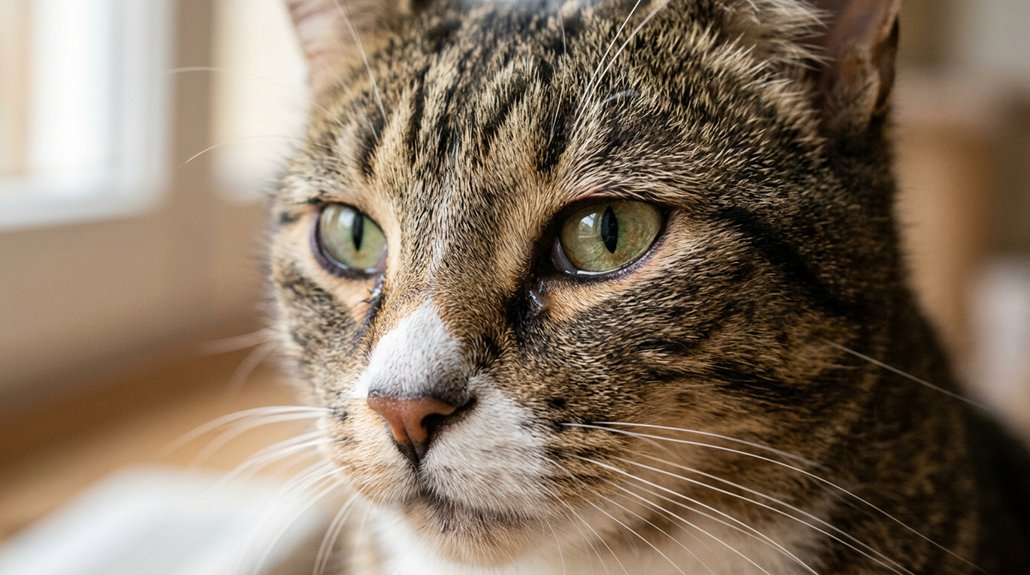
Identifying symptoms of eye issues in cats is essential for ensuring timely intervention and treatment. Watery or red eyes are common visual symptoms indicating potential problems like conjunctivitis, infections, or allergies. You’ll notice various eye behaviors—such as excessive blinking, squinting, or pawing—that may signify irritation or foreign bodies. Pay attention to the type and color of discharge: clear can suggest allergies, while yellow or green may indicate bacterial involvement. It’s vital to monitor if only one eye is affected or both, as this variation can provide insights into the issue’s severity. Additionally, look for related signs such as sneezing or nasal discharge, as these may signal upper respiratory involvement. Observing these symptoms informs prompt decisions about care and treatment.
When to Seek Veterinary Care for Eye Problems
When your cat’s eye issues persist beyond a couple of days, seeking veterinary care becomes vital to determine the root cause. A professional cat eye examination is important to accurately diagnose the problem and prevent complications. Timely intervention is critical for vision preservation and overall well-being. If you notice persistent pain, swelling, or discharge from your cat’s eyes, it’s important to act quickly. Immediate veterinary attention is necessary when:
- Your cat can’t open their eyes or shows additional symptoms
- Their eyes are bloodshot or they’re squinting excessively
- Severe symptoms signal potential vision loss
Ignoring these warning signs may result in irreparable damage to your cat’s vision and their health. Prompt veterinary care guarantees your pet’s relief and maintains their quality of life.
Causes of Watery or Red Eyes in Cats
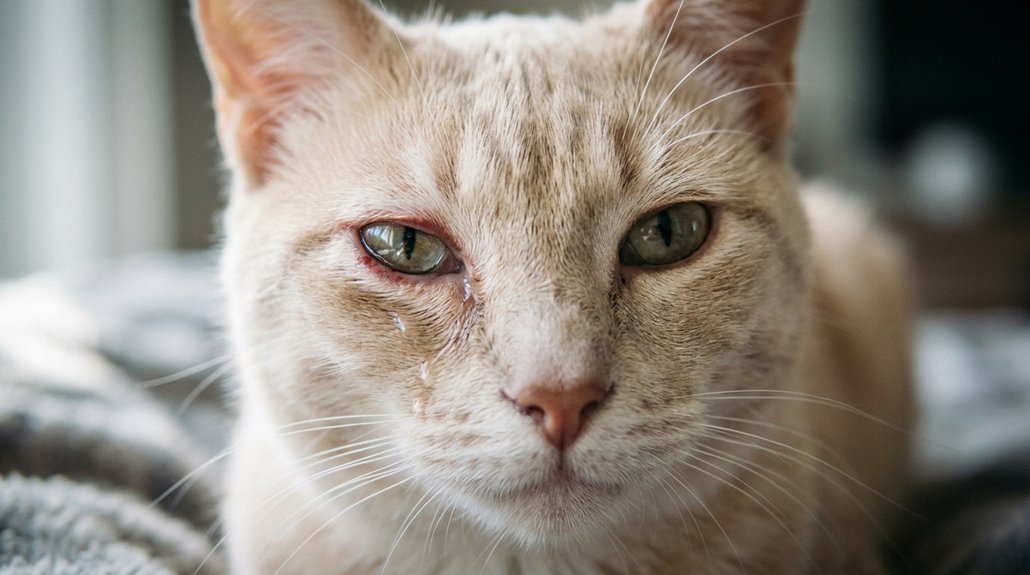
Though they might seem like minor issues, watery or red eyes in cats often signal an underlying health concern that needs attention. Conjunctivitis causes inflammation, often tied to infections or feline allergies, resulting in ocular discharge. Allergies to pollen or dust cause watery eyes and necessitate diagnostics. Eye ulcers, due to scratches or chemicals, present with watering and redness, needing urgent care.
Consider this table for clarity:
| Condition | Impact on Eyes |
|---|---|
| Conjunctivitis causes | Inflammation, discharge |
| Feline allergies | Watery eyes |
| Eye ulcers | Redness, squinting |
Additionally, brachycephalic breeds face excessive tearing due to their unique facial structure. Upper respiratory infections, often linked with conjunctivitis, exacerbate watery eyes, highlighting the importance of veterinary evaluation.
Decoding Eye Discharge: Color and What They Mean
Understanding the color and consistency of your cat’s eye discharge can be vital in determining the underlying cause and suitable treatment. Discharge types serve as infection indicators that can guide you. If you notice:
Color and consistency of cat’s eye discharge indicate potential infections, guiding necessary treatment steps.
- Clear discharge: Often linked to viral infections like conjunctivitis, and warrants close monitoring for additional signs.
- Yellow or green discharge: Signifies a bacterial infection, possibly requiring antibiotic therapy from your vet.
- Sticky or thick discharge: Indicates a potential severe infection. Differentiating between viral and bacterial causes is essential for successful management.
Whether your cat’s eyes are producing clear, yellow, or sticky discharge, these signs shouldn’t be ignored. Colors linked with redness, squinting, or excessive tearing necessitate immediate veterinary evaluation to guarantee timely and appropriate care.
Common Allergens Causing Eye Issues in Cats
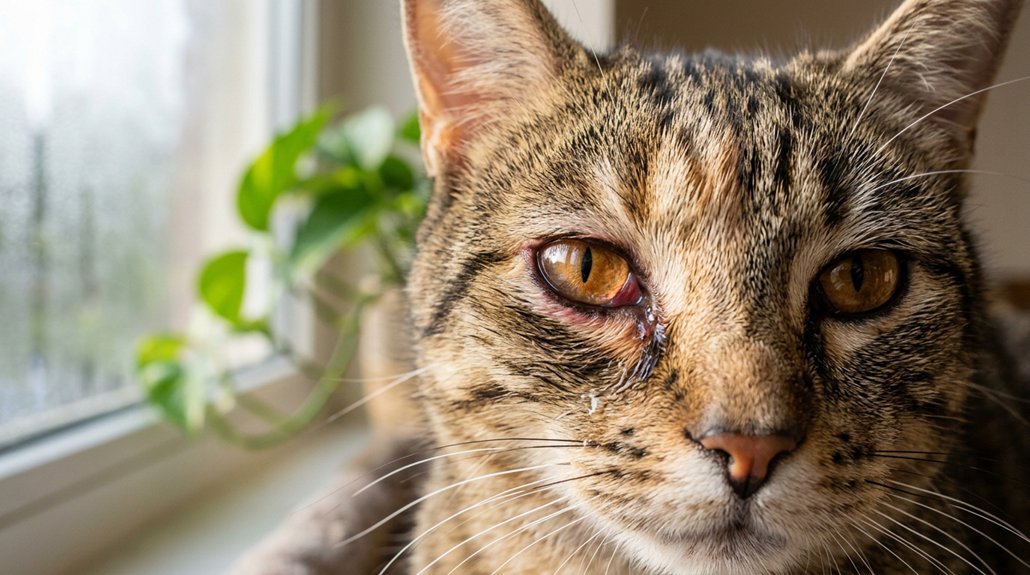
When addressing eye issues in cats, it’s essential to take into account environmental irritants, which can include pollen, mold, and household substances like perfumes and cleaning products. Identifying these common allergens through veterinary testing is key, as symptoms can overlap with other health conditions. Once specific triggers are pinpointed, you can manage your cat’s allergy symptoms by avoiding these irritants and using veterinarian-prescribed medications.
Environmental Irritant Sources
While a variety of factors can lead to eye issues in cats, some of the most prevalent culprits are common environmental allergens. These allergens, whether they’re indoor or outdoor, can cause significant discomfort. Indoor allergens such as dust, mold, and mildew often result in watery eyes and sneezing. Outdoor allergens like pollen also contribute to similar symptoms in cats.
Additionally, non-biological irritants in your home environment can exacerbate these issues. These include:
- Household cleaning products: Chemicals in these products can trigger inflammation.
- Perfumes: Strong fragrances may lead to eye irritation and discharge.
- Flea control treatments: These can also act as irritants, resulting in allergic reactions.
Monitoring your cat’s exposure and minimizing contact with these allergens is crucial. Always consult a veterinarian to address persistent symptoms.
Identifying Common Triggers
How do you pinpoint the culprits behind your cat’s watery or red eyes? Begin by identifying common allergens that might be triggering symptoms. Understanding allergen identification is key. Your cat could react to pollen, mold, dust, or cleaning products, which are typical triggers. Flea-control products and perfumes also contribute to allergic reactions, potentially causing eye irritation. Effective allergy management hinges on this identification process. Consider your cat’s environment and the frequency of symptoms. Excessive tearing, sneezing, or nasal discharge may necessitate veterinary evaluation for proper diagnosis and treatment. Consulting a veterinarian doesn’t just help your pet—it greatly improves their quality of life by reducing these eye-related issues.
| Allergen | Symptoms | Possible Triggers |
|---|---|---|
| Pollen | Watery eyes, sneezing | Outdoor exposure |
| Mold | Red eyes, nasal discharge | Damp environments |
| Dust | Excessive tearing, irritation | Indoor accumulations |
| Cleaning Products | Eye irritation, sneezing | Household cleaning |
How Your Cat’s Breed Affects Their Eye Health
Due to distinct anatomical features, the breed of your cat can greatly influence its eye health. Some breeds exhibit specific breed characteristics and genetic predispositions that heighten their vulnerability to certain eye conditions. For instance, brachycephalic breeds like Persians and Himalayans have facial structures that hinder normal tear drainage, leading to watery eyes and potential epiphora. Conversely, Siamese cats, with their prominent eyes, may face increased risk for eye injuries. It’s essential to understand:
- Flat-faced breeds risk excessive tearing, causing skin irritation.
- Prominent-eyed breeds need monitoring for potential injuries.
- Genetic factors can make certain breeds more prone to inflammatory eye conditions.
Regular veterinary check-ups should be a priority to guarantee prompt intervention and protect your cat’s eye health.
Home Remedies and Veterinary Treatments for Cat Eye Issues
When your cat’s eyes appear watery or red, you might consider starting with a home remedy, such as rinsing them with a sterile saline solution to clear mild discharge. However, it’s imperative to seek veterinary advice for persistent issues, as professional treatments like ophthalmic antibiotics are often necessary for bacterial infections. Should your cat experience allergic reactions or more severe conditions like eye ulcers, a veterinarian can provide appropriate medications, including antihistamines and corticosteroids, to manage symptoms and prevent complications.
Effective Home Remedies
One effective strategy for addressing your cat’s red or watery eyes is a gentle cleaning routine using a moistened cotton ball. This simple action helps manage discharge and minimizes irritation from minor infections or allergies. Additionally, a warm compress applied for 5-10 minutes can alleviate swelling and discomfort associated with mild irritations like conjunctivitis.
Consider these supportive steps:
- Herbal eyewash: Use a diluted chamomile tea solution as a soothing eyewash. Confirm it’s cool and veterinarian-approved.
- Environment control: Reduce allergens such as dust and pollen within your home to prevent eye irritations.
- Health monitoring: If symptoms persist beyond 48 hours or escalate, seek veterinary advice promptly.
Professional Treatment Options
If you find your cat suffering from persistent watery or red eyes, it might be time to contemplate professional treatment options to address the underlying causes effectively. Veterinary intervention typically starts with thorough diagnostic tests, like fluorescein stain tests or tear production assessments, to pinpoint the issue accurately. For bacterial infections, antibiotics in the form of eye drops or ointments are common treatment options. Allergies might necessitate antihistamines or corticosteroids to alleviate symptoms while determining triggers. More serious conditions, such as eye ulcers, could require specialized treatments including targeted topical medications and pain management strategies. While home remedies—such as using a warm, damp cloth—can offer temporary relief, they shouldn’t replace expert veterinary care for long-term solutions and ideal recovery.
Frequently Asked Questions
What to Do When a Cat’s Eyes Are Red and Watery?
Immediately seek veterinary advice to rule out serious conditions. Clean eye area with moistened gauze. Monitor symptoms’ progression and identify allergy triggers. Avoid delaying professional evaluation if symptoms worsen or aren’t improving within 48 hours.
What Are Four Signs Your Cat Is Suffering?
You’ll notice excessive eye discharge, your cat’s watery eyes, sneezing, and a raised third eyelid. These can indicate allergies symptoms or eye-related issues. Promptly contact your vet for an accurate diagnosis and appropriate treatment.
How Do You Treat a Cat’s Watery Eyes?
“A stitch in time saves nine,” so quickly address watery eyes by understanding tear production. Begin diagnosing eye infections with a vet’s help. Antibiotics or antihistamines are common treatments, and regularly clean the eyes to prevent complications.
What Home Remedies Help Cat Eye Infections?
For natural eye care, start with soothing compresses using warm, damp cloths. You can rinse with diluted chamomile tea. Guarantee their environment’s clean to prevent allergies, but always consult your vet for serious symptoms.
Conclusion
Think of your cat’s eyes as windows to their world; when they become clouded or red, it’s like a smudge obscuring a vibrant view. Just as you’d clean your glasses or seek help for a blurry vision, addressing your cat’s eye issues with prompt care is essential. A gentle reminder: nearly 60% of cats will experience eye problems. Trust your instincts and your vet’s expertise to restore clarity and comfort to your feline friend’s gaze.