
You’re not alone if you’re dealing with cat allergies. Common allergies include environmental triggers like pollen and dust, fleas, and certain foods. Symptoms range from sneezing and itchy eyes to rashes. Managing these involves antihistamines, regular cleaning with HEPA filters, and hypoallergenic diets. Partner with a vet for tailored tests and treatments. With strategic care, coexisting with a cat is possible, and there’s detailed information on making your home allergen-free.
Key Takeaways
- Identify allergy type from environmental, flea, or food sources for targeted management.
- Utilize prescription or over-the-counter antihistamines and corticosteroids for symptom relief.
- Regularly clean homes with HEPA-filter vacuums and damp cloths to minimize allergen presence.
- Consider allergen immunotherapy for long-term desensitization against cat allergens.
- Partner with veterinarians for personalized allergy management plans and assessments.
Understanding Common Cat Allergies
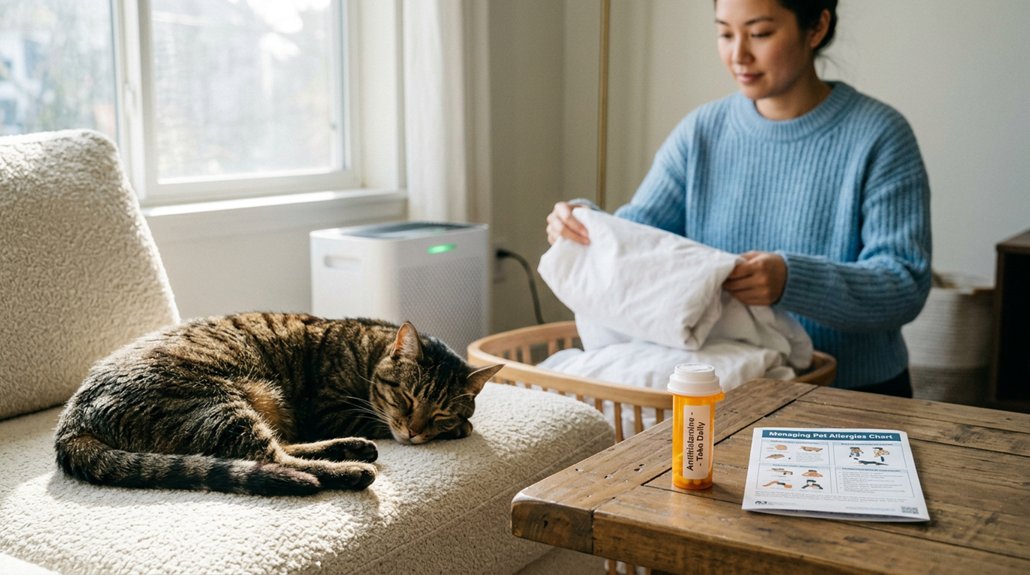
When managing cat allergies, it’s vital to understand the different types and their triggers. Cats commonly suffer from allergy types like environmental allergies (atopic dermatitis), flea allergies, and food allergies. Each type originates from specific allergen sources. Environmental allergens can include pollen, dust, and mold, often resulting in atopic dermatitis. Flea allergies occur due to a hypersensitivity to flea saliva, leading to flea allergic dermatitis and intense itching. Food allergies, typically from proteins like beef, fish, and chicken, can cause digestive issues. Identifying and addressing the allergen sources is essential. Working with a veterinarian, you can pinpoint and mitigate these allergy types. Proper management alleviates discomfort and enhances your feline friend’s quality of life.
Identifying Symptoms of Cat Allergies
Understanding the various allergies afflicting cats sets the stage for recognizing their symptoms, a vital component in effective management. Distinguishing cat allergies hinges on symptom differentiation, with common manifestations including sneezing, runny or stuffy nose, coughing, and wheezing—often resembling colds. Eye symptoms such as itching, watery eyes, or ocular erythema can signal sensitivity to feline allergens. Additionally, skin reactions may arise as rashes, pruritus, or hives upon tactile interaction with cats. Asthmatic individuals might experience exacerbated respiratory distress, marked by chest constriction, wheezing, and dyspnea post-exposure. Be vigilant, as symptoms can fluctuate and are commonly aggravated by concurrent environmental allergy triggers. Correctly identifying these symptoms facilitates targeted interventions, ensuring a proactive approach to managing your cat allergy experiences.
Medication, Cleaning, and Dietary Strategies for Managing Cat Allergies
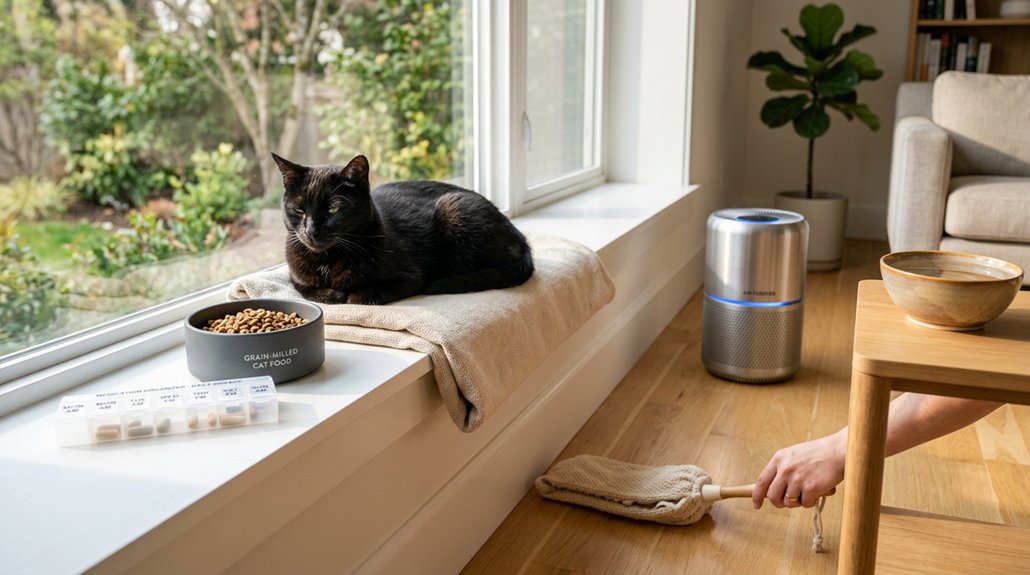
Properly managing cat allergies involves a multi-faceted approach that combines medication, cleaning, and dietary interventions to effectively reduce symptoms and improve quality of life. Prescription medications, including antihistamines and corticosteroids, offer relief and should be tailored to individual needs by a professional. For milder cases, over-the-counter options can be considered. Regular cleaning with HEPA-filter vacuums and damp cloths can notably decrease allergens like Fel d 1. Allergen immunotherapy may provide long-term solutions by gradually desensitizing the immune system. On the dietary front, introducing specialized foods such as Pro Plan LiveClear can lower allergen levels in cat saliva. Additionally, creating a cat-free zone, particularly in the bedroom, and practicing consistent hygiene appreciably minimizes allergen exposure.
Partnering With Your Vet for Cat Allergy Management
Partnering with your veterinarian is an essential element in creating a thorough strategy to manage cat allergies effectively. Vet collaboration guarantees your cat receives tailored treatments by incorporating specialized tests like skin or blood diagnostics to pinpoint specific allergens. Based on results, your vet can recommend targeted therapies, including prescription diets, topical options, or allergen-specific immunotherapy for chronic cases. Regular check-ups facilitate ongoing assessment and prompt adjustments, customizing the management plan as needed while monitoring for new allergies. Open, consistent communication with your vet is vital for optimizing care, enhancing your cat’s well-being, and improving your quality of life. Trust your vet’s expertise to navigate the complexities of allergy management, guaranteeing professional guidance at each stage of your cat’s health journey.
Reducing Allergen Exposure at Home

Effectively managing cat allergies involves minimizing exposure to allergens in your home environment. Start by implementing air filtration solutions with HEPA-certified filters to capture Fel d 1, the primary cat allergen, present in airborne particles. Regular surface cleaning is essential; use a damp cloth instead of chemical detergents to remove allergens without irritating your cat. Designate areas like your bedroom as cat-free zones to limit allergen accumulation.
Incorporate frequent vacuuming using a unit equipped with a HEPA filter and wash bedding and pet items weekly to reduce allergen buildup. Groom your cat outdoors when possible, limiting indoor allergen spread. Anti-allergen wipes can also keep your cat’s coat cleaner, further reducing potential allergen exposure indoors.
Frequently Asked Questions
Can Cat Allergies Develop Later in Life?
Yes, you can develop cat allergies later in life. Symptom onset might be sudden, prompting discomfort. Allergy testing is essential for an accurate diagnosis and management plan. Consult an allergist to discuss treatment options and lifestyle adaptations.
Are Certain Cat Breeds Less Allergenic Than Others?
Yes, certain breeds are less allergenic. Hypoallergenic breeds like Siberians and Balinese have lower allergen levels. When making breed comparisons, focus on individual sensitivity and practical management of allergens. Regular grooming and cleaning can further reduce allergens.
How Does Stress Affect Cat Allergies?
Imagine your neighbor notices their allergy symptoms flare when their cat experiences stress due to environmental factors, like moving homes. Cat stress can exacerbate these symptoms, altering the immune response negatively. Managing stress can partially alleviate issues.
Can Outdoor Environments Trigger Indoor Cat Allergies?
Yes, outdoor environments can exacerbate indoor cat allergies. Pollen exposure and outdoor pests can increase sensitivity to cat dander. Environmental changes outside might influence allergen levels indoors, so guarantee good airflow and frequently clean surfaces to minimize allergies.
Is It Possible to Outgrow Cat Allergies Over Time?
Yes, you can outgrow cat allergies as your immune system adapts. Monitor symptom types, like sneezing or itching, and explore treatment options such as antihistamines or immunotherapy for effective management and potential desensitization over time.
Conclusion
Imagine you’re the captain of a ship steering through stormy seas of allergies. By understanding your cat’s needs, you wield the compass of knowledge. Identifying symptoms is your trusty map, while medication, cleaning, and dietary changes are the sails catching the wind of relief. Partnering with your vet becomes the lighthouse guiding you safely. Reducing allergens at home is the anchor stabilizing your journey. Together, you chart a course toward calmer, healthier seas for you and your feline friend.