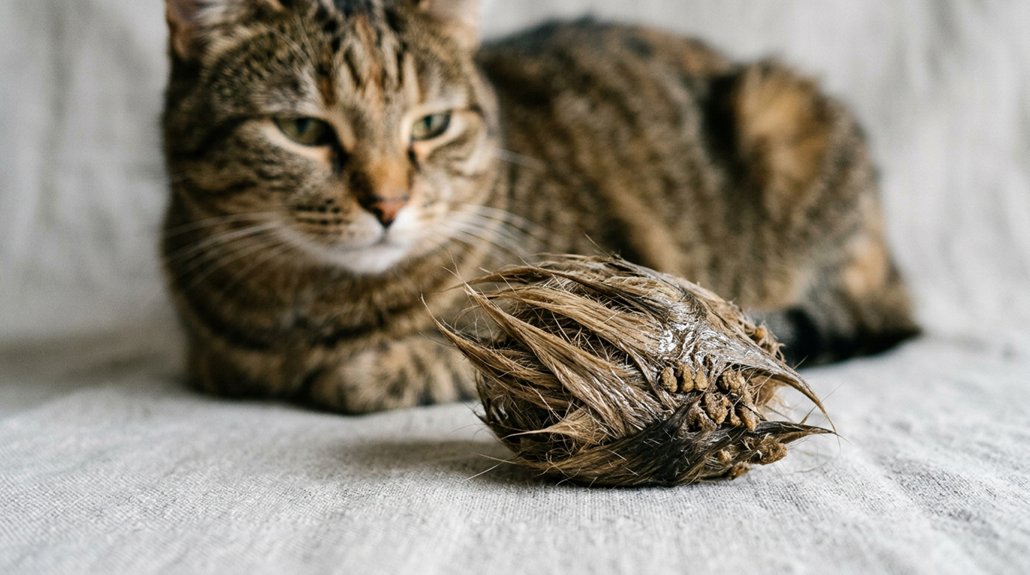
Cats often ingest hair while grooming, leading to hairball formation. Generally, a hairball every few weeks is normal. Look out for symptoms like frequent gagging without production, vomiting bile, or swelling, as these could signal a blockage needing veterinary attention. Regular grooming, hydration, and high-fiber diets can help decrease hairball occurrence. If your cat shows persistent lethargy or changes in appetite, it’s time to consult a vet. More insights follow to guarantee your pet’s well-being.
Key Takeaways
- Hairballs in cats are normal, especially in long-haired breeds, with acceptable frequency being once every few weeks.
- Typical symptoms include brief retching or gagging, which usually aren’t serious signs.
- Concerning signs are repeated gagging without hairballs, vomiting bile, and any obvious distress during vomiting.
- Regular grooming, high-fiber diets, and proper hydration can prevent excessive hairball formation.
- Severe symptoms like lethargy, appetite loss, or bloating may indicate a blockage requiring urgent veterinary care.
Understanding Hairball Formation in Cats
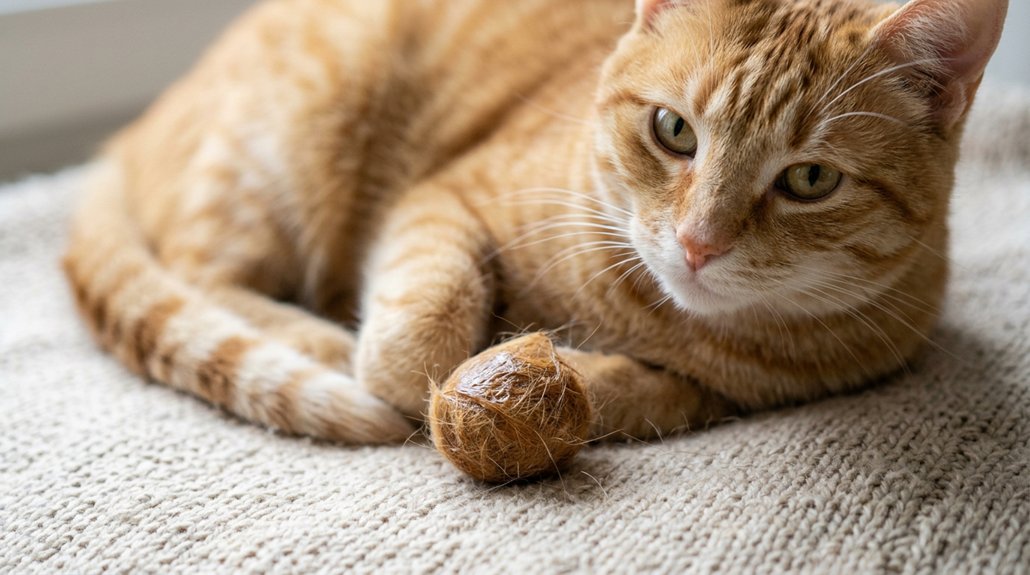
Hairballs, scientifically known as trichobezoars, arise when cats ingest their hair during grooming, leading to its accumulation in the stomach rather than passing through the digestive tract. Contrary to popular hairball myths, these formations aren’t round but typically resemble cylinders or sausages, primarily composed of indigestible keratin. While many believe hairballs are exclusive to long-haired breeds, even short-haired cats can form hairballs through excessive grooming. Proper grooming techniques play an essential role in minimizing hairball formation. Regular brushing reduces loose hair, decreasing ingestion during grooming sessions. Effective grooming can considerably curtail the amount of fibrous buildup in the stomach, supporting the natural elimination of most swallowed hair via feces. Addressing these misconceptions can aid in better understanding and managing feline hairballs efficiently.
Why Do Cats Get Hairballs? Common Causes
You’ll find that cats often develop hairballs due to the ingestion of loose hair during their grooming routine, a natural behavior for maintaining coat hygiene. Breeds with long hair or those that shed heavily are particularly susceptible, as the increased hair volume leads to more frequent accumulation. Seasonal shedding cycles and grooming compulsions, whether stress-induced or related to skin conditions, further amplify this risk by boosting the amount of hair swallowed.
Grooming and Hair Swallowing
While grooming serves as an essential function for maintaining a cat’s hygiene and coat health, the process often results in the ingestion of loose hair. When cats groom, their specialized grooming techniques guarantee they efficiently clean themselves but often lead to swallowing fur. These hair strands can accumulate in the stomach, forming trichobezoars, commonly known as hairballs. Factors like excessive grooming can exacerbate this process. Cats typically groom more due to stress-induced conditions, so implementing effective stress management strategies can help reduce this behavior. Additionally, cats with allergies or skin conditions may engage in increased grooming routines, inadvertently ingesting more hair. Managing these factors can substantially decrease the frequency and severity of hairball formation in your feline companion.
Long Hair and Shedding
The ingestion of hair during grooming is a common cause of hairball formation, but certain factors exacerbate this issue. Long-haired breeds such as Persians and Maine Coons are particularly susceptible. Their dense fur results in significant hair ingestion, especially if appropriate grooming techniques aren’t applied regularly. Seasonal impacts further worsen this condition, as cats shed more during shifts in temperature, increasing the amount of loose hair.
To mitigate hairballs:
- Long-haired cats require frequent brushing to remove excess fur.
- Monitoring for excessive licking due to allergies or skin conditions is vital.
- Adapt grooming techniques to address age-related grooming behavior changes.
Regular grooming minimizes shedding and decreases hairball risks, ensuring your cat’s health and well-being. Attention to these factors can greatly aid in managing hairball issues.
Signs of Normal vs. Concerning Hairball Symptoms
Occasional hairballs are a normal occurrence in many cats, particularly those with long hair, with an acceptable frequency being about once every few weeks. Contrary to some hairball myths, brief retching or gagging followed by expulsion is typical, not indicative of severe issues. Monitoring for behavioral changes is vital; any shift in grooming habits or increased frequency of hairball expulsion can signal potential health problems.
On the flip side, signs demanding concern include persistent, unproductive gagging, loss of appetite, and lethargy. Symptoms such as diarrhea or a bloated abdomen, coupled with frequent vomiting without hairball production, warrant immediate attention. These may suggest underlying conditions, such as blockages, necessitating professional evaluation to guarantee your feline’s well-being.
Warning Signs: Veterinary Attention for Hairballs
Identifying the warning signs that require veterinary attention for hairballs is essential for a cat’s health. Despite prevalent hairball myths, such as assuming they’re always harmless, certain symptoms demand professional evaluation.
- Repeated gagging or retching: This, without producing hairballs, can signify a blockage needing veterinary intervention.
- Behavioral changes and symptoms: Loss of appetite, lethargy, and constipation often signal deeper health troubles linked to frequent hairballs.
- Severe symptoms: A bloated abdomen, vomiting bile, or distress during vomiting require immediate veterinary care.
These signs underline the importance of monitoring your cat’s overall health and adjusting grooming techniques to minimize risk. Observing these indicators guarantees proper care and prevention of severe complications, stressing the necessity for swift veterinary attention when needed.
Why Do Some Cats Have More Hairballs?
Understanding the specific factors that contribute to frequent hairballs can help you address potential issues more effectively. Cats with long hair breeds often face increased hairball issues due to intensive grooming habits and the ingestion of loose hair. Seasonal shedding intensifies this by elevating hair ingestion. Age differences also influence grooming frequency; older cats typically groom more, increasing hairball risk. Skin problems like allergies or parasites may lead to excessive grooming, further exacerbating hair ingestion. Stress factors, such as environmental changes or anxiety, can trigger compulsive grooming behaviors, resulting in greater hair consumption. Knowing these dynamics among different cat breeds and environmental influences enables targeted interventions, ensuring your cat’s grooming routine doesn’t lead to excessive hairball formation.
Effective Prevention Strategies for Hairballs
A multitude of effective prevention strategies exist to help mitigate hairball issues in cats, with regular grooming standing at the forefront. Alternative grooming techniques, like using specially designed brushes or grooming gloves, can help further in reducing loose hair, especially in long-haired breeds. Paying attention to lifestyle influences such as your cat’s age, shedding patterns, and activity level is vital. Adjusting your care routine accordingly can make a notable difference in minimizing hairballs.
Consider these prevention strategies:
Consider daily brushing, ensuring hydration, and using vet-recommended supplements for effective hairball prevention in cats.
- Daily brushing: Essential for long-haired cats to decrease hair ingestion.
- Hydration: Fresh water maintains digestion efficiency.
- Vet-recommended supplements: Useful for chronic cases.
Regular assessments of your cat’s grooming habits guarantee you adapt effectively, maintaining their health and comfort.
How Diet Can Help Manage Hairballs
While managing hairball issues in cats, considering the cat’s diet is essential for promoting digestive health and minimizing hairball formation. Increasing fiber sources within their diet aids in the smooth passage of hair through their digestive tract. High-fiber foods, such as pumpkin and apples, can be carefully added to facilitate this process. Hairball control diets specifically offer elevated fiber content along with specialized nutrients that help manage hair ingestion effectively. Monitoring moisture levels in your cat’s diet is equally important. Wet food options can help maintain hydration and promote healthy digestion, thereby assisting in hairball management. Should there be any notable increase in hairball production after dietary changes, consulting a veterinarian for guidance on appropriate adjustments is advisable.
Complications From Severe Hairballs: What to Know
If your cat repeatedly retches without producing a hairball and shows signs of lethargy or refuses to eat, these could indicate a gastrointestinal blockage due to severe hairballs. Such blockages often occur at critical points like the esophageal or intestinal sphincters, necessitating immediate veterinary care to prevent further complications. To manage severe hairballs effectively, regular grooming and vigilant monitoring of your cat’s hairball expulsion can help identify health issues early and reduce the risk of needing surgical intervention.
Symptoms of Blockages
How can you tell if a cat is suffering from a blockage due to severe hairballs? Understanding cat behavior, along with debunking hairball myths, is essential in identifying serious symptoms. Blockages can manifest through persistent unproductive retching or gagging, where cats struggle without producing hairballs. They might also display lethargy, dwindling appetite, or dehydration. Additionally, intestinal obstruction from hairballs can cause digestive issues, leading to either constipation or diarrhea. Immediate signs to be wary of include:
- No interest in food or water
- Noticeable abdominal pain or swelling
- Persistent retching without hairball production
Promptly addressing these symptoms with veterinary evaluation is crucial, as untreated blockages can lead to life-threatening consequences. Recognizing these signs helps prevent severe complications in affected cats.
Emergency Veterinary Care
Prompt recognition of blockage symptoms underscores the significance of emergency veterinary care in managing severe hairball complications. Equipping yourself with knowledge about cat behavior aids in early detection of serious symptoms like persistent vomiting and lethargy, which suggest urgent intervention. Gastrointestinal blockages need immediate attention, as they can occur anywhere from the esophagus to the intestines. Effective fur management helps prevent these issues, but when constipation or a bloated abdomen accompanies hairball symptoms, seek veterinary help promptly. Surgery may be the only solution in urgent cases. Recognizing these signs guarantees you provide essential care swiftly.
| Symptom | Possible Cause | Action Needed |
|---|---|---|
| Persistent Vomiting | Gastrointestinal Blockage | Emergency Vet Care |
| Lethargy | Intestinal Obstruction | Immediate Evaluation |
| Distress Signals | Severe Hairball Issue | Veterinary Assessment |
| Refusal to Eat | Digestive Blockage | Surgical Intervention |
Managing Severe Hairballs
Recognize the importance of managing severe hairballs effectively to mitigate potential health complications in cats. Severe hairballs can cause gastrointestinal blockages and related symptoms like unproductive retching, lethargy, and anorexia, requiring immediate veterinary care. Employing effective strategies can prevent these complications:
- Natural remedies: Introduce feline-safe natural remedies that promote smooth passage of hair through the digestive tract.
- Hairball supplements: Consider specially formulated supplements designed to reduce hairball frequency and facilitate easier elimination.
- Grooming tools: Use appropriate grooming tools to decrease fur ingestion—regular brushing greatly minimizes loose hair buildup.
Emphasizing the hydration importance can also aid in preventing blockages, as hydrated cats typically experience fewer digestive issues. Regular veterinary check-ups can catch underlying conditions increasing hairball formation. Early intervention is vital for preventing emergency situations.
Immediate Steps for Handling Severe Hairballs
When tackling severe hairballs in cats, immediate and informed action is essential to safeguard your feline’s health. Begin by observing for unproductive retching, lethargy, or a bloated abdomen. These symptoms may signal a blockage. Before trying home remedies or dietary supplements, make certain you consult a veterinarian, as inappropriate treatments could aggravate the issue. Pay close attention to your cat’s ability to keep food or water down, as this indicates potential gastrointestinal distress requiring swift response. In acute instances, veterinary interventions like laxatives might be necessary to alleviate the blockage. Surgical procedures could also be considered if non-invasive methods fail. Promptly addressing these symptoms can vastly improve outcomes and prevent complications related to severe hairball blockages.
When to Seek Veterinary Guidance
How do you know when to escalate a hairball situation to a veterinary level? Observing cat behavior is key to discerning the difference between typical grooming habits and signs that necessitate professional evaluation. Forget hairball myths—persistent issues can signify serious concerns. Be vigilant for:
- Repeated gagging or retching without expelling hairballs, indicating possible blockage.
- Changes in appetite or energy levels, often pointing toward significant health issues.
- Gastrointestinal symptoms such as constipation, diarrhea, or vomiting without hairball production.
Additionally, a bloated abdomen or any behavioral changes post-hairball suggest timely veterinary intervention. Keeping track of your cat’s grooming and hairball frequency can preempt complications. By understanding these symptoms, you’ll elevate your pet’s health beyond dismissing them as mere myths.
Frequently Asked Questions
When to Be Concerned About Cat Hairballs?
You should be concerned if your cat shows persistent symptoms like unproductive retching or vomiting. Implement hairball prevention by improving grooming techniques, ensuring your cat receives consistent grooming to minimize ingestion of loose fur, reducing hairball risks.
What Is “I Love You” in Cat Language?
In cat language, “I love you” involves purring signals—soft, rhythmic vibrations indicating comfort. Slow blinking is another key indicator. Tail language, like upright tails or gentle flicks, also conveys love, trust, and affection from your cat.
What Helps a Cat Get Rid of a Hairball?
You’ll find that combining effective hairball remedies with strategic grooming techniques works wonders. Regular brushing contrasts with fiber-rich diets to manage hairballs, while hydration complements lubricants, yielding a harmonious approach that aids your cat’s digestive passage.
What Does a Healthy Cat Hairball Look Like?
A healthy hairball is typically cylindrical, around 1-2 inches long, often resembling your cat’s fur color. You can expect them every few weeks, especially if your cat’s grooming habits are regular, reflecting common hairball frequency.
Conclusion
You’ve journeyed through the hairball maze, and now you’re armed with knowledge to tackle these feline phenomena. While occasional hairballs are as common as the rising sun, an avalanche of them signals the need for action. Remember, a balanced diet is your cat’s best ally, while an attentive eye guarantees early intervention for any alarming symptoms. Don’t hesitate to consult your veterinarian—it’s like calling in the cavalry to make certain your furry companion stays healthy and hairball-free.