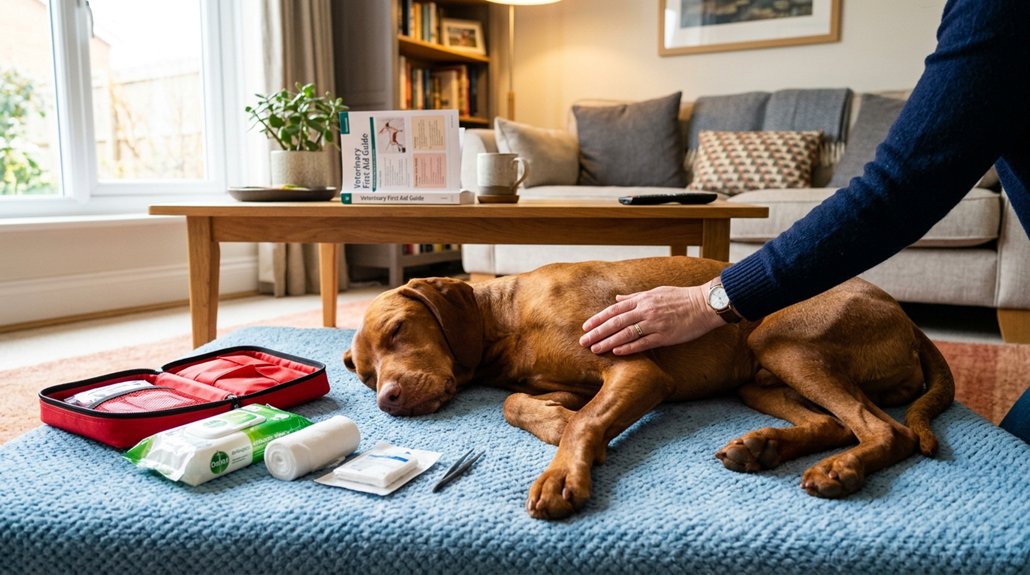
You should always have a well-stocked dog first aid kit with essentials like gauze pads, adhesive tape, and a thermometer. If your dog bleeds, apply pressure and elevate the limb. In case of poisoning, immediately contact a vet and avoid inducing vomiting unless advised. Recognize choking signs and perform appropriate maneuvers. For heatstroke, move your dog to a cool area and hydrate them slowly. Discover more effective strategies to handle these common emergencies confidently.
Key Takeaways
- Keep a well-stocked first aid kit with gauze, adhesive tape, hydrogen peroxide, and a digital thermometer.
- Apply pressure and elevate a limb to stop bleeding; seek help if bleeding persists.
- Contact a vet or poison control for any suspected poisoning and follow their instructions.
- Recognize choking signs and know how to perform the Heimlich maneuver on dogs.
- Move dogs with heatstroke to a cooler area, wet them down, and offer sips of water.
Complete Guide to Dog First Aid Kits
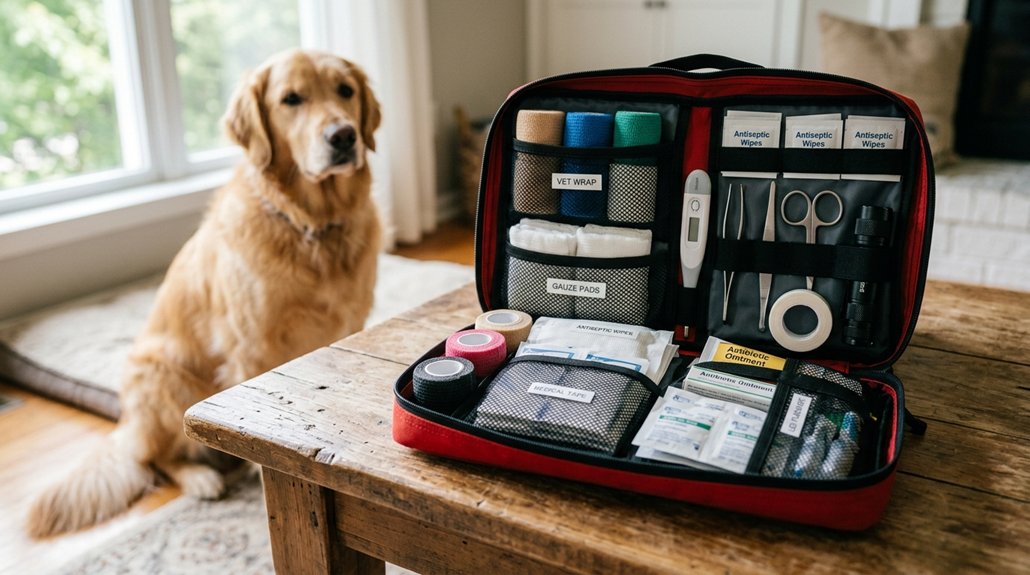
When it comes to preparing for your dog’s health emergencies, having a thoroughly stocked first aid kit is essential. You’ll need to focus on collecting high-quality dog first aid supplies such as gauze pads, adhesive tape, and hydrogen peroxide—critical for initial wound care. A digital thermometer is invaluable for monitoring your dog’s temperature, while a muzzle and leash will help you manage your pup safely when it’s in distress. Assembling first aid kits involves regularly checking for expired items, guaranteeing each component is in prime condition. Don’t forget to include important contact information for your vet, local animal hospital, and poison control hotline. Adding a pet first aid manual guarantees you’re ready to handle common emergencies confidently and effectively.
Stop Dog Bleeding Quickly
In emergency situations where your dog is bleeding, it’s crucial to act swiftly and efficiently. Begin by applying pressure directly to the bleeding site using a clean gauze pad or cloth, holding it firmly for at least three minutes. This technique helps control bleeding by promoting clot formation. If the injury is on a limb, elevate the affected limb above the level of the heart. Elevating the limb reduces blood flow to the injury site, assisting in the process of stopping the bleeding. Avoid removing any objects lodged in the wound, as this can exacerbate the issue. Should the bleeding persist after 10 minutes of sustained pressure, transport your dog to the veterinarian immediately. Always keep your first aid kit well-stocked to handle such emergencies effectively.
Responding to Poisoning: Vital Steps
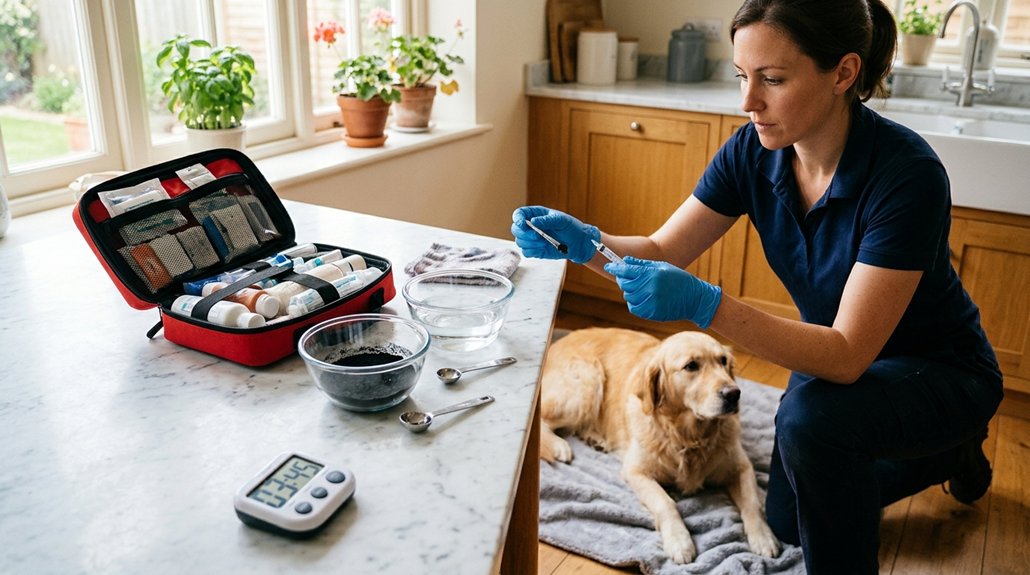
Handling emergencies like bleeding is just one aspect of keeping your dog safe, but knowing how to respond when your pet ingests a toxic substance is equally important. First, immediately contact your veterinarian or a poison control hotline. Provide specific details about your dog and any toxic substances they may have ingested. Don’t induce vomiting unless directed by a professional, as it might cause additional harm. It’s essential to recognize symptoms of poisoning, which include lethargy, vomiting, diarrhea, tremors, or seizures. Collect any packaging or remnants of the substance to help the veterinarian determine the appropriate treatment. Prevent future incidents by ensuring items like chocolate, certain plants, and household chemicals are kept out of reach, safeguarding your dog from accidental ingestion.
Help Your Dog if They’re Choking
Choking incidents can be terrifying, but knowing how to respond effectively can make a significant difference for your dog. Recognize choking symptoms like difficulty breathing, pawing at the mouth, coughing, or a blue-tinged tongue or lips, as these indicate a lack of oxygen. Your emergency response should start by staying calm and contacting your veterinarian if your dog is breathing. Avoid pushing anything down their throat.
For small dogs, try gently swinging them side to side or give abdominal thrusts if necessary. For larger dogs, perform the Heimlich maneuver by placing your arms around their waist, giving firm inward and slightly upward thrusts. If unconscious, check for visible obstructions and begin rescue breathing immediately, while seeking veterinary care.
Immediate Actions for Dog Heatstroke
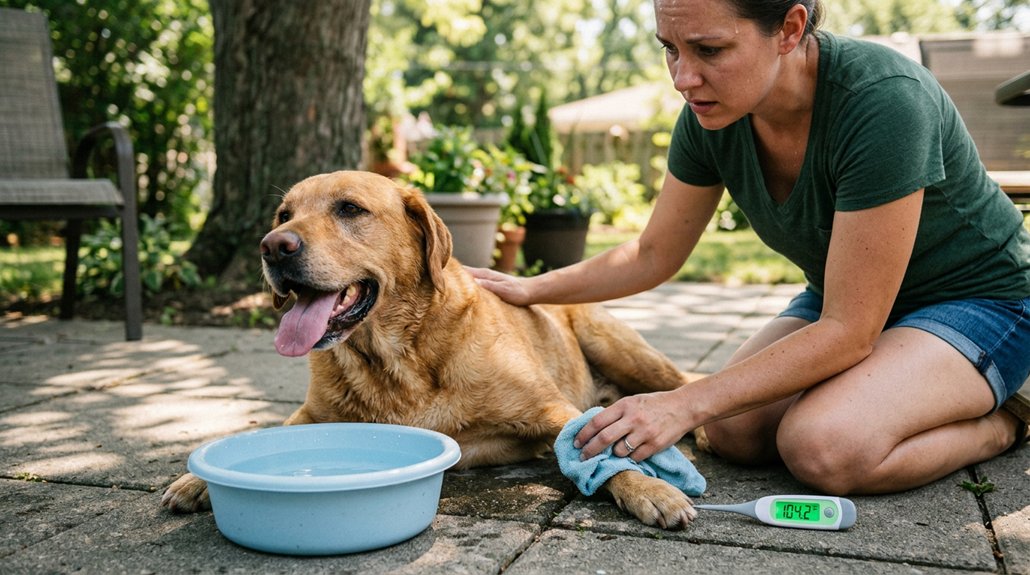
When your canine companion starts to display symptoms of heatstroke, swift intervention can be life-saving. Recognizing symptoms like excessive panting, drooling, and unsteady movements helps you act promptly. Immediately move your dog to a shaded or air-conditioned area to cool them down. Prevention strategies are essential, but knowing what to do when they’re overheating is equally important. Wet their body, focusing on the neck, armpits, and groin with cool water. Offer small sips of water, ensuring hydration without forcing it.
| Symptoms | Immediate Actions | Veterinary Care |
|---|---|---|
| Excessive Panting | Move to shade/AC area | If severe, seek immediately |
| Drooling | Wet with cool water | |
| Vomiting | Offer small sips of water | |
| Unsteady Movements | Focus on cooling specific body areas | |
| Weakness | Reassess and monitor continuously |
Seek veterinary care promptly if needed.
Frequently Asked Questions
How Do I Perform CPR on My Dog During an Emergency?
To perform CPR on your dog, check for dog breathing, then start CPR techniques. Close the dog’s mouth, breathe into their nose until the chest rises, give 30 chest compressions for every 2 breaths, and repeat.
What Signs Indicate My Dog Is Going Into Shock?
Spot subtle signs of shock, including lethargy, labored breathing, and low temperature. Causes of shock can be trauma or toxins. You’ll notice pale gums, a rapid pulse, or persistent panting. Prioritize professional help promptly for your pet.
How Can I Treat a Burn on My Dog’s Skin?
Assess the burn severity first. For mild burns, gently rinse with cool water, then apply home remedies like aloe vera gel or honey. Don’t use ice. If severe, contact your vet immediately for professional treatment.
What Should I Do if My Dog Has a Seizure?
Stay calm during your dog’s seizure; guarantee their safety by removing nearby hazards. Avoid touching them but time the seizure duration. Post-seizure, keep them comfortable and consult a vet to discuss potential seizure causes and necessary care.
How Do I Safely Transport an Injured Dog to the Vet?
When you’re carrying an injured dog, handle with kid gloves. Guarantee transport safety by using a sturdy crate or support with blankets. Keep your dog secure and calm, avoiding sudden stops. Drive gently to the vet.
Conclusion
As a dog owner in today’s bustling world, you’re not just a pet parent; you’re your dog’s superhero. Armed with the knowledge of first aid, you can leap to the rescue like a caped crusader when emergencies strike. Remember, from stopping bleeding to addressing heatstroke, each quick action you take might be the difference between life and death. Equip yourself with these essential skills, and your beloved canine will forever wag their tail in gratitude.