
In your puppy’s first year, you’ll master essentials like creating a safe home environment by securing hazardous materials and designating a quiet space. Regular vet visits and timely vaccinations are vital for preventing diseases. Consistent potty training and a nutritious diet tailored to their growth needs are foundational. Stay attentive to health red flags, such as persistent vomiting or behavior changes. By staying informed, you’ll discover how to raise a healthy, confident puppy.
Key Takeaways
- Schedule regular veterinary visits for vaccines, growth monitoring, and preventative treatments like heartworm and flea/tick protection.
- Implement a consistent potty training routine with scheduled outdoor trips and positive reinforcement for successful actions.
- Store toxic substances, cleaning supplies, and medications securely to ensure a safe environment for the puppy.
- Monitor for health red flags such as persistent vomiting, diarrhea, or notable behavior changes requiring immediate veterinary evaluation.
- Provide a balanced diet with puppy-formulated food and fresh water, adjusting feeding schedules as the puppy grows.
Safe Home Setup for Your New Puppy
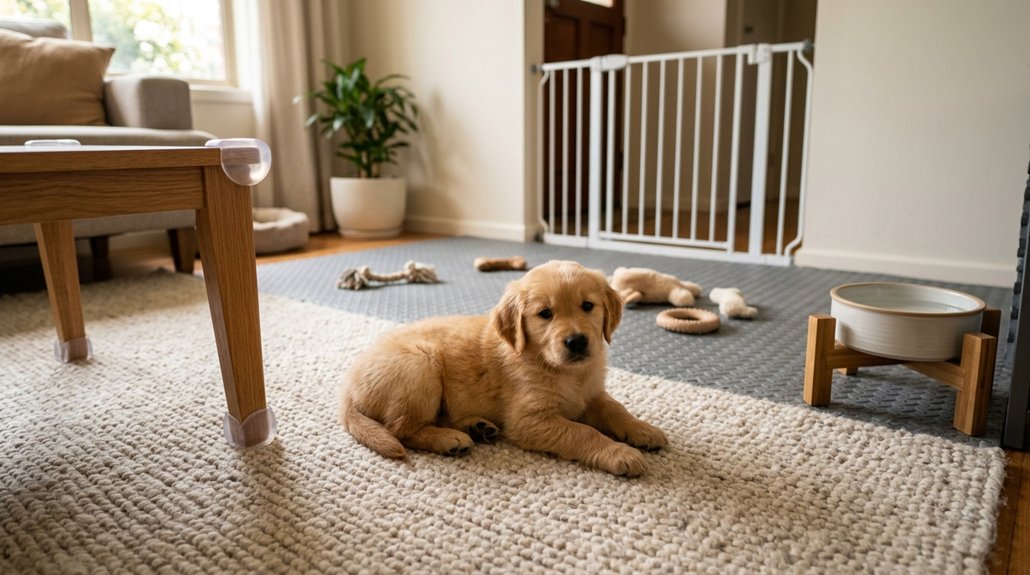
Although bringing a new puppy home is an exciting experience, ensuring a safe environment is essential for their wellbeing. Start by implementing vital puppy proofing tips. Store cleaning supplies, medications, and hazardous chemicals in high cabinets or use secure storage solutions, like locked containers, to prevent accidental ingestion. Also, secure laundry hampers and trash cans; small objects or food waste can cause harmful gastrointestinal blockages.
Inspect your yard by checking fencing for gaps or weak spots, ensuring your puppy stays safe and contained. Remove toxic plants and sharp objects, and clear away any loose materials. Inside, designate a quiet area with a cozy bed or crate, offering your puppy a comfortable, safe retreat, fostering a secure change into their new home.
Essential Vet Visits and Vaccinations to Protect Your Puppy
When you bring a new puppy home, starting a routine of essential vet visits and vaccinations is essential to safeguarding their health. Begin with a veterinary assessment shortly after arrival. This initial visit is significant for checking their health, administering initial vaccines, and outlining a thorough vaccine schedule. Puppies generally receive their first vaccinations between 6 and 8 weeks of age with booster shots every 3 to 4 weeks until they’re 16 to 18 weeks old. Key vaccines include distemper, parvovirus, and rabies. Depending on your puppy’s environment, additional vaccines like leptospirosis may be necessary. Regular vet check-ups will monitor their growth and discuss preventive care, such as heartworm and flea/tick treatments, keeping your puppy safe and healthy.
Mastering Potty Training With Simple Techniques
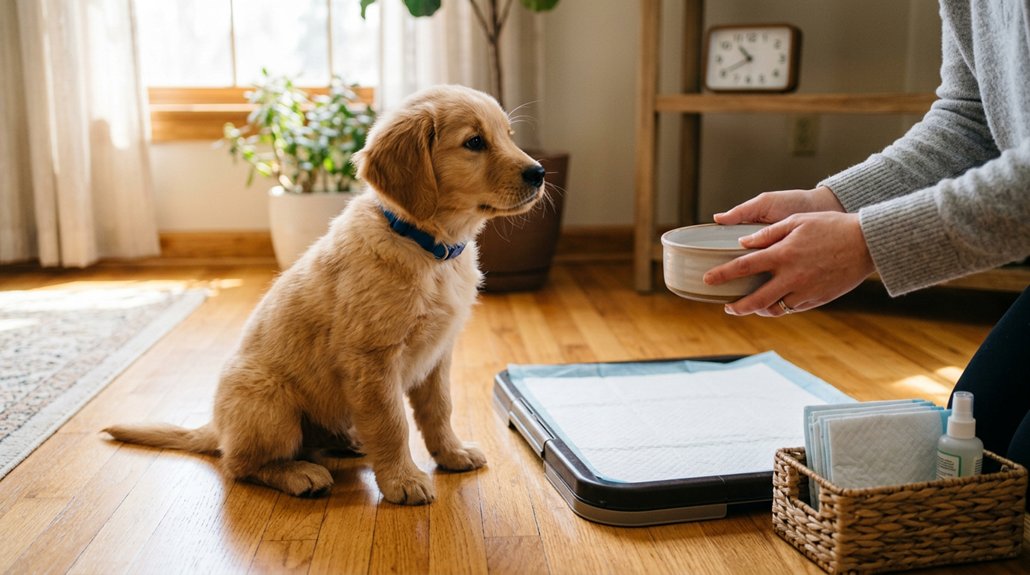
Potty training your puppy hinges on consistency and routine, so it’s essential to use a specific command like “potty” to create a clear association. Implementing a schedule for regular outdoor trips, particularly after meals and naps, can greatly reinforce this behavior. Positive reinforcement techniques, such as rewarding your puppy with treats and praise for successful outdoor potty breaks, will enhance compliance and aid in developing long-lasting habits.
Consistency and Routine
Consistency and routine are foundational for mastering puppy potty training, ensuring quicker and more reliable results. Establishing a consistent potty schedule means taking your puppy outside frequently, ideally every two hours, and immediately following meals, playtime, or waking up. This encourages your puppy to develop good habits. Training consistency is essential; use a specific command like “potty” to create a clear association for your puppy between the word and the act of relieving themselves. Crate training also supports routine development by leveraging your puppy’s instinct to keep their sleeping area clean. By maintaining calmness and avoiding scolding during accidents, you promote a secure learning environment. Instead, if caught mid-action, firmly say “no” and redirect them outside.
Positive Reinforcement Methods
Incorporating positive reinforcement into your puppy’s potty training can significantly accelerate their learning process. Clicker training is an effective method; the sound bridges the gap between action and reward, enhancing communication. Consistency remains essential—pair a command like “potty” with outings to help your puppy make associations. Reward timing is critical; offering a treat or praise immediately after successful potty actions outdoors reinforces good behavior. Schedule regular outdoor visits, especially post-meal, play, and naps, to create predictable patterns. In the event of an indoor mishap, maintain composure and redirect your pup outside. Opt for crate training as it aligns with their instinct to keep their sleeping area clean. Introduce the crate positively to aid in house-training.
Feeding Your Puppy for Strong Growth and Health
When it comes to ensuring your puppy’s strong growth and health, feeding them the right diet is essential. Puppies require high-quality, puppy-formulated food tailored to their nutritional needs. This specialized food supports healthy growth and development. Establish feeding schedules, starting with three meals daily until they reach about four months old. Post 4 months, you can typically reduce this to twice daily, but always consider their unique requirements. Consult your veterinarian to determine the best food types and quantities suited to your puppy’s growth stages. Introduce a variety of flavors and textures early to foster healthy eating habits and prevent pickiness. Don’t forget, continuous access to fresh water is vital for hydration and overall health as they grow.
How to Raise a Confident, Social Puppy
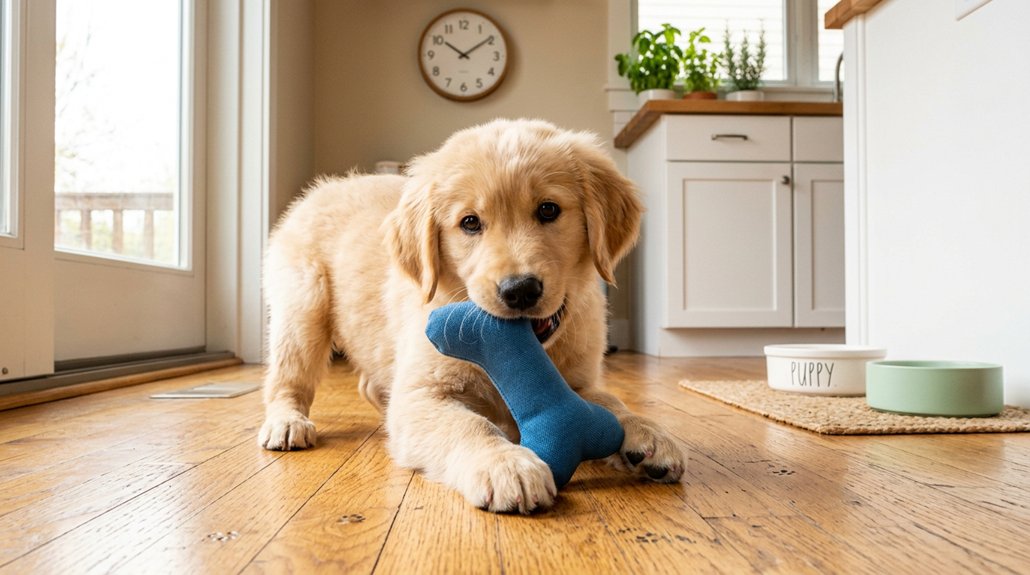
Raising a confident, social puppy involves providing early and impactful experiences that shape their temperament for life. Begin socializing your puppy between 3 to 16 weeks. This is a critical window for socialization strategies, greatly influencing their long-term confidence. Introduce them to diverse environments, people, and vaccinated animals to minimize fear-based behaviors. Short car rides and pet-friendly store visits increase adaptability. Use positive reinforcement, such as treats and praise, to encourage curiosity and trust. Puppy training classes are essential, offering structured environments. Additionally, organize regular puppy playdates to develop their social skills effectively. These experiences collectively build your puppy’s confidence, making them adaptable and well-adjusted companions. Ensuring these interactions are positive will set the foundation for a happy, social dog.
Easy Grooming Tips to Keep Your Puppy Comfortable
Starting grooming sessions early is crucial for your puppy’s comfort and hygiene. Familiarizing them with grooming tools reduces stress for both you and your puppy. Regular brushing minimizes shedding and matting, allowing you to inspect their coat for potential skin issues. Monitor your puppy’s behavior closely—it’s key for detecting discomfort and building positive associations with grooming.
- Begin paw handling: Gradually desensitize their toes with gentle touches.
- Use a nail file: Lightly file nails to make them comfortable with grooming tools.
- Bathing routine: Use lukewarm water and puppy-specific shampoos to prevent irritation.
- Rinse thoroughly: Guarantees no shampoo residue is left on their skin.
- Schedule frequent sessions: Enhances your puppy’s overall well-being through consistent grooming.
Recognizing Health Red Flags in Your Puppy
Beyond keeping your puppy comfortable through grooming, it’s important to be vigilant about their health. Symptom awareness is vital for recognizing red flags early. Persistent vomiting, diarrhea, or a refusal to eat for more than a day can indicate serious issues. Behavior changes, such as sudden aggression or withdrawal, shouldn’t be ignored—they might be signs of discomfort or illness. A sudden increase in thirst or urination suggests potential diabetes or kidney issues.
| Symptom | Possible Cause | Action Required |
|---|---|---|
| Vomiting/Diarrhea | Gastrointestinal problems | Vet evaluation |
| Increased Thirst | Diabetes/Kidney issues | Consult veterinarian |
| Lethargy/Pain Signs | Underlying health problem | Seek prompt vet care |
| Coughing/Breathing Issues | Respiratory infection | Immediate vet attention |
| Behavior Changes | Stress/Discomfort | Further assessment |
Stay attentive to these cues to guarantee your puppy remains healthy.
Frequently Asked Questions
What Are the Signs of Teething in Puppies?
You’ll notice puppy teething symptoms like increased drooling, chewing on objects, and occasional gum redness. Offer teething relief options such as chew toys or frozen washcloths to soothe discomfort. Regular vet check-ups guarantee their dental health progresses well.
How Can I Help My Puppy With Separation Anxiety?
You’ll discover that easing separation anxiety involves gradual desensitization. Begin by establishing strong puppy bonding through consistent, brief separations. Reinforce calm behavior with rewards. Implement anxiety management techniques like puzzle toys to keep them mentally engaged.
When Should I Start Leash Training My Puppy?
You should start leash training your puppy at 8-10 weeks. Use positive reinforcement techniques and familiarize yourself with various leash types to guarantee your puppy’s comfort and safety during walks. Training early helps establish good habits.
What Types of Toys Are Safe for Puppies?
Choose durable, non-toxic toys specifically designed for puppies. Look for the best chew toys made from safe materials like rubber. Interactive toys can help engage them mentally while ensuring they’re safe and appropriate for their age and size.
How Often Should I Clean My Puppy’s Ears and Teeth?
You should clean your puppy’s ears weekly to prevent infections, and focus on dental care by brushing their teeth several times a week. Consistent ear cleaning and teeth maintenance are vital for your puppy’s overall health.
Conclusion
Steering your puppy’s first year is a dance between predictability and surprises. Amidst cuddles and midnight bathroom breaks, you’re building habits that safeguard their health. From essential vet visits to recognizing illness signs, you’re both caregiver and protector. Balanced meals fuel their growth, while socialization nurtures confidence. Grooming sessions offer both hygiene and bonding. As challenges and joys intertwine, remember: you’re shaping not just their first year, but a lifetime of health and happiness.