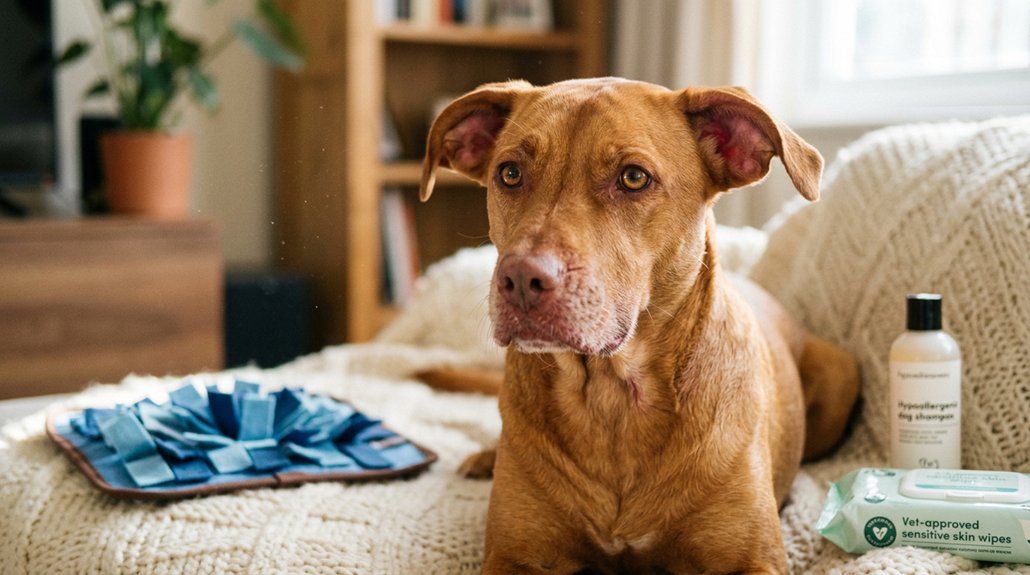
Dog allergies often arise from environmental factors like pollen, mold, or dust mites, as well as food proteins such as chicken or beef. Watch for signs like itching, watery eyes, or gastrointestinal issues. Consult your vet for diagnosis through tests or elimination diets. Treatments include flea control and medications, such as anti-itch and steroidal options, while home management can involve air purifiers and oatmeal shampoos. Discover more strategies for effectively managing your dog’s allergies.
Key Takeaways
- Common dog allergens include pollen, mold, dust mites, certain proteins, and flea saliva.
- Symptoms of dog allergies include scratching, skin redness, hair loss, watery eyes, and ear infections.
- Allergy management involves identifying allergens through tests like IDAT and elimination diet trials.
- Treatments include antihistamines, omega-3 supplements, medicated baths, and strict flea control.
- Home management tips include cleaning paws, using HEPA air purifiers, and reducing outdoor exposure during high-pollen times.
Understanding the Causes of Dog Allergies
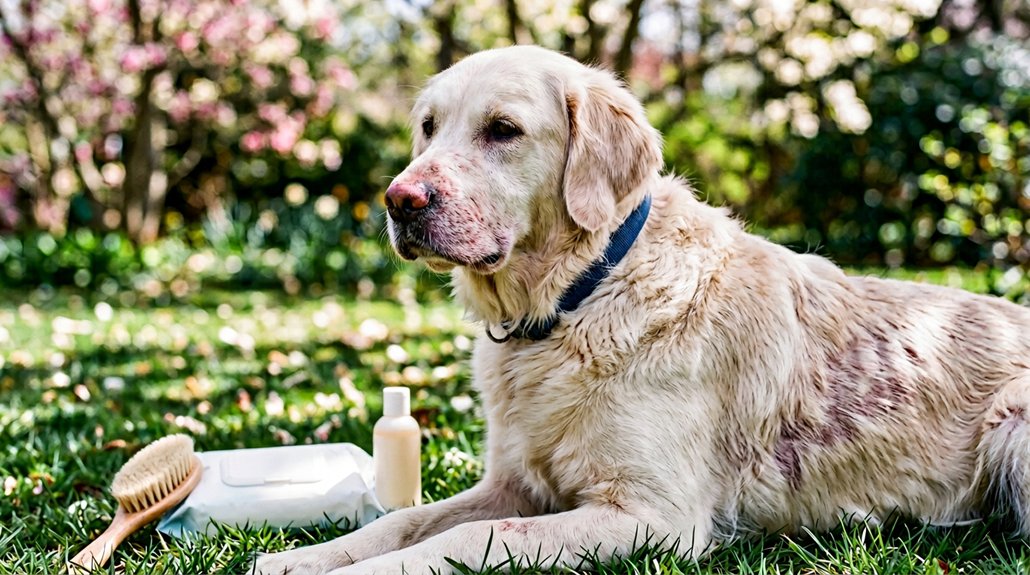
When it comes to understanding dog allergies, it’s essential to recognize that these conditions arise from the immune system‘s defensive response to typically innocuous substances called allergens. Allergen sources can vary and are commonly found in environmental elements like pollen, mold, and dust mites. When such allergens are introduced, your dog’s immune response can become excessively active, mistaking these substances as harmful, leading to allergy symptoms.
Reactions are often seen with environmental allergens; pollen and mold usually cause seasonal issues, while dust mites may trigger year-round reactions. Food-related allergens often involve proteins from chicken, beef, or grains. Additionally, flea allergy dermatitis is another significant condition where the allergenic source is flea saliva, intensifying the immune response with severe dermatological impacts even from minimal exposure.
Identifying Key Signs of Allergies in Dogs
Have you ever noticed your dog incessantly scratching or licking and wondered why? These behaviors often signal potential allergy triggers. Dogs experiencing allergies may manifest symptoms like excessive scratching, face rubbing, and licking paws, all leading to red, inflamed skin or hair loss. Watery eyes and recurrent ear infections are also indicators of allergic reactions, signaling your dog’s discomfort. Gastrointestinal signs such as vomiting and diarrhea typically accompany food allergies, reflecting systemic responses to specific proteins. Observing paw licking, especially after outdoor exposure, can reveal environmental allergies, common during high pollen seasons. Severe allergies yield chronic complications, including skin infections and disruptive dog behaviors. Recognizing these key signs is essential for understanding your dog’s allergy challenges.
Key Methods to Diagnose Dog Allergies
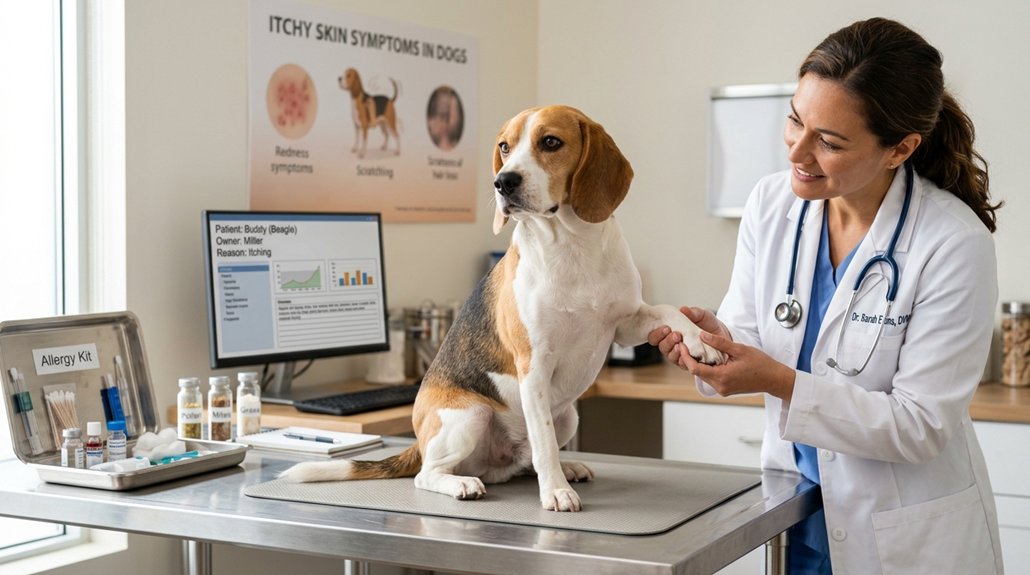
How exactly do you determine the specific cause of allergies in your dog? It begins with a thorough physical examination and a detailed medical history to rule out other causes. Common diagnostic methods include allergy testing like skin scraping or blood tests to identify environmental allergens or food allergies. Intradermal allergy testing (IDAT) is highly effective, providing immediate assessment for environmental allergens. For food allergies, an elimination diet trial lasting eight to twelve weeks is essential, requiring your dog to strictly adhere to a hypoallergenic diet. Given the complexity of dog allergies, you might need a referral to veterinary dermatologists or allergists for specialized allergy testing and management in persistent cases. It’s vital to follow these steps for precise diagnosis.
How to Treat Your Dog’s Allergies Effectively
Although managing your dog’s allergies can be challenging, effective treatment hinges on accurately identifying the specific allergen. Proper diagnosis, via elimination diets or intradermal tests, guarantees targeted treatments. For example, flea allergies demand strict flea control measures with topical or oral medications, as even one bite can cause significant itching.
After identifying the allergen, consult your veterinarian to devise a treatment plan incorporating anti-itch medications, steroids, or antibiotics if necessary. Omega-3 fatty acid supplements are a natural remedy that supports skin health and reduces itching, complementing medicated baths for soothing relief. Allergy prevention strategies are essential; maintaining your dog’s comfort often requires combining medications with lifestyle adjustments tailored to your dog’s needs and allergic triggers.
Home Management Tips for Alleviating Allergy Symptoms

- Clean paws after walks: Wipe your dog’s paws to remove pollen and other allergens.
- Use air purification systems: Install air purifiers with HEPA filters to capture airborne allergens, improving air quality.
- Medicated baths: Implement oatmeal-based shampoos to soothe itchy skin temporarily.
- Limit outdoor exposure: Keep windows closed during pollen peaks and limit playtime on high-pollen days.
Following these steps will effectively reduce your pet’s exposure to indoor and outdoor allergens.
Frequently Asked Questions
What Is the Best Thing to Do for Dog Allergies?
You should identify allergy symptoms and explore treatment options. Diagnostic tests can pinpoint allergens, and anti-itch medications, hypoallergenic diets, or steroids may alleviate symptoms. Regular veterinary guidance guarantees optimized management of your dog’s allergy-related issues.
What Are the 9 Major Foods That Cause 90% of Allergic Reactions?
Imagine your dog Chef developing itchy skin after chicken consumption. The nine culprits include chicken, beef, lamb, dairy, eggs, wheat, soy, corn, and fish. Recognizing food sensitivity symptoms helps when considering hypoallergenic diets to alleviate issues.
What Are the Top 3 Things Dogs Are Allergic To?
Dogs are commonly allergic to flea saliva, environmental triggers like pollen and dust mites, and food proteins. Seasonal allergies, primarily environmental, can provoke chronic itching and inflammation, while food allergies often necessitate careful dietary management.
What Months Are the Worst for Dog Allergies?
The worst months for dog allergies typically span from March to October. During this period, seasonal triggers like pollen and mold spores worsen allergy symptoms. Be vigilant for signs of discomfort as the environmental allergens peak.
Conclusion
In managing your dog’s allergies, think of yourself as the captain steering through turbulent seas. Understanding the root causes, recognizing the key signs, and employing appropriate diagnostic methods are your navigational tools. Effective treatments and home management tips are your compass, ensuring smoother sailing for your furry friend. By addressing allergies with precision and care, you’re not only enhancing your dog’s quality of life but also fostering a healthier, more comfortable environment for them.