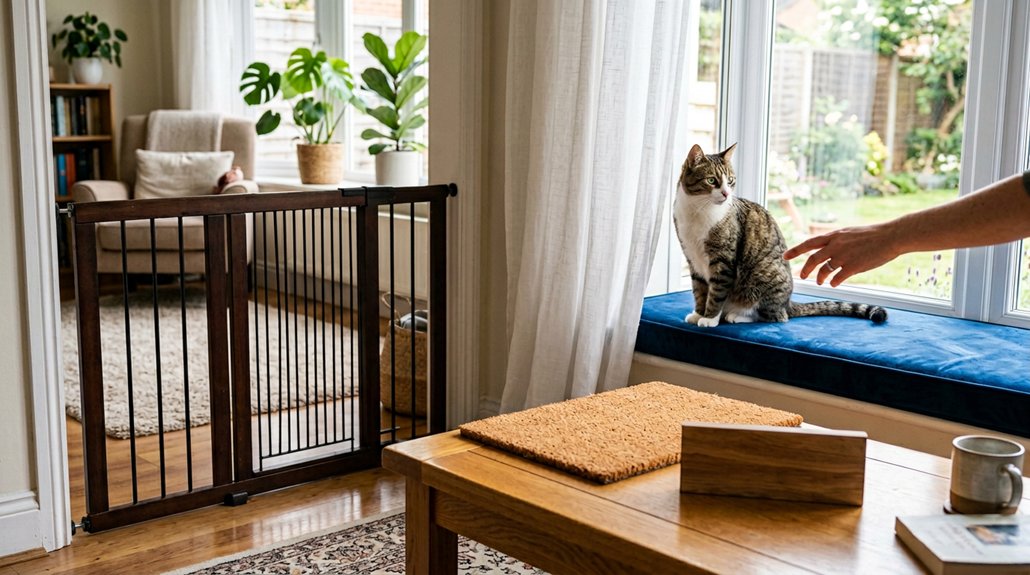
Setting boundaries with your cat involves understanding their natural behaviors and using positive reinforcement. Respect their sensory world and instinctual needs by creating designated zones for play, rest, and feeding. Equip these zones with engaging toys and climbing structures. Be consistent with routines to reduce anxiety and redirect undesirable behaviors gently. Balance your home’s layout with your cat’s preferences for mutual happiness. Engage with cat owner communities for supportive insights that enhance your bond and home harmony.
Key Takeaways
- Use positive reinforcement techniques to reward desired behaviors, making boundary-setting enjoyable for your cat.
- Designate specific play, rest, and feeding zones to give your cat predictability and security.
- Decode your cat’s body language to understand their feelings and adjust boundaries accordingly.
- Redirect undesirable behaviors by providing alternatives like scratching posts and engaging toys.
- Regularly engage with cat owner communities for shared experiences and practical boundary-setting advice.
Use Positive Reinforcement Techniques
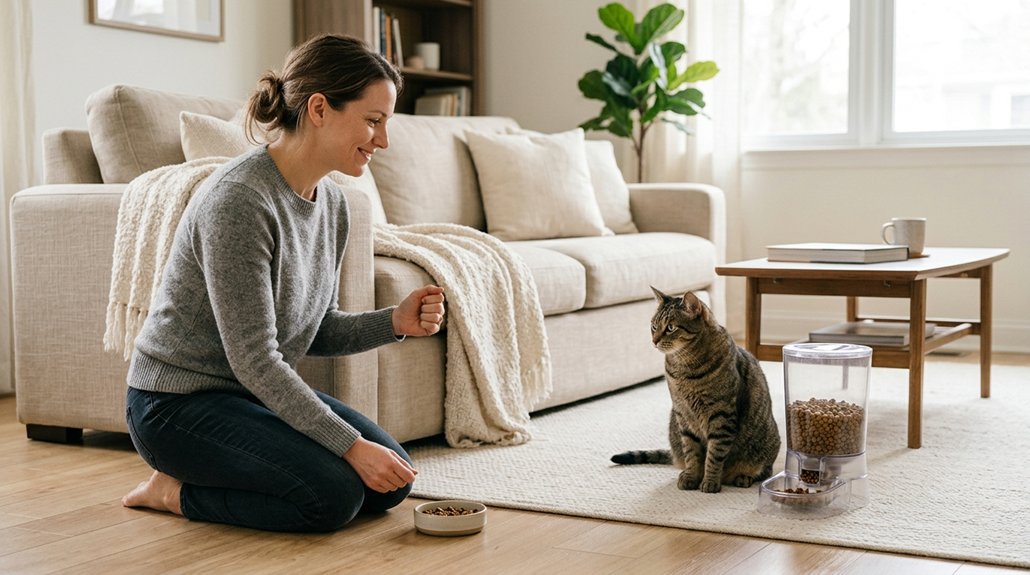
When it comes to setting boundaries with your cat, understanding the power of positive reinforcement can be transformative. It’s all about making learning fun and rewarding through clicker training and effective reward systems. By offering treats or toys for desired behaviors, you’re not just teaching your cat but engaging with them in a delightful way. Short, 5 to 10-minute sessions keep your cat interested and focused. Consistency is key, so be sure you’re rewarding the right actions each time. Start with simple tasks, gradually shaping their behavior by increasing expectations slowly. Avoid any negative reinforcement; instead, focus on the joy of rewarding good behavior. This strengthens your bond, creating a balanced and happy home environment for you both.
Understand Your Cat’s Natural Behavior
Understanding your cat’s natural behavior involves appreciating their sensory world and instinctual needs. You’ll notice how their acute senses shape behaviors like climbing and exploring, essential activities that should be nurtured rather than stifled. By decoding their body language, you can better communicate and set boundaries that respect their instincts, ensuring a peaceful coexistence in your home.
Sensory Influences on Behavior
While observing your cat navigate its world, it becomes clear how greatly their senses shape their behavior. Understanding these sensory influences is essential for setting boundaries. Here’s what to reflect on:
- Texture Preferences: Cats can be particular about surfaces they walk or rest on. Offer a variety of soft, rough, or smooth textures to discourage inappropriate scratching.
- Scent Attractiveness: With an acute sense of smell, cats might push boundaries if attracted to new or strong scents. Use familiar, comforting scents to keep territories defined.
- Sound Sensitivity: Cats hear frequencies we can’t, leading to stress. Minimize sudden, loud noises in their environment to prevent sensory overload.
- Territorial Instincts: Respect their need for personal space by creating zones for privacy and environmental enrichment, reducing stressful interactions.
Instinctual Climbing and Exploration
Though often perceived as mischievous, a cat’s inclination to climb and explore is deeply rooted in their natural instincts. Cats have a strong urge for vertical climbing and thrive on feline curiosity, which means they need opportunities for both physical exercise and mental stimulation. Providing tall scratching posts and designated climbing areas like cat trees or shelves can help satisfy these needs. By fulfilling their territorial instincts, you encourage healthier behaviors and alleviate some of the mischief, such as jumping on counters. It’s essential to understand that your cat seeks these heights not only for exercise but also to gain a vantage point for observing their surroundings. These insights can guide you to create a harmonious home environment that respects their exploratory nature.
Communication Through Body Language
As you cater to your cat’s instinctual climbing needs, it’s equally important to appreciate the subtleties of their body language to build a respectful relationship. Cats rely heavily on body language cues to communicate their comfort zones and boundaries.
- Ears: Forward-facing ears show curiosity, while flattened ears signal fear or aggression. Watch these cues to know when to engage or give space.
- Tail: A high, erect tail is a sign of happiness and confidence, but a low or twitching tail indicates irritation.
- Posture: Swatting or hissing means a boundary has been crossed, suggesting it’s time to step back.
- Facial Expressions: Notice the subtleties in their eyes and whiskers to gauge mood and set appropriate boundaries.
Understanding these cues will enhance communication and strengthen your bond.
Create Designated Spaces for Play, Rest, and Feeding
It’s important to define specific zones in your home to cater to your cat’s play, rest, and feeding needs. Start by observing your cat’s preferences and behaviors to create designated spaces that nourish their natural instincts and provide comfort. You’ll foster a sense of security and routine by ensuring these areas are consistently maintained and thoughtfully arranged.
Define Play and Rest Zones
Creating designated play and rest zones for your cat can enhance their well-being and promote harmonious living. By strategically setting up these spaces, you cater to your cat’s need for activity and downtime.
- Play Zone: Equip this area with engaging toys and climbing structures. This setup stimulates your cat’s natural instincts, diverting potentially destructive energy into fun play sessions.
- Rest Haven: Provide a peaceful spot away from high-traffic areas. A cozy bed or soft blankets help your cat feel secure and offer a retreat when they need a break.
- Regular Adjustments: Observing your cat’s reactions, tweak these zones to suit their preferences, ensuring comfort and familiarity.
- Structure and Routine: Consistency in zones helps your cat understand activity expectations, fostering a sense of security.
Establish Feeding Routine Areas
A strategic approach to setting up feeding routine areas can greatly enhance both your cat’s comfort and your household’s harmony. Designate a specific, quiet environment for feeding, ensuring it’s away from bustling areas. This reduction in distractions will allow your cat to focus on their meal without stress. Implement a consistent feeding schedule to establish predictability, which can greatly reduce any anxiety related to mealtime. Pay attention to your cat’s cues and preferences as you organize these spaces. Some cats prefer elevated areas for eating, so consider incorporating raised dishes if needed. By maintaining these designated spots, you’ll create a peaceful framework that supports your cat’s well-being and helps clarify boundaries, ensuring a more balanced and content home environment.
Explore Safe Spaces for Your Cat
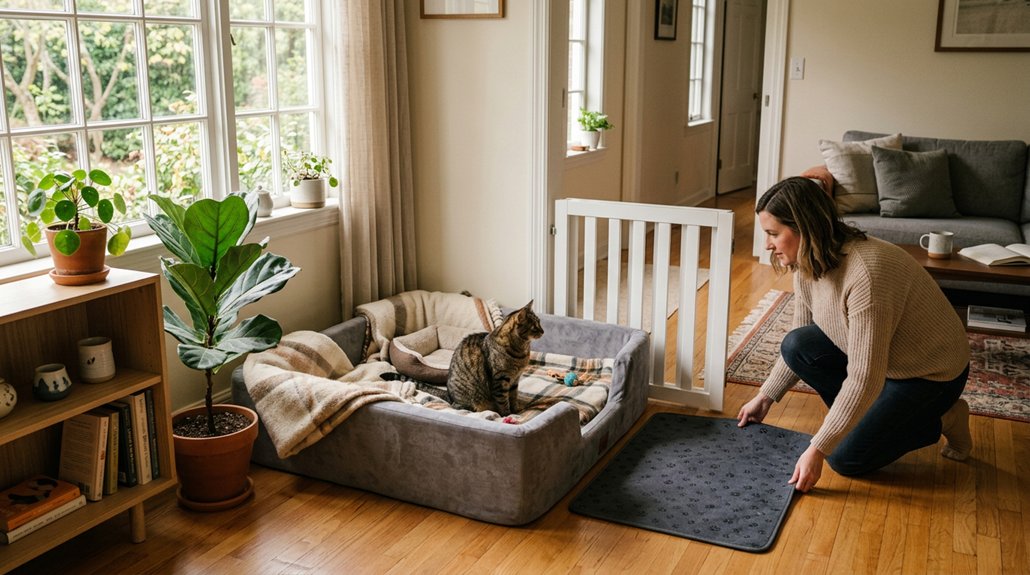
Ever wonder how to give your feline friend the perfect haven they truly deserve? Creating a safe zone or feline sanctuary in your home is vital for their well-being. Here’s how to guarantee they have a stress-free refuge:
Wondering how to create the ideal feline sanctuary at home for your cat’s well-being?
- Essentials Setup: Incorporate food, water, toys, and a litter box to guarantee your cat feels comfortable and secure in their space.
- Territorial Haven: Recognize their need for territoriality by setting aside a specific area that they can fully claim as their own.
- Enhanced Security: Add elements such as a cat tree or a quiet refuge to boost their confidence and sense of ownership.
- Ongoing Maintenance: Regularly assess and update the environment to accommodate your cat’s changing needs while keeping it a consistent relaxation spot.
Gentle Techniques to Redirect Behavior
Some might not realize how pivotal gentle techniques can be in improving your cat’s behavior. Understanding your cat’s behavioral triggers is essential to develop effective redirection strategies. Utilize positive reinforcement by rewarding desired actions with treats or toys, making good behavior more appealing. Providing alternatives like tall scratching posts addresses the urge to climb on counters. Consider interactive play sessions to channel your cat’s energy and curiosity into constructive activities, preventing boredom-driven disruptions. Enrich their environment with puzzle toys or stimulating activities to satisfy their instincts, averting undesirable behaviors.
Here’s a quick guide:
| Behavior Issue | Redirection Strategies |
|---|---|
| Climbing on counters | Tall scratching posts |
| Boredom | Interactive play sessions |
| Disruptive energy | Puzzle toys or enrichment |
Empathy and understanding go a long way in nurturing a harmonious home.
Keep a Consistent Routine for Your Cat
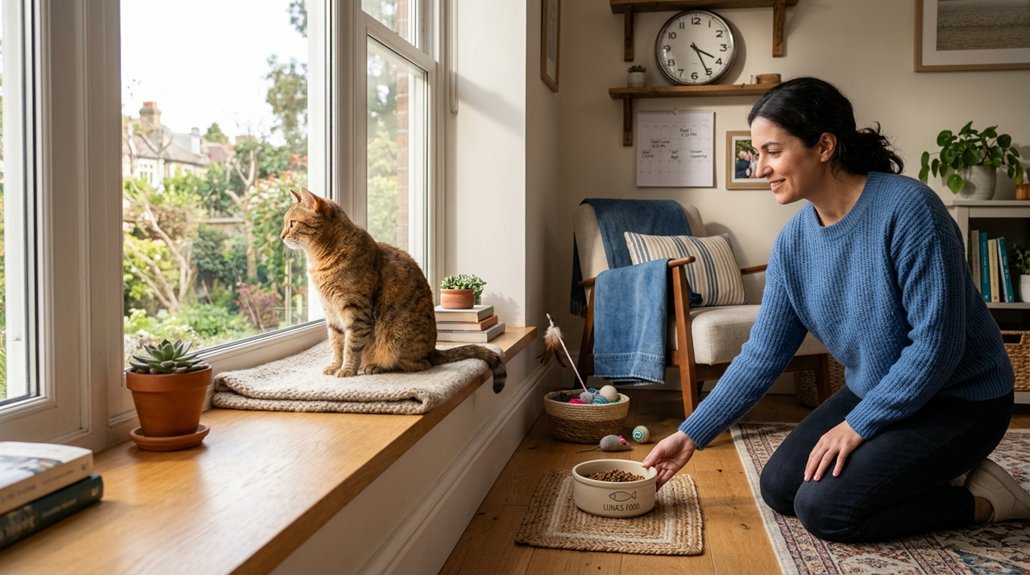
Establishing a consistent routine with your cat can greatly contribute to a peaceful and well-adjusted household. Cats thrive on daily consistency, which helps in aligning their natural behavior patterns. Here’s how to keep a routine in place:
- Feeding Schedules: Designate specific times for meals to foster security and stress reduction.
- Play Times: Engage in interactive play regularly to provide stimulation and curb boredom-related issues.
- Routine Benefits: Predictable environments facilitate trust building and enrich the bond with your cat.
- Environmental Stability: Align activities like resting and active periods to their natural instincts for a harmonious environment.
Balance Your Space With Your Cat’s Needs
When balancing your living space with your cat’s needs, consider that though your feline friend may appear independent, they still require a tailored environment to thrive. A thoughtful furniture arrangement can help maintain personal boundaries while accommodating your cat’s instincts. Position tall scratching posts and perches strategically, letting them climb and observe without encroaching on your personal areas. Establish a consistent feeding and playtime routine, ensuring your cat feels secure in their designated spaces, reducing clinginess. Regularly assess the home for hazards and provide outlets for natural behaviors, preventing unwanted antics. Engage your cat in shared activities like cooking or playing, respecting space while fostering involvement. Balancing their needs with yours creates harmony, ensuring both your happiness and your cat’s well-being.
Find Support in Cat Owner Communities
While you’ve carefully arranged your space to accommodate both your needs and your cat’s, sometimes seeking guidance from those who have walked the path before can greatly enhance your journey. Engaging with cat owner communities online gives you community support through shared experiences, stories, and practical advice. Here’s how these groups can benefit you:
- Insights: Discover strategies for boundary-setting by learning from personal anecdotes shared by fellow cat owners.
- Problem-Solving: Identify common behavioral issues, tapping into collective wisdom for tailored solutions.
- Resources: Utilize articles, guides, and webinars offered for deeper understanding of cat behaviors and effective boundaries.
- Advice: Receiving support from seasoned cat owners aids in adjusting environments and exploring alternative solutions to unwanted behavior, fostering harmony with your feline friend.
Frequently Asked Questions
What Is the 3-3-3 Rule for Cats?
The 3-3-3 rule helps cat behavior understanding; give three days for adapting, three weeks for settling, three months showing true personality. Effective boundary management means respecting this timeline, patiently observing, and adjusting to their unique cues.
What Is “I Love You” in Cat Language?
In cat language, “I love you” can be expressed through their body actions like gentle head-butting, slow blinks, and purring. Their soft body and these actions reveal deep trust, affection, and a connection they cherish with you.
Which Cat Breed Is Most Clingy?
Siamese cats, like shadows with a voice, exemplify clingy cat breeds through their need for interaction. Understanding feline attachment requires recognizing this dependence, blending expert insight with empathy for their social, vocal, and loving nature.
What Color Cat Is Least Desired?
Black cats often face the longest waiting time in adoption centers. Despite their stunning appearances, feline color preferences affect cat adoption trends, sometimes making these beauties seem less desired due to unfounded superstitions and stereotypes. Encourage awareness!
Conclusion
Steering through life with your feline friend is akin to a carefully choreographed dance, where balance and understanding are key. By setting boundaries through gentle redirection and positive reinforcement, you’re crafting a harmonious environment that respects both your space and your cat’s instincts. Creating designated areas and keeping a consistent routine helps guarantee peace reigns at home. Remember, you’re not alone—seek out fellow cat owners to share insights and support. Your cat isn’t just a pet; it’s a cherished family member.