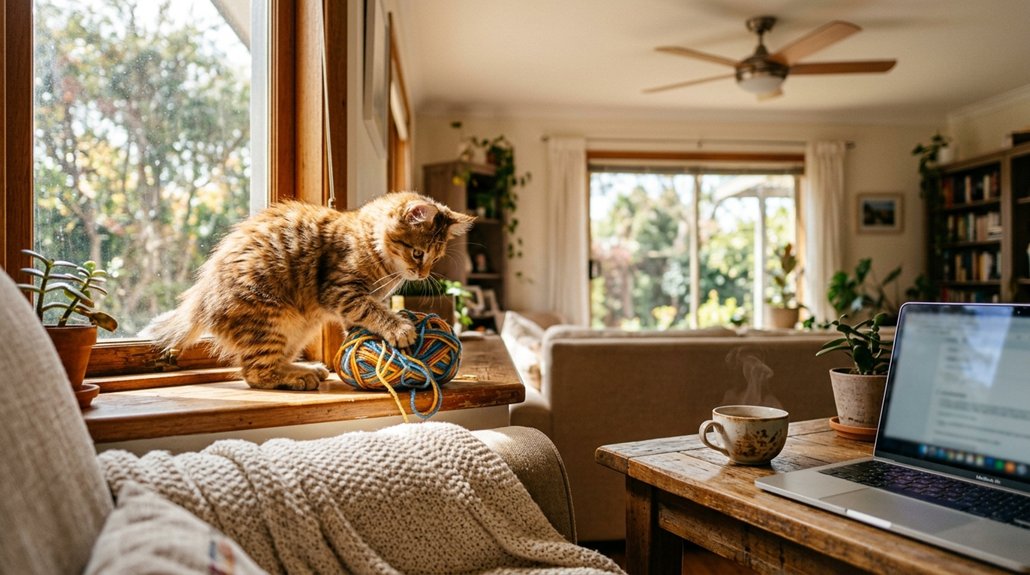
Your day with a kitten involves morning play sessions that boost social skills and agility. Grooming follows, essential for maintaining cleanliness and coat health. Sensory exploration sparks curiosity and confidence, while feeding practices guarantee proper growth. Afternoon exploration helps build social skills, with vital nap times supporting development. Evening play aligns with their natural rhythms, and a calming nighttime routine secures rest. Explore each activity further for a deeper understanding of kitten care.
Key Takeaways
- Morning playtime helps kittens develop social skills and muscle strength through activities like stalking and pouncing.
- Kittens engage in sensory exploration, enhancing coordination and social bonding, spending around 2 hours investigating their environment.
- Regular grooming, lasting 2 to 3 hours, maintains coat cleanliness, distributes oils, and reinforces instinctual cleanliness and health.
- Kittens require 16 hours of sleep on average, essential for energy recharge, physical growth, and neurological development.
- Socialization and mental stimulation are crucial for balanced development, promoting emotional growth and adaptability to new environments.
Morning Playtime: Kittens Begin Their Day With Energy and Fun
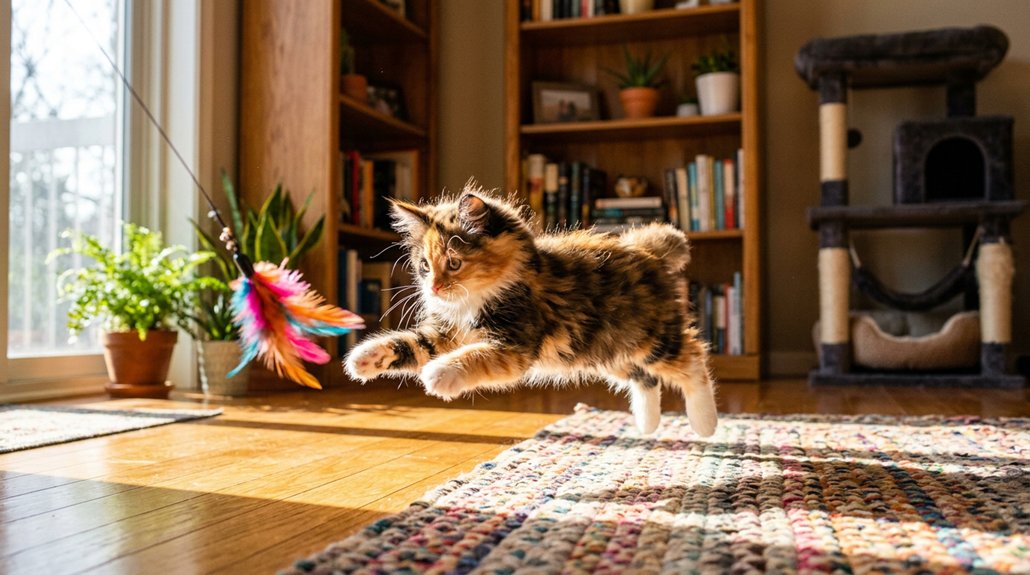
When you observe kittens in the morning, you’ll notice their boundless energy as they initiate play sessions that are as enjoyable as they are essential. Kitten behavior during this time is marked by activities that resemble hunting, such as stalking and pouncing. These actions are important for developing social skills and coordination. The playtime benefits extend beyond mere entertainment; engaging in these high-energy sessions builds muscle strength and agility, contributing to physical health. Additionally, the bursts of energy help reinforce their exploratory instincts. Throughout morning play, kittens display unique personalities and maintain a keen awareness of their surroundings. This integral part of their routine fosters mental stimulation and enhances overall well-being, setting the foundation for a healthy and active lifestyle.
Grooming Time: The Kitten’s Daily Ritual for Cleanliness
Following an invigorating session of morning play, kittens typically engage in a soothing ritual that holds significant importance: grooming. This essential activity occupies about 2 to 3 hours each day, ensuring their coat remains immaculate and free from harmful parasites. Grooming benefits extend to distributing natural oils through their fur, which not only waterproofs but also maintains coat health. It’s important to understand the self-grooming importance as it’s akin to a meditative practice for kittens, promoting mental balance and relaxation. The act of grooming further helps in vitamin D absorption, reinforcing their physiological health. Additionally, these behaviors echo maternal lessons, nurturing instinctual cleanliness.
| Aspect | Function |
|---|---|
| Time Spent | 2 to 3 hours daily |
| Coat Maintenance | Cleans and waterproofs |
| Health Enhancement | Vitamin D absorption |
| Psychological Benefit | Calming and balancing |
Curiosity Unleashed: How Your Kitten Sees the World
Your kitten’s world is an intricate tapestry of sensory exploration, where every scent and sound is a piece of the puzzle they are compelled to put together. Through keen vision and acute hearing, they invest around two hours daily, methodically investigating new environments while leaving pheromonal messages. This playful curiosity isn’t just whimsical; it’s a critical component of their developmental process, enhancing their agility and ensuring they’re well-equipped for a socially adept life.
Kitten’s Sensory Exploration
Although kittens are born with their eyes closed, they begin to reveal the fascinating world around them between 7 to 14 days as their eyes open. This marks a major sensory milestone in their development, initiating a phase of exploratory behavior. Initially graced with blue eyes, they gradually shift to their adult color, enhancing their connection with their surroundings. By three weeks, a well-developed sense of smell emerges, pivotal for identifying scents and navigating their surroundings. Around four weeks, you’ll notice a burst of curiosity as they interact with their environment—an essential step in refining their sensory skills. As they mature, their advancing senses—vision, smell, and hearing—are fundamental for social bonding and building confidence during exploration.
Discovering New Environments
As kittens grow and their senses sharpen, their innate curiosity propels them to explore and familiarize themselves with their surroundings, which is essential for their holistic development. They spend around 2 hours daily investigating various environments, a crucial activity for their physical and mental growth. Engaging in environmental interaction, kittens traverse diverse textures and terrains, honing their coordination and balance. Through these exploratory practices, they naturally partake in territory marking, using pheromones and urine to establish dominance and security within their space. This behavior not only cements their ownership of these environments but also aids in their socialization as they adapt to household sounds and activities, ensuring they’re comfortable and confident in their evolving world.
Playful Curiosity Observations
Kittens, driven by their innate curiosity, dedicate a significant portion of their day to observing the world around them, employing keen senses to absorb and interpret various stimuli. With roughly 2 hours spent exploring from elevated vantage points, such as windowsills, they engage in critical kitten observations. This behavior helps them hone their spatial and territorial awareness through pheromones and visual cues. During playtime, occupying approximately 1 hour, kittens practice essential hunting skills like stalking and pouncing. These playful bursts are vital for their mental and physical health, providing playtime benefits by allowing them to release natural instincts in a safe and controlled environment. As their eyes mature, shifting to adult colors by 9-10 weeks, their visual perception becomes sharper, enriching exploratory experiences.
Feeding Your Kitten: Best Practices for Health and Growth
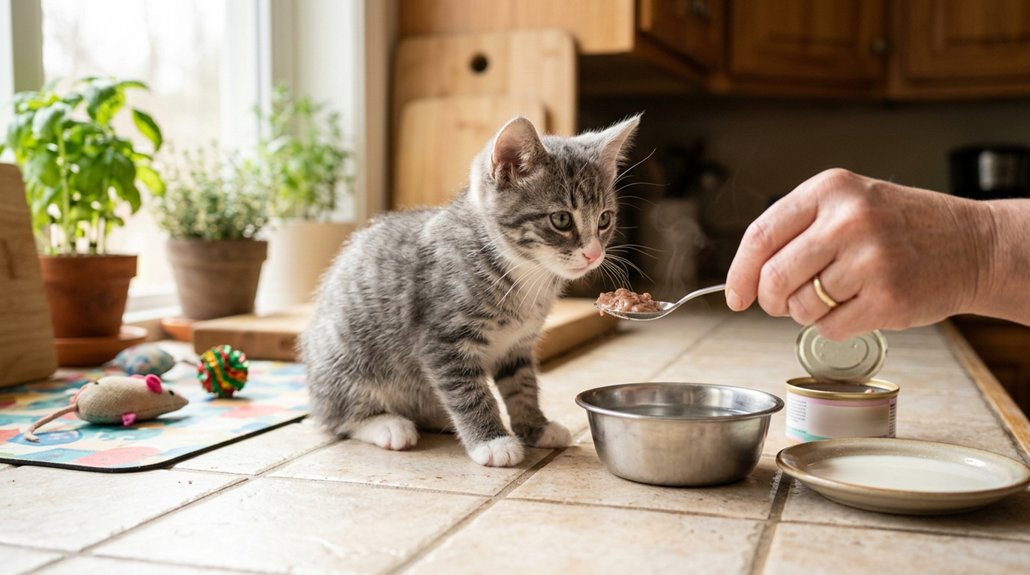
Feeding your kitten during its early stages is essential to ensuring both health and robust growth. Proper kitten nutrition supports development, requiring a well-planned feeding schedule. Initially, maintain the diet provided by the previous caretaker for one week. This consistency minimizes digestive issues while the kitten acclimates.
Set up a quiet, secure location for feeding to prevent disturbances from other pets. Kittens thrive on small, frequent meals throughout the day, accommodating their growing appetite. Always provide fresh water, separate from food, to promote hydration—vital for their metabolism. Within a week, gradually introduce new food to adapt the kitten to different nutritional needs as it matures. Monitoring eating habits is significant to spot any dietary issues early.
Cuddle Time: Enhancing Bond With Your Furry Friend
While nurturing your kitten, cuddle time becomes a vital activity in fostering a deep emotional connection. Engaging in regular cuddle sessions amplifies the cuddle benefits considerably, as these interactions are essential for building trust and comfort. Physical closeness during cuddling promotes a calming environment for both owner and pet, establishing a strong bond. Implementing effective bonding techniques, such as gentle stroking and soft vocalization, enhances the relationship further.
It’s important to guarantee your kitten feels safe and secure in your presence. Observe their body language to identify stress signals, adjusting your approach accordingly. Respecting your kitten’s cues during cuddle time is critical for maintaining a positive experience. Prioritize these nurturing moments to optimize the emotional development and trust-building between you and your furry friend.
Afternoon Exploration: Building Confidence and Skills
Afternoon exploration plays a significant role in the development of a kitten, especially after cuddle time has laid the foundation for trust and security. This period involves about two hours of active exploration, where your kitten begins marking their territory, engaging keen senses by observing various surroundings. This is vital for developing their hunting prowess, as they practice stalking and pouncing, enhancing their coordination. Introducing kittens to different terrains and household sounds is important, as it aids in boosting their confidence and familiarization with the environment. Social interaction during this time, whether with caregivers or other pets, enhances a kitten’s ability to socialize effectively, satisfying their curiosity and contributing to mental stimulation, essential for their healthy and balanced development.
Essential Nap Time: Recharging Your Kitten’s Energy
Nap time is an elemental component in a kitten’s daily routine, crucial for recharging energy levels and supporting healthy development. Kittens typically sleep between 12 to 19 hours daily, with an average nap duration of 16 hours. This expansive sleep period is essential for energy restoration, ensuring they have the stamina necessary for active exploration.
Nap time is vital for kittens, recharging energy and supporting healthy growth with 12 to 19 hours of sleep daily.
The benefits of sleep on kitten health include:
- Physical health: During sleep, kittens conserve energy and bolster physical growth.
- Mental balance: Adequate rest supports neurological development and cognitive stability.
- Routine: Regular sleep patterns enhance comfort and security in their new environment.
Optimal nap time is imperative for energy conservation, promoting robust growth and establishing a secure, comfortable routine in their day-to-day life.
Evening Play: Gear Up for Nighttime Adventures
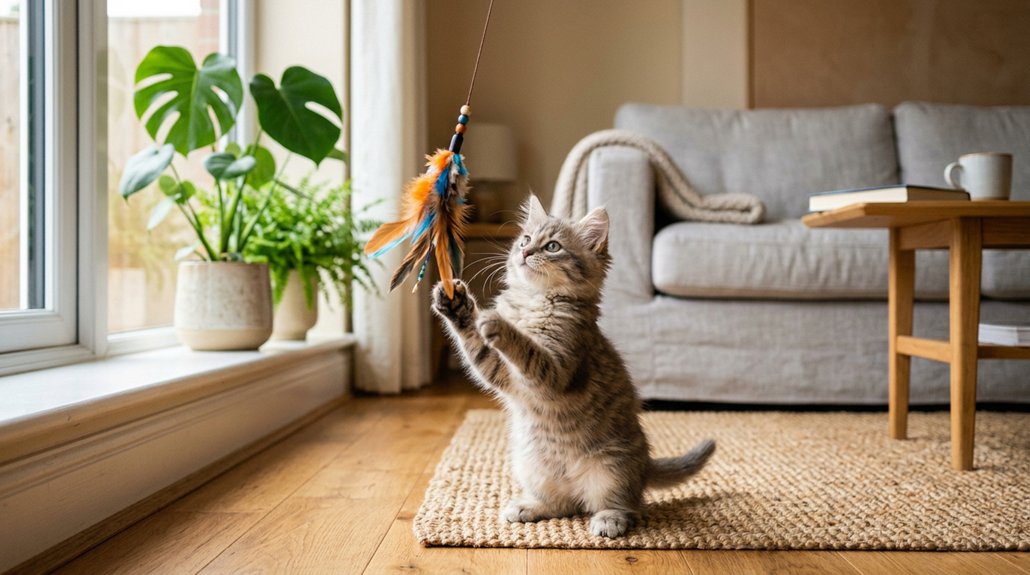
Evening is a prime time for playful exploration with your kitten, aligning with their instinctual nocturnal rhythms. Establish an evening routine that includes focused play sessions, using interactive toys to satisfy hunting instincts and provide energy outlets. Effective toy selection, such as feather wands and laser pointers, enhances kitty entertainment and physical agility, leading to significant playtime benefits.
Devote approximately 30 minutes to these bonding moments, ensuring the establishment of a safe environment as your kitten begins their nighttime adventures. Such structured activities enable your kitten to explore securely and expel excess energy, contributing to better sleep quality for both of you. Embrace this opportunity to strengthen your bond while addressing your pet’s innate behavioral needs efficiently and enjoyably.
Settling Down: Ensuring a Peaceful Night for Your Kitten
To guarantee a tranquil night for your kitten, it’s crucial to establish a calming environment with strategic preparation. Confirm nighttime comfort by setting up a cozy, quiet sleeping area with soft bedding and essentials nearby. This setup fosters security and alleviates kitten anxiety. To further ease your kitten’s first night, consider the following:
- Use a night light: Provides comfort and guides them in the unfamiliar environment.
- Minimize disturbances: A calm house reduces stress, promoting restful sleep.
- Be patient with crying: It’s normal as they adjust to their new surroundings.
Frequently Asked Questions
What Is the 3-3-3 Rule for Kittens?
The 3-3-3 rule explains kitten behavior phases in new homes: the first three days involve shyness, three weeks for socialization techniques development, and after three months, kittens are fully acclimated, confident, and bonded with household members.
What Should a Kitten’s Daily Routine Be?
Think of a kitten’s day like a well-balanced equation: playtime activities act as the lightning, sparking joy and agility, while a feeding schedule serves as the compass, anchoring their routine in nourishment and growth. Aim for balance.
What Is “I Love You” in Cat Language?
In cat language, “I love you” is expressed through purring, soft vocalizations, nuzzling, and slow blinks. Recognize feline body language, like paw kneading or gentle meows, as signs of love, trust, and affection from your cat.
Can a Kitten Be Left Alone for 5 Days?
Leaving a kitten alone for 5 days isn’t advised. Kittens require vigilant care, frequent feeding, and socialization. Guarantee guilt-free travel by arranging a pet sitter or trusted person to provide necessary kitten care during your absence.
Conclusion
In caring for your kitten, you’re initiating the most rewarding journey of your life. The boundless energy, curious explorations, and heart-melting cuddles are the ultimate experiences you’ll cherish. Guarantee their daily routines—from exhilarating playtime to restorative naps—are consistent, fostering robust health and growth. Your diligent attention to their needs will create an unbreakable bond. As night falls, you’ve prepared them for the most peaceful slumber imaginable. Follow these guidelines, and you’ll have the happiest kitten on Earth.