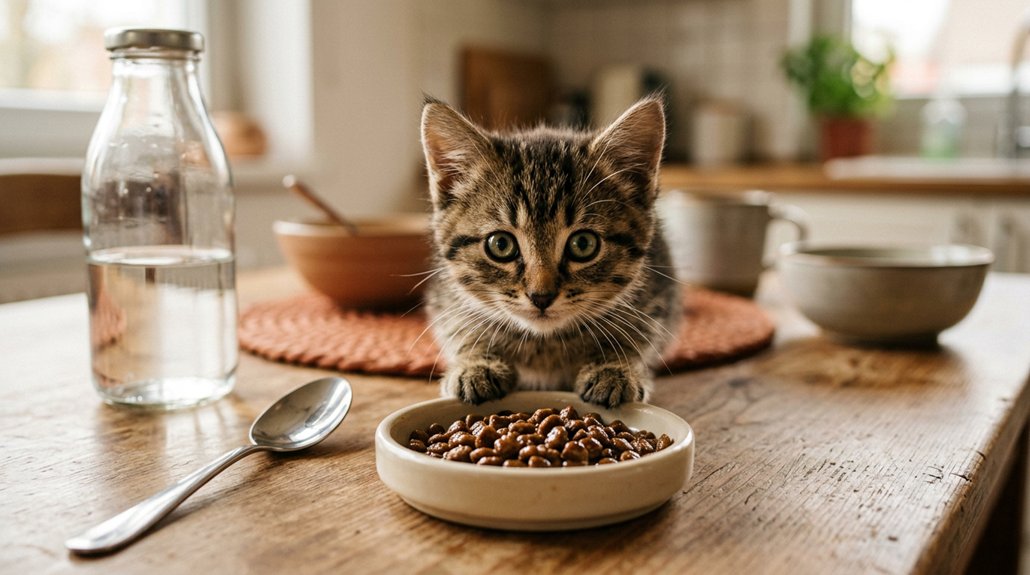
To move your kitten to new food, start with a mix of 75% old food and 25% new food over two to three days while monitoring for digestive issues. Gradually increase the proportion of new food, aiming for a complete shift by day ten. Choose a nutrient-dense, AAFCO-compliant formula, ensuring it meets the kitten’s age and activity needs. Keep a consistent feeding schedule and track health indicators. Further insights are just ahead.
Key Takeaways
- Begin with a mix of 75% old food and 25% new food over the first 2-3 days.
- Gradually increase the proportion of new food over a 10-day period.
- Monitor for any digestive issues like vomiting or diarrhea early in the transition.
- Maintain a consistent feeding schedule and designated feeding area for the kitten.
- Consult a veterinarian for personalized dietary advice and to ensure nutritional needs are met.
Starting the Kitten Food Transition
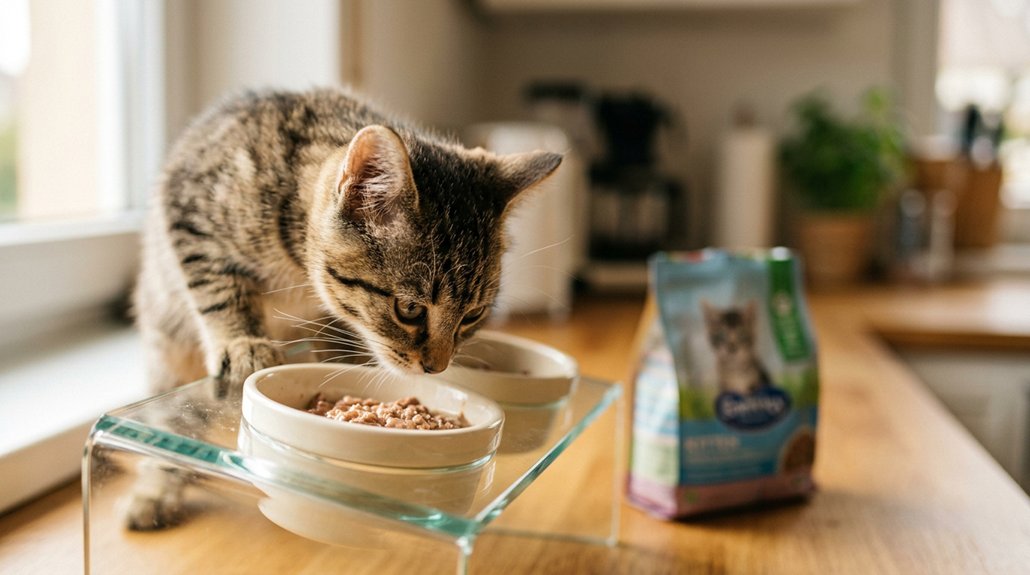
Before initiating the change of your kitten’s diet, it’s essential to consult a veterinarian to confirm the new food aligns with the specific nutritional requirements necessary for their development. Utilizing veterinarian guidance guarantees that you’re considering your kitten’s food preferences and specific health needs. Start the alteration by mixing 75% of the old food with 25% of the new food over the first 2 to 3 days, progressively modifying this ratio over a 7 to 10 day period. Closely monitor your kitten for digestive issues such as vomiting or diarrhea, or changes in appetite. Adjust accordingly if discomfort arises. Establishing a consistent feeding area and routine is significant, fostering a harmonious environment that encourages acceptance and minimizes stress during this important dietary change.
Choosing the Right New Kitten Food
When shifting to a new kitten food, it’s important to select a product that meets the specific nutritional needs of young felines to support their rapid growth and development. Focus on nutrient-dense formulas that address kittens’ nutritional requirements, featuring substantial protein from high-quality animal sources. Prioritize foods that meet AAFCO standards for complete and balanced nutrition. Consider the kitten’s age and activity level, as energetic ones might need more calories. Look for products with appropriate calcium and phosphorus levels for bone health, as these aren’t always present in adult cat food. Evaluate ingredient sourcing to guarantee you’re providing premium nutrition, and consult with a veterinarian for personal guidance, especially if your kitten has unique health considerations.
Kitten Food Transition Strategy
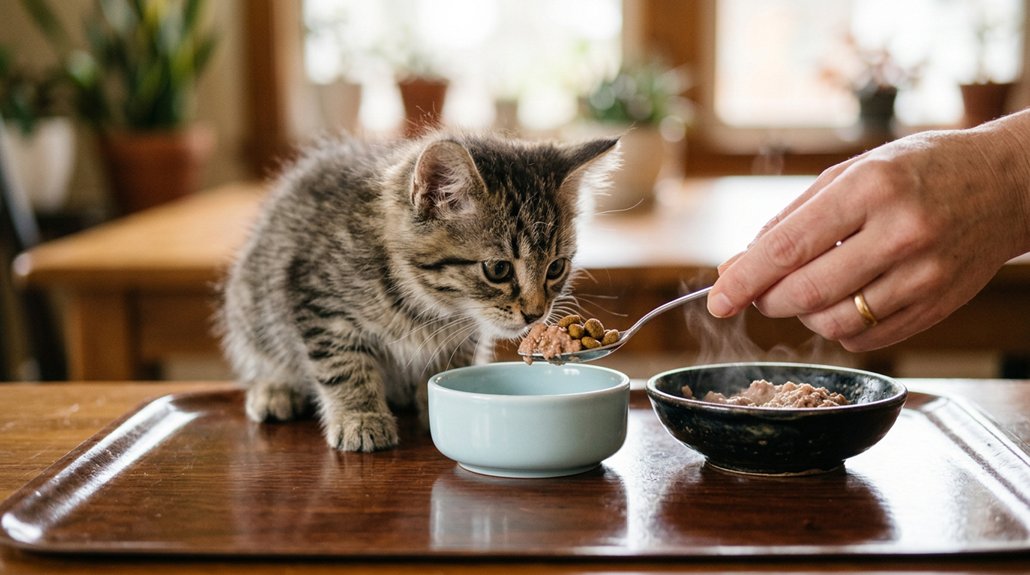
To guarantee a smooth shift to new kitten food, it’s essential to adopt a methodical approach that minimizes digestive disturbances. Employing effective changeover techniques begins with a structured feeding schedule. Initiate the shift by mixing 25% new food with 75% existing food over the first 2 to 3 days, gradually acclimatizing your kitten to new tastes and textures. Progress to a 50% mix for days 4 to 6, ensuring a seamless dietary adaptation. For days 7 to 9, further increase to 75% new food. By day 10, you can serve 100% new food, having monitored closely for adverse reactions. Adjust the timeline based on your kitten’s response, and consult your veterinarian for advice tailored to your kitten’s specific nutritional requirements.
Solving Digestive Issues During Transition
If you’ve established a structured feeding schedule, the focus now shifts to minimizing digestive issues. Monitoring symptoms such as vomiting, diarrhea, or decreased appetite is essential. These are indicators that your kitten might be struggling with the adjustment. Start by observing your kitten closely and keeping detailed notes. Don’t hesitate to adjust the schedule if needed. For example, extending the adjustment period beyond the typical 7 to 10 days could provide more time for adaptation. Initially, incorporate only 25% of the new food mixed with 75% of the current food for 2 to 3 days. Prebiotics introduced a week prior can fortify their gut health. If symptoms linger beyond 24 hours or appetite wanes for 36 hours, consult your veterinarian for further guidance.
Tracking Health Changes During Transition
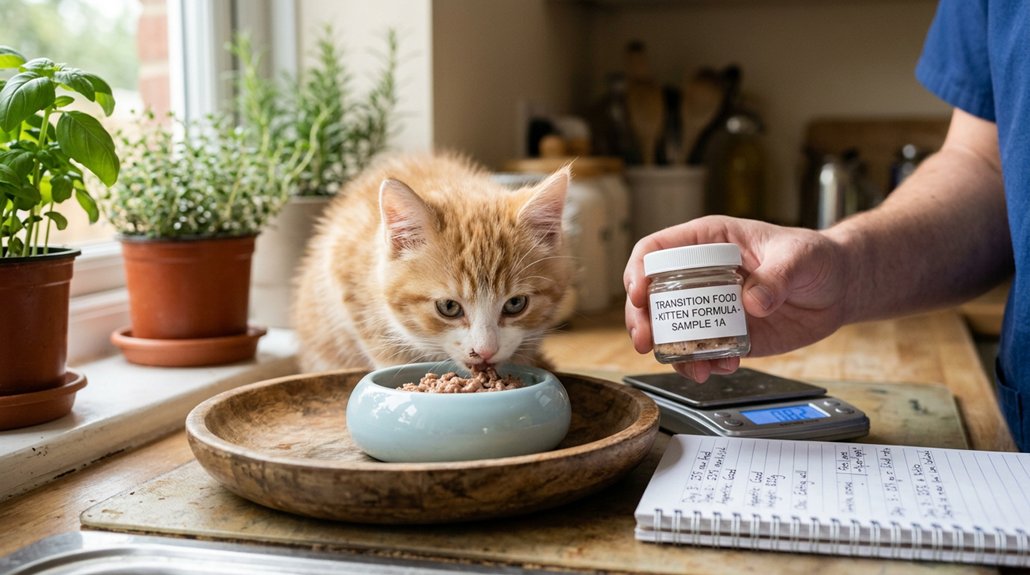
Successful change begins with meticulous observation. During this period, you should focus on monitoring behavior and tracking appetite to guarantee your kitten’s healthy adaptation to new food. Look for digestive signs like vomiting or diarrhea, which might suggest a hasty change. Keep a daily log to identify any patterns in eating habits or behavioral changes. This data is invaluable for detecting issues early on.
| Observation | Indicators |
|---|---|
| Appetite | Increased/Decreased |
| Behavior | Lethargy/Activity |
| Digestive | Vomiting/Diarrhea |
Don’t overlook energy levels; lethargy could indicate discomfort. Also, make sure they have ample water to prevent dehydration. If persistent problems arise, consult your vet for possible adjustments in diet strategy. This methodical approach will support your kitten’s well-being during food change.
Frequently Asked Questions
How Long Can It Take a Kitten to Adjust to New Food?
It can take up to 10 days for a kitten to adjust to new food using gradual switching methods. Be vigilant for any food sensitivity signs, and extend the changeover period to prevent digestive issues if needed.
What Is the 3-3-3 Rule for Kittens?
The 3-3-3 rule for kittens guides you through gradual dietary changes to guarantee ideal kitten nutrition. It involves three days, weeks, and months focusing on acclimatization, adaptation, and full adjustment to new environment and food.
What Is the Best Food for Cats With Pancreatitis?
You should choose a high-quality, low-fat diet with less than 10% fat on a dry matter basis. Include easily digestible carbohydrates and proteins like chicken. Stick to dietary recommendations, and watch for pancreatitis symptoms while changing over.
What Is “I Love You” in Cat Language?
Cats say “I love you” through cat communication and feline behavior, like purring softly, slow blinking, or kneading. You’ll notice bunting against you or even gifting objects, all indicating their trust, affection, and contentment.
Conclusion
Successfully shifting your kitten to new food is essential for their growth and well-being. By carefully selecting appropriate food, and gradually introducing it, you can minimize digestive disturbances. If issues arise, adjust the pace or type of food. Monitoring your kitten’s health guarantees any problems are promptly addressed. Remember, a smooth change isn’t just about switching food—it’s about fostering lifelong habits that promote health. Your attentive approach can yield a content, thriving feline companion.