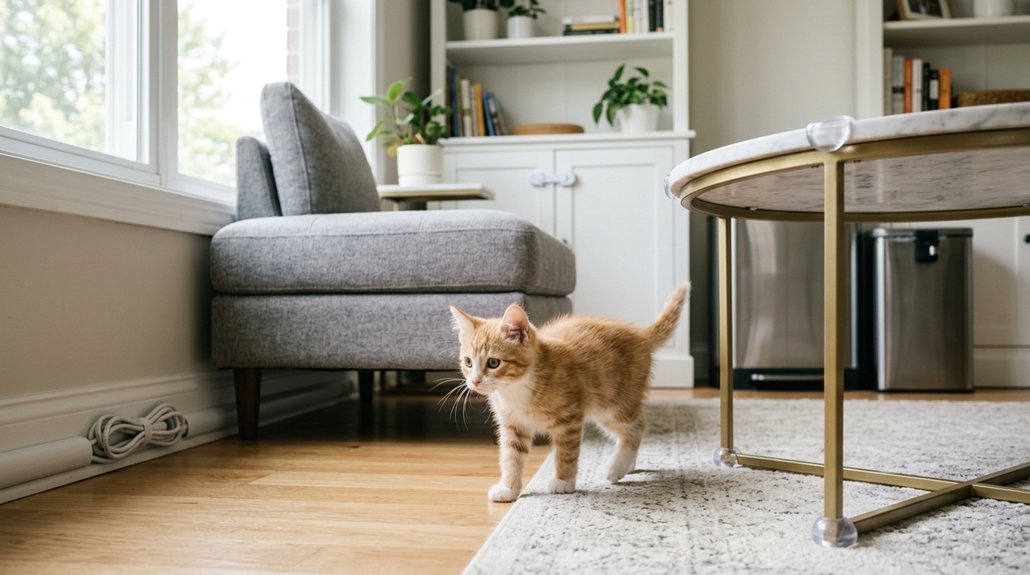
To kitten-proof your home effectively, start by removing toxic plants and storing hazardous substances securely. Protect electrical cords with covers and anchor furniture to prevent tipping. Keep small objects and chemicals locked away, and secure trash and appliance doors. Opt for unbreakable decor and choose kitten-safe toys. Providing safe exploration zones with cat trees and soft play areas reduces injury risk. Following these measures guarantees a safe, playful environment where your kitten can thrive, with more tips to enhance safety further.
Key Takeaways
- Identify and remove toxic plants, replacing them with kitten-safe alternatives like spider plants and bamboo palms.
- Use cord protectors to encase wires and secure furniture with brackets to prevent accidents.
- Store household chemicals in locked cabinets and use pet-friendly cleaning solutions like vinegar and baking soda.
- Choose non-toxic and durable toys, inspecting them regularly for frays or splits to ensure safety.
- Place fragile items on high shelves or use unbreakable alternatives like plastic and silicone decor to prevent breakage.
Identify and Remove Hazardous Plants and Substances
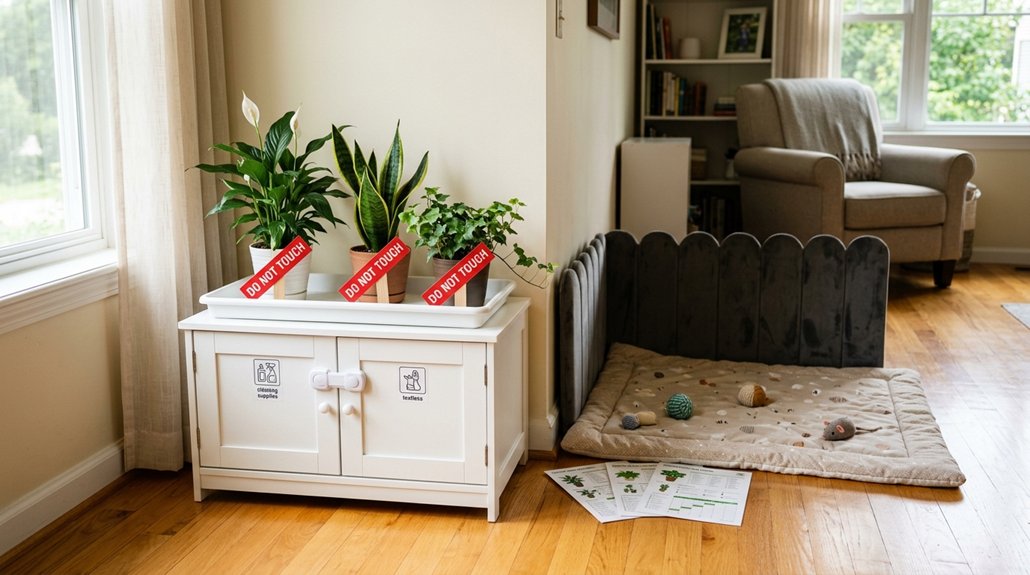
Many don’t realize how perilous common household items can be for curious kittens. Begin by mastering toxic plant identification to safeguard your home. Lilies, azaleas, and poinsettias pose serious risks. Replace these with kitten safe alternatives like spider plants or bamboo palms. Beyond plants, store harmful substances securely. Use child locks on cabinets housing cleaning products and chemicals to prevent dangerous encounters. Meanwhile, in the garden, be vigilant about fertilizers and pesticides, and avoid harmful plants like foxglove and oleander. Regular home inspections for small items, such as rubber bands or plastic bags, are essential to prevent choking hazards. Familiarize yourself with poisoning symptoms—vomiting, lethargy, difficulty breathing—and have a vet’s number handy in case of emergencies.
Safeguard Electrical Cords and Furniture
After securing your home from toxic plants and substances, focus on safeguarding electrical cords and furniture to protect your kitten from additional hazards. Effective cord management involves encasing exposed cords with protectors or tubing, ensuring they’re out of the reach of curious paws. Regularly inspect cords for any fraying or damage to prevent electrical shock and ingestion risks. Extension cords should be avoided in accessible areas, as playful tugs can create disturbances. To enhance furniture stability, secure top-heavy items with brackets or safety straps to the wall, preventing accidents if your kitten decides to climb.
Ensure your kitten’s safety by managing cords and securing furniture to prevent electrical and climbing accidents.
- Use cord protectors to encase exposed wires
- Inspect cords regularly for any signs of damage
- Invest in safety straps for securing furniture to walls
Lock Away Small Hazardous Objects
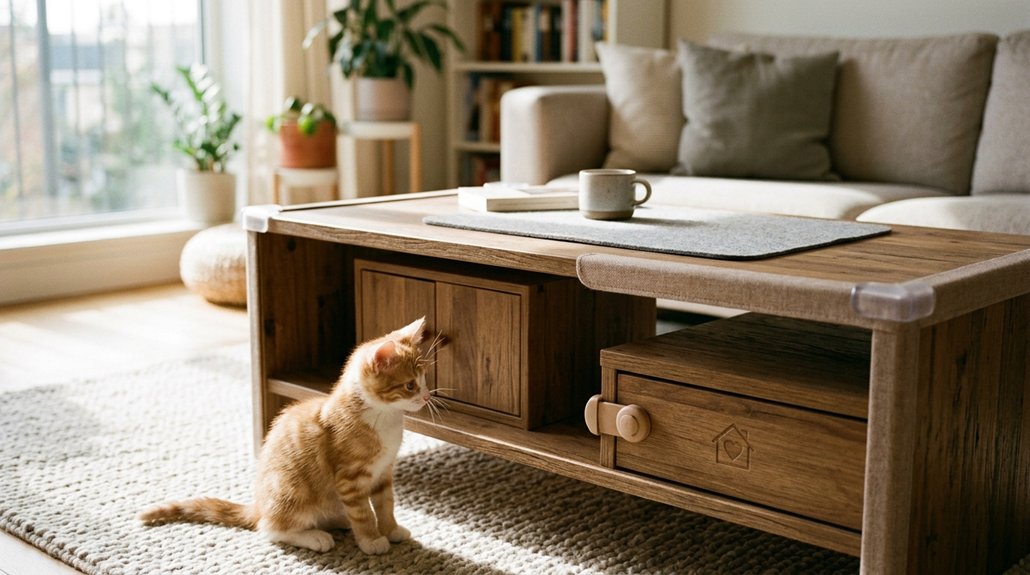
Ensuring your home is free from small hazardous objects is essential for creating a safe environment for your kitten. Begin by storing items like rubber bands, paper clips, and buttons in closed containers. Utilize drawers as storage strategies to keep tempting objects such as coins and small craft supplies from curious paws. Regular cleaning of floors and surfaces is vital to eliminate any stray items that might pose a choking risk. Pay close attention to areas like home offices or craft rooms, where these objects are frequently used, and secure them diligently. Educate everyone in your household on the importance of storing small items properly, which will complement the kitten toys you provide, ensuring safety and peace of mind.
Secure Household Chemicals Out of Reach
To protect your kitten from harmful exposure, it’s essential to store household chemicals in locked cabinets with child safety locks. Consider switching to pet-friendly cleaning solutions like vinegar and baking soda, as they’re much safer alternatives to harsh chemicals. Additionally, make certain everyone in the household understands the toxic risks associated with unsecured chemicals and the importance of maintaining proper storage to guarantee pet safety.
Implement Child Safety Locks
One of the most reliable ways to safeguard your curious kitten is by installing child safety locks on any cabinets containing household chemicals. Begin with safety lock installation using high-quality products that can endure persistent feline investigation. These locks are vital for keeping hazardous substances out of your kitten’s reach. Remember, setting them up correctly is just the first step.
Lock maintenance tips are important to preventing any accidental access. Regularly inspect these locks to guarantee they’re operational and not worn out. Additionally, reinforce the significance of these precautions to household members.
Envision the locked cabinets as a fortress for your furry friend’s wellbeing:
- Cleansers like sprays and detergents securely housed.
- Cabinets shut tight with steadfast locks.
- A kitten contentedly playing far from danger’s reach.
Choose Pet-Friendly Cleaners
While curiosity might be a kitten’s hallmark, it swiftly becomes a threat when your cleaning supplies aren’t pet-friendly. Choosing eco-friendly options is essential to keeping your furry friend safe. Avoid cleaning products with toxic ingredients like bleach, phenols, and pine oil. Always secure household chemicals out of reach in locked cabinets or high shelves. Regular checks guarantee there are no leaks or spills that could endanger your kitten. Natural ingredients such as vinegar and baking soda are effective and gentle alternatives.
| Safe Cleaning Tips | Eco-Friendly Options |
|---|---|
| Use vinegar and baking soda | Choose non-toxic products |
| Inspect storage regularly | Avoid harmful chemicals |
| Secure cabinets | Educate household members |
| Avoid toxic ingredients | Regularly review options |
Confirm everyone knows the importance of keeping cleaning supplies safely stored.
Educate on Toxic Risks
Ensuring that household chemicals are securely out of reach is essential for protecting your kitten’s health. With keen curiosity, kittens explore their surroundings, increasing risk exposure to toxic substances. Elevate your chemical awareness by taking preventive measures, as certain cleaning products like bleach and ammonia can trigger toxic symptoms such as respiratory distress or poisoning. Always store these items securely to prevent access and reduce risk.
- Locked Cabinets: Employ strong locks to impede curious paws from accessing harmful chemicals.
- High Shelves: Utilize elevated storage options, ensuring items are well out of paw’s reach.
- Pet-Safe Alternatives: Choose natural cleaning solutions, diminishing exposure risk and grooming safety.
Stay vigilant with regular inspections, promptly addressing spills or leaks to maintain a safe, kitten-friendly environment.
Seal Trash and Compost Covers
A critical step in kitten-proofing your home involves securing your trash and compost covers effectively. Prioritize trash can safety with locking lids, ensuring kittens can’t access hazardous materials like food scraps or cleaning supplies. For compost container security, tightly seal these to prevent curious paws from exploring potentially harmful organic materials. Regular monitoring helps; check trash cans and compost for spills or openings that might tempt kittens. Educate everyone in your home on proper trash disposal to deter scavenging habits.
| Task | Key Action | Why It’s Important |
|---|---|---|
| Secure Trash Cans | Use locking lids | Prevent access to hazardous items |
| Seal Compost Bins | Tightly cover | Deter rummaging through organic waste |
| Regular Inspections | Check for spills and openings | Maintain security and prevent access |
| Household Education | Train proper disposal habits | Encourage a safe environment |
Install Toilet and Appliance Locks
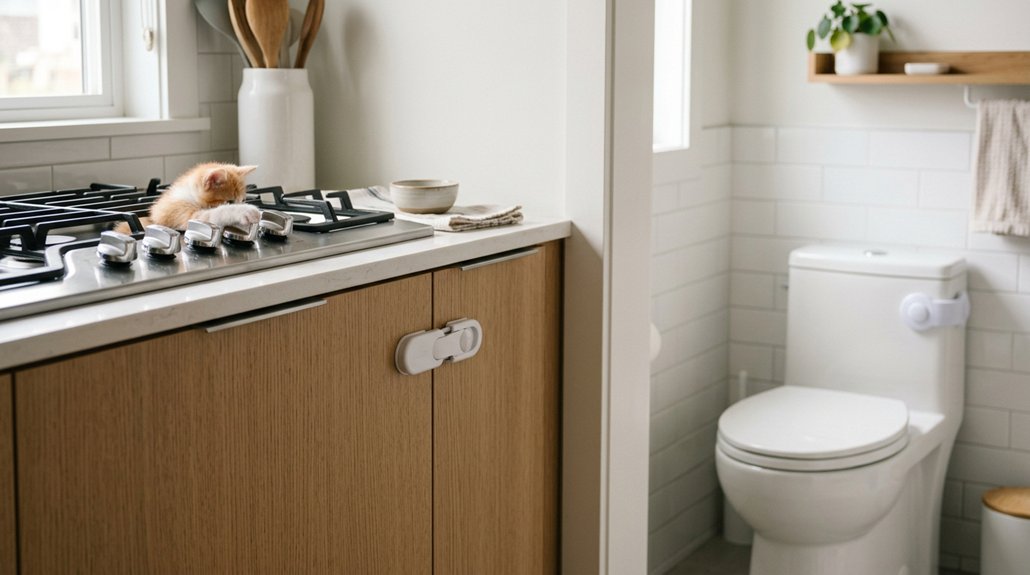
Kittens are incredibly curious creatures, often venturing into places they shouldn’t, making it crucial to install locks on toilets and appliances in your home. Toilet locks deter kittens from playing in water-filled bowls, reducing drowning risks. Consider different toilet lock types that provide secure, tamper-resistant closure. Equally important is appliance lock placement—install durable locks on dishwashers, washing machines, and dryers to prevent accidental entrapment or injury.
- Toilet Lock Types: Choose sturdy, easy-to-install locks that prevent water access.
- Appliance Lock Placement: Prioritize secure installation on frequently used machines.
- Lock Durability: Opt for resilient materials to withstand persistent kitten curiosity.
Secure Fragile and Valuable Items
To prevent curious kittens from knocking over your breakables, store fragile items like glass vases and delicate china in secure cabinets. Consider using unbreakable alternatives for decor in spaces your kitten can access, which can minimize injury risks and avoid messes. Regularly inspect your home for precarious items on lower surfaces and place them on high shelves or in stable display cases out of reach.
Store Breakables Safely
When introducing a new kitten into your home, safeguarding fragile and valuable items should be one of your top priorities. Prioritize fragile item storage by placing delicate belongings in secure locations to prevent unfortunate mishaps. Use sturdy, non-tippable display case options to keep valuable collectibles safe from energetic, curious paws. Regularly reassess your living space and adjust as necessary, ensuring that kittens can’t knock anything over.
Consider these strategies:
- Closed Cabinets or High Shelves: Store glass vases and china away from reachable surfaces.
- Sturdy Display Cases: Secure your treasured ornaments in non-tippable cases that withstand exploration.
- Clutter-Free Organization: Maintain organized shelves to decrease the chance of accidents.
Stay proactive and regularly inspect your spaces for potential hazards, adapting as needed.
Use Unbreakable Alternatives
It’s wise to rethink everyday objects in your home by choosing unbreakable alternatives wherever possible to guarantee the safety of your playful new companion. Opting for plastic alternatives and silicone decorations minimizes the risk of injury from shattered pieces when your kitten engages their natural curiosity. Secure fragile items like vases and china either in cabinets or on higher shelves, where your kitten can’t reach them. Reinforce stability by anchoring bookshelves and tall furniture to the wall; a climbing kitten won’t cause tipping accidents. Synthetic and wooden alternatives provide durability and safety, ensuring knick-knacks aren’t vulnerable to curious paws. Regularly reassess and rearrange valuable items to maintain their security. These protective measures help transform your home into a kitten-safe haven.
Select Engaging and Safe Toys for Kittens
While bringing a kitten into your home is a joyous occasion, ensuring their environment is both safe and stimulating is essential. Selecting the right toys involves a balance of interactive play and sensory stimulation. Choose items designed specifically for kittens, focusing on those made from non-toxic materials.
Welcoming a kitten requires safe, stimulating toys crafted from non-toxic materials for their playful exploration.
- Interactive toys: Opt for feather wands or balls with bells to satisfy their hunting instincts.
- Puzzle toys: These dispense treats, providing mental challenges and fostering problem-solving skills.
- Durability checks: Regularly inspect toys for frays or splits, replacing them as necessary to avoid ingestion of hazardous materials.
Create a Safe, Interactive Living Environment
After you’ve selected engaging and safe toys for your kitten, consider the broader environment they’ll explore daily. Start by offering vertical exploration opportunities like cat trees and shelves. These stimulate natural instincts and provide safe climbing exercise. Next, enhance interactive play with toys such as feather wands and puzzle feeders. They’ll not only entertain but also curb boredom-related destructive behavior. Designate a play area featuring soft surfaces and cat-safe toys to minimize injury risk and foster healthy play habits. Rotate these toys regularly to maintain their interest and deter them from unsafe household curiosity. Finally, secure cords and small objects out of reach, ensuring your home is both stimulating and safe for their inquisitive nature.
Frequently Asked Questions
What Should I Do to Kitten Proof My House?
You’ll need to use cord covers to safeguard electrical cords and secure all frayed wires. Choose safe plants over toxic ones, install child-proof locks on cabinets, and block stairways with gates to guarantee your kitten’s safety.
What Is the 3-3-3 Rule for Kittens?
Think of it as a dance. The 3-3-3 rule means embracing the kitten’s behavior over three days, using safe toys to encourage comfort in three weeks, and witnessing their full personality emerge in three months.
What Annoys a Cat the Most?
Loud noises and sudden bangs can annoy your cat due to their sensitive hearing. Additionally, disrupting their environment or routine, excessive handling, dirty litter boxes, and confined spaces conflict with feline preferences and upset their natural cat behavior.
What Color Is Most Calming to Cats?
Imagine this: You want to create a haven for your kitten. The answer is subtle yet powerful—those calming colors, like blue and green, transform spaces, easing kitten behavior and promoting tranquility. Embrace softer hues, avoid bright reds.
Conclusion
To summarize, kitten-proofing your home is essential for your furry friend’s safety and well-being. Imagine Lucy, a curious tabby whose owner overlooked securing electrical cords; one bite led to a vet visit and a hefty bill. By identifying hazards, like toxic plants and unsecured chemicals, and taking simple steps such as wrapping cords and locking away small items, you’re creating a safe haven. Remember, a well-prepared home guarantees a happy, adventurous kitten without unnecessary risks.