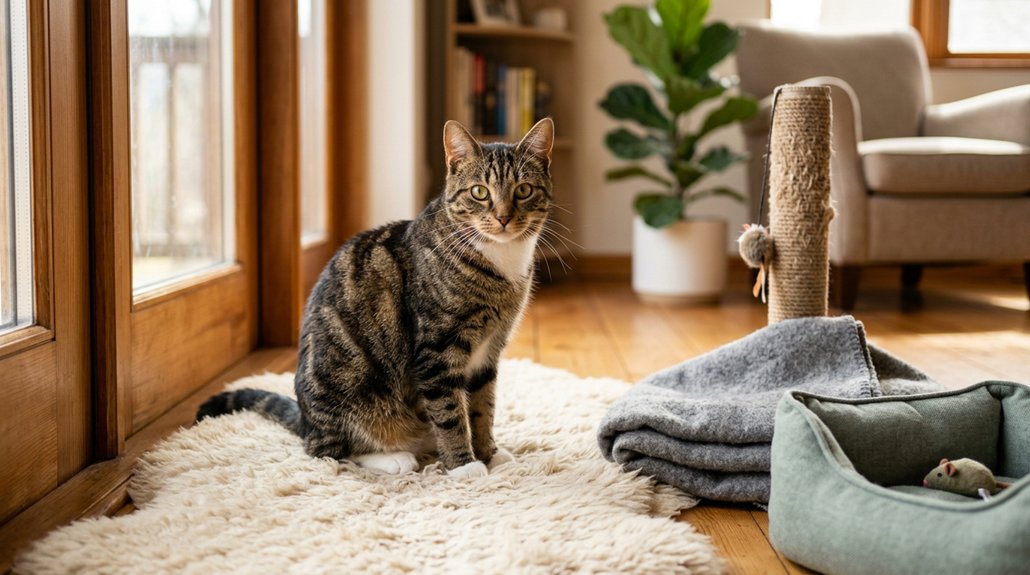
To help your newly adopted cat adjust, set up a quiet safe room with essentials like a litter box and bedding. Choose a sturdy, well-ventilated carrier for transport, and create positive associations with it using treats. Establish predictable routines, engaging in interactive play to build trust. Recognize body language signals to manage stress and anxiety effectively. Make certain smooth introductions to other pets through supervised interactions and patience. Explore further strategies to make sure your cat feels secure and comfortable.
Key Takeaways
- Set up a quiet safe room equipped with essentials to provide a secure environment for the newly adopted cat.
- Choose a sturdy, well-ventilated cat carrier and create positive associations with it using treats or toys.
- Establish a consistent routine with regular feeding times and interactive play to build trust and reduce anxiety.
- Observe the cat’s body language to understand signals of confidence or stress and respond accordingly.
- Introduce other pets gradually and supervise interactions to ensure safety and foster positive relationships.
Prepare Your Cat’s Safe Room
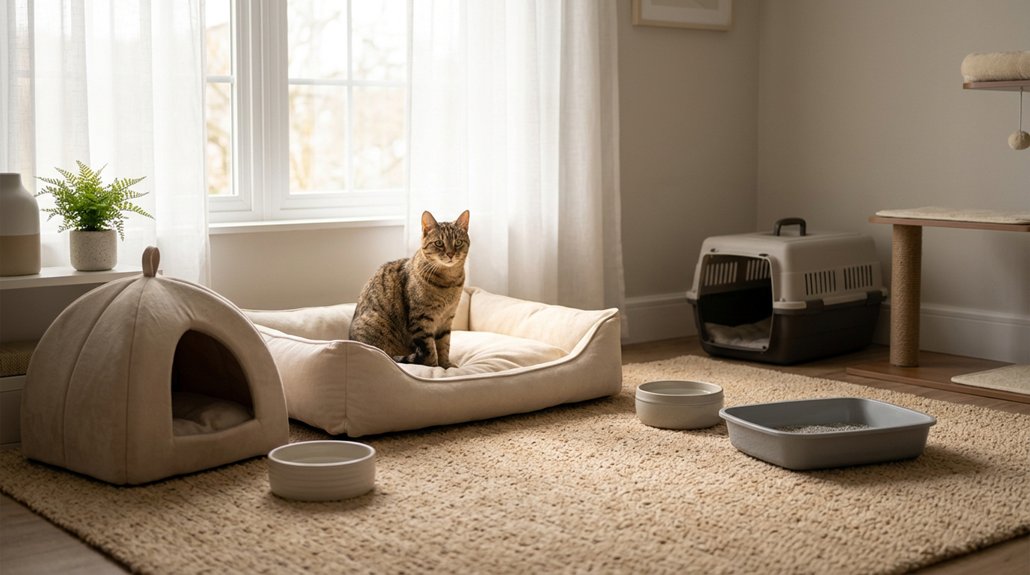
Creating a safe room for your newly adopted cat is important for easing its adjustment into your home. Focus on safe room essentials to guarantee cat comfort. Opt for a small, low-traffic area like a bedroom or bathroom. These spaces reduce overwhelming stimuli, allowing the cat to decompress. Equip the room with necessities: a litter box, food and water dishes, and soft bedding. Include hiding spots to help the cat feel secure. Remove hazards such as small objects or cords. Introduce toys and scratching posts for mental stimulation and to encourage natural behaviors. Let the cat explore at its own pace, providing a retreat when it’s stressed. This setup plays a critical role in facilitating a smooth shift.
Selecting a Cat Carrier for Safe Transport
Once your cat has settled into its safe environment, attention shifts to selecting a reliable cat carrier for transport. Prioritize carrier features ensuring transport safety, including a sturdy, well-ventilated design spacious enough for your cat to stand, turn, and lie comfortably. Transport safety is critical, so choose a carrier with a secure locking mechanism to prevent escapes. A top-loading option can reduce stress during placement, providing practical ease. Evaluate the carrier’s weight and handling—this impacts your ability to move it easily to your vehicle or new home. Introduce the carrier in advance; leave it open in a common area with treats or toys inside to establish positive associations. This approach fosters familiarity and minimizes anxiety during the actual transport process.
Setting Up Essentials for Comfort
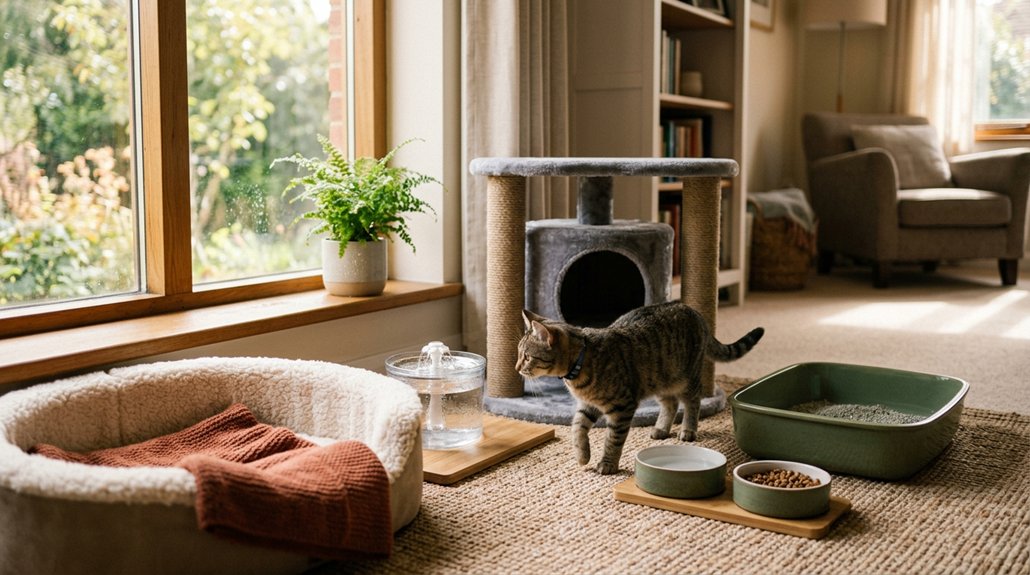
To create a secure and calming environment for your newly adopted cat, begin by setting up a dedicated starter room with all necessary comfort items. Include a litter box, food and water dishes, soft bedding, and concealed areas for hiding, ensuring the space is quiet and escape-proof by checking windows and doors. Introduce familiar scents with blankets or toys, and incorporate a scratching post along with interactive toys to promote natural behaviors, fostering a seamless adjustment to its new surroundings.
Safe Starter Room
When welcoming a newly adopted cat into your home, establishing a safe starter room is essential for their adjustment and comfort. Choose a quiet space, like a bathroom or bedroom, and place the litter box location with easy access, ensuring privacy for your cat. Kitten-proof the room by removing potential hazards such as cords and small objects. This room should include multiple sleeping and hiding spots, offering the cat choices to enhance comfort. Using scent familiarity, integrate items like blankets or toys from the cat’s previous home to provide a calming environment. Additionally, include vertical spaces such as shelves or a cat tree, enabling your cat to safely observe its new surroundings and develop a sense of security and territory.
Essential Comfort Items
Establishing a safe starter room lays the foundation for your cat’s comfort, but complementing this space with essential items further enhances their well-being. Start by including cozy bedding to provide warmth and a sense of security. A litter box and dishes for food and water are critical to meet basic physiological needs. Introduce various cat toys to stimulate your cat’s curiosity and encourage play, which is crucial for mental stimulation. Make certain each toy mimics natural prey-like behavior, promoting natural hunting instincts. To further aid relaxation, incorporate familiar scents from their previous environment, like favorite blankets, to form a sense of territory. A scratching post is indispensable for stress reduction, letting your cat express genuine behaviors comfortably within their new home.
Calming Environment Setup
While creating a calming environment for a newly adopted cat may seem intricate, focusing on essential elements can ease the process. Start with a quiet “safe room” equipped with a litter box, food, water dishes, and soft bedding. Include hiding spots to amplify security. Make certain the area is kitten-proofed—remove small objects, cords, and other potential hazards. Integrate familiar scents, like blankets or toys, from their previous environment to cater to their scent preference and ease discomfort. Employ pheromone diffusers or sprays to stabilize their mood. Calming music can also contribute to an atmosphere of tranquility. Maintain a consistent feeding and activity schedule; this predictability is vital for establishing trust and safety, helping the cat adjust seamlessly to its new surroundings.
Allow Time for Exploration and Discovery
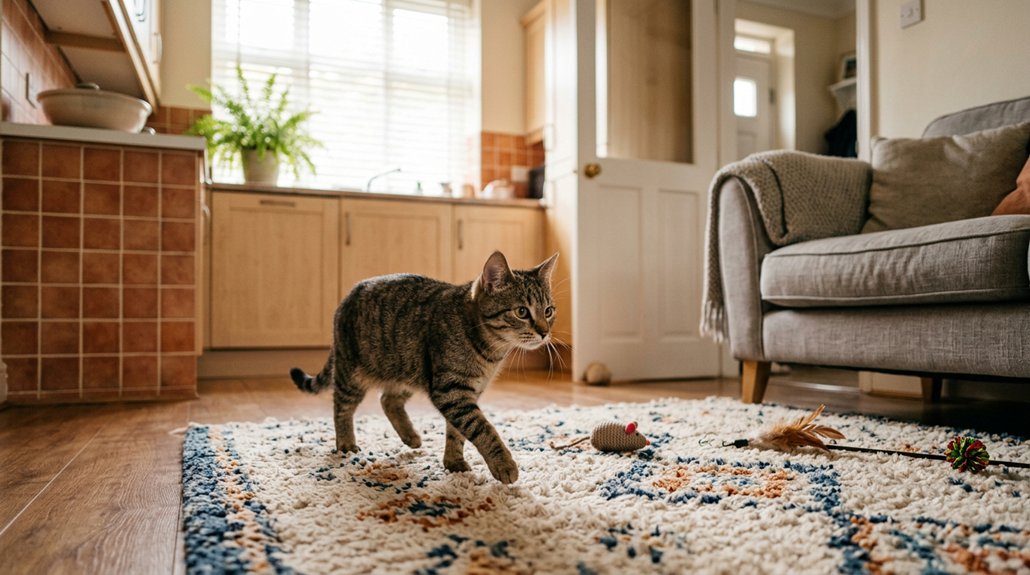
To facilitate your cat’s exploration and discovery, start by allowing a gradual acclimatization to the environment, introducing one room at a time to mitigate stress. Establish safe exploration zones equipped with hiding spots, such as blankets or boxes, where your cat can retreat when overwhelmed. Encourage curious behavior by strategically placing toys and treats within the defined areas, promoting engagement without imposing interaction.
Gradual Environment Acclimatization
Acclimating a newly adopted cat to their new environment involves a methodical approach to guarantee their comfort and security. Given your cat’s natural feline behavior, it’s crucial to acknowledge their propensity for hiding instincts during stressful changes. Encourage gradual exploration, consistent with their hiding behavior and natural instincts, by introducing them slowly to different areas of your home. Start with a single room to foster a sense of security before expanding their territory. Supervise exploration sessions to prevent stress, ensuring they can retreat if needed. Provide hiding spots like boxes or tunnels to inspire exploration in line with their instincts. Maintaining a calm atmosphere—avoiding loud noises and sudden movements—can greatly aid in easing their acclimatization process.
Safe Exploration Zones
Begin by designating a “safe room” where your newly adopted cat can acclimate at its own pace. Equip this area with essentials: food, water, a litter box, and cozy hiding spots to forge a secure environment. Observing the cat’s behavioral cues, allow gradual exploration, vital for minimizing stress. Exploration benefits include fostering adaptability and resilience within new territories. Introduce vertical spaces like shelves or cat trees, enabling the cat to survey from above, enhancing its sense of control in unfamiliar surroundings. To reduce anxiety, incorporate items bearing familiar scents, such as blankets or toys from its prior habitat. Confirm the overall environmental stability by avoiding abrupt noises, helping the feline feel safe during exploratory phases. This systematic approach supports successful adjustment.
Encourage Curious Behavior
Building on the concept of safe exploration zones, fostering curious behavior is a pivotal aspect of helping your new cat adapt efficiently. Cat curiosity enables exploratory activities, promoting environmental adjustment. To facilitate this, create an enriching habitat where discovery is encouraged while reducing stress and anxiety. Implement these strategies to enhance exploration encouragement:
- Designate a starter room: Include essentials like food, water, and a litter box for gradual acclimation.
- Introduce interactive toys: Stimulate natural hunting instincts and exploratory behaviors.
- Provide secure hiding spots: Offer boxes or tunnels to allow comfort and confidence during investigations.
- Maintain a calm environment: Minimize noise to boost the cat’s exploratory confidence.
- Monitor interactions: Address any signs of distress, ensuring a balanced discovery experience.
These measures support the natural adaptive processes.
Establish a Routine for Stability
To create a stable environment for your newly adopted cat, establishing a routine is fundamental for easing their adjustment. Routine consistency, including feeding times, is critical; providing meals at the same time each day helps reduce anxiety. Important items, like food dishes and litter boxes, should remain in fixed locations to enhance territory familiarity. Interact using consistent tones and phrases to foster safety and predictability. Engaging in low-key activities regularly encourages trust without overstimulation. It’s also essential to maintain a calm ambiance with minimal disturbances.
| Routine Element | Purpose |
|---|---|
| Feeding times | Reduces anxiety |
| Location consistency | Enhances territory familiarity |
| Tone and phrases | Guarantees predictability |
| Low-key activities | Builds trust |
| Calm atmosphere | Provides reassurance |
A stable routine enhances your cat’s adaptation process.
Interactive Play for Your Newly Adopted Cat
Although a newly adopted cat may initially seem reserved in its new environment, interactive play can greatly ease this shift by tapping into the cat’s natural hunting instincts. Playtime benefits include essential mental and physical stimulation, reducing stress and anxiety. Engaging your cat in short, regular sessions fosters bonding and boosts confidence while minimizing behavioral issues. For effective stimulation, use a range of interactive toys that allow your cat to chase and explore.
- Wand toys: Encourage chasing and pouncing, mimicking prey.
- Laser pointers: Provide unpredictable movement for hunting instincts.
- Interactive puzzle feeders: Engage problem-solving skills.
- Regular scheduling: Establish predictability and security.
- Positive reinforcement: Use treats or gentle petting post-playtime.
Incorporating these strategies will help your cat adjust seamlessly.
Watch and React to Your Cat’s Signals
Understanding your newly adopted cat’s signals is vital for building a trusting relationship and facilitating a smooth adjustment. Observing body language, such as a high, upright tail indicates confidence while a tucked tail suggests fear, helps decode emotional signals. Monitor ear positions: forward ears signal curiosity, flattened ears suggest fear or overstimulation. Slow blinking from your cat signals trust; reciprocating with slow blinks can reassure your cat that it’s safe. It’s important to allow your cat to approach and explore its surroundings at its own pace. Rushing interactions can increase anxiety. Be vigilant of behavioral changes like hiding or excessive grooming, which may indicate stress. Address these through calming strategies and provide a safe retreat, ensuring your cat’s comfort.
Handling Anxiety and Stress
A newly adopted cat communicates its emotions and needs through subtle clues, and addressing these appropriately can ease its anxiety and stress. Implementing scientifically-supported stress relief techniques is essential. You can enhance the environment to support serenity:
- Create a “safe room” filled with essentials—food, water, litter box, and cozy hiding spots—facilitating environmental enrichment.
- Use calming aids like Feliway pheromone diffusers to chemically reduce anxiety levels.
- Establish a consistent feeding and play routine to foster predictability and comfort.
- Engage in non-intrusive activities around the cat, promoting gradual exploration without overstimulation.
- Observe the cat’s body language, respecting its comfort levels and waiting patiently for it to approach you.
Foster Smooth Introductions With Other Pets
When introducing a newly adopted cat to resident pets, it’s crucial to manage interactions meticulously to prevent conflicts and assure safety. Supervise initial interactions to guarantee a controlled environment. Provide escape routes like elevated perches and secluded spots, allowing the cat to retreat and feel secure. Control resident pets’ movements initially and introduce them in a calm setting to foster positive associations.
| Action | Purpose | Benefit |
|---|---|---|
| Supervise interactions | Prevent aggression | Assures safety |
| Offer retreats | Reduce cat’s stress | Encourages exploration |
| Gradual introductions | Foster familiarity | Builds positive associations |
| Isolate other pets | Establish cat’s territory | Promotes confidence |
| Patience | Time to build relationships | Harmonious dynamics |
Frequently Asked Questions
How Long Does It Take for an Adopted Cat to Adjust?
Typically, you’ll find that feline behavior suggests a newly adopted cat requires roughly 2 to 4 weeks to adjust. Emphasize adjustment tips like providing a safe space and establishing a consistent routine to aid in comfortable acclimation.
What Is the 3-3-3 Rule for Adopted Cats?
The 3-3-3 rule for adopted cats mirrors Goldilocks’ journey: three days to absorb the new environment, three weeks for socialization tips, and three months for environmental enrichment to reveal their true personality and settle.
Do Cats Have a Hard Time Adjusting to a New Home?
Yes, cats often struggle to adjust. Implement environmental enrichment and gradual introduction techniques to ease change. Make certain consistent routines, provide a safe space, and slowly introduce new elements to foster their confidence and reduce stress.
How Long Does It Take for My Cat to Adjust to a New Cat?
Imagine quiet pawsteps echoing as your cat slowly circles a new feline. Adjustment varies, often weeks, focusing on gradual introduction. Watch for behavioral signs like swishing tails or purring, indicating comfort in their budding friendship.
Conclusion
Remember, adjusting a newly adopted cat requires patience and an understanding of feline behavior. With a safe space, essentials for comfort, and plenty of time for exploration, your kitty will feel at home. Stick to routines to foster stability, engage in interactive play, and observe your cat’s signals to manage stress. Introducing other pets can be, like the old Wild West, a delicate affair. With time and proper techniques, peace in your home will reign.