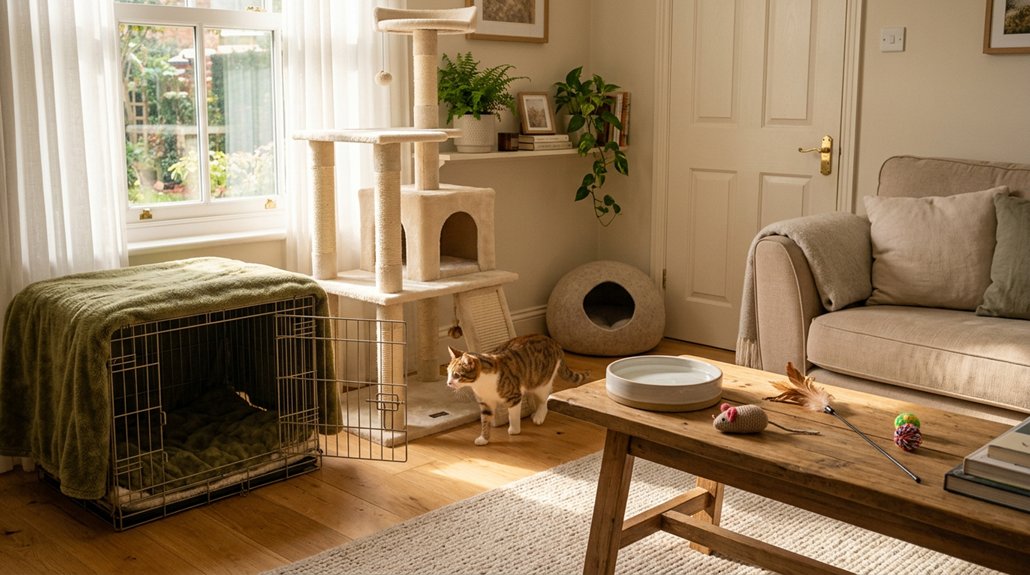
To create a safe space for your new cat, designate a quiet sanctuary room with essentials like food, water, and a clean litter box. Include comfort items with familiar scents and multiple hiding spots to reduce stress. Minimize noise and activity in the area. Pay attention to signs of stress, such as decreased appetite or excessive grooming, and adjust the environment accordingly. Gradual exposure to the rest of the home can further guarantee a smooth changeover. Discover more about long-term comfort strategies.
Key Takeaways
- Designate a quiet room as a sanctuary equipped with essentials like food, water, and a litter box.
- Introduce familiar scents by including the cat’s previous bedding or toys to provide comfort.
- Provide multiple hiding spots, such as towel-lined boxes, for exploration and security.
- Minimize loud noises and excessive activity around the sanctuary to reduce stress.
- Gradually allow the cat to explore the rest of the home after acclimating to the sanctuary space.
How to Create a Safe Space for Your New Cat to Reduce Anxiety
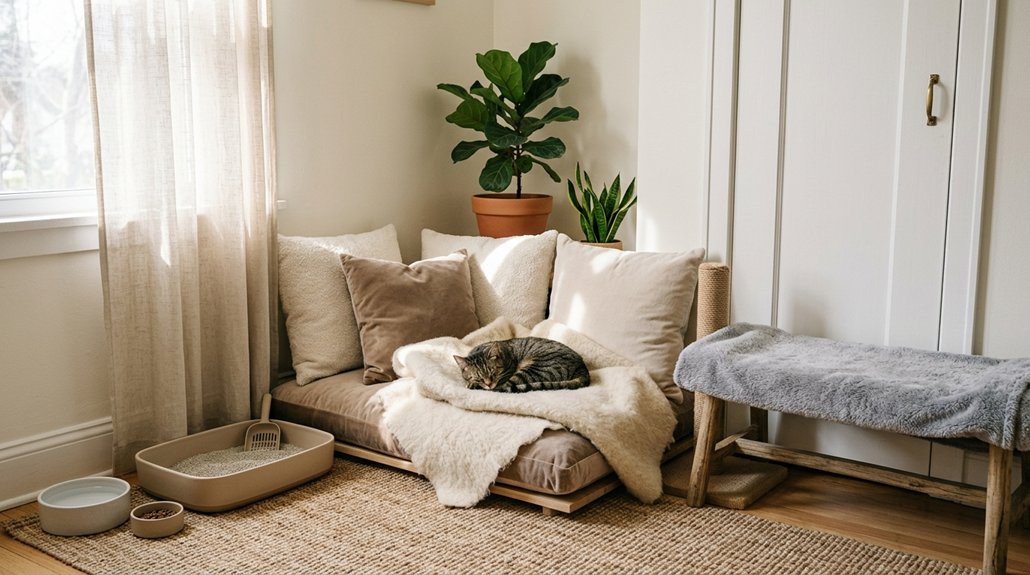
Creating a safe space for your new cat is essential in mitigating anxiety and fostering a sense of security. A designated sanctuary, ideally a quiet room, should function as a safe haven. Equip this area with essential resources: food, water, and a litter box. Introduce comfort items, such as the cat’s previous bedding or toys, to maintain familiar olfactory stimuli that help reduce stress. Providing multiple hiding spots, like a towel-lined box, offers retreat options for moments of overwhelming stimuli. Loud noises or excessive activity in this zone should be minimized to sustain tranquility. Monitoring behavioral indicators and adjusting accordingly allows your cat to gradually explore beyond its initial haven. Remember, acclimatization requires patience, as this process can extend over several weeks.
Must-Have Supplies for a Smooth Transition
A smooth shift for a new cat relies on having vital supplies readily available to support its well-being. Begin with separate food bowls to guarantee proper nutrition and hydration. A clean, uncovered litter box is essential; maintaining it with daily scooping and bi-weekly cleanings promotes elimination consistency. Place the litter box in a quiet area to reduce stress and behavior issues. Also, provide a comfortable cat bed in a secluded spot, enhancing security and rest. To satisfy natural instincts, integrate scratching posts or cat trees, which also offer mental stimulation. Finally, multiple hiding spots like cardboard boxes enable exploration at a preferred pace, aiding in confidence building. These provisions are foundational to guaranteeing the cat’s healthy shift.
Recognize and Manage Stress in Your New Cat
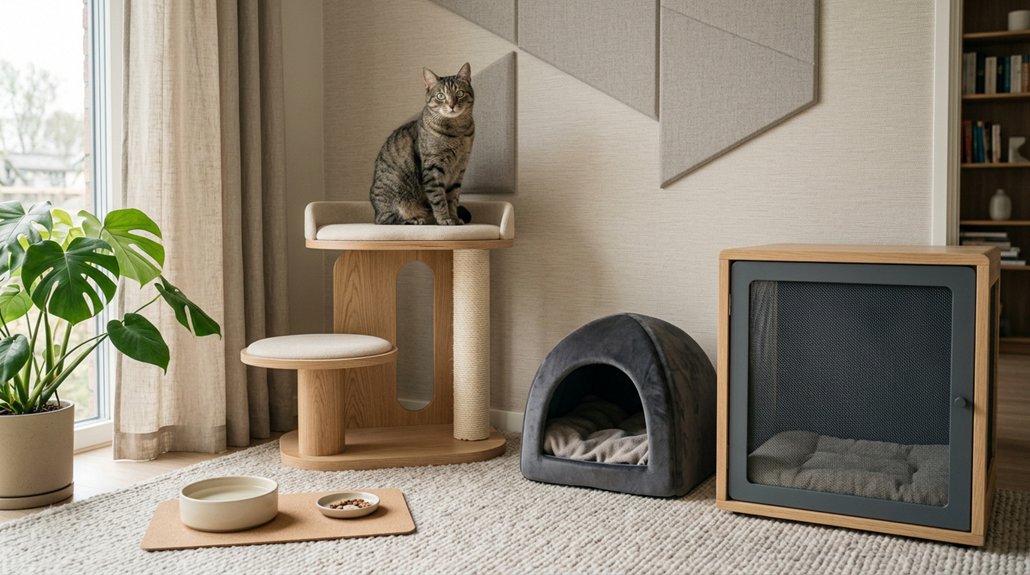
When welcoming a new cat into your home, it’s important to recognize stress indicators early to guarantee a smooth adjustment and preserve the animal’s mental well-being. Cats often exhibit decreased appetite, excessive grooming, hiding, or disinterest in social interactions when stressed. Acknowledging these signs is critical for developing effective coping strategies. Adjusting from a shelter to a home environment can take several weeks, and providing a secure sanctuary space aids in stress management. Monitor behavioral changes like aggression or withdrawal to tailor your cat’s adjustment period. Gradual exposure limits overstimulation, reducing anxiety and promoting comfort. Incorporate multiple hiding spots and maintain clean litter facilities to alleviate stress, supporting the cat’s natural coping mechanisms and ensuring their adaptation into your home.
Integrate Your Cat Into the Household Step-By-Step
Begin by confining your new feline companion to a single room that serves as a sanctuary space, equipped meticulously with essential resources like food, water, and a litter box. This environment facilitates acclimatization. The step-by-step introduction to the rest of your household should be undertaken over several weeks, allowing for gradual exploration. Guarantee the process aligns with the cat’s comfort levels, maintaining a close observation of behavioral indicators.
Provide a sanctuary space with essentials for gradual acclimatization and ensure comfort through observation.
Isolate other pets initially to minimize stress and enhance controlled introductions later. Address any signs of stress—such as persistent hiding or reduced food intake—with positive reinforcement strategies.
Here’s a concise plan:
- Create a calming, resource-rich space.
- Monitor for stress signs and respond appropriately.
- Facilitate gradual exploration.
- Isolate existing pets initially.
Make Your Cat Feel at Home Long-Term
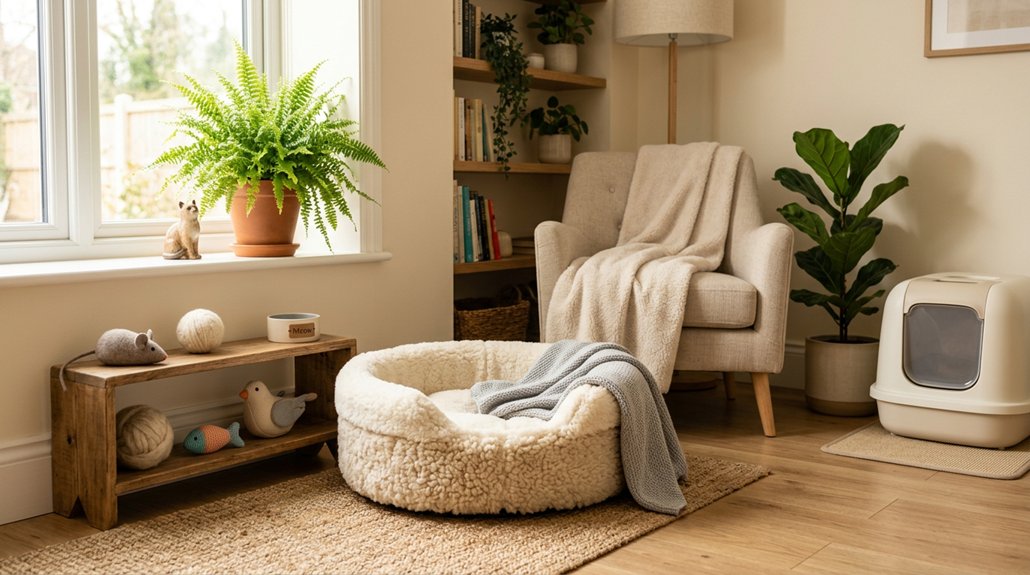
Furnish your cat’s living area with a variety of stimulating and comforting elements to secure a smooth long-term adjustment. Incorporate familiar scents from their previous home. Use bedding or toys carrying these scents to alleviate transfer anxiety and foster comfort. Place a designated bed, and consider adding multiple hiding spots, which serve as refuge and support exploratory behavior. Guarantee enriching play by introducing engagement toys that encourage physical activity, cognitive function, and environmental exploration. Regularly monitor the living space for potential safety concerns, such as unsecured windows or dangerous hiding spots, mitigating escape risks and stress-induced incidents. Patience is paramount during acclimatization; provide ongoing support and patience, understanding that a full adjustment may take several weeks.
Frequently Asked Questions
What Is the 3-3-3 Rule for Cats?
The 3-3-3 rule describes a cat’s introductory period for feline adjustment, consisting of three phases: initial days of stress, weeks of gradual adaptation, and months establishing routine, requiring patience and security to facilitate emotional stabilization.
What Is the 3:2:1 Rule in Cats?
The 3:2:1 rule is a universal law in managing cat behavior, creating an astronomically safe environment for felines. It’s a balance of interactions, ensuring 3 positive, 2 neutral, and 1 negative experience, fostering acclimatization.
What Is “I Love You” in Cat Language?
In cat communication, “I love you” is expressed through feline behavior like slow blinking, purring, and head-butting. It’s evidence-based that these actions signify trust and affection, often seen as a strong attachment between you and your cat.
Where Should a Cat Sleep on Its First Night?
As the saying goes, “home is where the heart is.” Your cat’s first night should be spent in a designated bed in a serene corner to observe its bed preferences and nighttime behavior, promoting security and comfort.
Conclusion
Incorporating evidence-based practices is essential for reducing feline anxiety when introducing a new cat to your home. By creating a dedicated sanctuary equipped with fundamental supplies, you will greatly ease their shift. Monitoring signs of stress and integrating your cat gradually will further support their psychological well-being. Ultimately, when you prioritize their emotional needs, you’re fostering a harmonious environment. This approach not only aligns with veterinary recommendations but also guarantees your cat’s long-term health and happiness.