
To help your puppy grow into a healthy dog, guarantee it gets high-quality proteins, healthy fats, and balanced minerals. Choose puppy food that meets AAFCO guidelines, monitor portions, and check body condition to avoid obesity. Track weight, coat condition, and schedule vet check-ups for thorough health assessment. Encourage socialization and training early for well-rounded development. Explore methods to maintain balanced nutrition, portion control, and social growth for your puppy’s ideal health and behavior development.
Key Takeaways
- Provide a diet aligning with AAFCO guidelines, focusing on high-quality proteins and balanced nutrients for optimal growth and development.
- Maintain a consistent feeding schedule and adjust portions to prevent obesity and ensure steady, healthy growth.
- Regularly track weight and health indicators, consulting veterinarians for personalized dietary and health advice.
- Foster early socialization and training using positive reinforcement to ensure a well-behaved and confident dog.
- Ensure adequate exercise supports metabolism, muscle development, and prevents obesity in growing puppies.
Understand Essential Nutritional Needs for Growing Puppies
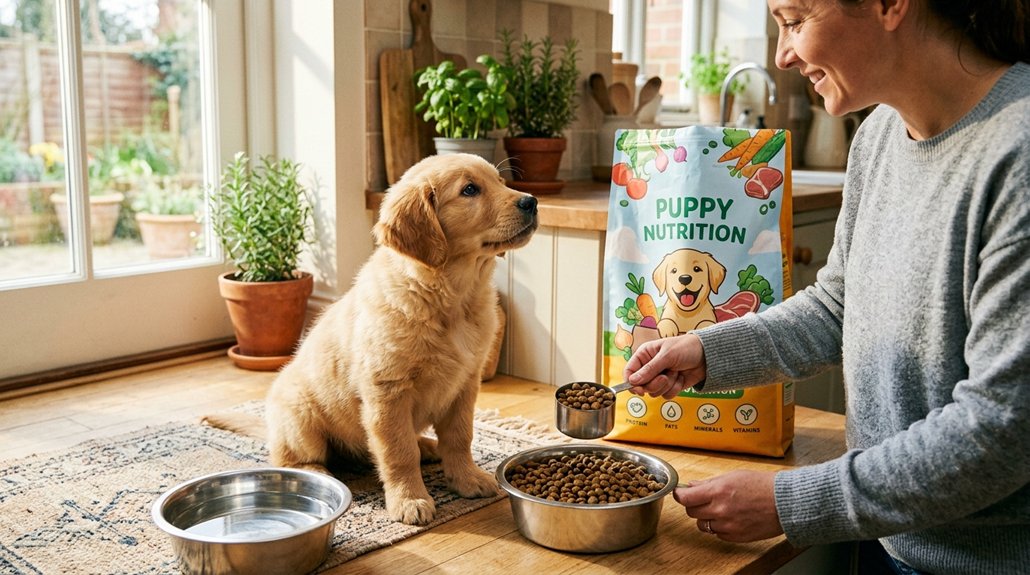
When raising a puppy, understanding its essential nutritional needs is critical for healthy development. Puppies require diets rich in high-quality proteins, such as those from chicken, turkey, and fish, to support their rapid growth and energy demands. Inadequate protein intake can lead to nutritional deficiencies, impairing muscle development and overall puppy growth. Additionally, don’t underestimate the importance of healthy fats like omega-3 and omega-6, which are essential for brain function and a lustrous coat. Proper bone formation depends on a balanced intake of calcium and phosphorus. Confirm the puppy food you choose aligns with AAFCO guidelines, free from fillers or artificial additives. A well-rounded diet prevents deficiencies and sets the foundation for your puppy’s health and longevity.
Select the Optimum Puppy Food for Balanced Growth
Selecting the optimum puppy food for balanced growth is essential to ensuring your furry friend’s healthy development. Choose a puppy food labeled as “complete and balanced,” adhering to AAFCO guidelines, for proper protein, fat, vitamins, and minerals. Opt for high-quality protein sources, like chicken and fish, which bolster muscle growth and energy. Large breed puppies benefit from specialized formulas to prevent joint issues by regulating calcium and phosphorus.
| Important Factors | Recommendations | Examples |
|---|---|---|
| Protein Source | High-quality, such as chicken or fish | Brand A, Brand B |
| Feeding Schedule | Consistent, regulated | 3-4 meals per day |
| Food Change | Gradual, over 7–10 days | Mix old with new gradually |
Monitor growth with vet visits and adjust portions to prevent obesity.
Plan Your Puppy’s Meals and Portions Effectively
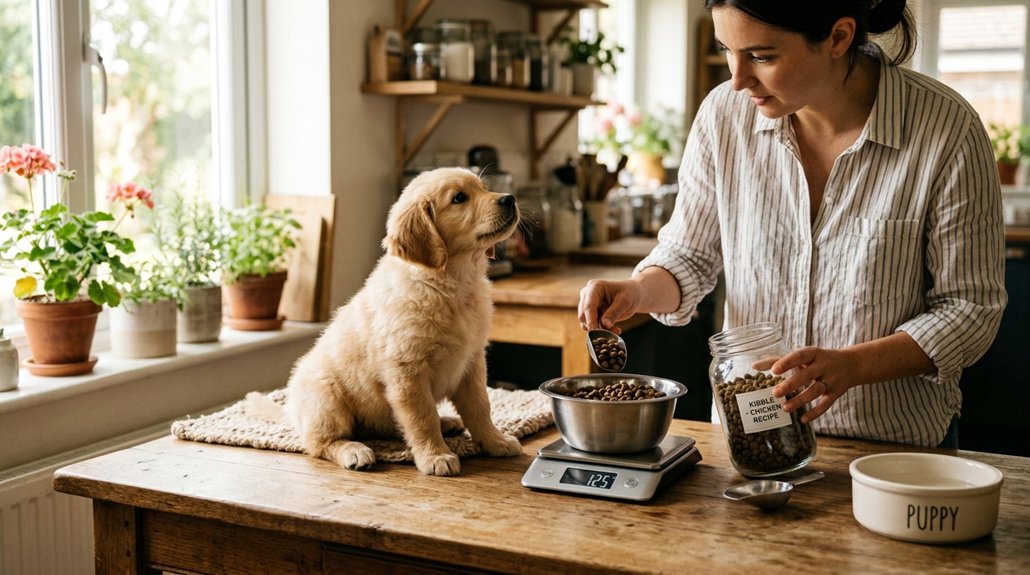
Puppies require well-structured meal plans to guarantee their ideal growth and development. It’s essential to adjust meal frequency as your puppy matures. At ages 8–12 weeks, aim for 4 meals a day to match their growth and energy demands. Between 3–6 months, shift to 3 meals daily, then settle at 2 meals from 6–12 months. Portion control is important; use feeding guidelines on food packaging as a starting point and consult your veterinarian to tailor portions based on your puppy’s body condition. Introduce new foods gradually over 7–10 days to prevent digestive issues. Monitor growth, adjusting portions to maintain steady weight gain, and look for indicators of health like a shiny coat and active behavior.
Track Essential Health Metrics in Puppy Development
While crafting a nutritional plan is essential for your puppy’s growth, it’s equally important to keep an eye on key health metrics throughout their development. Regular weight tracking is critical; record their weight and measurements weekly to guarantee they’re within a healthy range for their breed. Use growth monitoring techniques to observe changes, confirming consistent progress without sudden fluctuations, which could indicate health issues. Regular vet check-ups are fundamental to assess overall health, update vaccinations, and discuss any concerns regarding development stages. Observe diet indicators like a shiny coat and clear eyes, reflecting proper nutrition. Utilize a puppy weight guide to adjust feeding portions as needed during growth spurts. Finally, guarantee adequate exercise to support metabolism and prevent obesity.
Mastering Puppy Socialization and Training
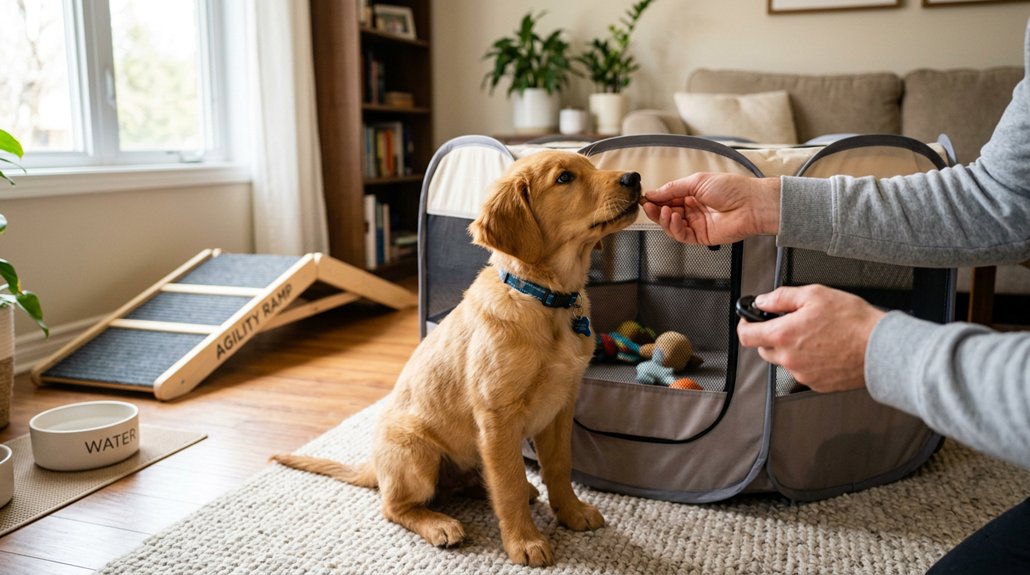
A well-structured socialization and training plan is essential for your puppy’s behavioral development. Introducing them to different environments, people, and pets within the first 16 weeks is critical. This approach, combined with gradual experiences like car rides and grooming, bolsters confidence and adaptability. Addressing typical challenges, such as overstimulation, is crucial. For instance, encouraging calm behavior in social settings can prevent jumping, guaranteeing polite interactions.
Training should be consistent, using short sessions focused on positive reinforcement to teach basic commands. Reward-based methods keep your puppy engaged, aiding in obedience. Remember, early training and ongoing socialization are fundamental. They make sure your puppy adapts positively to their surroundings, minimizing anxiety-related behaviors and promoting a well-mannered demeanor as they mature.
Frequently Asked Questions
What Is the 7 7 7 Rule for Dogs?
The 7 7 7 rule for dogs guides you in key stages: first seven weeks for socialization tips with the mother, 7-14 weeks for exposure, then training techniques from 14 weeks onwards to establish desirable behaviors.
How Long Does It Take for a Puppy to Grow Into a Dog?
You’re certainly curious about puppy growth. So, when do puppies hit those developmental milestones and mature? Typically, 9 to 24 months, but breed size dictates pace. Small dogs quicken; large breeds linger longer. Fascinatingly rhythmic, isn’t it?
What Is the 3-3-3 Rule for Puppies?
The 3-3-3 Rule for puppies outlines a three-day adjustment period, three weeks for settling emotionally, and three months for full adaptation. Use socialization strategies and training techniques to support your puppy through these phases confidently.
What Is the Hardest Month of a Puppy?
The hardest month for puppies is often between 3 to 4 months due to puppy challenges like emotional development, training milestones, and health concerns. You’ll need to focus on patient training and watching for any medical issues.
Conclusion
Imagine your puppy bounding through lush green fields, its eyes sparkling with liveliness and its coat gleaming in the sun. By understanding their nutritional needs, selecting balanced food, and planning meals meticulously, you’re laying the foundation for robust health. Keep a keen eye on their growth metrics, ensuring no beat is missed on their journey. And as they trot into social harmony through skillful training, you’re crafting not just a pet, but a vibrant, happy companion for life.