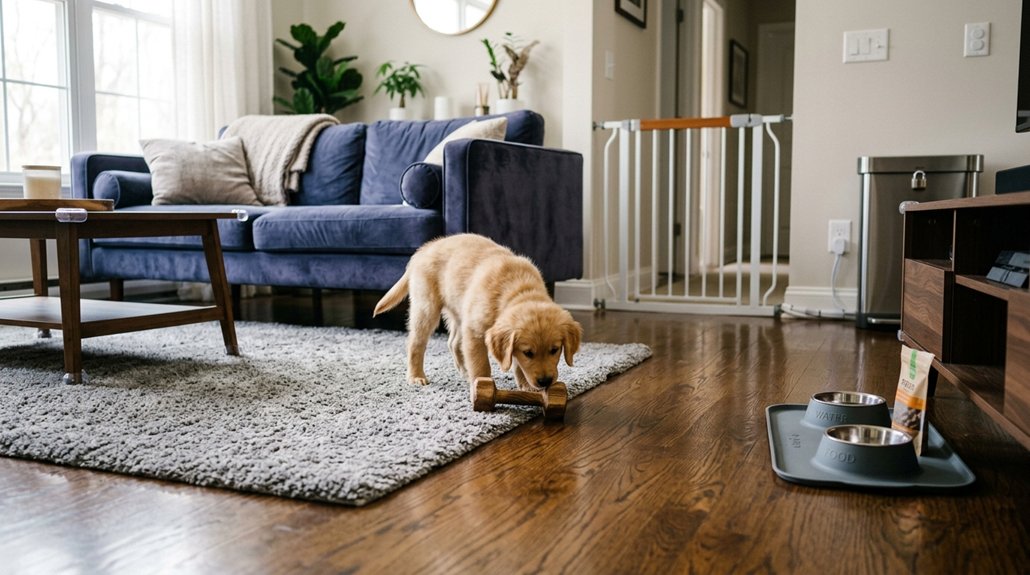
To puppy-proof your home effectively, designate a safe, quiet space for your pup with a durable bed and chew-friendly toys. Secure indoor and outdoor hazards by managing cords, covering trash cans, and removing toxic plants. Store chemicals high or with child-proof locks, and avoid leaving food on accessible surfaces. Reinforce boundaries with consistent training using positive reinforcement. Inspect your outdoor area for risks and guarantee fences are sturdy. There’s much more to guarantee a harmonious environment.
Key Takeaways
- Designate a specific puppy area with safe toys, a durable bed, and boundaries using baby gates or playpens.
- Secure and conceal electrical cords and regularly inspect fencing to prevent hazards and escapes.
- Store dangerous chemicals in high cabinets with child-proof locks, and regularly assess them for potential dangers.
- Use pet-proof trash cans and avoid placing food on low surfaces to prevent access to harmful items.
- Inspect outdoor spaces for toxic plants and secure pool or pond areas with fences for enhanced safety.
Create a Welcoming Puppy Space
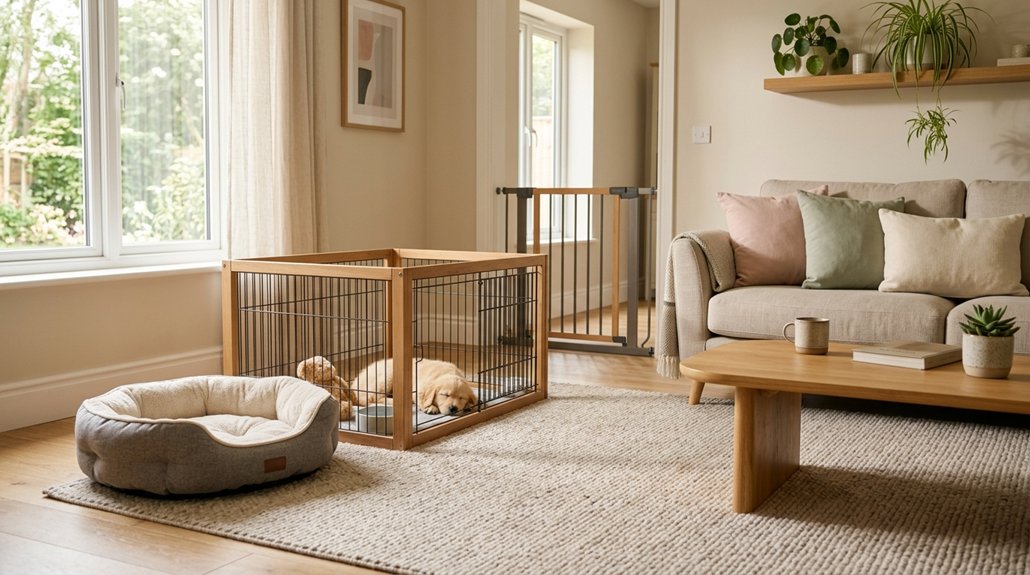
To guarantee your new puppy feels both secure and comfortable, it’s vital to create a designated space specifically tailored to its needs. Start by choosing a durable puppy bed that offers support and warmth, a key element for rest. Position this bed in a quiet, low-traffic area to reduce stress and encourage relaxation. It’s just as important to integrate safe toys that cater to your puppy’s instinctual desire to chew, mitigating the risk of damage to furniture or other items. Utilize baby gates or playpens to establish a boundary around this space, making it a safe haven while allowing for curiosity-driven exploration. Continuously evaluate and adapt this environment to accommodate your puppy’s growth, always prioritizing safety and comfort.
Secure Immediate Hazards Indoors and Outdoors
While welcoming a new puppy into your home is an exciting journey, it necessitates diligent attention to securing immediate hazards. Implement cord management by unplugging and using cord concealers to prevent electrical hazards caused by chewing. Inspect fencing regularly for gaps to mitigate escape risks and evaluate your yard to identify toxic plants. Make sure trash cans are securely covered, preventing access to harmful food scraps and potentially choking-inducing foreign objects. Designate safe play and bathroom areas devoid of sharp tools, standing water, or other potential dangers that could harm your puppy. Establishing these precautionary measures is essential to maintain a protected environment, fostering well-being and minimizing health risks during their explorative phase. Prioritize your puppy’s safety for a harmonious home integration.
Store Dangerous Chemicals Safely
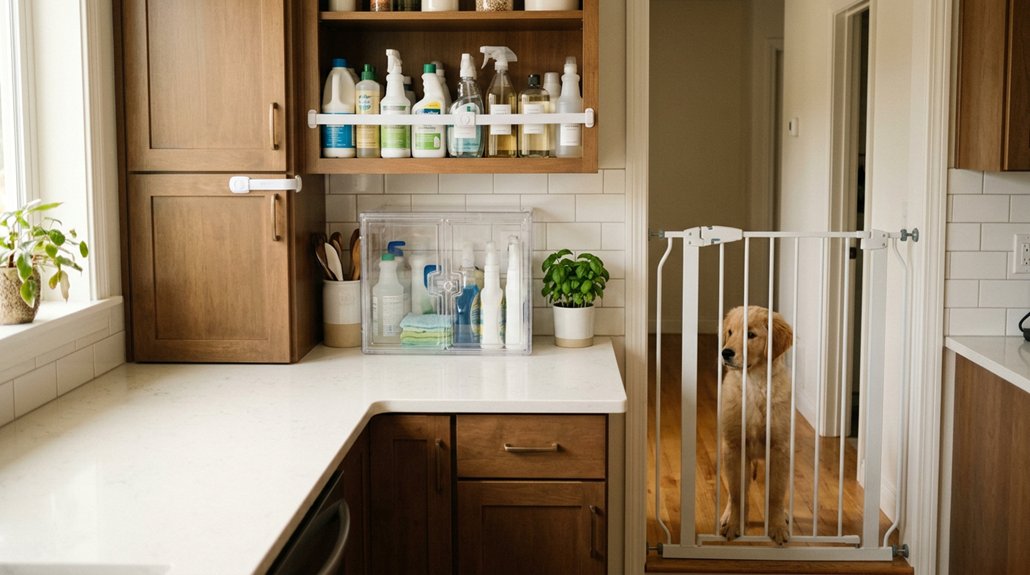
Having addressed visible hazards, attention must now focus on the less obvious threat posed by household chemicals. Store these substances in high cabinets or use child-proof locks to prevent inquisitive puppies from accidental ingestion. Implement rigorous chemical labeling to confirm each container’s contents are unmistakably identified, reducing risk. Regularly review storage areas for new hazards, maintaining a thorough awareness of every potential threat. Recognize the unique dangers of items like antifreeze and bleach, common yet potentially lethal if ingested. Educate yourself on safe disposal practices to responsibly manage expired or unused substances, guaranteeing they never become accessible to your puppy. Secure medications and toxic plants as rigorously, maintaining vigilance to protect your pet from their inherent curiosity.
Let’s Tackle Trash and Food Temptations
To effectively manage trash and food challenges, guarantee all trash bins are secured with lids or childproof locks, preventing access to hazardous contents like harmful food scraps. Avoid placing food items on accessible surfaces, as even small quantities of substances like chocolate and grapes can be toxic to puppies. In addition, promptly clean up after meals to minimize attractive odors that might encourage scavenging behavior.
Securing Kitchen Trash Bins
Managing kitchen trash bins is essential for maintaining a safe environment for your puppy, as these innocent-looking containers can pose significant risks. Use pet-proof trash cans with locking mechanisms, providing an effective trash alternative to prevent your puppy from accessing harmful items. These bins should be stored in cabinets or areas inaccessible to pets for additional security. Implement regular cleaning and emptying schedules to eliminate enticing odors that can attract puppies. Consider introducing puppy distractions, such as toys or chew items, to redirect their curiosity.
Employ barriers, like baby gates, to limit kitchen access when unsupervised, further minimizing the risk of incidents. Educating household members on the importance of securing bins reinforces the collective effort to guarantee your puppy’s safety.
Avoiding Harmful Food Scraps
How can you guarantee your home remains a safe haven from harmful food temptations for your puppy? Begin with stringent food safety practices. Always keep kitchen trash cans covered or locked to deter curious paws and noses. Human foods such as xylitol, chocolate, and raisins pose severe toxicity risks to dogs. Safeguard against accidental ingestion by storing leftovers and waste in securely closed containers. It’s critical to educate all household members about the life-threatening consequences of canine exposure to certain human foods, emphasizing the importance of withholding table scraps. Implement a meticulous cleaning routine to eliminate dropped food remnants that can lead to unintended munching. Through diligent food safety and rigorous puppy education, you’ll greatly reduce your puppy’s exposure to harmful food hazards.
Managing Tempting Food Smells
Preventing accidental ingestion of harmful foods is only one piece of the puzzle in creating a safe environment for your puppy. Effective food odor management is essential to deter puppies from following tempting scents. Implement the following strategies to minimize risks:
- Secure Waste: Utilize trash cans with lids or foot pedals. These act as scent deterrents and prevent your puppy from accessing food waste that could contain harmful substances.
- Airtight Storage: Store all food and treats in airtight containers on elevated shelves to eliminate odor trails that encourage scavenging behavior.
- Immediate Clean-Up: Promptly clean up spills and crumbs on floors and counters to prevent lingering smells that attract your puppy.
- Cabinet Safety: Employ childproof latches on food storage cabinets, deterring curiosity-driven access to hazardous snacks.
Make Your Outdoors Puppy Friendly
Ensuring your puppy’s safety begins with making your outdoor space secure and welcoming. Prioritize fence integrity by installing a high, gap-free fence to prevent potential escapes. Examine your garden for toxic plants such as azaleas, rhododendrons, and sago palms; remove these or enclose them to mitigate ingestion risks. Pool and pond safety is vital—secure these areas with appropriate fencing. Designate a specific area for your puppy’s bathroom needs, fostering hygienic habits and maintaining cleanliness elsewhere. Systematically inspect your yard, trimming grass and eliminating debris to minimize tick infestations and other hazards. Vigilant maintenance and strategic modifications will create a safe, controlled environment for your puppy’s outdoor activities, reducing risk and promoting well-being.
Teach Early Puppy Boundaries
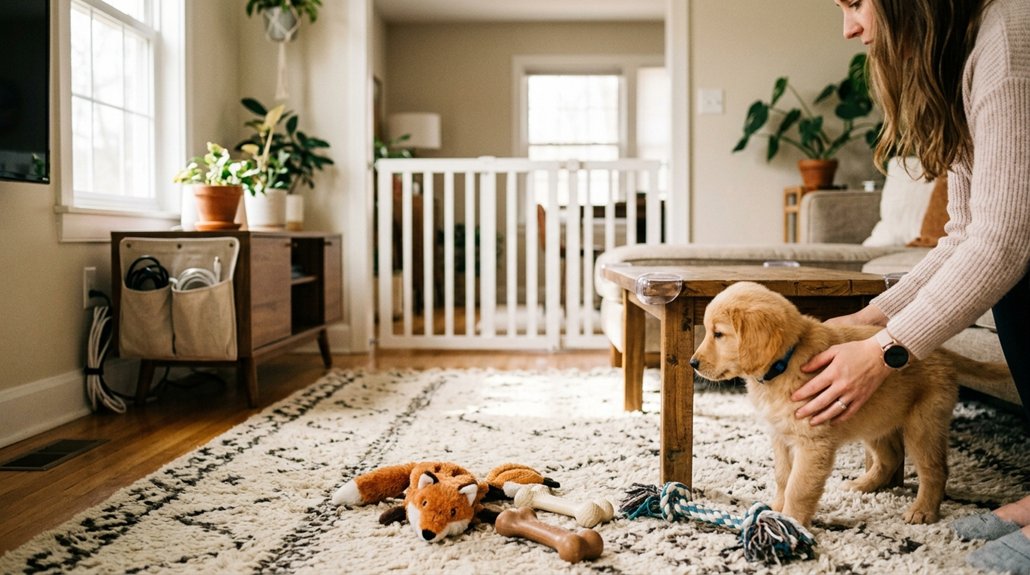
To effectively teach early puppy boundaries, it’s essential to establish clear command signals that delineate space limits and direct appropriate behavior. Utilize consistent verbal cues and positive reinforcement to guarantee your puppy comprehends which areas are accessible and which are restricted. By supervising closely and reinforcing rules from day one, you’ll create a structured environment that promotes safe exploration and prevents undesired behaviors.
Establish Clear Command Signals
Teaching early boundaries to your puppy requires establishing clear command signals that they’ll understand and respond to consistently. Command consistency is essential. Start by integrating simple commands such as “no” or “leave it” to create immediate boundaries. Reinforce these with rewards—treats or praise—to instill behavioral reinforcement and encourage positive outcomes. Complement verbal commands with body language; adopt a firm stance and authoritative tone to reinforce your directives. Broaden your puppy’s comprehension by practicing commands in varying contexts, moving from indoor spaces to potentially distracting outdoor environments. Regular reinforcement is critical to solidifying understanding and promoting sustained good behavior. Here’s a structured guideline to achieve this:
- Use clear verbal commands.
- Deploy consistent voice and body language.
- Apply positive reinforcement.
- Train in diverse settings.
Enforce Consistent Space Limits
While establishing command signals is essential for behavioral groundwork, imparting structured boundaries enhances your puppy’s sense of security and structure. Employ baby gates and playpens to restrict access to unsafe areas, reinforcing these measures during puppy exploration. Implement strict command systems like “stay” or “leave it” for effective boundary training, and reward your puppy with treats and praise when they comply, reinforcing positive behavior. Guarantee consistent correction when they attempt to breach restricted zones, helping solidify the limits through repetition. Regularly assess current rules, updating them as your puppy matures to match their evolving curiosity and abilities.
| Emotion | Action | Result |
|---|---|---|
| Confidence | Boundary Setting | Structured Living |
| Security | Consistent Limits | Safer Exploration |
| Contentment | Rewarding Compliance | Positive Reinforcement |
| Frustration | Attempting Breach | Gentle Correction |
| Growth | Updating Rules | Adaptive Training |
Frequently Asked Questions
What Is the 3-3-3 Rule for Puppies?
The 3-3-3 rule for puppies outlines initial adaptation phases: three days of shock, three weeks of settling, and three months of acclimatization. Utilize socialization strategies and training techniques to guarantee successful adjustment and build lasting trust.
What Should I Do to Puppy Proof My House?
You’ll be sealing Fort Knox! Secure furniture to prevent tipping and remove toxic plants immediately. Prioritize furniture safety, as puppies might leap into mischief. Regularly reassess your space, adapting to their endless curiosity and unyielding playfulness.
Is It Okay if I Leave My Dog Home Alone for 8 Hours and 5 Days a Week?
Leaving your dog alone for 8 hours five days a week isn’t ideal. It can lead to dog separation anxiety and boredom. Consider boredom solutions like puzzle feeders, or hiring a dog walker to alleviate these issues.
What Is the 7 7 7 Rule for Puppies?
The 7-7-7 rule for puppies specifies seven minutes each of training routines, playtime, and structured downtime per month of age daily. It enhances puppy behavior, fostering balanced development and a robust bond with the owner.
Conclusion
Beginning the journey of puppy-proofing your home requires diligence and foresight. With the precision of a surgeon, you’ve assessed potential hazards indoors and out, secured dangerous chemicals, tackled trash temptations, and sculpted an inviting outdoor arena. This isn’t just preparation—it’s crafting a sanctuary where curiosity thrives safely. By teaching early boundaries, you mold a harmonious coexistence. Picture a symphony of wagging tails and joyous barks as your meticulously safeguarded home becomes a haven for your new furry friend.