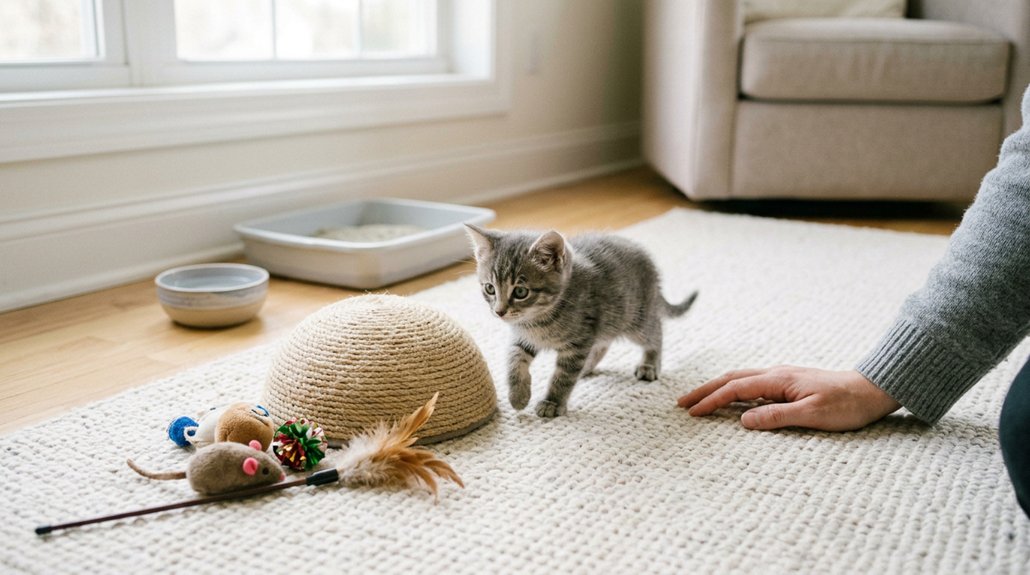
To prevent overwhelming a new kitten, establish a cozy, secure space with hiding spots, and kitten-proof it for safety. Implement consistent routines for feeding, play, and rest, allowing their natural acclimation pace. Utilize gentle play and treats to build trust while gradually expanding their environment, monitoring for stress signals. You’ll foster a sense of security and predictability, easing their adaptation. Implementing these strategies will lead to a harmonious adjustment and deeper insights into kitten care.
Key Takeaways
- Create a small, quiet space with essentials to help your kitten feel safe and secure.
- Implement consistent feeding and playtime routines to provide a predictable environment.
- Allow your kitten to explore new areas gradually and at their own pace.
- Engage in gentle play with interactive toys to build trust and prevent overstimulation.
- Monitor your kitten’s body language and adjust activities to maintain a stress-free environment.
Set Up a Cozy and Secure Space for Your Kitten
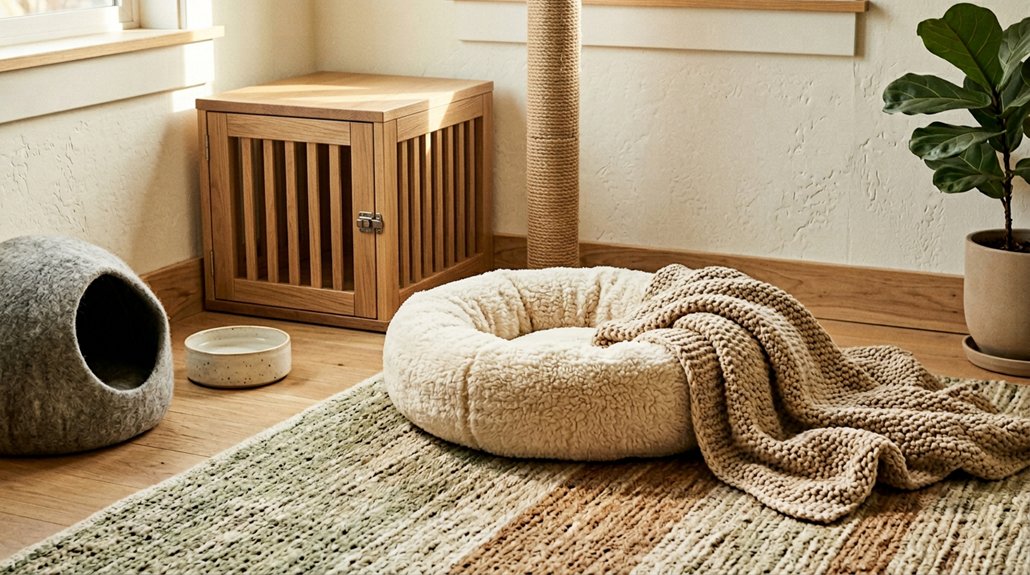
Creating a designated space fosters immediate comfort and security for your new kitten. Opt for a small, quiet room with kitten proofing essentials to safeguard against hazards and minimize stress. Providing a variety of hiding spots, such as under beds or inside boxes, is vital to reduce anxiety and encourage exploration at a self-directed pace. Equip the area with two litter boxes containing different types of litter, supporting the development of stable elimination habits. Strategically position food and water dishes away from litter boxes, ensuring a clean and sanitary dining space. Incorporate a scratching post and climbing structures to promote naturalistic behaviors. Ensuring these elements are in place will greatly contribute to the kitten’s initial acclimatization and ongoing welfare.
Establish Consistent Routines for Predictability
To establish a calming routine for your new kitten, begin by introducing consistent schedules for essential activities like feeding, playtime, and rest. A well-structured feeding schedule allows your kitten to anticipate meals, fostering nutritional stability and reducing stress. Implementing a playtime routine not only satisfies physical exercise requirements but also promotes mental stimulation and emotional well-being. By embedding these activities into a daily framework, you provide predictability, which cultivates a secure environment conducive to adaptation and tranquility. Remember, moderate flexibility within these routines is permissible, ensuring that while occasional changes may occur, overall consistency is meticulously preserved. Consequently, this predictability reduces anxiety, fostering a harmonious relationship between you and your kitten, and greatly enhances the acclimatization process to its new home.
Allow Your Kitten to Adjust Naturally
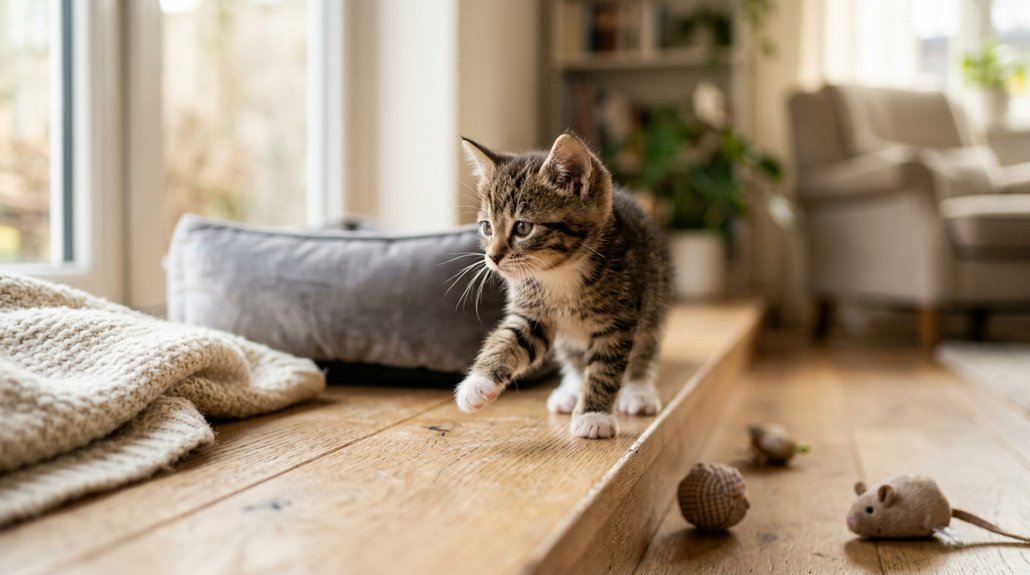
While establishing consistent routines is fundamental, it’s equally important to permit your new kitten to adjust naturally to its environment. Provide a quiet, designated area for exploration, equipped with essentials like food, water, a litter box, and comfortable resting spots, which will help prevent overstimulation. Allow the kitten to acclimate at its own pace, respecting its individual kitten behavior throughout the adjustment period. Implement the 3-3-3 Rule: three days for initial safety, three weeks to settle in, and three months to achieve confidence. Gradually expose your kitten to new experiences, people, and pets, ensuring you proceed according to its comfort level to avoid inducing anxiety. A consistent routine for feeding, play, and rest reinforces predictability and security, supporting natural adaptation.
Build Trust With Gentle Play and Treats
Engage your new kitten in gentle play to build trust and nurture their developmental needs. Using interactive play, such as feather wands, awakens their hunting instincts while ensuring that your movements remain slow and controlled to prevent overstimulation. Positive reinforcement via treats is instrumental in associating play with rewarding experiences, thereby fortifying trust and boosting confidence.
Engage kittens with gentle play to build trust and nurture development with rewarding experiences.
- Observe your kitten’s body language carefully to tailor play intensity, adapting tactics to avoid undue stress.
- Introduce diverse toy types incrementally, aligning complexity with the kitten’s skill level to maintain engagement without inducing frustration.
- Maintain patience and routine, dedicating time for short, frequent sessions—optimal at 2-3 times daily—to prevent exhaustion and facilitate recuperation.
Balancing these elements fosters a trusting, enriching environment.
Carefully Expand Your Kitten’s Environment
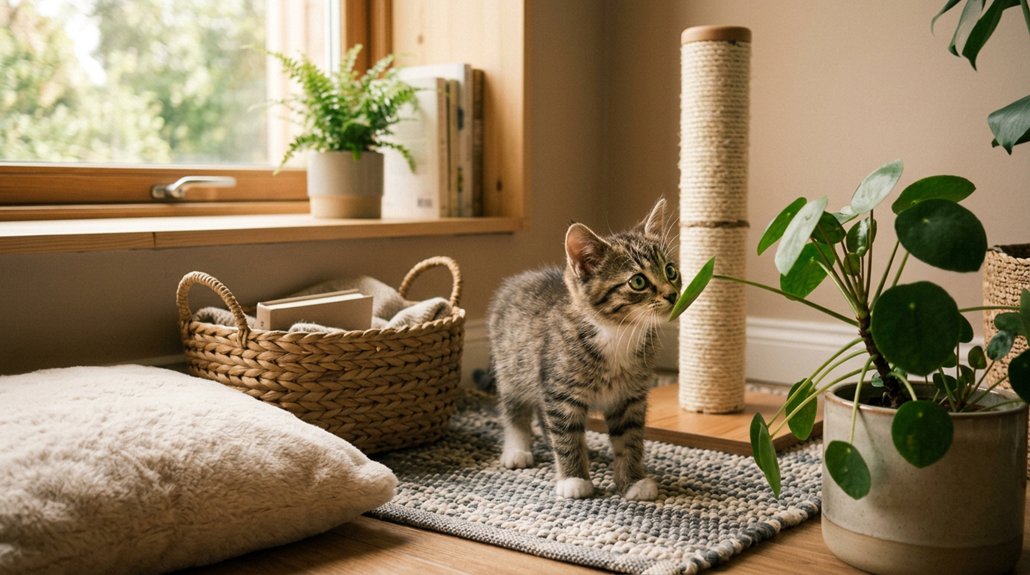
After establishing trust through gentle play, focus on expanding your kitten’s environment to foster confidence and reduce anxiety. Implement environmental enrichment by gradually introducing new areas of your home. Start with one room, guaranteeing access to essentials such as food, water, litter boxes, and safe hiding spaces. Follow the 3-3-3 rule: provide a quiet space for the first three days, then progressively allow exploration. Regular interactive play sessions contribute to bonding and comfort in new environments. Observe your kitten for signs of stress or anxiety during these gradual introductions; be prepared to retreat to familiar spaces if necessary. Monitoring behavioral cues will guarantee you’re promoting a positive, stress-free experience while advancing their environmental acclimation efficiently.
Frequently Asked Questions
How to Make a New Kitten Less Stressed?
To make a new kitten less stressed, focus on environmental enrichment and gradual introductions. Create diversified stimuli with toys, textures, and scents, while slowly familiarizing them with new spaces and individuals to foster a calming acclimatization process.
What Is the 3-3-3 Rule for Kittens?
The 3-3-3 rule for kittens involves three phases: initial adaptation (three days), exploration and routine establishment (three weeks), and full integration (three months). It guides kitten behavior understanding and introduction strategies with expert precision.
What Is “I Love You” in Cat Language?
Cats convey “I love you” with a cocktail of cuddly cues: calm purrs, contented kneading, and cozy companionship. Recognizing these feline communication signs in your kitten’s body language showcases expert insight into their affectionate expressions.
Where Should a Kitten Sleep on the First Night?
Place the kitten in a designated safe space, ensuring it’s equipped with appropriate kitten bedding. This area should be quiet and away from disturbances, promoting stress reduction and aiding in the kitten’s acclimatization to their new environment.
Conclusion
Creating a nurturing environment for your new kitten is like building a bridge of trust—each careful step strengthens the bond. By setting up a cozy space, establishing reliable routines, and allowing your kitten the time to adapt, you’re laying a foundation for their well-being. Engaging in gentle play and rewarding them with treats fosters a sense of safety, while gradually expanding their environment guarantees they grow confidently into their new home. Your prudent guidance is essential.