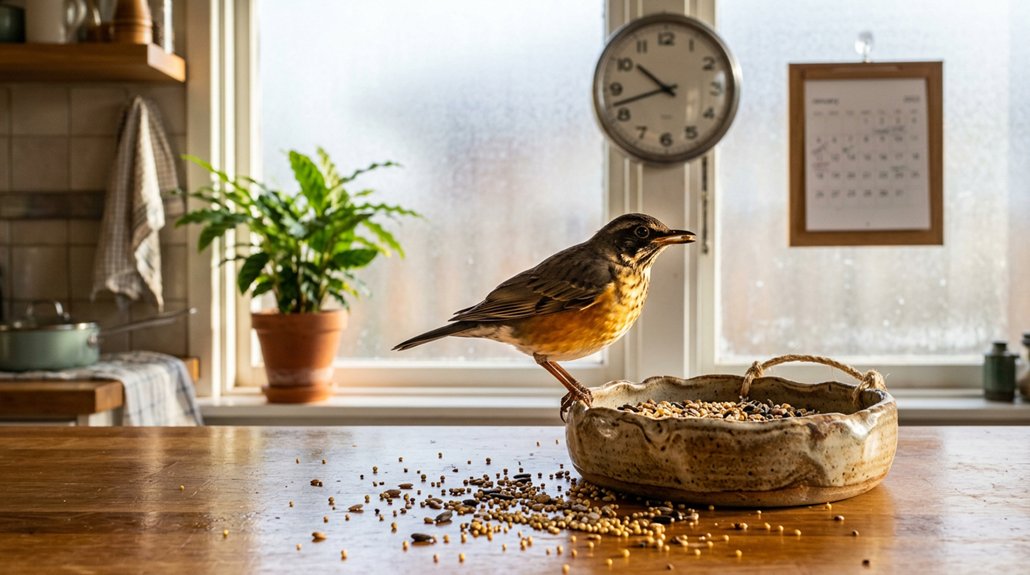
Match bird species to your daily routine by pairing timing, feeder type, and habitat. Feed suet or sunflower at dawn and dusk for wrens, chickadees, titmice, and woodpeckers; offer nyjer for finches and ground seed for sparrows at midday. Watch trees, wires, shrubs, lawns, and edges during quick stops, especially after fronts or on windy migration days. Use eBird bar charts and Merlin Sound ID to verify likely species, and your routine gets even more productive from there.
Key Takeaways
- Match species to your schedule: dawn favors wrens and chickadees, midday suits cardinals and sparrows, and dusk brings woodpeckers and nuthatches.
- Use feeder types that fit common visitors: sunflower for cardinals, nyjer for finches, suet for woodpeckers, and cracked corn for ground feeders.
- Scan routine places on the move: lawns, shrubs, wires, trees, medians, and parking-lot plantings often reveal birds during short stops.
- Check eBird bar charts and weather before errands to time outings with peak movement, especially after fronts and during migration.
- Use Merlin Sound ID and quick visual checks together, then save audio notes to confirm birds seen in everyday locations.
Match Bird Species to Your Feeding Routine
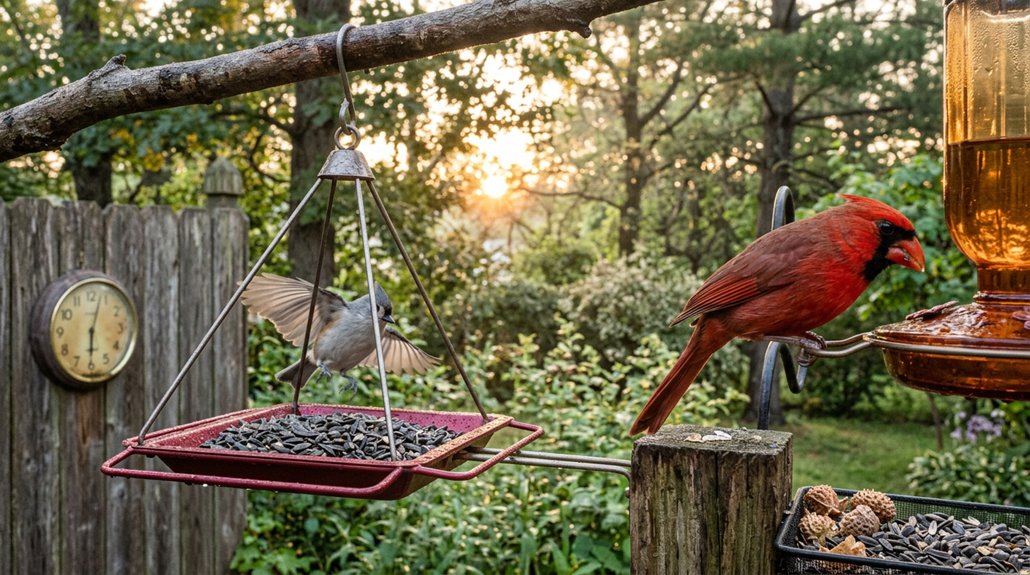
If you feed early in the morning, you’ll draw the species that are already active at first light: Carolina Wrens, Chickadees, and Titmice, which defend territories and forage during the 30–60 minutes around dawn. This timing matches their dawn choreography, when they’re most efficient at locating food and repelling rivals. Midday refills shift your backyard rhythms toward Cardinals and sparrows, which use predictable routes and accept more human presence. If you feed late afternoon or near dusk, you’ll support woodpeckers, nuthatches, and wintering migrants that need energy before roosting. Keep feeders visible and filled through the day so habitual visitors can maintain fixed foraging schedules. In cold weather, high-energy foods at morning and evening further align with birds’ fat-accumulation demands.
Choose the Right Feeders and Foods
You should match feeder design and food type to your refill schedule: hopper or large-capacity tube feeders work well for daily service, while small-port tubes suit midweek nyjer for finches. If you’re refilling in cold mornings, use suet or peanut-based feeds for woodpeckers and nuthatches; if you only check feeders at night, use shelled sunflower or no-waste mixes in securely hung feeders to limit spoilage. For broader coverage, add tray or ground feeders with cracked corn and mixed seed for sparrows and doves, and reserve mealworms, fruit, or late-afternoon suet for species with more specialized timing.
Match Feed To Species
Feeder selection acts like a species filter, so matching food type and feeder design to bill shape, foraging style, and seasonal energy demands can sharply improve your results. Use tube feeders with nyjer for finches such as American Goldfinches and Pine Siskins; their small bills and high-oil needs fit the narrow ports. Hang hopper or large-port sunflower and safflower stations, with black-oil sunflower preferred, for cardinals, white-throated sparrows, tufted titmice, and chickadees. Offer suet cakes on a suet feeder in winter or cool weather for woodpeckers, wrens, and nuthatches. Put cracked corn and millet on a tray or ground scatter for doves, sparrows, and juncos. Add grape jelly, orange halves, or mealworms during migration and breeding, and check seasonal availability and feeder maintenance regularly.
Offer Varied Food Types
A varied feeding setup works best when each feeder and food type is matched to the birds you want to attract. Use tube feeders for nyjer-loving finches, hopper or box feeders for cardinals and woodpeckers, and tray or ground feeding for doves and sparrows. Keep one feeder dominated by black oil sunflower seed; it’s a reliable high-energy staple for chickadees, titmice, cardinals, and many finches. Offer nyjer in a single small-port sock feeder during winter and migration for goldfinches and pine siskins. Add suet cakes or balls on a suet cage in cold months, but skip them in hot weather. Supplement with mealworms and fruit or peanut jelly on a platform or dish as seasonal treats that complement native plants and support insectivores and orioles.
Add Specialized Feeder Options
Tailor specialized feeders to the species you’re trying to attract by pairing the right food with the right delivery system. Use finch tubes with small ports for nyjer to bring in American Goldfinches and Pine Siskins, and larger-port tubes or hoppers for black oil sunflower to support chickadees, titmice, and cardinals. In cool months, add a suet cage or suet-ball attachment with beef tallow suet for woodpeckers, Carolina Wrens, and nuthatches. On the ground, set a tray with peanuts, sunflower chips, and cracked corn for doves, sparrows, and juncos. Hang a nectar feeder with 4:1 water-to-sugar solution for Ruby-throated Hummingbirds, and offer mealworms for bluebirds. Use fruit feeders, grape jelly, orange halves, and peanut halves near cover and visible perches. Specialty nectar works best when refreshed daily.
Use Weather and Migration Cues
When migration is underway, weather becomes one of your best scheduling tools: spring and autumn usually produce the highest movement, with raptor and waterfowl passage often beginning in March and peaking through mid-April. You should align outings with prevailing winds and weekly bar charts, because they’re efficient predictors of directional flow and local abundance.
Weather is one of your best migration tools: spring and autumn usually bring the strongest movement.
- Southerly spring winds and northerly autumn winds often tighten coastal concentrations.
- Windy days can sustain raptor movement, while warm, windless afternoons generate spring thermals for soaring migrants.
- After a front clears, check eBird’s tallest county bars and sample the following hours.
Use those cues to prioritize peak weeks, then verify microconditions at your site. When weather shifts quickly, rare arrivals can appear with little warning, so timing matters.
Scan Edges, Perches, and Open Skies

Once you’ve timed your outings to the right weather and movement windows, shift your attention to the habitat structure itself: birds often concentrate where open ground meets cover, where perches interrupt a skyline, and where the sky stays unobstructed. Use edge scanning along reeds, shrubs, woodland margins, rock lines, shorelines, and tidal seams, because sparrows, wrens, shorebirds, and similar species often hold in these transition areas. On every circuit, inspect treetops, snags, fence posts, poles, and wires for raptors, kestrels, and passerines. Sweep open fields, mudflats, and water in an S-pattern to expose cryptic birds. Keep sky vigilance high by using a distant reference point and preset binocular focus for soaring migrants. If a patch looks empty, pause and rescan; birds can appear after several minutes.
Use eBird and Merlin to Identify Birds
Use eBird’s Bar Charts for your county to identify the exact weeks when each species’ weekly frequency peaks, so you can schedule surveys around the highest-probability windows in your routine. Pre-load Merlin Bird ID and use Sound ID during short commutes or breaks to passively capture vocalizations and convert uncertain bird calls into likely identifications. When you pair eBird’s timing data with Merlin’s audio recognition, you’ll make brief observation sessions more efficient and more accurate.
eBird Bar Charts
eBird bar charts let you match species activity to your daily routine by showing weekly occurrence patterns at the county or hotspot level. Use them to read seasonal timing and county peaks, then schedule outings around tallest bars, which mark local peak weeks. Adjust the date range on an Explore page to expose earliest and latest records, so you can target days just before or after a peak for likely early or late detections.
- Check weekly frequency percentages to estimate detection probability.
- Use Show Targets to filter species by area and time of year.
- Plan commute, after-work, or full-morning sessions from bar height.
When you combine these peaks with Merlin’s recent sightings data, you can pick the most efficient time window for each species without wasting field time.
Merlin Sound ID
Merlin Sound ID can listen in real time and flag bird songs and calls you might miss by ear, especially distant, hidden, or intermittent vocalizations. Use it for real time identification after you check local eBird bar charts, so you’re targeting expected migrants and residents rather than guessing. Let Merlin record for several minutes in quiet, early-morning conditions; that improves detection of species such as Blackpoll Warbler or Golden-crowned Kinglet. Review each detection’s confidence score and timestamp, then prioritize higher-confidence picks and saved clips. Cross-check those results against eBird range and seasonal charts before logging a bird. If Merlin provides audio or notes, attach them to your checklist. In practice, it supports automated species monitoring and tighter field verification.
Bird Watch in Everyday Spots
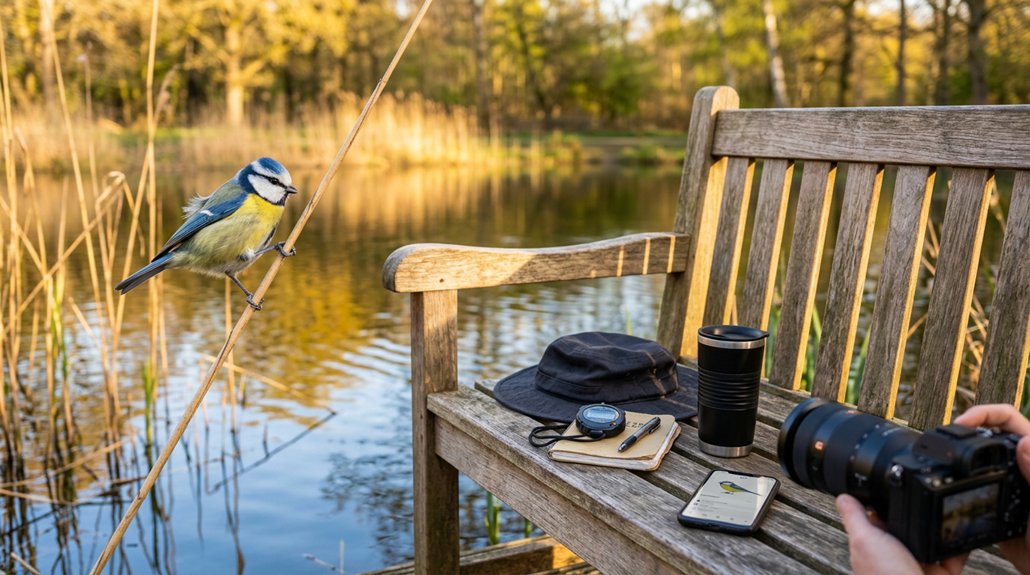
Often, the most productive birding happens in the places you already pass through every day. Keep urban binoculars in your bag or car, and use microhabitat scanning to inspect trees, utility wires, planter beds, and median strips during short stops. These quick surveys often reveal sparrows, finches, robins, Carolina Wrens, House Finches, and Chickadees.
- Scan playground edges and parking-lot plantings for migrants.
- Use S-pattern sweeps at school pickup or coffee breaks.
- Check dawn and dusk commutes for warblers and songbirds.
Reference county eBird bar charts before errands so you’re targeting likely species and habitats. Focus on trees for migrants and lawns for ground-feeding sparrows. With brief, repeated observation, you’ll turn routine movement into efficient, high-yield bird detection.
Frequently Asked Questions
What Is the 3 3 3 Rule for Birds?
The 3-3-3 rule for birds means you spend 3 minutes scanning edges, 3 minutes watching high flight paths for migration timing, then 3 minutes sitting quietly; you’ll improve detections and predator avoidance.
What Are the 5 S’s of Birding?
The 5 S’s of birding are Scan, Sky, Sit, Switch, and Season/Set. Like a field guide, you’ll use habitat preferences and identification tips to scan edges, check skies, sit quietly, switch methods, and time efforts well.
What Is the 5 7 9 Rule for Bird Feeders?
It’s a feeder-sizing guide: you’ll use 5 mm for tiny seeds, 7 mm for medium seeds, and 9 mm for large seeds, matching bill sizes, seed preferences, and feeder placement to reduce waste and attract more birds.
How Do You Say “Hi” in Bird Language?
You say “hi” in bird language with avian greetings: brief, soft song calls like “tsee-tseet,” “fee-bee,” or a gentle chickadee note. You’ll get safer, faster responses than loud calls or complex mimicry.
Conclusion
By matching bird species to your daily routine, you can turn ordinary moments into reliable birding opportunities. Start with your feeder schedule, then select foods and feeders that suit local species and seasonal movement. Watch edges, perches, and open sky for distinct behavior, and use eBird and Merlin to confirm identifications. Even brief stops at home, work, or transit spots can pay off. With consistent observation, you’ll hit the nail on the head more often.