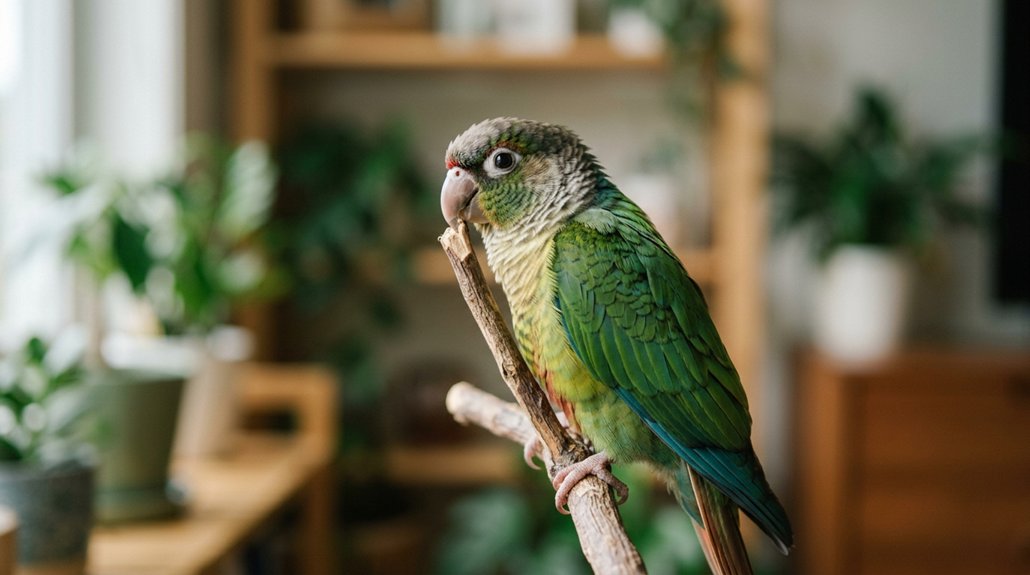
If you want a quieter pet bird, consider canaries, finches, doves, Bourke’s parakeets, parrotlets, budgerigars, cockatiels, or Senegals. You’ll still hear chirps, coos, whistles, and soft contact calls, because no bird is silent. Noise often rises with hunger, stress, boredom, or breeding. A spacious cage, daily flight time, and gentle handling can reduce unnecessary vocalizing and support health, and the best fit depends on your space and routine, which matters more than size alone.
Key Takeaways
- Canary, finch, dove, Bourke’s parakeet, and Pacific parrotlet are among the quieter pet bird species.
- Cockatiels and budgerigars are usually relatively quiet, though they still chirp, whistle, and call naturally.
- Quiet birds still vocalize for contact, stress, breeding, and flock communication; no bird is completely silent.
- Sudden silence or withdrawal can signal illness or stress, so an avian vet check is important.
- Quiet birds need proper housing, daily flight time, and gentle handling to stay calm and reduce unnecessary noise.
Best Quiet Pet Birds
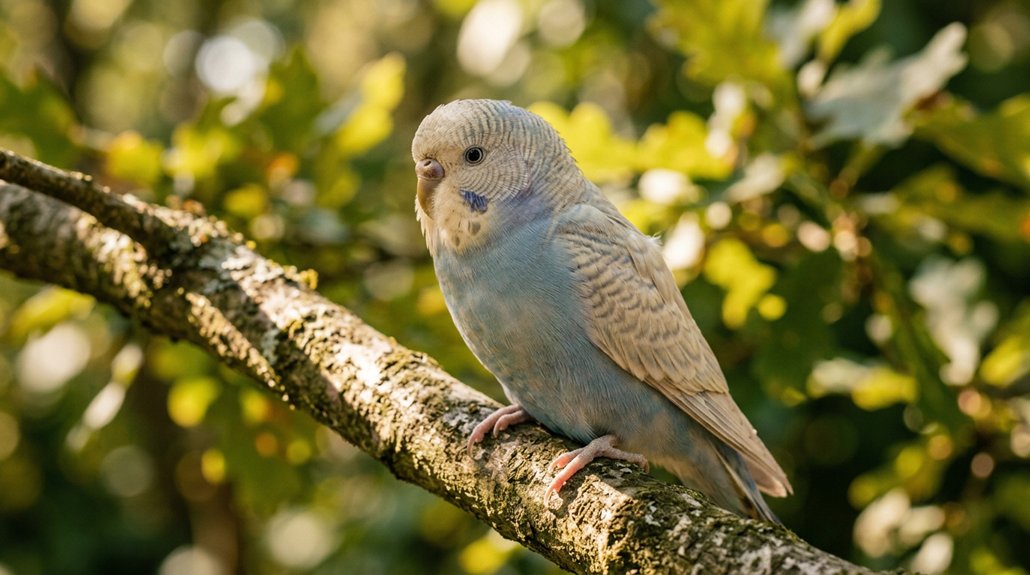
When you’re looking for a quiet pet bird, canaries, finches, doves, Bourke’s parakeets, and parrotlets are among the best options. A canary’s melodious song is usually low enough that you won’t hear it outside a closed room. Finches, such as zebra finches, give off soft chirps and peeps and do well in appropriately sized small aviaries. Doves, including diamond and ringneck types, produce gentle cooing instead of harsh calls, which suits calm homes. Bourke’s parakeets are small, generally quiet parrots with low activity noise at dawn and dusk. Parrotlets are compact and make only petite chirps and soft chatter. If you’re considering vocal training, these species’ naturally restrained sound levels make management easier.
Why Even Quiet Birds Make Some Noise
Even the quietest pet birds still make regular soft sounds throughout the day, because chirps, peeps, and songs are part of how they maintain contact and signal their location. You should expect these communication signals to serve the same functions as in wild birds: mate attraction, territory defense, predator warning, and flock cohesion. A quiet species may become louder when hungry, stressed, bored, or hormonally driven during breeding periods. If your bird suddenly stops vocalizing, that change can indicate illness or stress and merits veterinary evaluation. Training, enrichment, routine, and ignoring attention-seeking calls can lower frequency and intensity, but they won’t remove natural calling. Vocal development also varies by species and individual.
Finches, Canaries, and Doves for Quiet Homes
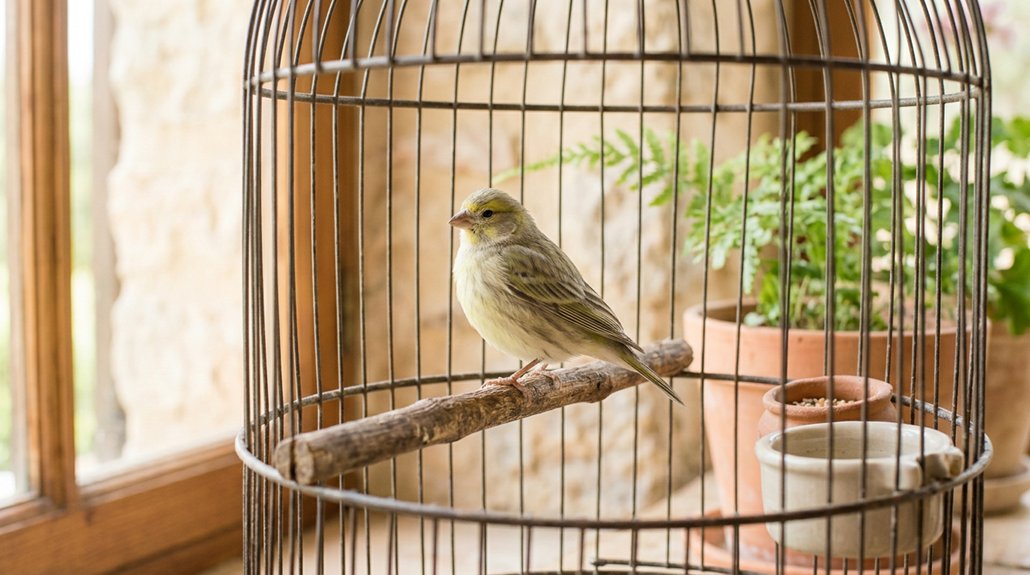
For quieter homes, finches, canaries, and doves are often the best-fitting pet birds because they stay relatively low in volume while still meeting their species-specific social and exercise needs. Finches are tiny, active birds that give soft chirps and peeps in small flocks, so you’ll need a long horizontal aviary for flight exercise and careful seed selection. Canaries usually sing at low volume, and their songs often aren’t audible outside a closed room. Diamond doves are gentle cooers, do best in pairs, and need roomy cages for light flight. Ringneck or stock doves are larger and can be slightly more vocal, but they’re still unobtrusive. Keep aviary placement away from drafts, and remember that sudden silence can signal illness.
Quiet Pet Birds That Bond With People
If you want a quiet bird that bonds with you, species like Bourke’s parakeets, Senegal parrots, Pacific parrotlets, cockatiels, and some doves can form steady caregiver relationships. You’ll usually get the best results with daily handling, routine interaction, and enough space or enrichment to support trust and normal behavior. These birds tend to communicate with soft calls, whistles, or cooing rather than loud screeching, but they still need regular social contact to stay tame and healthy.
Bonding Bird Species
Bonding bird species can offer both companionship and a quieter home, since several commonly kept birds form close attachments without being especially loud. You can use hand rearing techniques and emotional enrichment methods to support trust, but consistent handling matters most.
- Bourke’s parakeets are gentle, soft-voiced, and often active at dawn and dusk.
- Pacific parrotlets bond strongly with dedicated handlers and give off soft chirps.
- Senegal parrots usually attach to one person and seldom screech for long.
- Cockatiels and doves are sociable, with lower-volume chirps or cooing.
If you want a bird that stays calm while still responding to you, these species are practical options. Regular interaction helps maintain their social behavior and reduces stress.
Friendly Quiet Parrots
Friendly quiet parrots can give you a close human bond without the noise level typical of many parrot species. Bourke’s parakeets stay especially soft-spoken, with brief dawn-and-dusk chatter, and often form strong attachments. Senegal parrots are calm, affectionate, and usually bond closely to one primary caretaker. Pacific parrotlets are tiny but social; they thrive with daily interaction and make only petite chirps. Cockatiels often bond readily with you and communicate through gentle whistles instead of piercing calls. Pionus parrots and similar medium species also tend to remain subdued while developing loyal human relationships. For any of these birds, gentle socialization helps preserve calm behavior, and quiet feeding routines can reduce unnecessary excitement. If you want companionship with lower vocal output, these parrots offer practical options.
Handling And Trust
Handling quiet pet birds well depends on species, individual temperament, and daily consistency. You shouldn’t expect canaries, finches, or diamond doves to accept much handling; they usually prefer flock mates.
- Use slow acclimation and quiet presence.
- Offer hand-fed treats to build trust.
- Practice step-up training in short sessions.
- Monitor nonverbal cues for stress or comfort.
Parrotlets, budgerigars, cockatiels, Bourke’s parakeets, and some Senegal parrots can bond closely to you, but they need about 10–30 minutes of gentle handling each day to stay tame. Many bond to one person. If a bonded bird becomes withdrawn, less vocal, or less interactive, treat it as a possible illness or stress signal and arrange an avian vet exam promptly.
Quiet Pet Birds: Budgies, Cockatiels, and Parrotlets
If you’re looking for quieter pet birds, budgies, cockatiels, and parrotlets are among the most apartment-friendly parrot options, though each has a distinct vocal profile. Budgies are small, usually 6–8 inches long and about 1 ounce, and they typically chatter or mimic at roughly 65–70 dB. Cockatiels are larger, around 12–13 inches and 3 ounces, and they often whistle or copy short tunes with lower-volume calls. Parrotlets are tiny, 4–5 inches and about 1 ounce, with soft chirps rather than screeches. Use consistent socialization strategies and training techniques, plus daily handling, to keep them tame. Provide a roomy cage, varied toys, and regular out-of-cage interaction. Noise varies by bird and sex, so assess temperament before adopting.
Quiet Pet Birds: Bourke’s Parakeets and Senegal Parrots
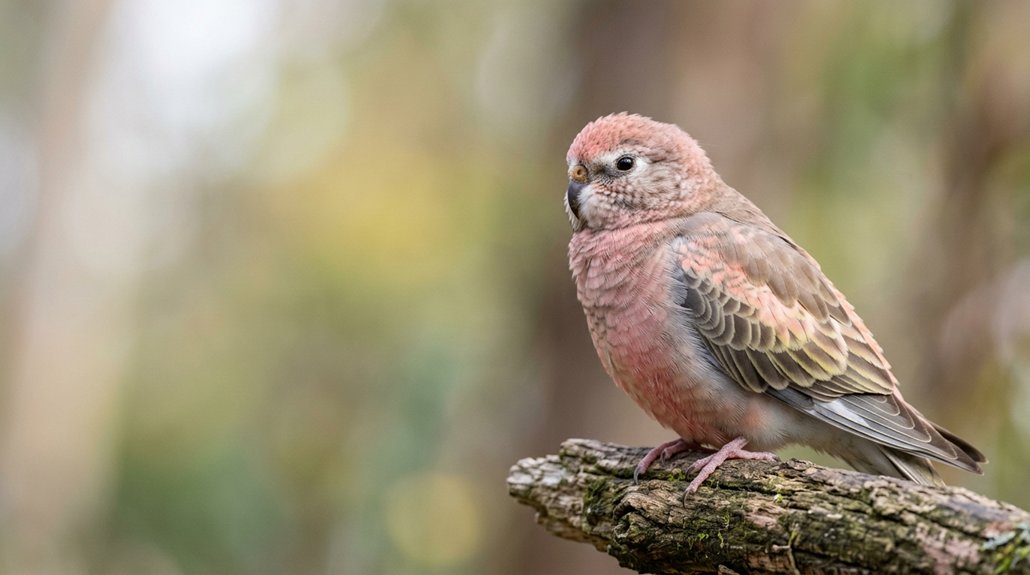
Bourke’s parakeets and Senegal parrots are both relatively quiet pet birds, but they differ in size, behavior, and vocal pattern. You’ll notice Bourke’s are small, gentle, and most active at dawn and dusk, when they give soft cooing rather than loud daytime calls. Senegal parrots are larger, calm, and usually less prone to frequent screeches. Their housing arrangements should support comfort and social contact, and their diet specifics should match their species needs.
- Bourke’s: 7–9 in, about 2 oz.
- Senegals: about 10 in, 4–5 oz.
- Both still make chirps and contact calls.
- Individual noise levels vary; observe the bird first.
Cage Size and Exercise for Quiet Birds
You should choose the largest cage you can fit, preferably square or rectangular, because small quiet birds need enough internal space for short flights, not just hopping. For finches, budgies, and parrotlets, a cage about 30″ long × 18″ wide × 18″ high is a practical minimum, and pair-housed finches or doves do better in a flight cage or aviary at least 48″ long. You should also provide daily supervised out-of-cage flight time and varied perches, and if space is limited, increase enrichment and targeted exercise to maintain muscle tone and behavior.
Roomy Cages Matter
A bird’s cage is a flight corridor, not just a perch stand: the larger the horizontal space, the quieter the bird usually stays. You should choose the largest cage your room allows, because horizontal space supports exercise and reduces wing clapping.
- Finches, budgies, and parrotlets need at least 30–36 inches of length and width.
- Cockatiels and Bourke’s parakeets do better in 36–48 inch cages.
- Use rectangular cages or flight cages; height alone won’t prevent frustration.
- Set perch placement to permit short, uninterrupted flights between perches.
Cramped layouts increase hopping, agitation, and louder attention-seeking calls. Multiple perches with varied diameters help, but they must leave clear lanes. Bar spacing should stay safe for the species, and daily out-of-cage flight time can further lower cage vocalization.
Flight Time Needs
Cage size works best when it’s paired with enough flight time, because even quiet birds need space to move if they’re to stay calm and healthy. You should still give finches, budgerigars, parrotlets, and canaries a cage at least 3–4 times their wingspan in each dimension, with horizontal length near 36–48 inches for short flights. Flighted birds need daily out-of-cage exercise, ideally 1–3 hours in a bird-safe room, to preserve muscle tone and mental health. Flocking finches do better in a long aviary, not a tall narrow cage. Quiet medium parrots, including cockatiels and Senegal parrots, need roomier cages plus 2–4 hours of supervised playtime. Without this, you can see feather plucking and more vocalization. Include daily stretches, and match flight time to species.
Enrichment And Exercise
For quiet birds, enrichment should be built around space and movement: even finches, canaries, and budgerigars need the largest cage you can provide, with a minimum for budgies of about 18 × 18 × 24 inches and, for small finch flocks, at least 36 inches of length to permit sustained flapping and short flights. Prioritize horizontal room, not height, and give a safe, bird-proofed room for 1–3 hours of daily flight.
- Use perch variety to support feet and motion.
- Place perches so paths stay clear.
- Offer natural foraging stations and hanging toys.
- Rotate low-risk swings weekly to prevent boredom.
This structure keeps you bird active, reduces foot fatigue, and preserves muscle tone and mental health in low-noise species like parrotlets, bourke’s parakeets, and cockatiels.
Frequently Asked Questions
What Is the 3 3 3 Rule for Birds?
The 3-3-3 rule means you give your bird 3 days to settle, 3 weeks for gradual socialization, and about 3 months for trust. You should respect avian boundaries and adjust for individual stress.
What Is the Lowest Maintenance Pet Bird?
Doves are your lowest-maintenance pet bird, a feathered whisper requiring easy handling, minimal grooming, budget feeding, and compact housing. They’re calm, hardy, and need only routine care, making them clinically the simplest option.
Which Bird Doesn’t Make Noise?
No bird’s truly silent, but you’d usually find the quietest among silent finches, diamond doves, and shy cockatiels. You’ll hear soft coos or whistles, not loud screams, though temperament still affects noise.
What Are the Quiet Birds That Like to Be Handled?
You’d want Bourke’s parakeets, parrotlets, doves, and budgies; they’re typically quieter and can become hand tame with regular handling. Hand tame cockatiels are moderate. Bonded lovebirds may be affectionate, but they’re usually louder.
Conclusion
If you want a quieter bird, you should remember that no species is silent. Notably, studies of companion bird ownership suggest that noise complaints are among the top reasons birds are rehomed, which makes sound level an important choice factor. Finches, canaries, doves, Bourke’s parakeets, and Senegal parrots are often better fits for low-noise homes. With the right cage size, daily exercise, and realistic expectations, you can reduce stress and support healthier behavior.