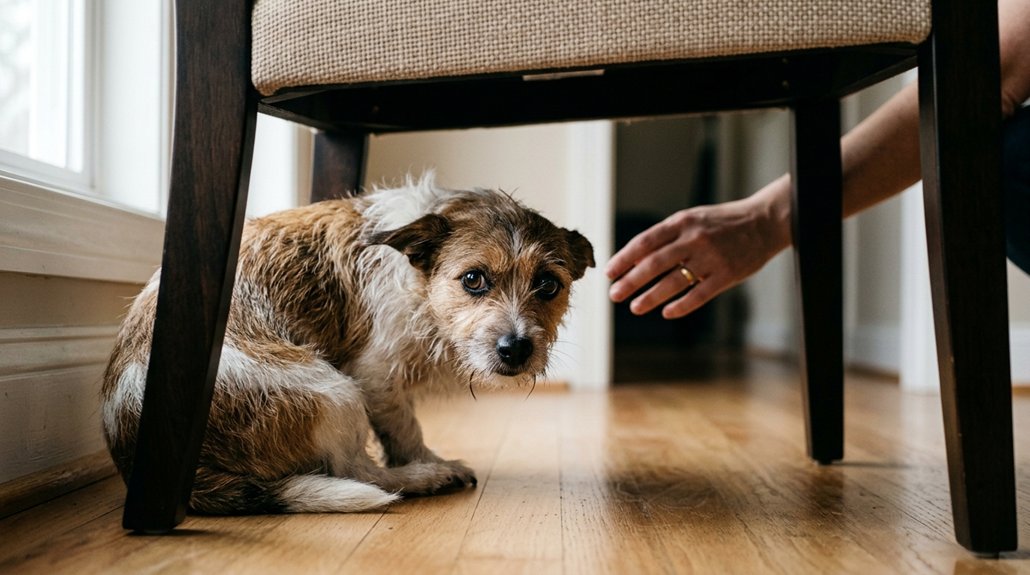
When your dog is afraid of everything, start by creating a cozy, safe space and sticking to a consistent routine. Use positive reinforcement with treats and praise to reward calm behavior. Gradually expose them to fear triggers, beginning with the least intimidating. Monitor their reactions and adjust accordingly. It’s essential not to rush; instead, let them explore at their pace to build confidence. Explore more strategies to help your dog feel secure.
Key Takeaways
- Create a safe and comforting space with cozy bedding and familiar toys to reduce anxiety.
- Use positive reinforcement, like treats and praise, to reward calm behavior and boost confidence.
- Implement gradual exposure therapy to desensitize dogs to fear-inducing stimuli in a controlled manner.
- Modify the environment to minimize fear triggers, such as loud noises and unfamiliar objects.
- Seek professional help if fear disrupts daily life or leads to severe anxiety or aggression.
Immediate Steps to Help Your Dog Cope With Fear
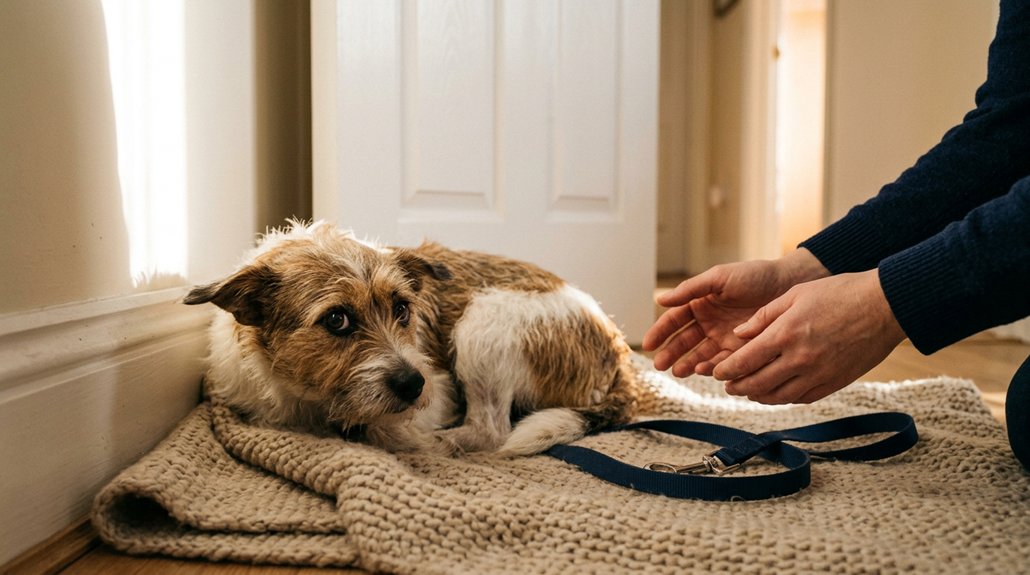
When your dog is afraid, taking immediate action can make all the difference in their comfort and well-being. To tackle fearful behavior, create a safe space—a cozy crate or a quiet corner—where your dog can find solace. This refuge acts as a calming aid, providing them with a haven during stressful times. Use positive reinforcement with treats and praise when your dog remains calm in unsettling situations. Exposure therapy can help too; gradually introduce fear-inducing triggers in controlled, low-intensity settings, coupling them with rewarding activities. Additionally, guarantee a consistent routine to bring predictability and security. By closely managing their environment and incorporating these steps, you can considerably ease your dog’s anxiety, promoting a more relaxed and content companion.
Recognizing Fear Triggers Within Your Environment
To effectively ease your dog’s anxiety, it’s essential to identify fear sources like loud noises, unfamiliar objects, and unpredictable human behaviors that might be present in your surroundings. By understanding these triggers, you can thoughtfully modify the environment to offer a sense of security and comfort. With careful observation and adjustments, you can create a safer and more reassuring space for your pet.
Identifying Common Fear Sources
Understanding your dog’s fear triggers is essential to helping them feel secure and at ease in their environment. Fear behavior can be exacerbated by various environmental cues that seem harmless to us. Loud noises like thunder and fireworks often provoke panic and anxiety. Unpredictable behaviors from children or interactions with unfamiliar dogs can heighten fear, especially in timid pups. Changes such as new furniture or baby equipment might unsettle your dog, as can slippery or reflective surfaces. Even household appliances like vacuums can trigger anxiety due to their surprising sounds.
Here’s a brief table of common triggers:
| Fear Source | Potential Trigger |
|---|---|
| Loud Noises | Thunder, Fireworks |
| Environmental Changes | New Furniture, Baby Items |
| Surfaces and Sounds | Slippery Floors, Vacuums |
Identifying these helps create a safe, comforting environment.
Modifying Environment For Comfort
Creating a stress-free and comforting environment for your dog starts by keenly observing their reactions to various stimuli in your home. Identifying specific fear triggers, like loud noises or sudden movements, is essential for environment modification. Implement comfort strategies by establishing a controlled haven for your dog, free from disruptions. Use comforting items, such as their favorite bedding and toys, to create a sense of security.
Consider these comfort strategies:
- Soundproofing rooms: This can reduce anxiety during thunderstorms or fireworks.
- White noise machines: They help mask frightening sounds.
- Gradual exposure: Introduce new objects slowly with treats and praise.
- Consistent routines: Maintain steady schedules to guarantee predictability, thereby calming your pet.
Modifying your dog’s environment thoughtfully can greatly enhance their sense of comfort and security.
Creating a Safe and Comforting Atmosphere
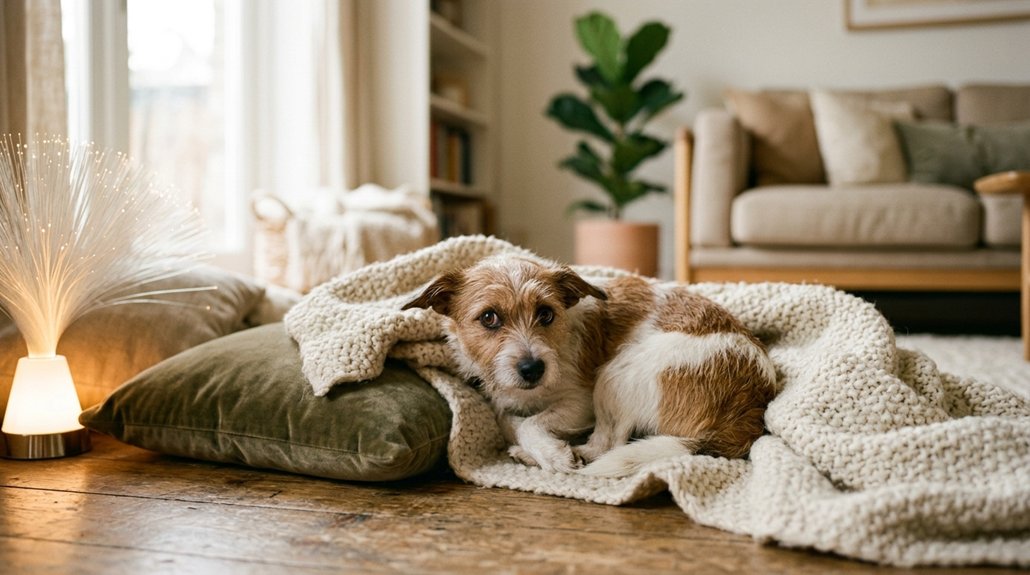
To help your dog feel secure, it’s vital to establish a comforting space with cozy bedding and familiar toys where they can escape stress. Place this refuge in a quiet part of your home, away from noise and activity, and use calming techniques like soft music or white noise to make the area soothing. By creating a predictable environment and gradually introducing them to these comforts, you’ll reduce their anxiety effectively.
Establishing a Secure Refuge
While watching your dog experience fear can be distressing, establishing a secure refuge can greatly alleviate their anxiety. Creating boundaries by setting up a designated safe space, such as a crate or quiet room, allows your dog to retreat and feel protected. Establishing routines, like guiding them to this refuge on command and rewarding their compliance, reinforces a positive, safe environment. Enhance this space with:
- Comfortable bedding and favorite toys to foster relaxation.
- Calming elements like dim lighting or soft music.
- Regular monitoring to guarantee it remains a serene escape.
- Reward-based training to encourage the use of this refuge.
Utilizing Calming Techniques
Even if your dog seems overwhelmed, introducing calming techniques can transform their anxiety into tranquility. Establish a designated safe space with comfortable bedding and familiar toys to create a haven where your dog feels secure. Calming music or white noise can drown out sudden sounds, fostering a soothing atmosphere.
Engaging the senses with soothing scents like lavender or chamomile through essential oils or sprays adds another layer of relaxation. Incorporate these techniques consistently within your dog’s environment to provide predictability and structure, helping to alleviate anxiety.
| Technique | Benefits |
|---|---|
| Calming Music | Drowns out sudden noises |
| Soothing Scents | Promotes relaxation and tranquility |
| Safe Space Setup | Enhances sense of security |
With diligence, your dog’s world becomes less intimidating and more peaceful.
Turning Fear of Everything Into Confidence With Positive Reinforcement
When your dog is beset by fears, transforming their apprehension into confidence may feel challenging, but with positive reinforcement, the journey becomes fruitful and rewarding. By nurturing positive fear associations, you lay the groundwork for confidence building. Reward calm behavior in intimidating situations with treats or praise. This simple act initiates a positive link, helping reshape fear perceptions. Consistently ignore fearful reactions and reward moments of bravery. This encourages confronting challenges with resilience.
- Use high-value rewards: These make calmness more desirable despite fear.
- Establish a safe, structured environment: This enhances coping abilities around anxiety triggers.
- Implement counter-conditioning: Pair enjoyable activities with fearful experiences to change perceptions.
- Consistency is key: Regular reinforcement solidifies confidence over time.
Gradual Exposure Techniques for Fearful Dogs
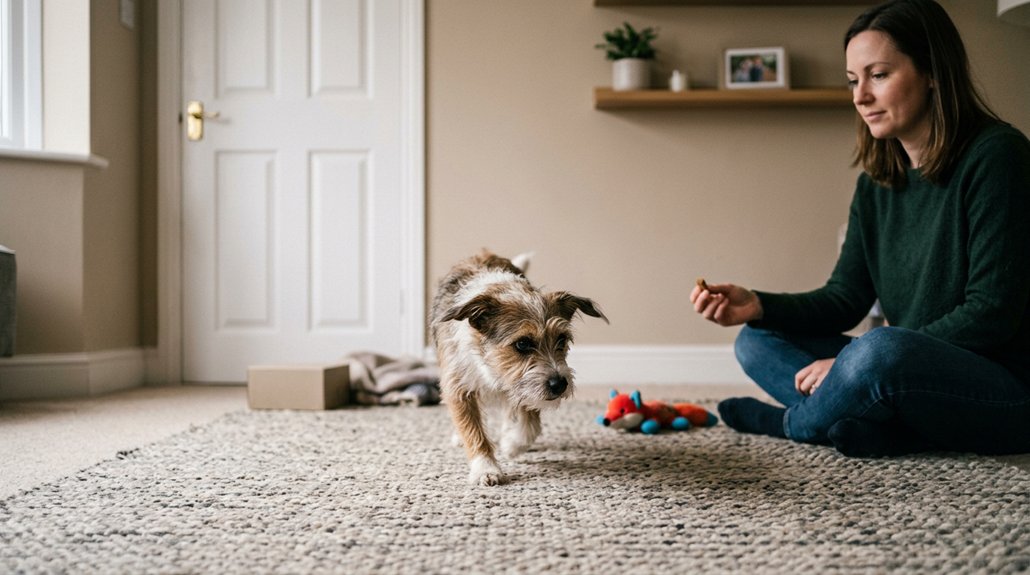
Introducing your dog to fear-inducing stimuli at a low intensity can be a transformative step in helping them overcome their anxieties. Begin by crafting an exposure hierarchy, where stimuli are ranked from least to most intimidating. Use desensitization techniques by starting at the mildest level of exposure, ensuring your dog doesn’t feel overwhelmed. This method helps in fostering calm through gradual acclimatization.
Pair each exposure with high-value rewards, like favorite treats, to build positive associations. Consistently monitor your dog’s reactions; adjust the exposure intensity to keep them within their comfort zone. Counter conditioning is beneficial too—change their emotional response by reinforcing calm behavior. This thoughtful approach nurtures confidence, turning fear into a manageable aspect of their experience.
Introducing New Experiences for Socialization
While starting the journey to introduce your dog to new experiences, it’s important to approach each situation with sensitivity and care. Gradually expose your furry friend to playful encounters and novel environments. Pair each new experience with high-value treats, creating positive associations and encouraging curiosity. Remember, patience is key—never rush or force interactions.
- Counter-Conditioning: Use treats to link novel environments with positive outcomes, reducing anxiety.
- Pacing: Let your dog explore at their own pace to prevent overwhelming fears.
- Calm Interactions: Facilitate supervised meetings with calm dogs to boost confidence.
- Miscellaneous Exposure: Introduce various objects and sounds non-threateningly, such as slowly increasing the volume of recorded baby noises.
These strategies build a solid foundation in fear management through socialization.
Tracking Progress in Fear Management
Effectively tracking your dog’s progress in fear management involves consistent and careful observation of their reactions to diverse stimuli. Begin by engaging in detailed behavior observation, noting instances where you see improvements. Are there fewer trembling fits or barking episodes? Each subtle change matters. Fear journaling is a valuable tool; it helps document specific triggers and your dog’s evolving responses. With these records, pinpoint patterns and design better interventions. Set small, achievable goals—celebrate each victory, no matter how minor. These are stepping stones to building overall confidence. Consider recording videos during exposure sessions. With visual evidence, you can precisely identify what strategies work best. Over time, you’ll better understand your dog’s journey, ensuring their comfort grows steadily.
Knowing When It’s Time to Call a Trainer
When should you seek the guidance of a professional trainer for your fearful dog? If your dog’s fear is severely affecting daily life or social interactions, it’s time to think about expert help. A trainer skilled in fear-based behavior can assess the situation accurately, offering tailored training options such as gradual desensitization and positive reinforcement. Here’s when a professional assessment becomes vital:
Consider expert help when your dog’s fear disrupts daily life or social interactions.
- Severe anxiety attacks that make managing your dog’s behavior challenging.
- Aggression specifically triggered by fear, posing risks to safety.
- Persistent fear leading to destructive behaviors, especially when left alone.
- Consistent home interventions failing to alleviate fearfulness, pointing to deeper issues.
Addressing these concerns early with structured expert strategies can prevent the escalation of anxiety-related problems in your dog’s behavior.
Frequently Asked Questions
How Do I Fix My Dog Being Scared of Everything?
Start by identifying your dog’s fear triggers and employ behavior modification techniques. Gradually expose them to stimuli using rewards, training for confidence, and ensuring a safe retreat. Always monitor progress, seeking professional guidance if anxiety persists.
What Is the 3-3-3 Rule With Dogs?
The 3-3-3 Rule for dogs is like a cozy blanket, easing them into new homes with structured steps. It promotes socialization strategies and fear reduction, emphasizing gradual adjustment over three days, weeks, and months.
What Is a Red Flag Dog’s Behavior?
A red flag dog’s behavior includes trembling, cowering, or aggression, indicating anxiety signals. Fear triggers may cause avoidance such as hiding, tail tucking, or sudden changes in behavior. Recognize these signs to address your dog’s needs compassionately.
Which Dog Breed Has the Most Anxiety?
Breed anxiety levels vary, but sensitive breeds like Greyhounds and Border Collies can be highly anxious. These dogs may react strongly to anxiety triggers due to their nature and experiences, often needing your understanding and patience.
Conclusion
While managing a fearful dog requires patience and empathy, your efforts can lead to remarkable improvements. Did you know that over 70% of dog owner’s report positive changes using gradual exposure techniques? Embrace the journey of transforming fear into confidence by recognizing triggers and providing a safe environment. Remember, you’re not alone, and professional trainers are available when needed. With consistent positive reinforcement and socialization, your dog’s fear will evolve into newfound courage and trust.