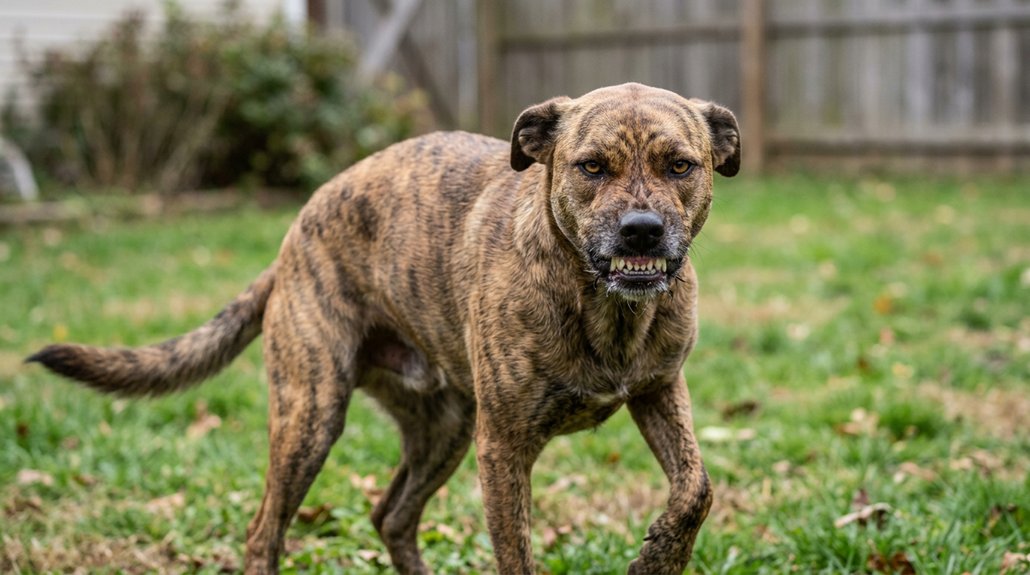
Your dog growls to communicate emotions, ranging from playful excitement to warning of threats. Play growls typically come with loose body language, while warning growls are lower in tone with stiff postures. It’s essential to monitor sudden changes, as aggressive growling can signal discomfort or territorial behavior. Address growling by observing cues, redirecting attention, and using positive reinforcement. For persistent issues, consider professional help. There’s much more to discover about interpreting and managing growling effectively.
Key Takeaways
- Dog growling communicates excitement, discomfort, or perceived threats through auditory and visual cues.
- Playful growling features loose body language and higher tones, indicating non-threatening interaction.
- Warning growls, marked by stiff postures and low tones, signal discomfort or threat perceptions.
- Sudden, intense growling with strangers or over resources may indicate aggressive or territorial behaviors.
- Persistent or unexplained growling warrants a professional assessment or veterinary evaluation for underlying issues.
Understanding Dog Growling
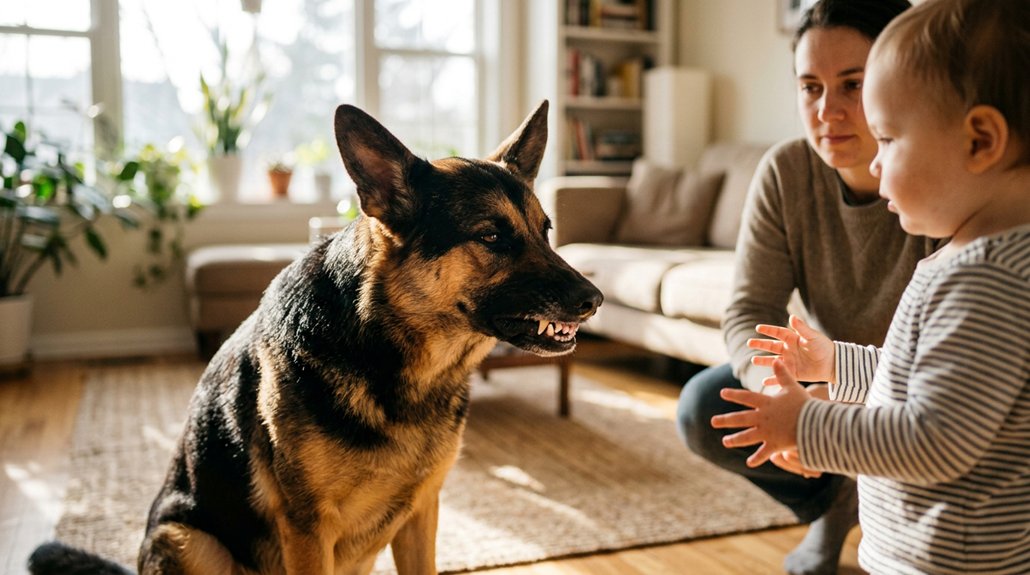
When it comes to understanding dog growling, it is vital to recognize that this behavior is a key aspect of canine communication, serving as a versatile tool to express a wide range of emotions. Dogs utilize growling to communicate discomfort, anxiety, excitement, or playfulness. Contextual understanding is essential—play growls typically involve loose body language and higher tones, while warning growls accompany stiff postures and lower tones. Such growls function as a warning system, indicating stress, fear, or threat, and aim to prevent conflict by creating distance. Misinterpreting growling might lead you to mistakenly punish your dog, potentially reinforcing undesirable behavior. Recognizing and accurately interpreting growls will enhance your relationship with your dog and promote positive behavioral outcomes.
What Your Dog’s Growling Communicates
Understanding what your dog’s growling communicates necessitates a keen observation of both auditory and visual cues. Dogs use growling as a form of communication, expressing various emotional states. Playful growling, often accompanied by a wagging tail and relaxed posture, signals excitement and is typically heard during interactive play. Conversely, growls can serve as warning signals indicating discomfort or perceived threats. Look for a stiff body and intense stare, which suggest a more serious context. Recognizing these growling types is pivotal, as they’re preventive warnings about your dog’s emotional state. By discerning the nature of the growl, you can enhance your bond with your dog, guarantee their feelings are respected, and mitigate conflict, reducing the risk of biting situations.
When Growling Becomes Concerning
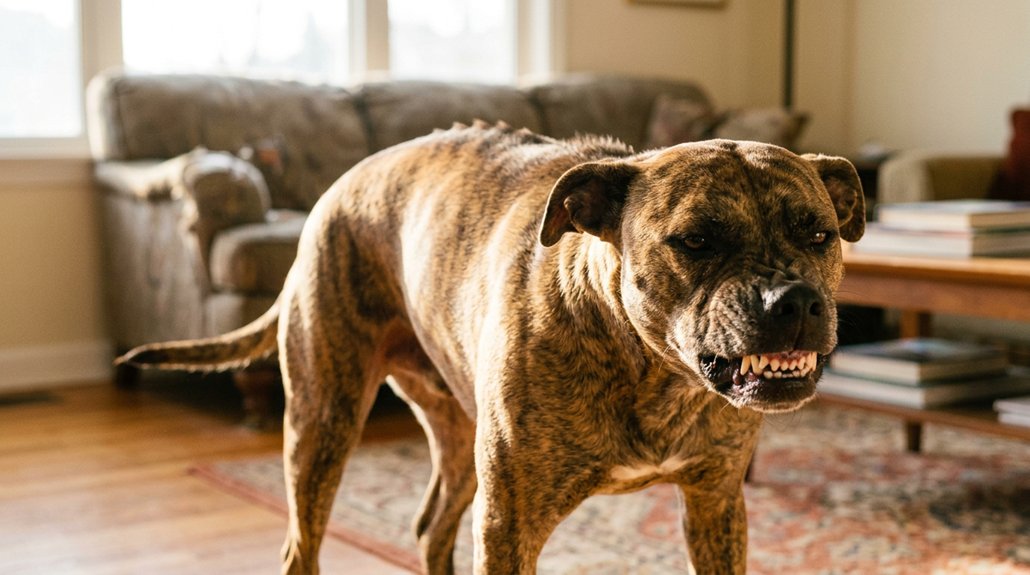
Although growling can sometimes seem alarming, it’s important to differentiate between benign and concerning growls. Pay attention to warning signs like sudden or increased growling, particularly in dogs with no previous aggression. Stiff body posture and low-frequency growls might indicate aggressive intent—potentially a response to feeling threatened or resource guarding. These behavioral cues should prompt a veterinarian consultation to rule out medical issues. Growling due to resource guarding, especially over food or toys, can escalate, risking biting incidents. Additionally, intensified growling during interactions with unfamiliar people or animals may show territorial behaviors needing training intervention. Ignoring or punishing a growl removes a critical warning signal, increasing the unprovoked bite risk as the dog might resort to aggression without prior notice.
Strategies to Handle Growling
Addressing concerning growling requires effective strategies to guarantee both the dog’s well-being and your safety. Start by observing your dog’s body language and the environment to understand the growling’s cause. Redirect their attention to a positive activity or command, which helps shift focus away from stressors. Implement desensitization by gradually exposing your dog to triggers while rewarding calm behavior. Positive reinforcement is essential in reinforcing desired responses, thereby aiding in anxiety reduction. Consistency in training and establishing boundaries will contribute to your dog’s security, lessening anxiety-induced growling. Always aim to create a structured environment that balances discipline with compassion. If a growling issue escalates, consider different strategies beyond your current methods and reinforcement practices.
When to Consult a Professional for Growling Issues
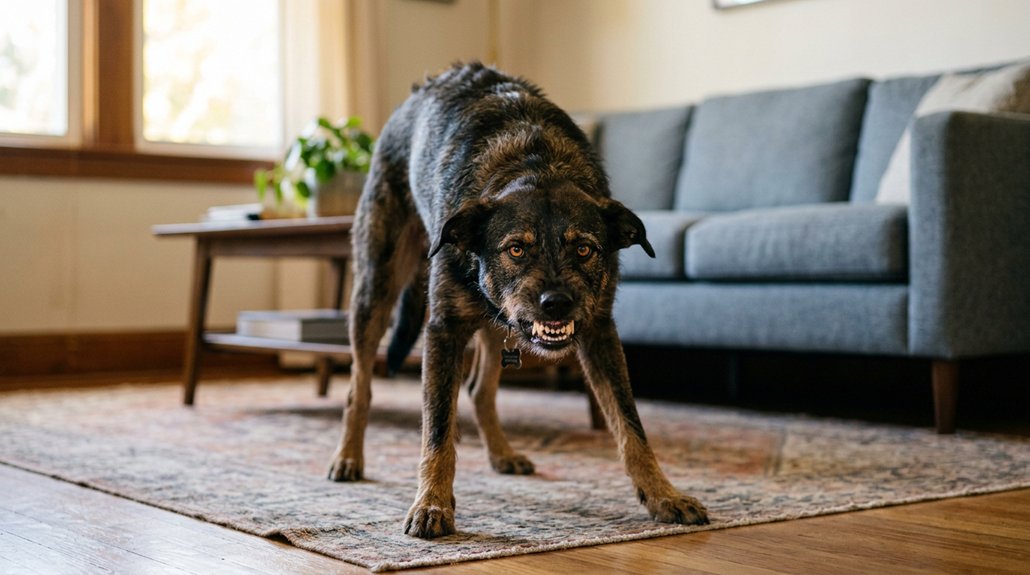
When your dog’s growling persists or escalates into aggressive behavior despite your intervention, it is crucial to consult a professional for a thorough assessment. Sudden growling may signal discomfort or pain, requiring a veterinary evaluation, especially if accompanied by behavioral changes. For cases linked to fear or anxiety, a certified animal behaviorist can create a tailored behavior modification plan to address triggers effectively. If growling occurs in familiar environments or towards known individuals without clear provocation, expert guidance can help bolster your dog’s confidence and social interactions. Engaging a trainer who employs positive reinforcement training techniques is pivotal for issues like resource guarding or jealousy. This approach aims to reinforce desirable behaviors while systematically reducing anxiety through consistent and supportive training.
Frequently Asked Questions
Should I Worry if My Dog Growls?
You shouldn’t automatically worry if your dog growls, but it’s important to observe growling triggers and understand dog communication. Address consistent or sudden changes in growling with appropriate training or consult a veterinarian for underlying issues.
Can Lyme Disease Cause Aggression in Dogs?
Can’t you imagine the discomfort Lyme disease symptoms cause? Yes, they can lead to aggression in dogs. When Lyme disease alters dog behavior, they might growl or snap due to pain. Consult a vet for assessment.
Why Is My Dog Growling so Much All of a Sudden?
Your dog’s sudden growling increase suggests investigating possible growl triggers, like sudden changes in their environment, pain, or illness. Assess new stressors carefully and consider veterinary evaluation to rule out medical concerns affecting their behavior.
Why Is My Dog Growling but Nothing Is There?
Your dog’s unexplained behavior may stem from anxiety triggers they’re sensing that you can’t detect. Consider environmental changes or unseen stimuli. Consulting a veterinarian may uncover hidden health issues contributing to this perplexing growling behavior.
Conclusion
Remember, an ounce of prevention is worth a pound of cure. Understanding your dog’s growling helps you respond appropriately and maintain a healthy relationship. While growling can simply be a form of communication, it’s essential to recognize when it signals a deeper issue. Implement strategies to manage this behavior and don’t hesitate to consult a professional when needed. By staying informed and proactive, you’re ensuring your furry friend feels secure and understood in their environment.