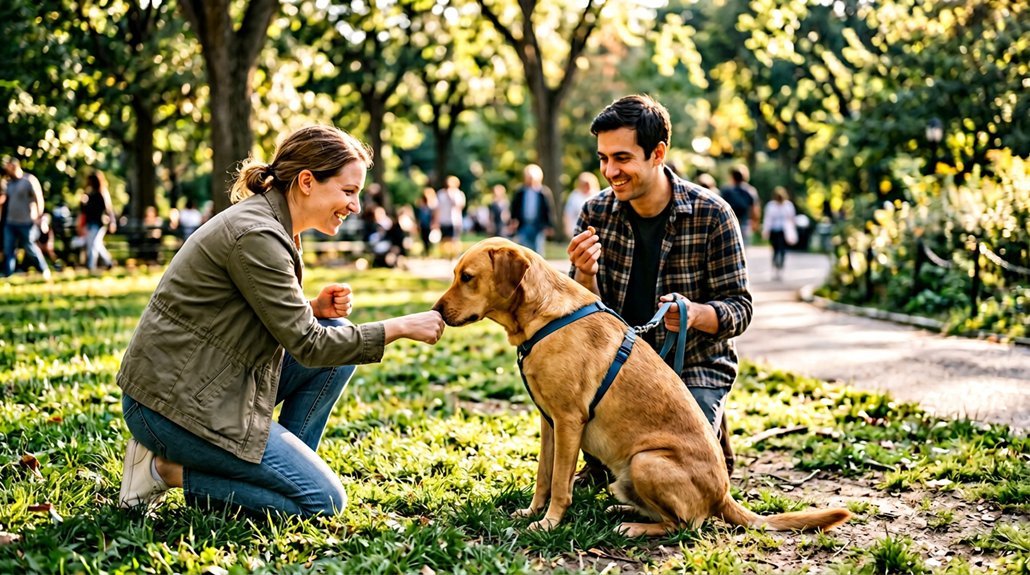
To safely introduce your dog to new people, recognize their body language to gauge comfort. Let them set the pace, using treats and gentle encouragement to build trust. Choose familiar, calm environments for the meeting, and avoid overwhelming spaces. Confirm your dog is relaxed beforehand, and let introductions start from a distance. Reward positive associations with praise and treats. Follow these steps and you’ll gain further insights on creating positive social experiences for your dog.
Key Takeaways
- Monitor body language; avoid forcing interactions to ensure comfort and safety.
- Start introductions from a distance and allow dogs to approach at their own pace.
- Choose familiar environments to reduce stress during introductions with new people.
- Use treats to create positive associations and reward calm behavior.
- Keep hands by your sides initially to avoid intimidating the dog.
Recognize Your Dog’s Comfort Signals
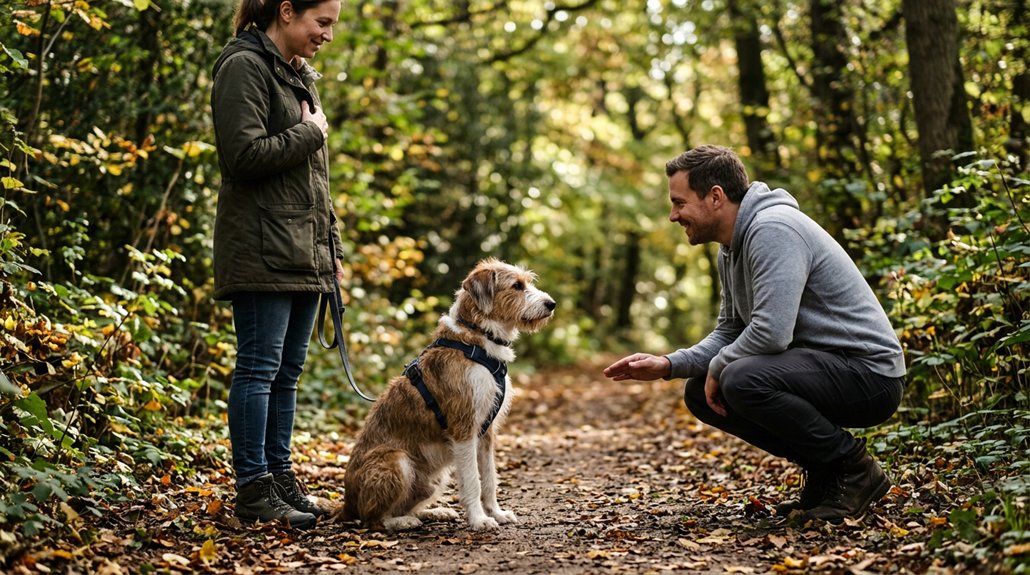
Understanding your dog’s comfort signals is essential for successful introductions to new people. Your canine companion’s body language cues are critical indicators of their emotional state. Look for positive signals like a wagging tail and open posture; these suggest your dog’s confidence and readiness to interact. However, be attentive to stress indicators, such as lip-licking, yawning, panting, or pinned-back ears. These signs hint at discomfort or anxiety, prompting the need for a gentler approach. It’s crucial to respect these body language cues and stress indicators; forcing interaction can lead to anxiety or negative experiences. If you notice avoidance behaviors like hiding or turning away, give your dog the choice to retreat, ensuring a safe and positive introduction process for both pet and stranger.
Allow Your Dog to Control the Introduction
Recognizing your dog’s comfort signals is just the beginning; the key to a successful introduction lies in letting your dog dictate the pace. Each dog personality is unique, meaning your furry friend might need varying amounts of time to warm up to new faces. Allowing your dog to approach people at their own interaction pace reduces the risk of overwhelming or frightening them. Have the newcomer keep their hands by their sides initially, which makes the environment safer and less intimidating. Encourage interaction through toys or friendly gestures, but let your dog initiate contact before offering pets or treats. For timid dogs, start with introductions at a distance or behind a closed door, always keeping an eye on their body language to guarantee comfort.
Get Your Dog Ready for Social Scenarios
Before introducing your dog to new social scenarios, it’s essential to guarantee they’re calm and relaxed. Create a quiet space with minimal distractions to help them stay composed. Start by engaging them in socialization games that encourage comfort around new people. Practice scenarios where they can observe from a distance before making contact. This gradual approach helps ease their anxiety and builds confidence.
Incorporate distraction techniques, such as using toys or treats, to keep their focus on you and positive experiences. Timing is everything, so reward your dog’s calm behavior with praise and treats, reinforcing positive associations. Keep an eye on their body language—watch for signs of stress or fear. Adjust your approach as needed to guarantee your dog’s comfort and safety.
Choose the Right Environment for Introductions
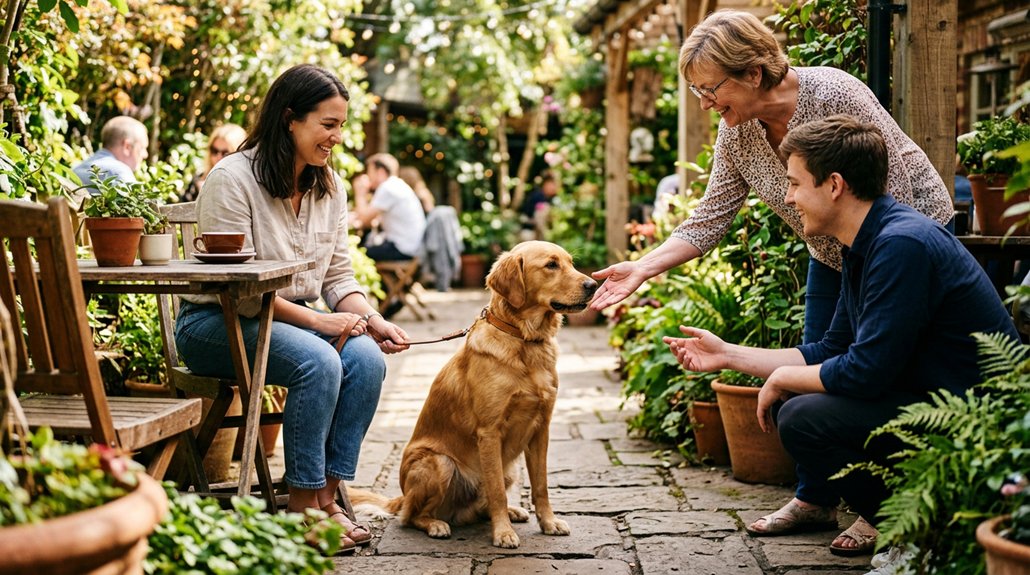
Selecting the right environment for introducing your dog to new people is essential, as it plays a substantial role in how comfortably and confidently they’ll handle the situation. Opt for familiar locations like your home or local park where your dog feels secure. Stay away from busy or overwhelming spots which might trigger anxiety or defensive behavior. If a new environment is necessary, arrive early to establish calming routines so your dog becomes accustomed before any introductions.
Choose familiar locations to introduce your dog to new people, avoiding overwhelming spots to prevent anxiety.
Consider these factors when choosing the environment:
- Opt for Neutral grounds: A nearby walking path can lessen territorial guarding.
- Prioritize calm and quiet: It sets a peaceful tone, promoting positive encounters.
- Embrace early arrivals: Letting them explore first reduces stress considerably.
Trust in these steps to make interactions smoother.
Use Treats and Reinforcement for Positive Associations
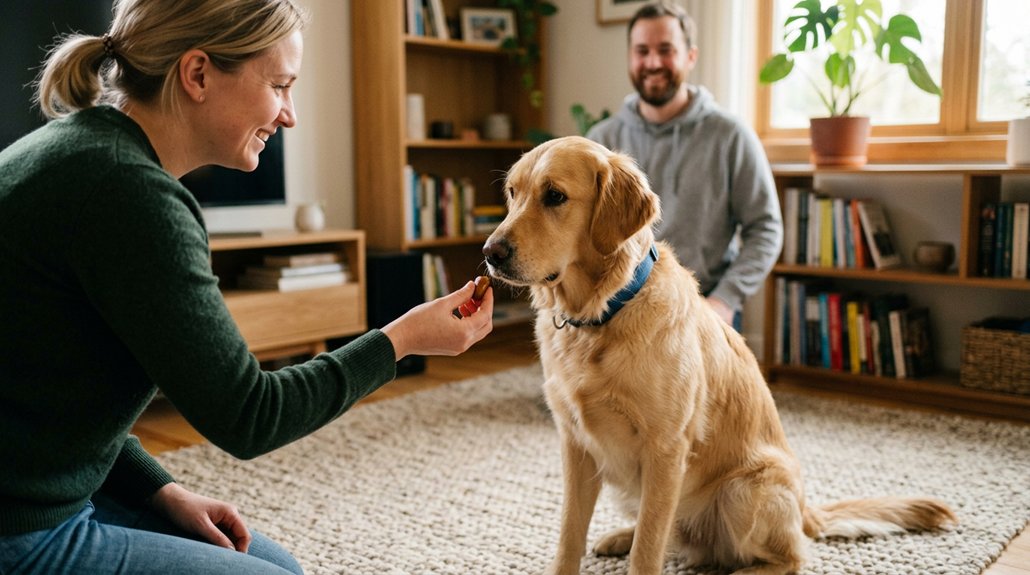
Incorporate treats into introductions to create positive associations and ease your dog into meeting new people. Offering treats during these encounters helps your dog link new people with positive experiences, enhancing their comfort level. Timing is essential—give treats from an outstretched palm to let your dog approach on their own terms, fostering trust. Make sure to reward during calm interactions, recognizing relaxed or curious behavior.
To keep your dog engaged, use reward variety, offering different treats to motivate and excite them. This approach is especially helpful for shy or fearful dogs, as gradual treat introduction reduces anxiety. By consistently using treats during introductions, you’ll bolster your dog’s socialization skills and build confidence in new environments.
Observe Body Language for Comfort and Stress
Understanding your dog’s body language is essential when introducing them to new people. Pay close attention to body language cues, such as ear position, tail movement, and posture. These signals can reveal their comfort level and willingness to interact. On the flip side, watch for stress signals, like lip-licking, yawning, and pinned back ears. These indicate that your dog may feel overwhelmed and isn’t ready for a new encounter.
Observe your dog’s body language to gauge their comfort or stress when meeting new people.
Here’s what to look for:
- Comfortable dog: Relaxed posture, wagging tail, playful demeanor.
- Stressed dog: Yawning, lip-licking, panting.
- Adjust interactions: Prevent overwhelming by noting and responding to their body language.
Gentle Methods to Encourage Trust
When introducing your dog to new people, it’s crucial to employ gentle methods that encourage trust to create a positive experience. Start by allowing your dog to approach new people at their own pace, fostering a sense of control and comfort—key elements in building confidence and establishing a routine. Use calm, friendly tones to soothe your dog, and avoid sudden movements which could cause anxiety.
Encourage guests to let your dog initiate contact by keeping hands down and eyes averted. Introduce positive associations using treats gently tossed towards your dog, promoting a safe and non-threatening interaction. Always monitor their body language for signs of discomfort, like lip-licking or cowering. Be ready to adjust the introduction to maintain your dog’s sense of safety and well-being.
Frequently Asked Questions
What Is the 3-3-3 Rule With Dogs?
The 3-3-3 rule helps you understand your new dog’s adjustment. Recognize dog body language for the first three days of stress, foster routine over three weeks, and expect safe interactions revealing their true character in three months.
How Long Does It Take for a Dog to Get Used to a New Human?
Each dog’s socialization timeline varies. You might notice different dog behaviors with new humans; getting used to them can take minutes to weeks. Stay patient, consistent, and positive. Treats and calm interactions can expedite their comfort.
What Is the Best Way to Introduce Dogs to New People?
Introducing your dog to new people is like planting a seed in unfamiliar soil—nurture it. Encourage scent familiarization, focus on relaxed body language, and prioritize calm environments. This empathetic approach helps your dog feel secure and comfortable.
What Is the 10 10 10 Rule for Dogs?
The 10 10 10 rule involves 10 seconds observing, 10 seconds calm interaction, and 10 seconds engagement. Use positive reinforcement while watching your dog’s body language to guarantee they’re comfortable and stress-free during introductions.
Conclusion
Guiding your dog through new introductions is like steering a ship through uncharted waters. You’re the captain, directing with empathy and expertise, ensuring smooth sailing. Watch for the lighthouses—your dog’s comfort signals—leading you safely ashore. Let them explore at their own pace, using treats as stars guiding the journey. In this voyage, patience and understanding are your compass. Trust builds like a sturdy bridge over time, creating a harmonious bond with new friends.