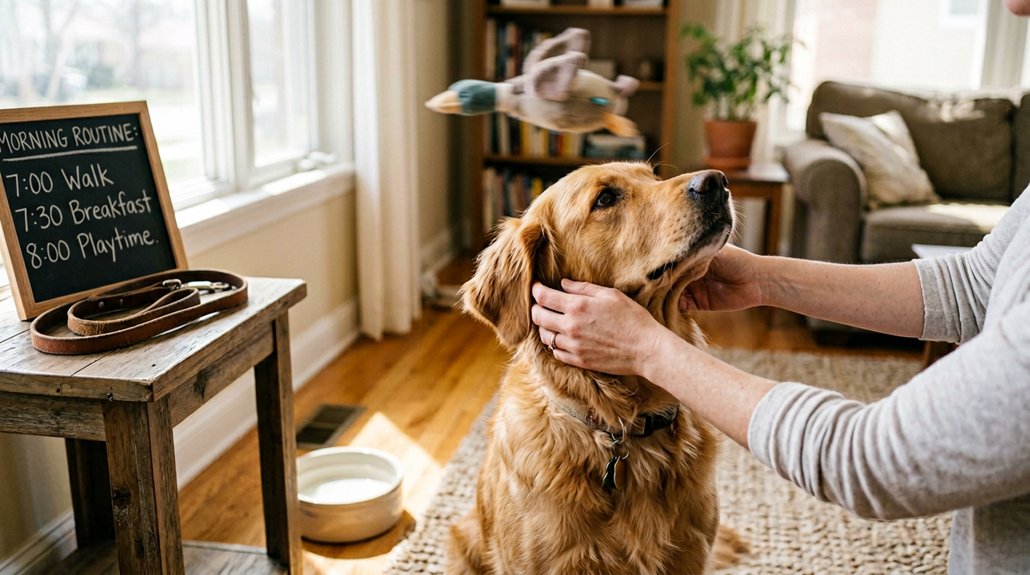
Your dog needs daily essentials like a balanced diet according to AAFCO standards, portion-controlled meals, and possibly supplements per vet advice. Guarantee proper exercise based on breed and size, with activities like walks and playtime for stimulation. Groom your pet routinely, checking their ears, teeth, and nails. Engage their mind with trick training and positive reinforcement. Finally, provide a peaceful, clean resting spot. Explore further to enhance your pet’s daily well-being.
Key Takeaways
- Provide a balanced diet with proteins, fats, and carbohydrates, ensuring nutritional adequacy.
- Tailor daily exercise and interactive play to your dog’s breed size and energy levels.
- Conduct regular grooming, nail trims, and ear and dental checks to maintain health.
- Engage in daily mental stimulation through training sessions and interactive toys.
- Create a secure and cozy sleeping area in a quiet environment for comfort.
Essential Daily Nutrition for Your Dog
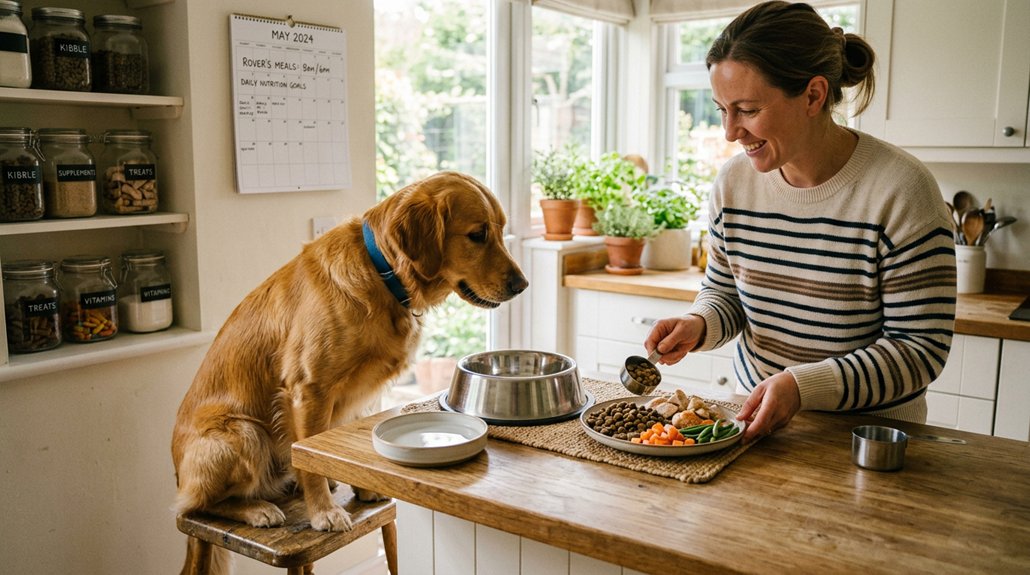
A dog’s health hinges on a diet providing essential daily nutrition, encompassing proteins, carbohydrates, fats, and key nutrients. To guarantee peak wellbeing, select food adhering to the Association of American Feed Control Officials (AAFCO) standards, confirming its nutritional adequacy. Portion control is crucial; adult dogs require two meals a day, while puppies need three to four until changing at four months. Avoid table scraps, which can lead to obesity and behavioral issues, undermining dietary balance. Consider dietary supplements if specific health needs arise, but consult a veterinarian to confirm their necessity. Maintain vigilance with hydration; change water bowls twice daily to promote proper hydration. Keeping these points in mind guarantees your dog receives thorough nourishment and maintains robust health.
How to Keep Your Dog Active Every Day
Proper nutrition sets the foundation for robust health, but keeping your dog active daily is equally essential to their wellbeing. Tailor your dog’s exercise regimen to their breed size: small breeds generally need 30–45 minutes, medium breeds 45–60 minutes, and large or active breeds 1–2 hours of activity each day. This can include dog park adventures for socialization and energy release. Incorporate interactive playtime—such as tug-of-war or fetch—to physically stimulate your dog while preventing boredom. Engage their mind by using puzzle feeders and interactive toys that encourage problem-solving. Mixing activities like walks with varied routes enhances mental stimulation and bolsters the bond between you and your pet. Consistently incorporating these elements guarantees thorough physical and mental enrichment.
Daily Grooming and Health Checks for Your Pet
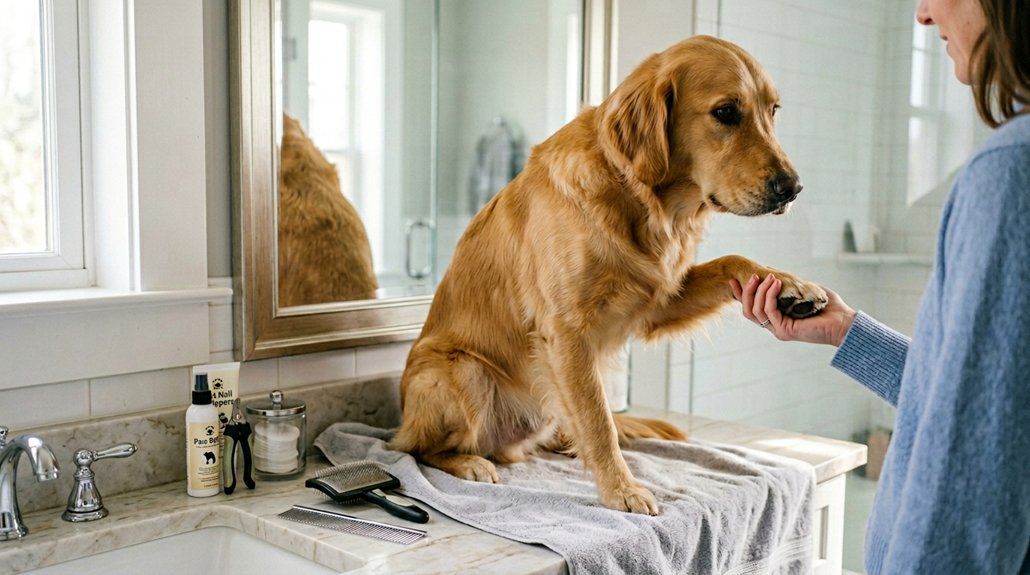
While daily grooming may seem like a chore, it’s important for maintaining your dog’s overall health and wellbeing. Focusing on coat maintenance through daily brushing helps manage shedding and prevents matting, especially essential for breeds prone to tangles. Regular ear checks are critical; infections often go unnoticed until symptoms worsen. Utilize veterinarian-approved ear cleaners to keep those areas clean. Prioritizing dental hygiene by brushing your dog’s teeth at least thrice a week considerably reduces plaque accumulation and dental disease risk. Monthly nail trims prevent discomfort and mobility issues, ensuring you avoid cutting into the quick. Routine health checks, such as monitoring weight and physical condition, enable early detection of health changes, ensuring timely intervention and veterinary consultation.
Engaging Your Dog’s Mind With Fun Tricks
Although it may seem like just playtime, engaging your dog’s mind with new tricks is an important component of their mental health. Mental stimulation is essential for preventing boredom and curbing destructive behaviors. Teaching tricks fosters bonding and sharpens focus and responsiveness. Start simple with commands like “sit” and “stay,” then increase complexity to challenge problem-solving skills. Incorporate positive reinforcement techniques, such as treats or praise, to encourage compliance and enjoyment. Consistency is key; brief, daily sessions of 5-10 minutes help maintain routine and effectiveness.
| Command | Complexity Level | Positive Reinforcement Method |
|---|---|---|
| Sit | Basic | Treats |
| Stay | Basic | Praise |
| Shake | Intermediate | Treats |
| Roll Over | Intermediate | Praise |
| Play Dead | Advanced | Treats |
Creating a Secure and Cozy Space for Your Dog
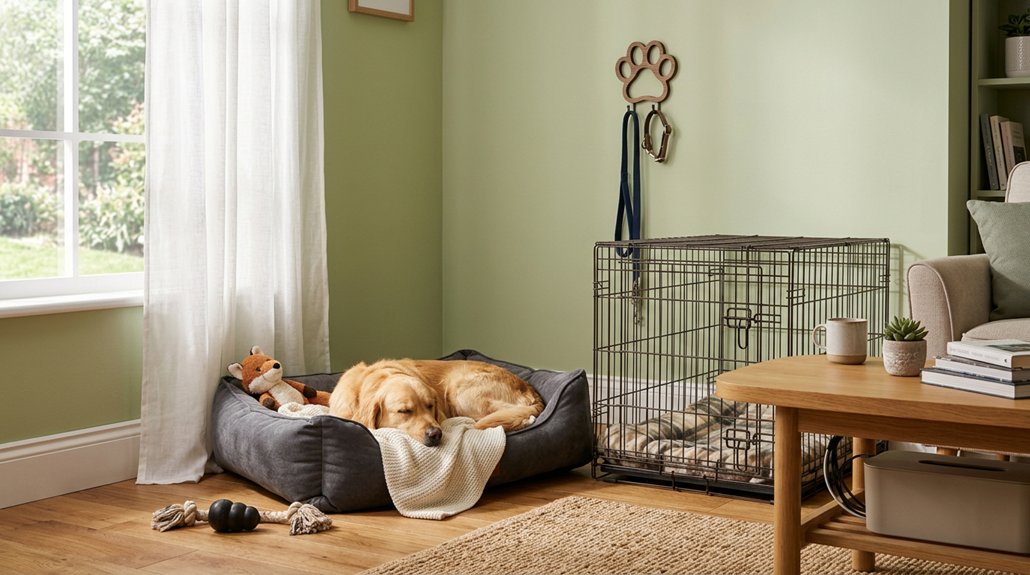
To guarantee your dog feels secure and content, creating a dedicated, cozy space is essential. A consistent sleeping area provides an important sense of security, reducing anxiety. Position this space in a tranquil, low-traffic zone to mitigate distractions, further solidifying a sense of safety. During shelter introduction, utilize treats and toys to foster a positive association with the designated area. Maintaining this space necessitates regular cleaning, ensuring health and comfort.
Consider these elements for your dog’s area:
- Comfort items: Opt for a luxurious bed like MiaCara to boost rest and well-being.
- Positive introduction: Use motivational tools like treats or toys.
- Cleanliness: Routine sanitation to prevent health issues.
- Location: Choose a quiet, distraction-free environment to enhance security.
Implementing these guidelines optimizes your dog’s comfort and security.
Frequently Asked Questions
What Does My Dog Need Every Day?
You should provide a daily routine including physical exercise, mental stimulation, and health care, ensuring emotional support and quality time. It’s essential to maintain consistency for your dog’s overall well-being and happiness in a routine-driven environment.
What Is the 3-3-3 Rule for Dogs?
The 3-3-3 Rule is an epic blueprint for conquering pivotal periods in adoption. You’ll master anxiety management as dogs journey through three thrilling phases: initial nervousness, slow settling, and finally, full adaptation—pure emotional evolution brilliance.
What Are the 7 Basic Needs of a Dog?
A dog’s 7 basic needs are: balanced dog nutrition, regular exercise, mental stimulation, social interaction, health care, grooming needs, and a safe environment. Confirm each is met consistently for their overall well-being and healthy development.
Can Dogs Lower Cortisol?
Yes, dogs can lower cortisol levels. Interacting with them promotes stress reduction, as even brief petting sessions decrease your cortisol. Their companionship fosters emotional well-being, showcasing their powerful role in managing stress biochemically and emotionally.
Conclusion
While you might see a cozy bed as simple, for your dog, it’s a fortress of solace. You may think daily exercise is basic, yet it’s a crucial energy release. Grooming could seem routine, but it’s a crucial health check. Engaging their mind isn’t just fun; it’s cognitive enrichment. Providing balanced nutrition? It’s not just feeding; it’s foundational well-being. By intertwining these daily needs, you’re not just a caretaker—you’re a central pillar in your dog’s vibrant life.