Every dog should learn basic commands like sit, come, stay, and heel to guarantee their safety and enhance obedience. These commands foster better communication with your dog and help prevent unwanted behaviors. Using positive reinforcement and consistency in different environments strengthens their learning and your bond. Incorporating training into daily routines keeps engagement high and comprehension sharp. For a deeper understanding of these commands and how they improve your dog’s behavior, explore further insights.
Key Takeaways
- Dogs should master basic commands such as “sit,” “stay,” “come,” and “heel” for safety and effective communication.
- Reinforce commands with positive reinforcement techniques like treats and praise to ensure compliance.
- The “leave it” command helps prevent dangerous interactions and enhances impulse control.
- Training should involve short, frequent sessions and be integrated into daily routines for natural compliance.
- Use verbal markers like “Yes!” for immediate reinforcement to strengthen command understanding and responsiveness.
Understanding Why Basic Commands Matter for Your Dog’s Well-being
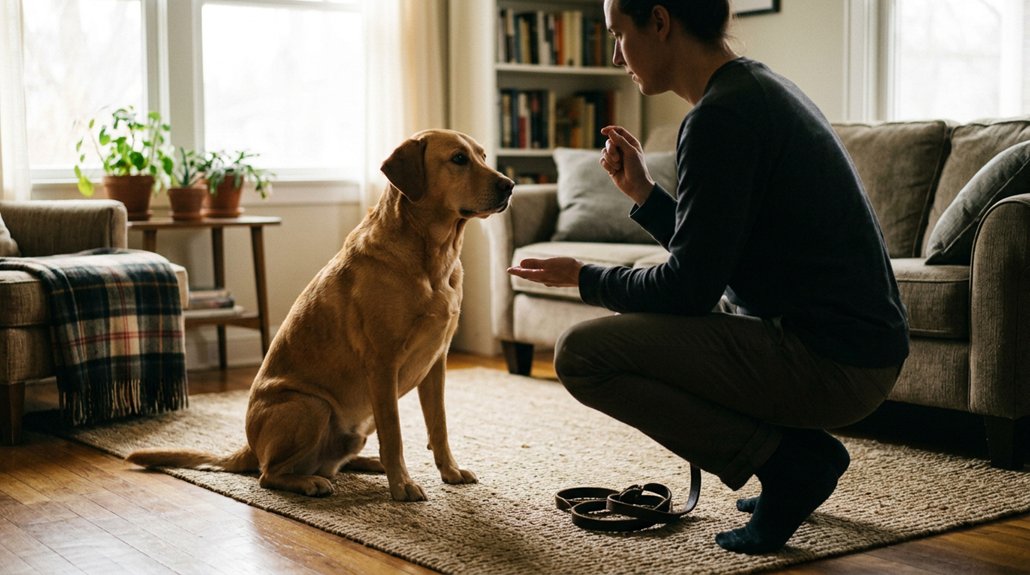
To truly comprehend why basic commands are essential for your dog’s well-being, consider how these commands guarantee safety and foster communication between you and your pet. Mastering fundamental commands enhances canine communication, making sure your dog is mentally stimulated and responsive in any situation. This is critical for safety awareness, especially during outdoor adventures where your dog may encounter traffic or unfamiliar animals.
Developing behavioral expectations through command training reduces issues, creating a more structured and predictable environment for your dog. This promotes better social interactions, allowing smoother encounters with other pets and people, contributing to harmonious relationships.
Your training progress strengthens trust building, using positive reinforcement strategies that boost your dog’s happiness and mental health. Embrace this practical approach to secure your dog’s safety and well-being.
Start With ‘Sit’: Building a Strong Foundation
To start building a strong training foundation with your dog, begin with the “Sit” command, emphasizing consistency from the get-go. Implement positive reinforcement strategies such as treats or praise to motivate and reward your dog, reinforcing desired behaviors. As these practices become routine, you’ll notice a smoother training process and stronger communication with your pet.
Establish Consistency Early On
Building a strong foundation in dog training starts with the simple yet essential command: “Sit.” By focusing on this basic behavior initially, you establish consistency and control, key elements in a successful training regimen. “Sit” is among the easiest commands for dogs to master, setting the stage for tackling more complex behaviors later on. Establishing a routine with reinforcement schedules is vital in maintaining consistency. Use clear cues each time you practice, helping your dog understand expectations. Establishing “Sit” as an early training milestone prevents unwanted behaviors like jumping, enhancing your dog’s control in various settings. Regular practice not only makes subsequent commands smoother but also strengthens overall obedience, fostering a reliable communication link between you and your dog.
Utilize Positive Reinforcement Strategies
When laying the groundwork for effective dog training, employing positive reinforcement strategies plays an essential role. Start with the “Sit” command—it’s the cornerstone of successful training techniques. Immediately reward your dog with treats or praise the moment they sit to create a direct link between the action and the positive outcome. Timing is vital; make sure the reward follows within half a second to strengthen this association. Maintain consistency by practicing “Sit” in different environments so your dog internalizes this command and responds reliably everywhere. Keep training sessions short and engaging, around 10 minutes, to keep your dog’s attention and enthusiasm high. Utilizing positive reinforcement effectively turns learning into a rewarding experience for your dog, laying the foundation for mastering future commands.
Teach ‘Come’ for a Reliable Recall
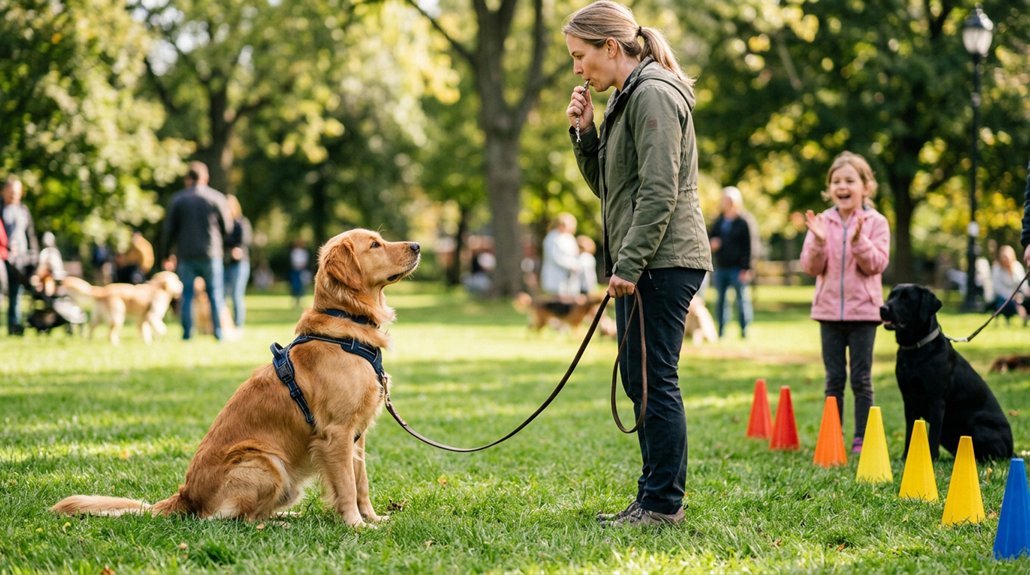
To guarantee a reliable recall, focus on reinforcing the ‘Come’ command by starting in distraction-free settings and using high-value rewards. Consistent practice in various environments will strengthen your dog’s ability to respond reliably, no matter the circumstances. Remember, immediate positive reinforcement is key to cementing this essential behavior, allowing you to confidently rely on your dog to return when called.
Reinforce Recall Techniques
Mastering the ‘Come’ command is essential for ensuring your dog’s safety in potentially hazardous situations. Start by training in a controlled setting—without distractions—to establish the basics. Use recall variations such as excited calls or a unique whistle to keep their interest piqued and enhance their understanding. Gradually introduce training distractions, like other sounds or mild movement, to bolster their focus and reliability. Always have high-value treats or a favorite toy on hand as a reward for each successful recall, instantly reinforcing the behavior. This consistent positive reinforcement strengthens the bond and emphasizes the importance of returning on command. Your dedication to clear, engaging training will pay off, giving you peace of mind and your dog a happier, safer life.
Practice in Varied Settings
Although you’ve laid the foundation for a reliable recall, practicing the ‘Come’ command in varied settings is essential for reinforcing your dog’s responsiveness. Gradually introduce environmental distractions to help your dog generalize the command across different locations. This approach guarantees recall reinforcement and responsiveness in busy areas like parks or public spaces.
Here are practical steps:
- Quiet Areas First: Start in calm settings to build confidence before progressing to busier places.
- Gradual Progression: Increase distractions over time, offering consistent recall reinforcement through varied environments.
- Consistent Visits: Revisit familiar training spots regularly to maintain your dog’s responsiveness even after breaks.
- High-Value Rewards: Use enticing treats and praise to motivate your dog, enhancing their learning and enthusiasm to come when called.
Use Positive Reinforcement
Building on your efforts to practice recall in varied settings, using positive reinforcement is a powerful way to teach your dog the ‘Come’ command effectively. Start in a low-distraction environment, guaranteeing your dog isn’t overwhelmed. Gradually introduce more stimulating settings as their behavior improves. Utilize high-value treats or enthusiastic praise right after they respond correctly; immediate rewards—within ½ second—enhance learning speed. Consistency across different trainers and scenarios helps avoid confusion, reinforcing your dog’s understanding of the command’s significance in any context. Regular practice of the ‘Come’ command in various situations is essential for behavior tracking, allowing your dog to generalize their response, building reliability in real-life cases. Positive reinforcement strengthens the bond and guarantees a reliable recall.
Master ‘Stay’ for Safety and Patience

Command the dog’s attention and instill essential skills with the “Stay” command, a pivotal tool for their safety and patience. In emergency situations, this command can prevent dangers like bolting into traffic. It also fosters calm behavior, as dogs learn to wait patiently in various settings without succumbing to impulsive reactions. To integrate this effectively into your routine, try these steps:
Instill patience and safety with the “Stay” command, preventing impulsive actions and fostering calm behavior in emergencies.
- Consistent Practice: Reinforce the “Stay” command daily, incorporating it during feeding and before walks to build discipline.
- Self-Control Reinforcement: Regularly challenge their focus and restraint by practicing “Stay” around distractions.
- Positive Rewards: Use treats and praise to fortify successful execution and boost confidence.
- Clear Boundaries: Establish and uphold rules to guarantee comprehension and obedience in different scenarios.
Perfecting ‘Heel’ for Enjoyable Walks
To truly enjoy your walks with your dog, mastering the ‘Heel’ command is vital. It guarantees your dog stays close to you, preventing pulling or lagging. Begin by establishing consistent heel timing. Use clear cues and, if necessary, a clicker to mark the exact moment your dog follows the command correctly. Distraction training is essential—start in quiet areas, gradually increasing distractions. This helps your dog understand that ‘Heel’ applies in all settings. Pairing the command with positive reinforcement, like treats or praise, can bolster your dog’s commitment to walking alongside you. Frequent short sessions are effective, slowly introducing more challenging environments. Keep your tone authoritative and encouraging; it’s all about making walks easy and pleasant for both of you.
Teach ‘Leave It’ for Safety
Teaching your dog the ‘Leave It’ command is essential for safety, as it prevents your furry friend from interacting with harmful items like toxic plants or dangerous substances they might encounter during walks. This command not only protects your dog from ingesting risky objects but also enhances their outdoor exploration by reducing potentially unsafe encounters, such as unexpected wildlife interactions. By consistently reinforcing ‘Leave It’ with positive reinforcement and high-value treats, you can guarantee quicker compliance and maintain control in public spaces full of distractions.
Importance Of Safety Command
While dogs are known for their curiosity and energy, these traits can sometimes lead them into dangerous situations if not properly managed. Teaching the “Leave It” command is crucial for safety. Here’s why it matters:
- Command Variations: Developing variations on “Leave It” can adapt the command to different environments and challenges, offering multiple layers of protection.
- Safety Examples: This command helps keep your dog from engaging with street hazards or wildlife, reducing their risk of harm.
- Establishing Boundaries: Consistent use of “Leave It” sets clear boundaries, enhancing your dog’s self-control and minimizing impulsive actions.
- Peace of Mind: Mastery of this command means you can steer your dog clear of dangers, allowing you to enjoy outings worry-free.
Prevent Harmful Item Ingestion
Virtually every dog owner has faced the challenge of preventing their pet from ingesting harmful items, making the “Leave It” command an indispensable tool for safety. This piece of preventative training can save your dog’s life by stopping them from grabbing poisonous plants or toxic substances during walks. It’s essential for emergency preparedness, limiting those frantic trips to the vet after an accidental ingestion. Start by using positive reinforcement—offer treats or praise when your dog correctly responds to “Leave It.” Practice consistently in different environments to cement their understanding, ensuring they’ll obey amidst distractions. By mastering this command, you’ll enhance your control, reduce risks, and provide a safer exploration experience for you and your furry friend.
Enhance Outdoor Exploration Safety
Enhancing your dog’s safety during outdoor exploration is essential, especially when they have a penchant for picking up every intriguing object they encounter. The ‘Leave It’ command is important to guard against outdoor hazards, ensuring your pet explores safely. Here’s how:
- Start simple: Begin with low-distraction objects to teach impulse control. Gradually introduce more challenging distractions to mimic real-world scenarios.
- Use rewards: High-value treats reinforce positive behavior, helping dogs associate ‘Leave It’ with success and safety.
- Consistent practice: Regular reinforcement prevents ingestion of harmful items like toxic plants or dangerous litter, boosting reliability in diverse environments.
- Strengthen the bond: Mastering ‘Leave It’ benefits overall training responsiveness, enhancing the bond during outdoor adventures.
Protect your dog’s well-being by mastering this important command.
Implement ‘Yes!’ to Reward Good Behavior
Implementing the command “Yes!” as a verbal marker in dog training is a straightforward and effective method to reinforce good behavior. Using “Yes!” training, paired with treats, provides immediate behavior reinforcement, ensuring your dog associates the sound with praise and motivation to repeat the desired action. The consistent application of this command strengthens communication and understanding between you and your dog, setting clear expectations and reducing unwanted behaviors. Make “Yes!” part of your training toolkit to enhance efficacy, encouraging dogs to engage positively. This technique not only fosters a better relationship but also aids in skill retention, making future learning more accessible. Incorporate “Yes!” routinely, and watch your dog’s ability to respond improve across various contexts.
Practicing Commands in Everyday Environments
When integrating dog training into daily life, practicing commands in everyday environments plays an essential role in achieving consistent behavior. Ensuring your dog responds reliably, even amidst environmental distractions, is vital. Here’s how to incorporate this into your routines:
Practicing commands daily ensures reliable responses in any environment, even with distractions.
- Vary the Environment: Start training in quiet areas and gradually introduce busier spaces to help your dog focus despite distractions.
- Consistent Commands: Use the same clear commands, like “Sit” or “Come,” across different settings to aid comprehension.
- Incorporate Into Daily Routines: Use routines like feeding or walks as opportunities to practice commands, encouraging natural compliance.
- Casual Practice: Turn playtime and outings into training moments by reinforcing commands such as “Leave It” in real-world situations.
This structured approach enhances overall obedience.
Simplify Command Language for Better Understanding
Practicing commands in varied environments is just one part of the equation; the language you use is equally significant. Simplifying your command language is essential to ensuring command clarity. Stick to a concise list of commands—such as Sit, Down, Come, and Leave It—so your dog can easily memorize them, even under pressure. Use consistent verbal cues across different contexts; for instance, don’t interchange “Come” and “Here”. Consolidating similar commands, like using “Kennel” for any location to which you want to direct your dog, streamlines communication. Additionally, integrate nonverbal signals alongside direct commands to aid understanding. This method keeps the command list short but effective, enhancing your dog’s ability to respond correctly, whether during training or in competitions.
Strengthen Bonds With Consistent Training
A consistent training routine isn’t just beneficial—it’s essential for fostering trust and a strong connection between you and your dog. Through structured sessions and bond building activities, you’ll reinforce boundaries, ensuring a safe, harmonious relationship. Here’s how to enhance training engagement:
- Routine Establishment: Consistent schedules create a trusting environment, making your dog feel secure and enthusiastic to learn.
- Positive Reinforcement: Use techniques like clicker training to celebrate successes and strengthen your bond.
- Family Involvement: Engage family members to maintain consistent commands, aligning everyone’s approach for solid teamwork.
- Practice in Varied Environments: Regularly train in different settings to enhance reliability and responsiveness, deepening your connection.
With these strategies, you’ll build lasting trust and cooperation.
Frequently Asked Questions
What Are the 7 Most Important Dog Commands?
The seven most important dog commands are Sit, Down, Come, Stay, Leave It, Heel, and No. Focus on basic training with command consistency. Use positive reinforcement and timely rewards. Socialization tips and understanding behavioral cues enhance training techniques.
What Is the 3-3-3 Rule With Dogs?
Imagine a new chapter unfolding: the 3-3-3 rule reflects a dog’s initial behavior adaptation journey. It’s about dog adjustment—3 days stressed, 3 weeks comfy, 3 months settled. Through this your dog’s true personality emerges.
How Do You Say “I Love You” in Dog Speak?
To say “I love you” in dog speak, use canine communication through affectionate gestures like gentle petting, vocal cues such as soft tones, and observe body language by sharing attentive eye contact, creating a bond that resonates love.
Do Dogs Lower Your Cortisol?
Yes, dogs lower your cortisol. Imagine coming home stressed; petting your dog offers cortisol reduction and emotional support. Canine companionship provides practical stress relief and enhances well-being, backed by research revealing substantial benefits of this therapeutic bond.
Conclusion
Mastering these commands is like adding vibrant colors to the canvas of your dog’s life, enriching their experiences and deepening your connection. Picture a symphony of harmony as your dog responds with joy and precision, creating a bond as unbreakable as a rock in a storm. Stay consistent in your training, and watch as your dog transforms, learning to dance through life with grace and confidence. You’re not just teaching commands; you’re building a shared language of love and trust.