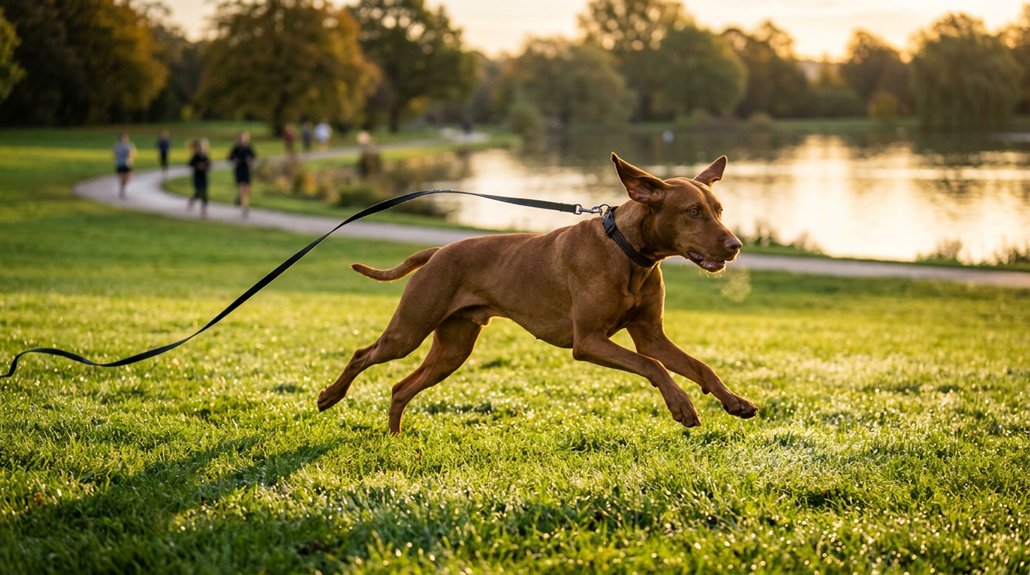
Determining your dog’s exercise needs hinges on age, breed, and health. Puppies require two play sessions totaling five minutes per month of age daily. Adult dogs vary: high-energy breeds like Border Collies need 1-2 hours of vigorous activity, while Bulldogs are content with 20-30 minutes. Senior dogs benefit from gentle 20-30 minute walks. Always consider health issues and guarantee safe environments. Explore further to discover tailored practices and enhance your dog’s fitness and joy.
Key Takeaways
- Exercise requirements vary by age: puppies need brief, frequent sessions, adults need 1-2 hours, seniors benefit from 20-30 minutes.
- Breed influences exercise needs; high-energy breeds require more vigorous and lengthy activities than lower-energy breeds.
- Consult veterinarians for personalized exercise plans, especially for dogs with health issues requiring low-impact or specialized activities.
- Adjust exercise intensity gradually and observe your dog’s behavior to ensure they remain healthy and engaged.
- Insufficient exercise may lead to undesirable behaviors; adapt routines if signs like restlessness or destructiveness appear.
How Much Exercise Does Your Dog Need? Quick Guidelines for Every Breed and Age
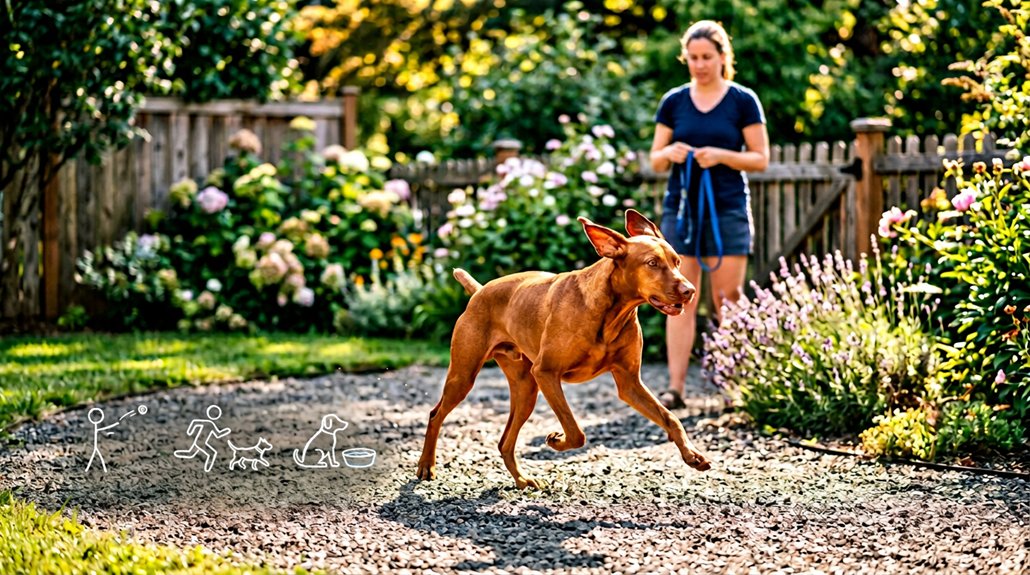
Ever wonder how much exercise your dog really needs? Exercise requirements hinge on factors like puppy energy and breed differences. Puppies brim with energy, necessitating roughly 5 minutes of exercise per month of age, twice daily through short play sessions. Their small joints can’t handle prolonged activities, making brief but frequent play essential.
In the dynamic world of adult dogs, breed differences greatly dictate exercise intensity. High-energy breeds, such as Border Collies, demand 1 to 2 hours of rigorous activity, while Bulldogs, with their lower energy threshold, are content with 20 to 30 minutes of gentle movements. Age further impacts exercise needs; senior dogs profit from 20 to 30 minutes of cautious walking. Always seek advice from a veterinarian to customize routines for health considerations.
Assessing Your Dog’s Unique Exercise Needs Based on Breed and Age
When determining your dog’s exercise needs, it’s important to take into account both their breed and age. Breed-specific needs dictate that high-energy breeds, like Border Collies, require more exercise compared to lower-energy breeds, such as Bulldogs. Meanwhile, age-related adjustments are vital; puppies benefit from multiple short play sessions, and their exercise should increase with age.
| Breed | Daily Exercise | Age Considerations |
|---|---|---|
| Border Collie | 1-2 hours, vigorous | Increase duration as puppies mature |
| Bulldog | 20-30 minutes, moderate | Shorter, easier activities with age |
| Labrador Retriever | 1 hour, varied | Regular, moderate intensity |
| Beagle | 30-60 minutes, active | Consistent activity, adjusting with age |
| Senior Dog | Shorter walks | Cater to health limitations |
Understanding these factors helps your dog maintain the best health and happiness.
Recognize How Age Influences Exercise
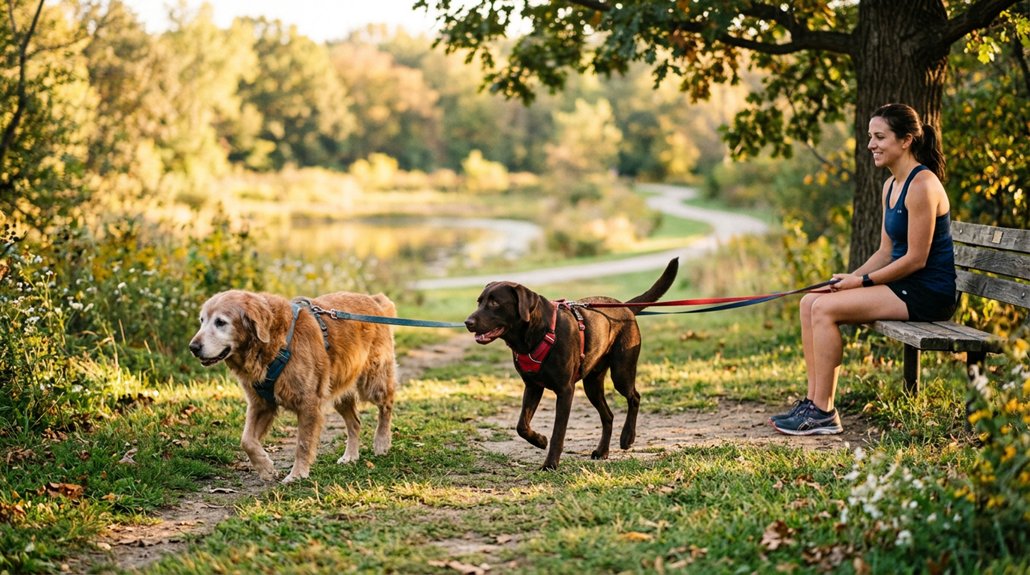
After evaluating breed-specific exercise needs, it’s crucial to contemplate how a dog’s age influences its physical activity requirements. Puppies, with their boundless puppy energy, demand frequent short play sessions throughout the day—approximately 5 minutes per month of age, twice daily. As dogs mature into adulthood, their exercise requirements stabilize to around 1-2 hours daily, tailored to match breed-specific energy levels. High-energy breeds invariably necessitate more vigorous routines than their moderate or low-energy counterparts. For senior dogs, whose senior stamina wanes, shorter, gentler walks become ideal, as age-related health issues can curb their enthusiasm for exercise. Carefully observe behavioral changes to adjust these routines. It’s crucial to consult a veterinarian for personalized plans, ensuring exercise supports their changing health needs.
Tailor Exercises for Dogs With Health Issues
When your dog has health issues like arthritis or past injuries, it’s essential to tailor their exercise regimen to prevent further complications. Collaborate with a veterinarian to develop a customized plan that accommodates your dog’s specific condition, ensuring activities remain low-impact and gentle on their body. Always monitor your dog closely during exercise to catch any signs of discomfort, adjusting the routine as needed to maintain their well-being and mobility.
Customized Exercise Plans
For dogs with health issues like arthritis or obesity, guaranteeing their exercise plan is tailored to their needs is essential. Begin by consulting a veterinarian to develop a low-impact exercise routine that aligns with their specific medical conditions. This guarantees minimal stress on joints while enhancing overall well-being. Pay attention to nutrition impact, as dietary adjustments may complement exercise regimens, supporting weight management and joint health. Consider dog preferences to incorporate enjoyable activities that align with their physical capabilities. Gradually increase exercise duration and intensity to safely improve fitness levels. Integrate mental stimulation through puzzle toys or training games to engage your dog’s mind, promoting mental and physical health. Ultimately, a customized plan benefits health and enhances your canine companion’s quality of life.
Monitor Health Closely
Given the unique needs of dogs with health issues, it’s vital to tailor exercises meticulously to prevent worsening their conditions or risking injury. Start by consulting a veterinarian to create a customized plan that takes into account the dog’s specific ailments and guarantees safety. Adjust exercise intensity based on their health status, favoring low-impact activities for dogs with joint issues. Monitoring your dog’s behavior is important; watch for signs of fatigue or discomfort during sessions to prevent overexertion. Maintaining regular, gentle activities aids in weight management and enhances overall fitness without straining their limitations. Improper execution can lead to complications, so precision in tailoring exercises promotes ideal recovery and supports joint health while avoiding adverse effects.
Indoor vs. Outdoor Activities: What Works Best?
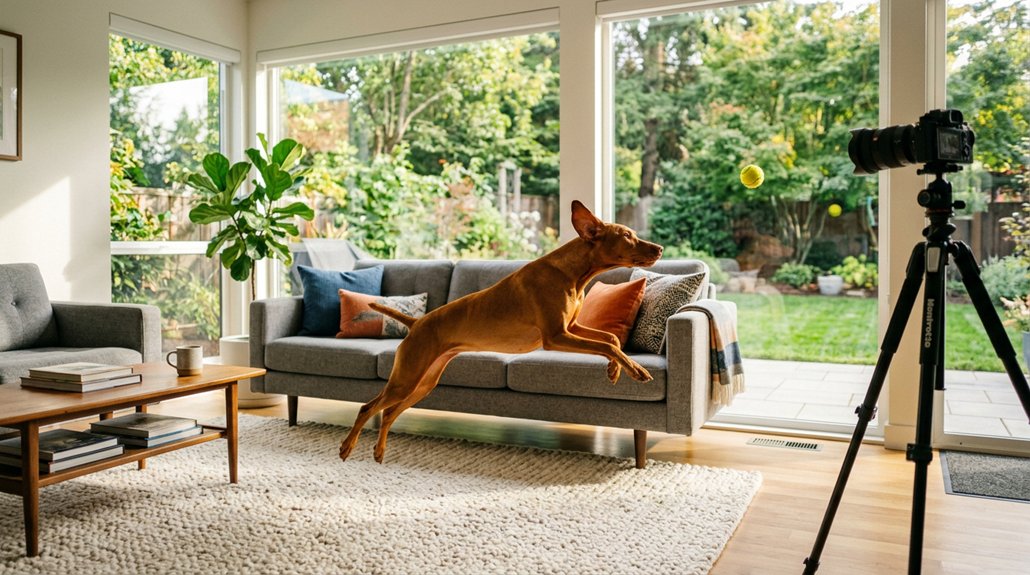
Determining whether indoor or outdoor activities work best for your dog depends on several key factors, including their breed, energy levels, and specific health needs. Indoor activities like tug of war games offer a controlled environment that can engage your dog mentally and physically, especially useful for lower-energy breeds or when the weather restricts outdoor play. Conversely, outdoor exercises are crucial for higher-energy breeds, where activities like agility training provide substantial stimulation and energy expenditure. Outdoor activities also allow dogs to enjoy fresh air and socialize, which is essential for their physical and mental health. Observing your dog’s response will guide you in finding the best balance between indoor and outdoor activities, ensuring both engagement and satisfaction without risking over-exertion.
How to Keep Dog Workouts Fun and Safe
To keep your dog’s workouts engaging and secure, integrate a range of activities like agility training, hiking, and swimming, minimizing monotony and boosting enjoyment. Prioritize a safe exercise environment by ensuring access to fresh water and monitoring your dog’s behavior for signs of fatigue or distress to prevent dehydration and injuries. By gradually enhancing the intensity and duration of workouts and incorporating mental challenges through puzzle toys, you’ll foster a balanced exercise routine that supports your dog’s overall well-being.
Variety in Exercise Activities
Incorporating diverse exercise activities into your dog’s fitness routine can greatly boost their physical and mental health while keeping them engaged. Utilizing exercise combinations like brisk walks, swimming, and agility training creates playful routines that prevent boredom and enhance enjoyment. Rotating activities, such as outdoor hiking adventures and indoor hide-and-seek games, addresses varying energy levels and interests, ensuring well-rounded stimulation. Including dog sports and obedience training fosters physical exertion while nurturing a stronger bond through teamwork and mental challenges. Regularly changing the environment, by exploring different trails or visiting dog parks, encourages socialization and exploration, enhancing mental well-being. Tailor these routines to your dog’s energy levels and preferences to maintain safe, enjoyable workouts, considerably improving their overall disposition and health.
Safe Exercise Environments
When planning your dog’s exercise routine, ensuring a safe environment is critical for protecting their well-being. Opt for safe walking zones, avoiding heavy-traffic areas. Look for well-fenced areas to prevent escapes and minimize exercise hazards. It is important to be mindful of temperature: choose early morning or late evening for walks, as these times offer cooler temperatures. Prioritize your dog’s hydration needs by carrying fresh water, particularly during hotter weather, to prevent dehydration. Utilize harnesses and leashes that allow control without causing discomfort, especially when maneuvering through busy or unfamiliar areas. By incorporating traffic awareness into your routine, you can further mitigate risks. These measures not only keep your dog safe but also make their workouts more enjoyable.
Monitor Dog’s Physical Cues
One essential aspect of maintaining a dog’s health and safety during exercise is monitoring its physical cues. Watch for tiredness signs such as excessive panting, sitting, or lying down to prevent overexertion. A drop in energy levels can indicate your dog’s readiness to rest. Regularly assess their enthusiasm for activities to guarantee exercises remain enjoyable and sufficient. Incorporate a variety of exercise types, including mental challenges like puzzle toys, to keep workouts stimulating. Always provide accessible water, essential for hydration, especially in warmer weather or after intense activities. Gradually increase the intensity and duration of exercise for out-of-shape dogs to promote safe acclimatization. These measures help sustain your dog’s health, ensuring workouts are both fun and safe.
Spotting Signs Your Dog Needs More Playtime
How can you tell your dog might need more playtime? Look for behavioral signals that act as playtime indicators. Destructive behaviors, such as chewing furniture or digging, often stem from pent-up energy. This could mean your dog isn’t getting enough engaging activity. Restlessness or constant pacing are clear playtime indicators that your dog needs more physical exercise. Be attentive to sudden increases in attention-seeking behaviors like barking or nudging; these suggest boredom.
Here are some signs to watch for:
- Destructive actions, such as chewing or digging
- Inability to settle and excessive restlessness
- Increased attention-seeking behaviors
- Weight gain or struggle to maintain a healthy weight
If you notice any of these, consider extending your dog’s play sessions.
Frequently Asked Questions
What Is the 10-10-10 Rule for Dogs?
The 10-10-10 rule for dogs suggests incorporating 10 minutes each of exercise, training, and play into your dog’s daily routine. This structured approach aligns dog activity with exercise guidelines, ensuring balanced physical and mental stimulation for peak health.
How Much Exercise Does My Dog Actually Need?
Your dog’s exercise needs depend on daily routines and breed differences. High-energy breeds need 60-120 minutes daily, while lower-energy breeds might suffice with 20-30 minutes. Adjust activities based on age, health, and behavioral cues.
What Is the 3 3 3 Rule for Exercise?
Ever wonder how to ease your adopted dog into a routine? The 3-3-3 rule guides exercise frequency: limit initially, gradually increase at three weeks, and fully adapt by three months, considering breed-specific exercise and routine needs.
Will Exercise Help With Neuropathy?
Exercise can indeed help with neuropathy by improving circulation, reducing neuropathy symptoms, and enhancing overall canine wellness. However, you should always consult your vet to determine the best exercise regimen tailored to your dog’s specific needs.
Conclusion
In the quest to guarantee your furry companion stays in tip-top shape, remember that exercise isn’t one-size-fits-all. Tailoring activities based on breed and age will be your guiding star, helping you avoid any bumps in the road due to health concerns. Embrace the joy of both indoor and outdoor play, while keeping safety paramount. If your pup’s behavior hints at boredom, it’s time to spice things up. Ultimately, your vigilance and love pave the way for a healthier, happier pet.