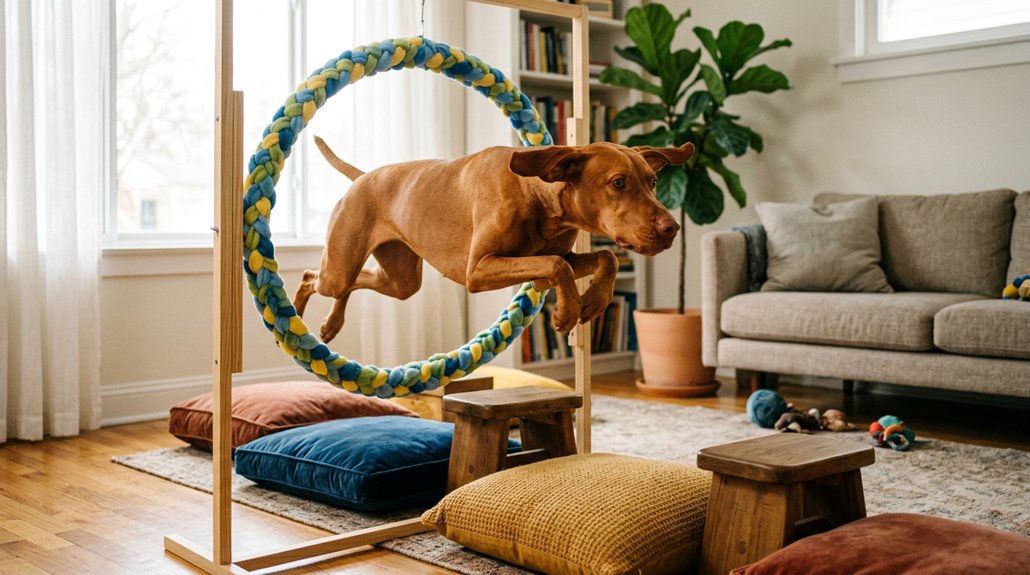
Keep your dog active indoors with quick obedience training sessions and trick instruction, utilizing commands like “sit” and “shake.” Create a fun obstacle course using household items, and introduce puzzle feeding toys to stimulate their mind. Engage their natural instincts with scent and treat games, and rotate toys to maintain interest. Establish a cozy resting space for relaxation after activities. Dive deeper into each strategy to discover new ways to enrich your dog’s indoor experience.
Key Takeaways
- Set up an obstacle course with household items to enhance agility and incorporate obedience commands like “jump” and “crawl.”
- Use puzzle feeding toys like Kongs to stimulate cognitive engagement and slow down fast eaters during meals.
- Engage dogs in scent games by hiding treats in boxes or using snuffle mats to trigger their natural sniffing instincts.
- Rotate toys regularly, including puzzle and interactive types, to maintain interest and prevent boredom.
- Create a cozy resting space with soft bedding and calming scents to support relaxation and reduce stress.
Start With Quick Obedience and Trick Training
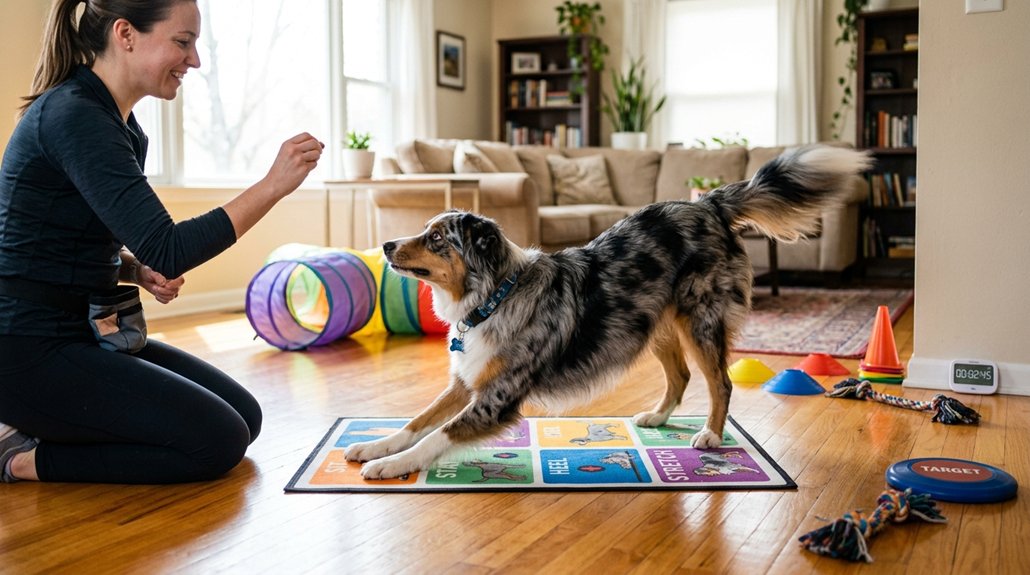
Starting with quick obedience and trick training is an effective way to keep your dog mentally and physically stimulated indoors. Sessions lasting 5 to 15 minutes are ideal, sharpening your dog’s listening skills while enhancing your bond. Focus on simple commands like “sit,” “stay,” “shake,” and “spin” to guarantee mental stimulation and accomplishment for your furry friend. Use a labeled dice to introduce variety and fun, enhancing alertness and curiosity. Trick rewards, such as treats or praise, should be consistent, fostering a positive association with training. Maintain a regular training frequency to channel your dog’s energy productively, minimizing behavioral issues. Regular practice not only keeps your pet engaged but also reinforces your role as a pack leader, encouraging obedience.
Set Up a Fun Indoor Obstacle Course
Creating an indoor obstacle course using everyday household items can transform your home into a dynamic playground, ensuring your dog gets essential physical activity even when outside play isn’t possible. By incorporating tasks like weaving between furniture and jumping through hoops, you’re not only promoting physical agility but also enhancing your dog’s mental engagement. Keep things exciting by regularly changing the layout and integrating new challenges, which will help maintain their interest and encourage continuous development in both skill and confidence.
Encourage Physical Activity
Transform your living room into an agility playground by crafting an indoor obstacle course that challenges your dog’s coordination and agility using everyday household items. Pillows become hurdles, blankets transform into tunnels, and chairs serve as boundaries for dog friendly games, promoting agility training in confined spaces.
| Item | Purpose |
|---|---|
| Cushions | Jump hurdles |
| Chairs | Navigation barriers |
| Blankets | Tunnels and crawls |
Incorporate rewards at checkpoints to promote positive reinforcement and encourage participation. Regularly adjust the layout to introduce new challenges and maintain engagement, tailoring the course to your dog’s skill level. Use commands like “jump” or “crawl” to blend obedience training with fun. Always prioritize safety by inspecting potential hazards and adapting to your dog’s physical abilities to prevent injuries.
Stimulate Mental Engagement
To stimulate mental engagement for your dog, consider setting up a fun indoor obstacle course using common household items. This activity taps into dogs’ sensory exploration by utilizing cushions, chairs, and hula hoops to create diverse pathways. Encourage your pup to crawl through blanket tunnels draped over furniture or navigate jumps with broomsticks balanced on boxes. This interactive training game not only challenges your dog’s problem-solving skills but also reinforces obedience. Incorporate various commands and rewards at checkpoints to maintain engagement. As your dog masters the course, adjust the complexity by altering the layout. Using a stopwatch to time their progress introduces a playful competitive element, enhancing both mental stimulation and physical activity in your dog’s daily routine.
Incorporate Daily Variety
As you continue to stimulate mental engagement, consider incorporating daily variety by setting up a fun indoor obstacle course for your dog. Use household items like chairs, blankets, and boxes to create creative challenges. These obstacles encourage climbing, crawling, and jumping, offering both physical and mental stimulation. Incorporate engaging activities by designing tunnels with laundry baskets and jumps using broomsticks balanced on books. Vary time limits or specific challenges to maintain excitement, promoting agility and quick thinking. Each time your dog successfully navigates a section, reward them with treats or praise to reinforce positive behavior. Regularly alter the course’s layout to prevent boredom and maintain interest, ensuring your dog remains active and engaged in a safe indoor environment.
Boost Mental Engagement With Puzzle Toys
When seeking to boost your dog’s mental engagement indoors, puzzle toys play an essential role in their cognitive development and well-being. These interactive challenges, like Kongs and Buster Cubes, offer cognitive stimulation that keeps your dog mentally stimulated and occupied for extended periods, reducing boredom and anxiety. Many puzzle toys can be filled with treats or kibble, transforming mealtime into a brain-boosting activity that promotes slower eating and enhances problem-solving skills. Using a variety of these toys not only stimulates your dog’s mind but also prevents behavioral issues linked to boredom. Regular use strengthens your bond with shared play, while rotating toys maintains interest and motivation, ensuring continuous mental stimulation and preventing desensitization to specific toys.
Use Treat Games to Tap Into Natural Hunting Instincts
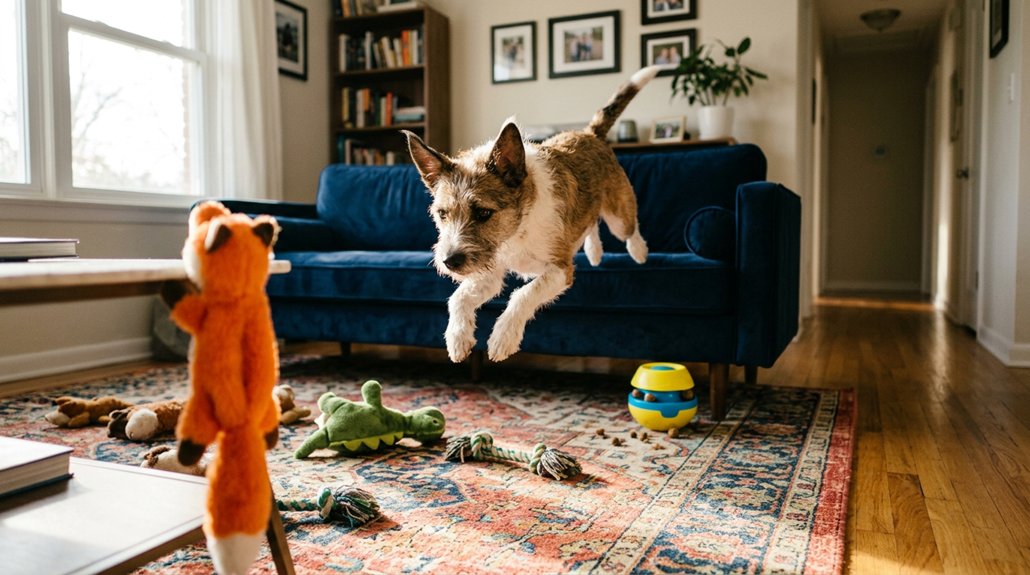
Enhancing your dog’s daily routine with treat games taps into their natural hunting instincts, offering both mental stimulation and a fun bonding experience. Engaging your dog in treat hiding activities encourages scent tracking, sharpening their keen sense of smell. Here’s how you can do it:
Elevate your dog’s routine with treat games to engage their natural instincts and boost mental stimulation.
- “Find It” Game: Hide treats around the house. This simple activity promotes problem-solving and keeps your furry friend mentally sharp.
- Snuffle Mat Foraging: Fill a snuffle mat with kibble. This mimics ancestral foraging behaviors, pushing your dog to sniff and search for food.
- Cup Game Challenge: Place treats under overturned cups. Your dog will need to use cognitive skills to locate the hidden goodies.
- Vary Hiding Spots: Regularly change treat locations to maintain interest and prevent boredom.
Make Mealtime a Fun Puzzle
Transforming your dog’s meals into engaging puzzles is not only a means to enhance mealtime engagement but also a way to stimulate their cognitive skills. Incorporate food-dispensing toys and interactive feeding devices to turn meals into an entertaining game, promoting mental and physical activity. By adjusting the complexity of these puzzles, you can keep your dog motivated and challenged, making mealtime more than just a routine.
Turn Meals Into Games
One effective way to engage your dog’s mind and promote healthier eating habits is by turning their meals into fun puzzles. This approach not only enriches their environment but can also refine meal timing and utilize positive reinforcement to curb undesirable behaviors. Here’s how you can transform mealtime into an engaging experience:
- Work-to-Eat Toys: Use food-dispensing toys like Kongs to challenge your dog’s problem-solving skills during meals.
- Puzzle Feeding: These toys slow fast eaters and enhance digestion by making dogs work for every bite.
- Homemade Solutions: Craft DIY toys from household items such as toilet paper tubes for a budget-friendly option.
- Treasure Hunts: Hide kibble throughout your home, activating their natural foraging instincts.
Engage both their mind and body simultaneously!
Enhance Mealtime Engagement
Boosting your dog’s mealtime engagement is essential for mental stimulation and can be easily achieved through interactive puzzle feeding. Implement food puzzles using simple tools like Kongs or Buster Cubes, transforming regular meals into stimulating challenges. These innovative “work-to-eat” methods prompt your dog to work for their meal, helping reduce separation anxiety while extending eating time. You might also create homemade food puzzles by stuffing a toilet paper tube or a plastic bottle with treats, enhancing your dog’s problem-solving abilities. For another engaging activity, try a muffin tin puzzle. Place kibble in the tin’s cups and cover them with tennis balls, encouraging your dog to discover their meal through exploration. Finally, frozen treat puzzles offer a revitalizing challenge, providing icy delights that extend mealtime enjoyment.
Use Puzzle Feeding Toys
While feeding time might often seem mundane, incorporating puzzle feeding toys can make it an engaging and beneficial event for your dog. Interactive feeding, through toys like Kongs and Buster Cubes, offers problem-solving play that challenges your dog mentally. This not only slows down fast eaters, aiding digestion and reducing bloating, but also helps alleviate separation anxiety by keeping your dog focused. To maximize benefits, consider these options:
- Variety of Fillings: Use kibble, treats, or frozen mixtures to increase the challenge.
- Mixed Toy Rotation: Regularly switch the puzzle toys to maintain interest and motivation.
- Size Matters: Choose a toy size that’s compatible with your dog’s breed and chewing habits.
- Monitor Play: Guarantee supervision during interactive feeding to avoid frustration or potential hazards.
Engage Their Sniffing Instincts With Scent Games
Release the power of your dog’s nose by engaging their sniffing instincts with scent games right in your living room. These activities offer scent enrichment, tapping into their natural foraging talents and transforming idle moments into exploratory play. Hide treats in various boxes or around the house to promote both mental exercise and problem-solving skills. Incorporate a snuffle mat, an innovative shag-rug-like toy that allows dogs to search for kibble, enhancing physical engagement. The adaptable “Find It” game can keep them challenged by varying treat locations or adding obstacles. Continually changing hiding spots stimulates your dog’s mind and prevents monotony. Encouraging this type of play nurtures their senses and results in an active, fulfilled canine companion indoors.
Rotate Toys to Maintain Indoor Play Excitement
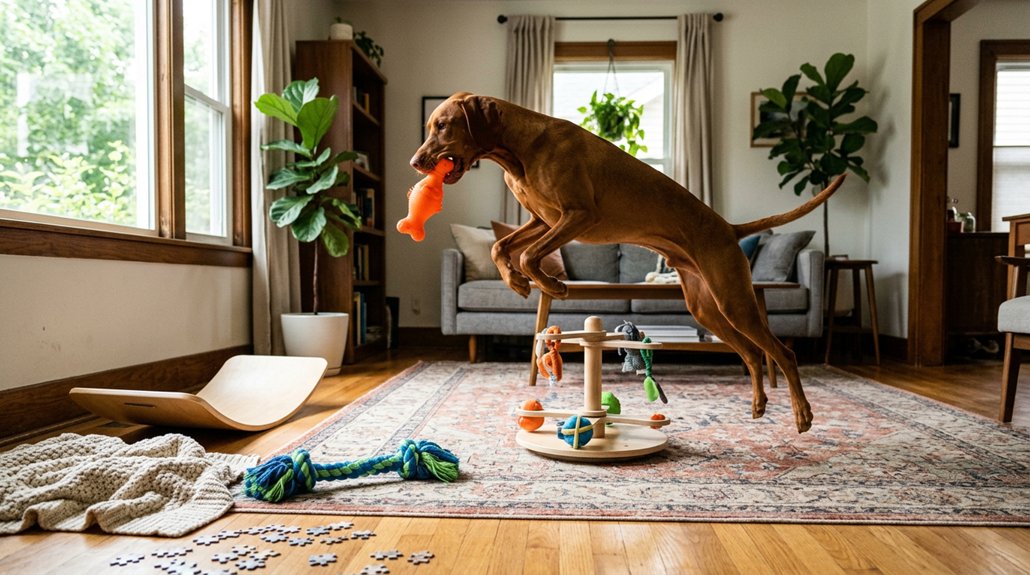
After engaging your dog’s keen senses with scent games, maintaining their excitement for indoor play requires strategic toy rotation. Regularly rotating toys every few days can prevent boredom and keep your dog mentally stimulated. To enhance indoor play, consider the following steps:
Regularly rotate your dog’s toys to maintain excitement and prevent boredom during indoor play.
- Toy Rotation: Swap out their toys every few days to keep them interested and curious about playtime.
- Introduce Variety: Include puzzle, interactive, and chew toys to cater to different play preferences, guaranteeing mental engagement.
- Store & Reintroduce: Put away frequently used toys and reintroduce them later to make them feel “new” again.
- Prioritize Favorites: Notice which toys your dog loves most and make sure they’re part of the rotation to maintain enthusiastic play.
This strategy will sustain your dog’s interest and encourage exploration.
Set Up a Cozy Space for Restful Downtime
Creating a comfortable retreat for your dog is essential for their relaxation and overall well-being. Designate a cozy area using dog friendly decor, such as soft bedding, blankets, and pillows, to provide both comfort and warmth. This setup offers ideal conditions for restful downtime, recharging your dog’s energy. Reading aloud in this cozy nook benefits both of you, as it creates calm moments, enhances your bond, and offers a soothing rhythm through your voice.
| Element | Purpose |
|---|---|
| Soft Bedding | Comfort & Warmth |
| Reading Aloud | Relaxation & Bonding |
| Calming Scents | Inviting Environment |
Additionally, incorporating soothing music or scent diffusers further enhances this space, establishing a consistent relaxation routine, therefore reducing your dog’s stress.
Frequently Asked Questions
How to Keep a Dog Active Inside?
To keep your dog active inside, use interactive toys and puzzle games. Combine indoor exercises with scent games, training sessions, and obedience training. Set up agility obstacles and create dog-safe games to guarantee both mental and physical stimulation.
What Is the 3-3-3 Rule With Dogs?
The 3-3-3 rule outlines your dog’s adjustment period: first three days, expect withdrawn behavior; next three weeks, observe personality emergence; and after three months, look for settled behavior as they’re fully integrated into their routine.
How Do You Say “I Love You” in Dog Language?
Connect through canine communication by creating comforting contact. Cuddle, converse softly, and engage in playful pursuits. Making meaningful moments with eye contact and training tasks strengthens trust and shows your pup ‘I love you’ in their language.
What Is the 7 Second Rule for Dogs?
The 7 Second Rule refers to promptly reinforcing dog behavior to strengthen learning. For effective indoor exercise and mental stimulation, quickly combine playful activities with rewards within seven seconds to guarantee your dog connects actions with positive outcomes.
Conclusion
Keeping your canine companion active indoors isn’t just about burning energy; it’s an opportunity to strengthen your bond and enhance their happiness. By combining physical challenges with mental puzzles, you’ll guarantee your dog stays sharp and lively. Remember, rotation and variety prevent monotony, sustaining their enthusiasm. While they engage in delightful activities, it’s also essential to offer them tranquility, a place where paws can rest and dreams can roam. This balanced approach enriches both their minds and souls.