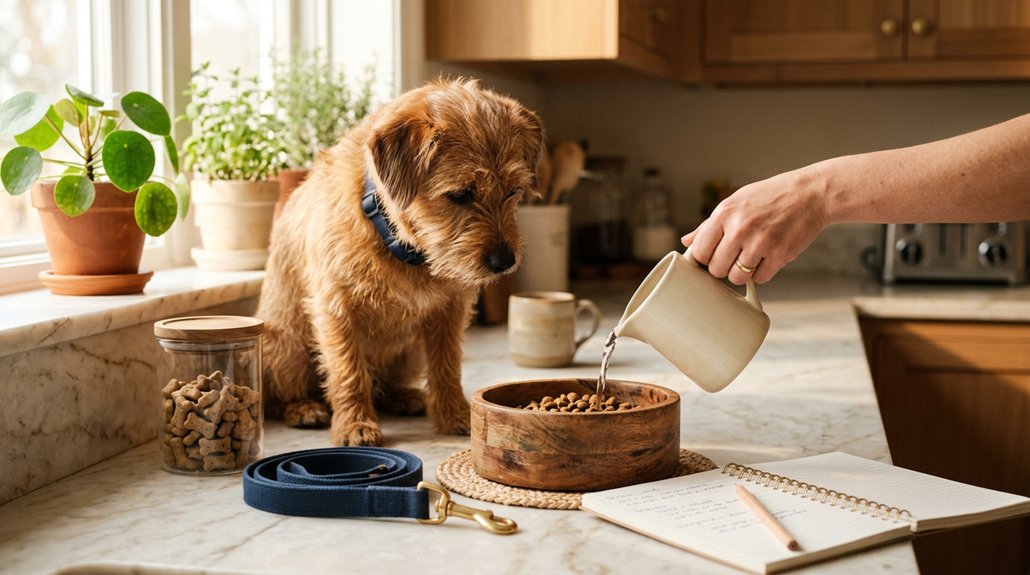
To build a daily routine for your dog, start by understanding their specific needs, including breed energy levels and socialization. Begin mornings with a walk and mental play, and stick to regular mealtimes for healthy digestion. Balance activity with rest midday, incorporating play to stimulate their mind and body. Evenings should focus on bonding and relaxation, considering climate and living conditions in your plans. Regularly adapt routines for your dog’s changing needs. There’s more to discover beyond these tips.
Key Takeaways
- Evaluate your dog’s breed characteristics to tailor exercise routines that match their energy levels and social needs.
- Establish consistent morning, midday, and evening activities to structure your dog’s day positively.
- Maintain regular mealtimes to support digestion and coordinate exercise to prevent health issues.
- Adjust routines based on climate, urban environment, and extreme weather for your dog’s safety and comfort.
- Regularly assess and adapt your dog’s routine based on behavioral cues, health changes, and seasonal variations.
Determine Your Dog’s Unique Needs
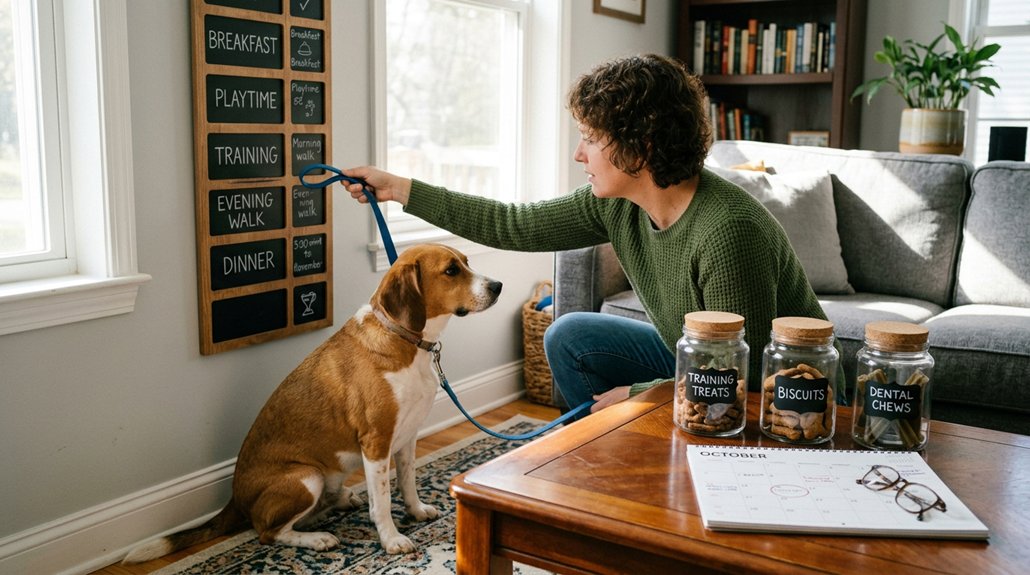
Understanding your dog’s unique needs is vital when establishing a daily routine that caters to their well-being. Evaluating breed characteristics helps tailor activities to match your dog’s exercise requirements and energy levels. For instance, high-energy breeds need vigorous playtime, while calmer breeds may prefer leisurely strolls. Health considerations are significant; consult your vet to guarantee any physical limitations are taken into account. Recognize socialization needs by encouraging interaction with other dogs or people, valuable for breeds that thrive on companionship. Young puppies require frequent feeds and potty breaks, unlike adult dogs who do well on twice-daily feeding schedules. Keep an eye on your dog’s behavior and be adaptable, making adjustments as necessary to suit their evolving needs and feedback.
Start the Day Right: Morning Activities
Once you’ve assessed your dog’s unique needs, it’s time to start the morning on the right paw with activities that set a positive tone for the day. Begin with a quick potty break—it’s essential for avoiding accidents and gives your pet morning motivation. Follow up with a 10-30 minute walk to provide exercise and mental stimulation, both vital for balanced energy levels. Use positive reinforcement throughout the walk to encourage good behavior. After returning home, engage your dog with mentally stimulating toys or playful interaction. This enriches your bond and combats any boredom. Finally, allow quiet rest time so your dog can relax and recharge for the day ahead. These steps will support your dog’s well-being and foster a happier household.
Regular Mealtimes: Feeding Consistency
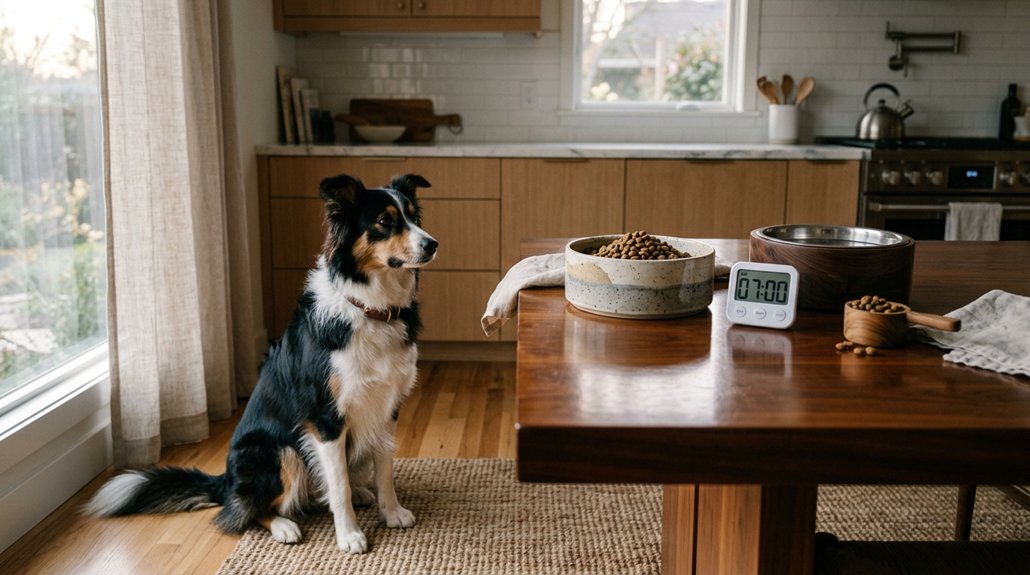
Establishing regular mealtimes for your dog is essential for maintaining healthy digestion and preventing overeating, with two meals approximately 12 hours apart being ideal. It’s important to manage portion sizes based on your dog’s weight and activity level to meet dietary needs without leading to unhealthy weight gain. Also, keep the timing of meals in mind regarding exercise to avoid health issues, and always consult with your vet for tailored advice.
Importance of Scheduled Feeding
A consistent feeding schedule is pivotal for your dog’s well-being, providing both nutritional balance and emotional security. By establishing regular mealtimes, you help regulate your dog’s feeding behavior, promoting healthy digestion and preventing overeating. Most dogs thrive on two meals a day, ideally spaced 12 hours apart. Puppies and small dogs, however, often need an additional midday meal to meet their higher energy demands and frequent potty requirements.
Consult your veterinarian for portion guidelines tailored to your dog’s weight, age, and activity level to guarantee balanced nutrition. Remember, timing meals around exercise is key to minimizing health risks like bloat—particularly for deep-chested breeds. Always make sure your dog has access to fresh water, especially during mealtimes, to maintain ideal hydration.
Timing and Portion Control
Now that you’ve understood the importance of scheduled feeding, let’s explore how consistent timing and portion control play an essential role in your dog’s diet. Establishing regular mealtimes by feeding your dog twice daily, about 12 hours apart, supports healthy digestion and helps prevent overeating. This feeding frequency minimizes excessive hunger spikes that can lead to behavioral issues and encourages better potty habits.
When considering meal portioning, it’s essential to weigh factors like your dog’s age, weight, and activity level. Puppies or smaller breeds might benefit from an additional midday meal for sustained energy. Always measure portions carefully and consult your vet for specific dietary needs. Providing fresh water constantly and planning meals well ahead of exercise, especially for bloat-prone breeds, is vital.
Midday: Balancing Rest With Activity
A midday routine is essential for your dog to balance their need for activity and rest effectively. Start with a potty break and a brisk walk to keep them engaged and comfortable, then offer a small treat to reinforce good behavior. Don’t forget to refresh their water and provide a cozy spot for a nap, ensuring they stay hydrated and relaxed.
Midday Potty and Play
While establishing a midday routine with your dog, it’s important to balance rest and activity to maintain their health and happiness. Midday potty breaks are vital, especially for puppies and senior dogs, who may struggle with holding their bladder. This prevents accidents and aids in effective potty training. Consider incorporating a brisk 10-20 minute walk during this time to provide exercise and enhance your bond, keeping your pup engaged without exhausting them. During these activities, remember the significance of playtime dynamics—interactive games can stimulate your dog’s mind and guarantee they’re entertained. Offering a small snack or training treat can boost their motivation and reinforce positive behavior, making your outings enjoyable and productive for both you and your furry friend.
Restful Breaks and Hydration
After a stimulating midday walk and play session with your dog, it’s important to guarantee they can rest and rehydrate properly. Make sure you’ve got a cozy resting spot where they can unwind. Interactive toys, such as food puzzles, can provide mental stimulation while allowing your dog to relax. Keep in mind that regular hydration is essential—always refresh their water bowl during this break to maintain ideal hydration levels. If you’re often away for long hours, consider hiring a pet sitter to offer a combination of potty breaks and valuable social interaction. This routine is especially important for puppies and senior dogs, helping prevent accidents and making certain they’re well-rested and ready for the remainder of their day.
Engage Your Dog: Physical and Mental Fitness
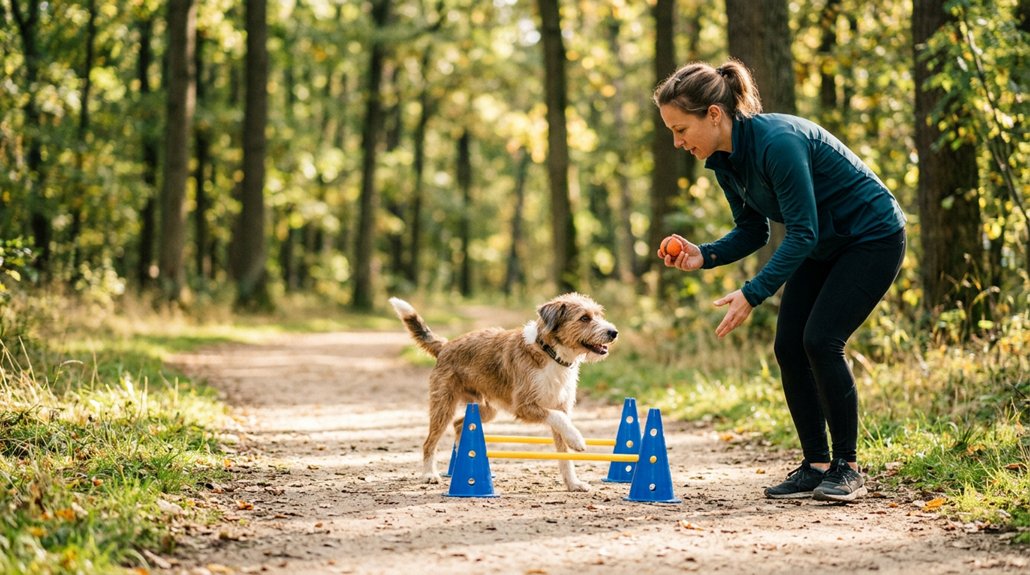
Jump into the world of canine fitness by blending physical and mental activities to keep your dog thriving. Start with engaging scent games or puzzle feeders to sharpen cognitive skills. These mental challenges can work wonders in just 15 minutes daily. Use agility exercises or interactive toys as energy outlets to add variety to routine walks. Including training sessions not only builds skills but also offers essential mental stimulation, especially for high-energy breeds. Social play and outdoor adventures also help in offering diverse experiences. Such a balanced routine keeps your pup motivated, prevents boredom, and addresses behavioral issues. So, whether it’s a simple game of fetch or a complex skill-building task, combine elements that nurture both mind and body for a happy, well-adjusted pet.
Wind Down: Evening Relaxation Practices
Creating an evening wind-down routine is essential for ensuring a smooth shift from day to night for your furry friend. Start with gentle evening grooming or cuddling after dinner to promote relaxation and deepen your bond. A quiet walk can help both digestion and encourage a final bathroom break. Introducing calming music during this time can ease any lingering anxiety, providing a soothing backdrop as the day winds down. A predictable routine reinforces healthy habits and lets your dog know it’s time to relax.
Here’s a simple breakdown:
| Activity | Benefit | Suggestion |
|---|---|---|
| Evening grooming | Bonding, relaxation | Use soft brushes |
| Gentle Cuddling | Emotional connection | Comfort and warmth |
| Quiet Walk | Digestion, bathroom break | Short, calm route |
| Calming Music | Anxiety reduction | Soft classical tunes |
| Final Potty Break | Habit reinforcement | Before bedtime |
Adjust Routines for Climate and Home
As you wind down in the evenings, it’s also important to think about how your dog’s daily routine needs to adjust based on climate and your living situation. Keep your furry friend comfortable and healthy with these tips:
Consider your dog’s routine in relation to climate and your living environment for their comfort and health.
- Temperature Adjustments: Plan walks for early morning or evening when it’s cooler, especially during hot months. This prevents overheating and guarantees a safe outing.
- Urban Exercise: If you live in an urban area, more frequent but shorter outdoor trips might be necessary due to limited green spaces. These excursions can help meet your dog’s exercise needs and bathroom requirements.
- Indoor Playtime: On days with extreme temperatures or inclement weather, incorporate stimulating indoor activities to maintain your dog’s physical and mental health without exposing them to harsh conditions.
Review and Revise Your Routine
Although we often establish routines to provide structure, it’s important to regularly review and revise your dog’s daily schedule to make certain it suits their changing needs. Routine flexibility is essential as your dog’s age, health, and energy levels evolve. Pay attention to behavioral cues; signs of stress or boredom might indicate a need for change. Seasonal factors like daylight and temperature also play a role in crafting a fulfilling routine. Consult trainers or veterinarians for tailored insights. Adding new activities or varying walk routes not only prevents behavioral issues but boosts mental stimulation. Here’s a quick table to guide you:
| Factor | Considerations |
|---|---|
| Age | Energy and activity levels |
| Health | Vet recommendations |
| Season | Weather and daylight adjustments |
| Behavior | Stress and boredom signs |
| Activities | New routines for stimulation |
Frequently Asked Questions
What Is the 3-3-3 Rule With Dogs?
The 3-3-3 rule with dogs describes the adjustment period over three weeks. During this time, you’re managing anxiety, observing dog behavior changes, and finding routine benefits that help your dog feel safe and comfortable in their new home.
What Is the 10-10-10 Rule for Dogs?
Imagine turning a key daily; the 10-10-10 Rule does just that for a dog’s well-being, giving them balanced daily exercise, mental stimulation, and bonding. It’s like revealing happiness and harmony in their life.
What Are the 5 D’s of Dog Training?
The 5 D’s of dog training—Duration, Distance, Distraction, Displacement, and Destination—enhance sessions. Use distraction techniques combined with positive reinforcement to improve focus and reliability. Build consistency to boost their performance in diverse situations and environments.
What Should I Do With My Dog Every Day?
Start with morning exercise like walks, then offer mental stimulation through training or games. Include socialization activities midday. Conclude with evening relaxation through bonding and grooming to create a balanced, enriching routine for your dog.
Conclusion
Building a routine with your dog is like crafting a symphony where each section shapes the harmony of their day. Imagine your dog as a musical instrument; consistent care keeps their strings in tune. Research shows that structured routines reduce anxiety in dogs by 60%. By adjusting for climate and home, you fine-tune this melody. Remember, it’s not just about creating a schedule; it’s about nurturing a bond that strengthens with every note played together.