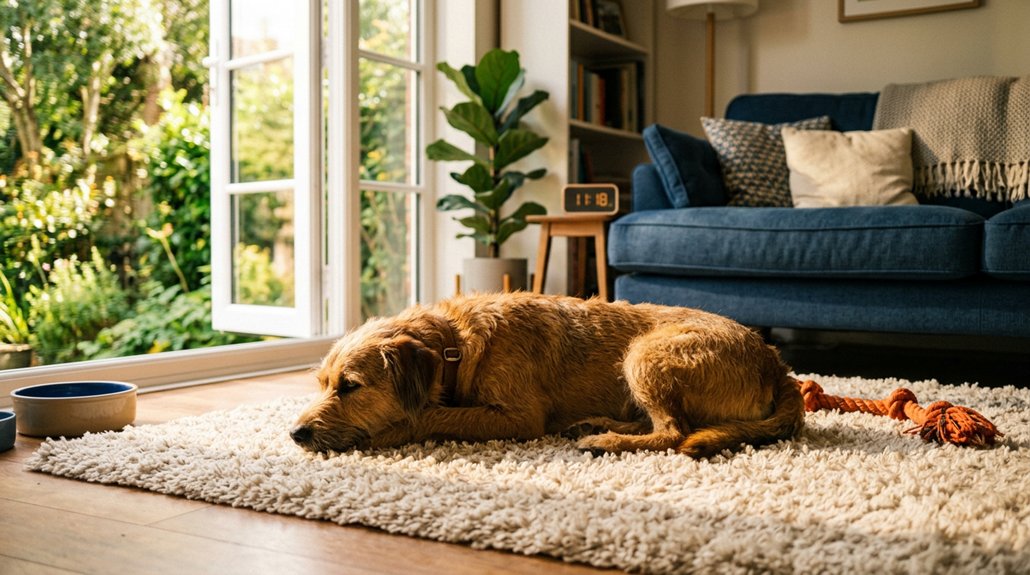
You can generally leave an adult dog alone for 4-6 hours each day, although ensuring they’re mentally and physically stimulated is essential to mitigating anxiety. While dogs can hold their bladder for up to 8 hours, extended isolation can affect their emotional and mental health. Puppies should be left for shorter periods, no longer than 2 hours, and senior dogs require more frequent breaks. For detailed strategies on managing this, further insights are available.
Key Takeaways
- Adult dogs should ideally not be left alone for more than 4-6 hours at a time.
- Puppies under six months should have alone time limited to no more than 2 hours.
- Senior dogs should generally not be left alone for more than 2-4 hours.
- Dogs can hold their bladder for up to 8 hours, but it is not recommended for their well-being.
- Providing mental stimulation and exercise can help mitigate stress during alone time.
Immediate Tips for Managing Your Dog’s Alone Time
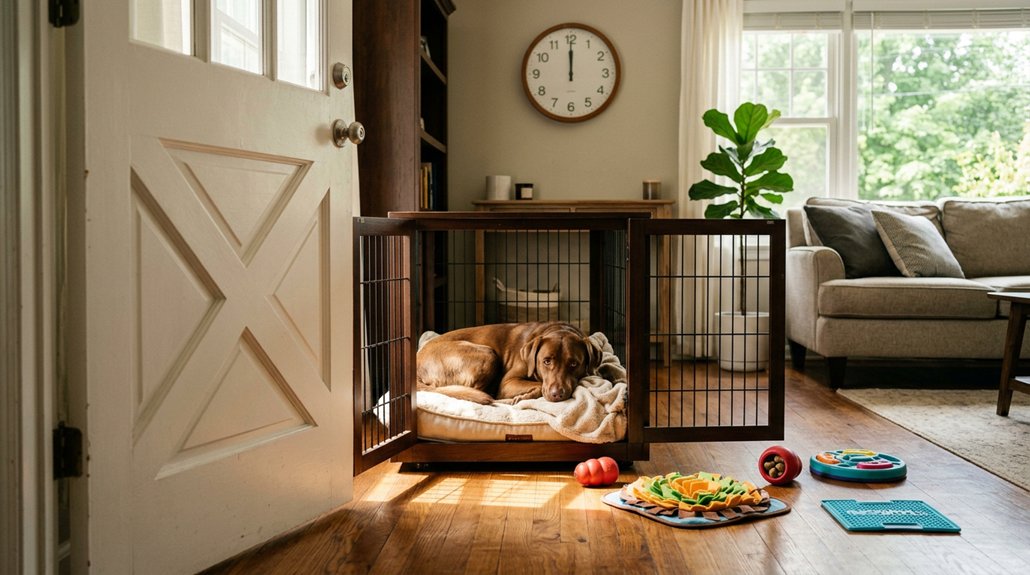
While it’s natural for dog owners to worry about alone time, there are effective strategies to manage it. To tackle separation anxiety and prevent boredom, guarantee your dog has ample stimulation. Puzzle toys are excellent for engaging their mind, reducing anxiety during solitary periods. Vigorous exercise before you leave can also minimize restlessness and stress. Adult dogs can generally handle being alone for 4-6 hours, but providing a comfortable environment with adequate space is critical. For seniors or puppies, consider breaks or substitute companionship. Hiring a dog walker or utilizing doggy daycare can maintain social interaction and alleviate extended solitude. By implementing these measures, you’re promoting mental and physical well-being in your dog’s independent hours.
Recognizing Challenges in Alone Time
Although managing a dog’s alone time is possible, recognizing the challenges it presents is essential to guaranteeing their well-being. Dogs may exhibit separation anxiety, leading to destructive behavior changes such as chewing or scratching. Identifying these signs helps in adjusting routines to promote a supportive environment. Adult dogs often manage 4-6 hours alone, but too much isolation can increase anxiety and stress.
Even with proper space and stimulation, some dogs might show signs of distress, like:
- Lethargy: A lack of energy and interest.
- Destructive behaviors: Damaging furniture or household items.
- Excessive barking: Vocalization indicating discomfort.
- Toileting accidents: Indoors due to stress or anxiety.
Being aware of these challenges allows for timely intervention and guarantees your dog’s mental and emotional health.
How Long Can Adult Dogs Be Left Alone?
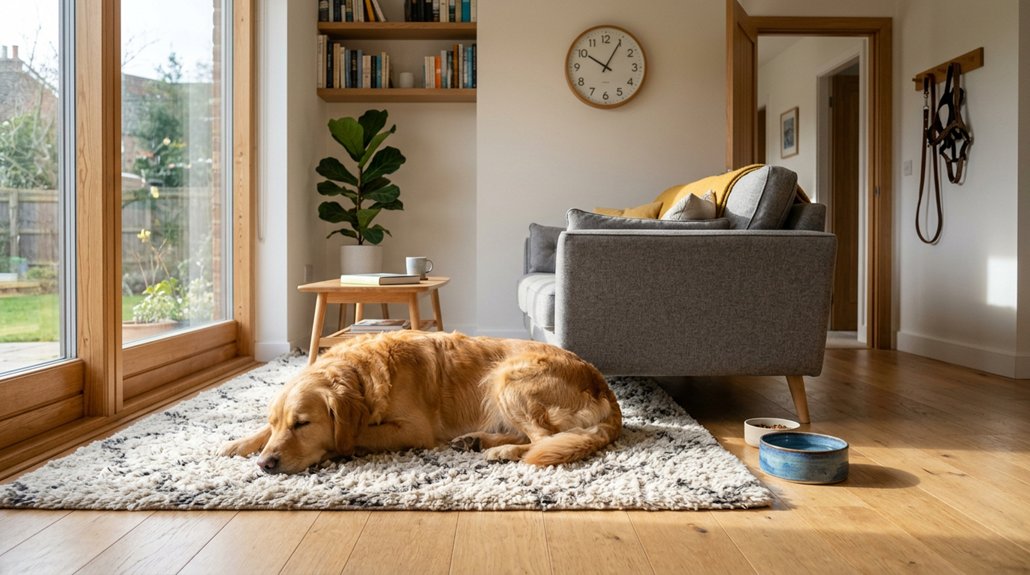
For adult dogs, it’s generally accepted that they can be left alone for up to four to six hours. Beyond this, essential aspects of dog behavior, such as emotional well-being and mental stimulation, might be compromised. Although adult dogs can physiologically hold their bladder for longer—up to eight hours—it’s advisable not to exceed four hours to prevent loneliness and boredom. Successful alone training involves providing exercise and mental challenges before separation to mitigate anxiety. Although some dogs adapt to lengthier absences if ample space and resources are available, long durations can negatively affect their health. You’re encouraged to guarantee regular interaction, enhancing your dog’s emotional and behavioral health when absence during work hours is unavoidable.
Care Strategies for Puppies Left Alone
Managing the challenge of leaving puppies alone involves understanding their developmental needs and limitations. Puppies under six months benefit from structured care to prevent separation anxiety. Limit alone time to no more than two hours, gradually extending it as they adjust. Considering their age-related bladder capacity, maintain vigilance to avoid accidents; a three-month-old can manage about three hours. Crate training aids in fostering comfort while minimizing stress. Yet, minimize crate confinement to guarantee a positive, reassuring experience.
- Engage in puppy playtime regularly to meet social interaction needs.
- Consider a dog walker or daycare for exercise and companionship during absences.
- Gradually increase isolation periods for better adaptation.
- Monitor behavior patterns to promptly address signs of distress and anxiety.
Health and Comfort Management for Senior Dogs
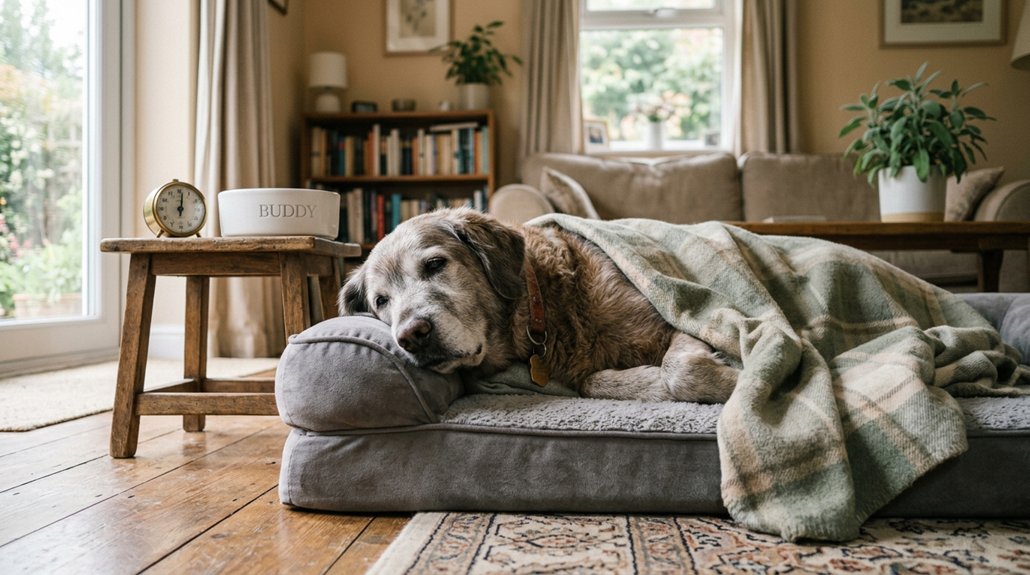
As dogs age, their needs change, requiring careful consideration to maintain health and comfort when left alone. Senior dogs should generally be limited to solitary periods of two to four hours, taking into account their individual health and comfort levels. More frequent bathroom breaks every two to three hours are important due to decreased bladder control. Monitoring any health issues is essential, as they can dictate the time a senior dog can be alone comfortably. To aid anxiety reduction, provide a familiar environment enriched with soothing elements. Regular interaction and socialization, beyond these isolation periods, enhance their emotional well-being by fulfilling senior needs. Ensuring these aspects are addressed is significant in managing the unique requirements of aging dogs effectively.
Effective Strategies for Busy Dog Owners
While juggling a busy schedule, ensuring your dog’s well-being is paramount, achievable through strategic planning and implementation. Consider enrolling your pet in dog daycare to provide essential exercise and social interaction, addressing both physical and mental health needs. Interactive toys, such as puzzle feeders, offer critical mental stimulation, reducing the potential for boredom during your absence. Evidence suggests maintaining a comfortable environment with fresh water access can alleviate anxiety, promoting overall canine health. Implementing pre-departure vigorous exercise sessions can facilitate relaxation by tiring your dog, correlating with decreased separation anxiety. Gradually increase your dog’s alone time to adapt them to your absence, benefiting both you and your pet.
Juggling a busy life while ensuring your dog’s well-being is possible with strategic planning and care.
- Dog daycare promotes socialization
- Interactive toys reduce boredom
- Fresh water mitigates anxiety
- Vigorous exercise encourages relaxation
Making Your Dog Feel at Home While You’re Away
Creating a secure environment for your dog when you’re away is essential to alleviate stress and promote well-being. A comfortable environment begins with a cozy bed and familiar toys, comforting your dog and reducing anxiety. Interactive toys, such as puzzle feeders, provide mental engagement, helping occupy your dog’s time and stimulating cognitive functions.
Background noise, like a radio or TV, can simulate human presence, diminishing loneliness. If you opt for crating, make sure it’s spacious and limit usage to prevent stress. Monitoring with a pet camera offers remote interaction, easing separation anxiety while allowing real-time observation of behavior. By addressing these critical elements, you create a supportive home base that maintains your dog’s psychological and physical health during your absence.
Frequently Asked Questions
What Is the 7 7 7 Rule With Dogs?
The 7 7 7 Rule guarantees dog comfort by mitigating separation anxiety through balanced care: 7 minutes of exercise, mental stimulation, and social interaction per hour alone. Implementing this reduces potential behavioral issues and promotes emotional health.
Can a Dog Be Left Alone for 8 Hours a Day?
Yes, you can leave your dog alone for 8 hours, but without proper separation training, dog anxiety could grow wild like unchecked weeds. Guarantee mental stimulation and physical comfort to cultivate a peaceful environment during your absence.
What Is the 3-3-3 Rule With Dogs?
The 3-3-3 rule in newly adopted dogs addresses their behavior adjustment timeline: 3 days for settling, 3 weeks for adaptation, and 3 months for full integration. Properly following this can help mitigate separation anxiety effectively.
What Is the 10-10-10 Rule for Dogs?
The 10-10-10 rule guarantees dogs maintain independence by balancing exercise, mental stimulation, and bonding in daily routines. It prevents separation anxiety, promotes effective training techniques, and supports a dog’s overall well-being through structured engagement.
Conclusion
Leaving a dog alone is more than just a matter of time—it’s a delicate balance that touches their emotional well-being. Imagine returning home to a wagging tail or heartbroken whimper. This reality hinges on understanding your pet’s unique needs. Are you ready to decipher the complexities of loneliness for a fulfilling bond? With strategic care and astute observation, you hold the key to their heart. Will you open a haven of comfort or let them drift into solitude?