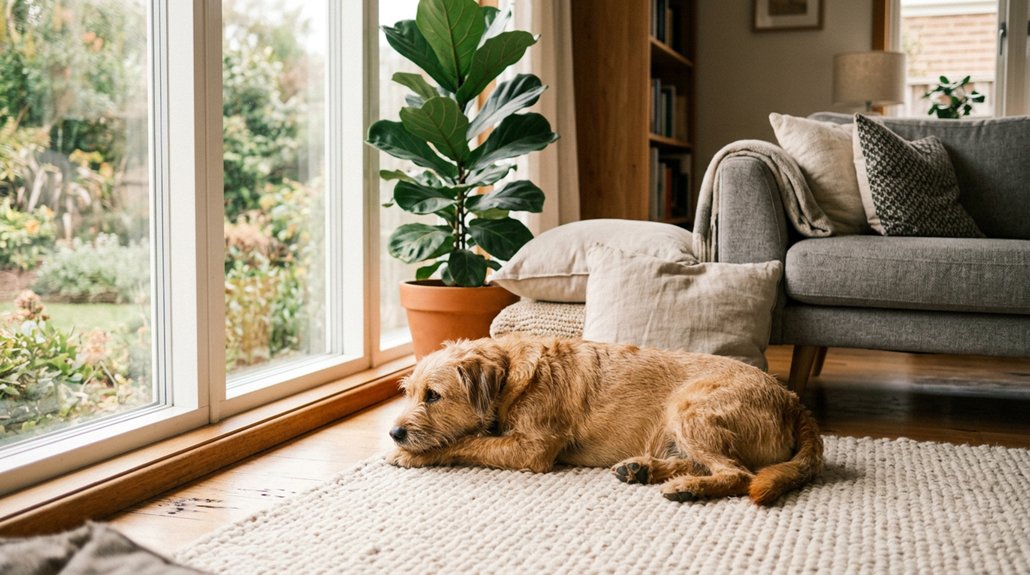
You should guarantee your dog has at least 300 square feet, varying with breed, size, and energy level. Small breeds like Chihuahuas adapt well to smaller spaces, while larger breeds need expansive areas. Indoor environments must allow free movement, and outdoor access is essential for physical exercise and mental stimulation. Active dogs especially benefit from engagement activities to prevent stress. Dive deeper to discover how to balance your dog’s need for comfort and exploration.
Key Takeaways
- Dogs need a minimum of 300 square feet at home to ensure comfort and mobility.
- Small breeds adapt to apartments, while larger breeds need expansive indoor and outdoor areas.
- Daily outdoor access is vital for energetic dogs to support movement, exercise, and rest.
- Indoor environments should provide unrestricted movement and include comfortable bedding and interactive toys.
- Engaging outdoor activities like obstacle courses promote physical health and alleviate stress for active breeds.
How Much Space Does Your Dog Truly Need?
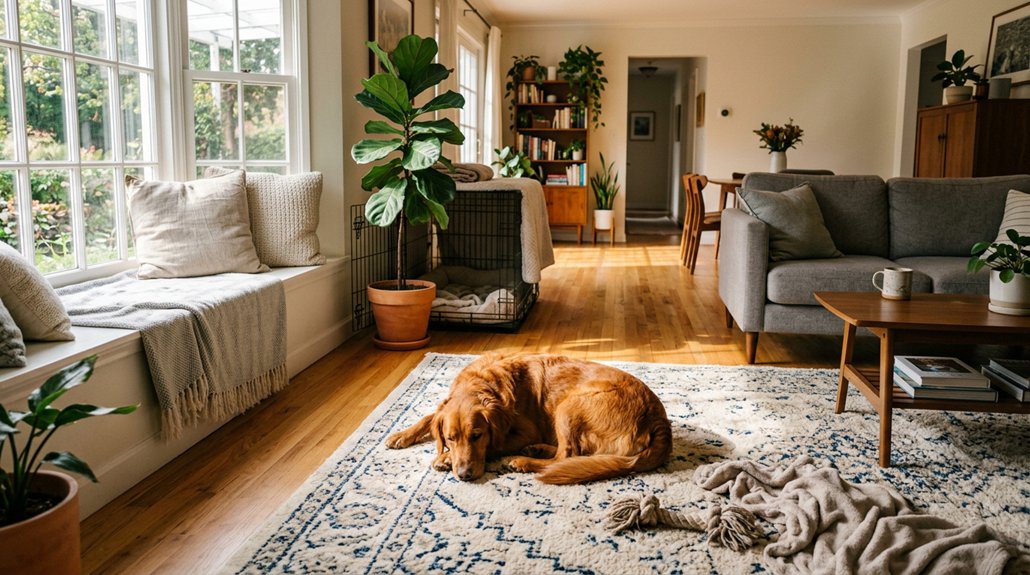
When determining how much space your dog truly needs, it’s essential to evaluate various factors such as breed, size, age, and energy level. Dog space requirements are not one-size-fits-all; instead, they reflect your pet’s unique nature. For example, while a minimum of 300 square feet is often suggested, active dogs demand more engaging environments. Ideal living conditions incorporate both indoor and outdoor spaces that can accommodate movement, rest, and exercise.
Energetic dogs, regardless of size, require daily access to outdoor areas to
Breed and Size Space Needs
Considering the broad spectrum of dog breeds and sizes, it’s evident that their space needs vary considerably. Small breed requirements are minimal, with Chihuahuas and Shih Tzus easily adapting to apartments due to their compact nature. Medium breeds, like Bulldogs, require marginally larger indoor spaces and benefit from moderate-sized backyards, facilitating comfort and exercise. Large breed considerations include Labrador Retrievers and German Shepherds, which thrive in homes with expansive outdoor areas, catering to their higher energy levels. Giant breeds, such as Great Danes, necessitate substantial accommodations both indoors and outdoors, with kennel sizes reaching 54 inches to guarantee comfort. Additionally, small active breeds like Jack Russell Terriers might demand more outdoor space, highlighting that both breed size and energy levels critically influence space necessities.
Balancing Indoor Comfort With Outdoor Adventure for Dogs
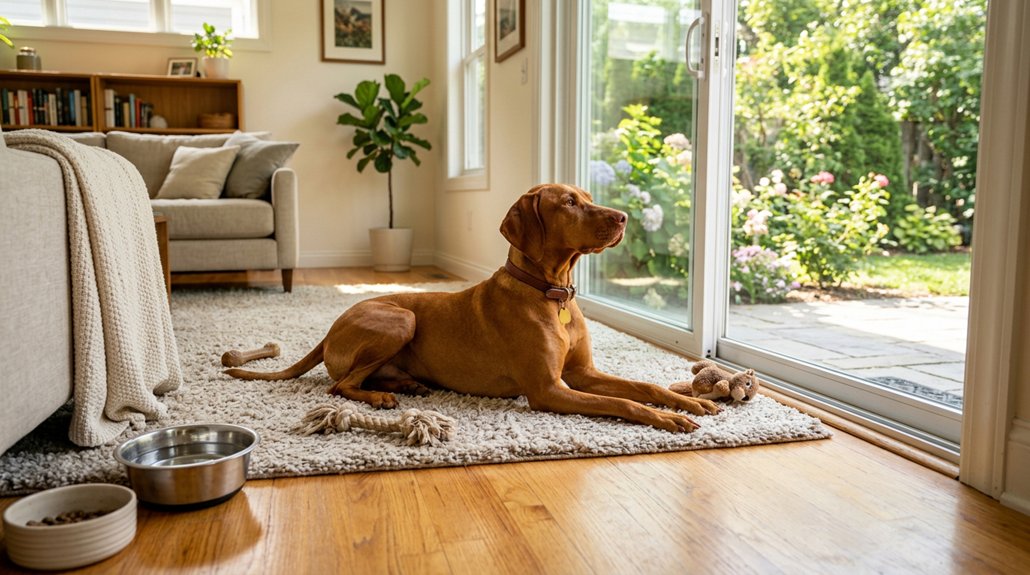
To guarantee ideal well-being, you must consider several factors when balancing your dog’s indoor comfort with outdoor exploration needs. Indoor environments should be spacious enough for unrestricted movement and rest, minimizing stress by allowing natural postures. Meanwhile, regular outdoor activities provide essential physical exercise and mental stimulation, supporting a harmonious relationship between space and activity that aligns with your dog’s specific requirements.
Indoor Environment Considerations
While determining the ideal indoor environment for a dog, it’s important to account for both their physical and psychological needs. Effective indoor design must prioritize environmental comfort to guarantee well-being and contentment. Meeting these needs involves careful consideration of space, structure, and enrichment. For most breeds, a minimum of 300 square feet allows them to move, stretch, and relax. Larger breeds may require this space despite their generally calmer demeanor, whereas energetic breeds benefit from expanded areas to satisfy their activity levels.
Components to enhance indoor environments include:
- Comfortable bedding to support rest and reduce stress.
- Climate control to maintain an effective temperature, enhancing comfort.
- Interactive toys for mental stimulation and engagement.
- Designated play areas promoting physical activity and exploration.
Outdoor Exploration Benefits
Acknowledging the importance of indoor environments, it’s paramount not to overlook the myriad benefits of outdoor exploration for dogs. Outdoor activities grant essential physical exercise, mental stimulation, and foster natural behaviors. Dogs, from active breeds like German Shepherds to smaller breeds, critically require time outside for well-being. Exposure to new stimuli through activities such as park visits and agility courses can reduce anxiety and enhance social skills. This balance of indoor comfort with outdoor adventure mitigates destructive behaviors indoors. Consider the following:
| Benefits | Details |
|---|---|
| Physical Exercise | Essential for all breeds to maintain health and prevent behavioral issues. |
| Mental Stimulation | New experiences enhance cognitive functioning. |
| Socialization Skills | Developing through exposure to diverse environments. |
| Anxiety Reduction | Interaction with varied sights, sounds, smells. |
Harmonizing Space and Activity
A thoughtfully designed environment is essential for a dog’s holistic well-being, balancing indoor comfort with essential outdoor activities. Efficient space utilization inside the home supports canine movement and rest. Larger breeds benefit from at least 300 square feet to move freely, while smaller breeds adapt with ample stimuli. Outdoor access is critical, reflecting natural behaviors and energy needs. Active breeds require daily outdoor adventures, whether via local parks, backyards, or nearby walking routes.
Consider these space and activity elements:
- Confirm indoor areas allow dogs to lie down, stand, and turn around unobstructed.
- Prioritize regular outdoor play to satisfy their exercise requirement.
- Utilize gardens or yards for supervised play and safety.
- Engage in breed-specific outdoor activities like agility training to enhance their quality of life.
Crafting a Home Environment for Dog Enrichment
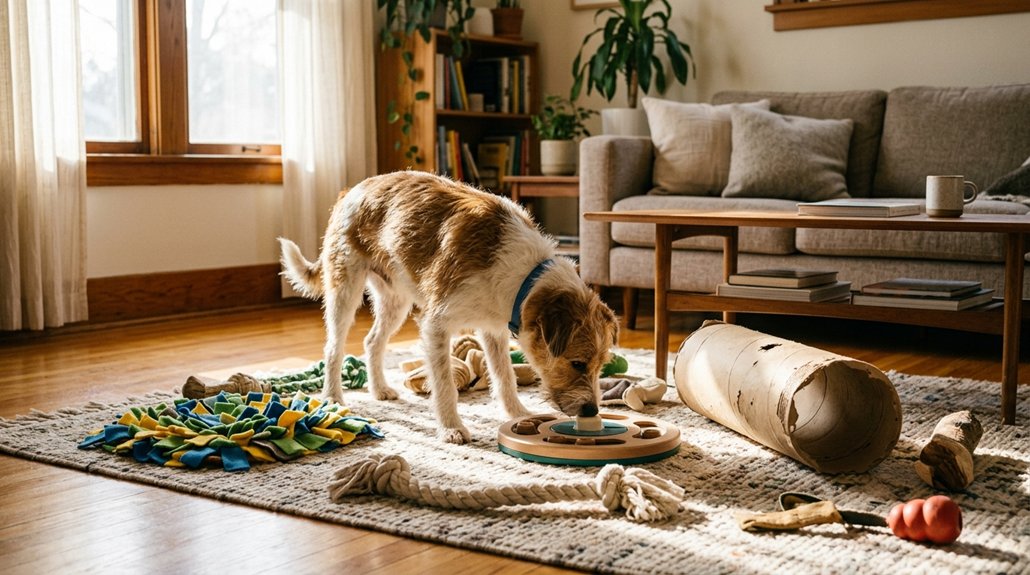
To create an enriching home environment for a dog, it’s vital to understand the spatial and activity requirements that contribute to their well-being. Adequate space facilitates sensory stimulation and multi-sensory enrichment, essential for a dog’s psychological health. Make sure your dog has a minimum of 300 square feet, free from hazards, allowing them to move and settle comfortably.
| Factor | Importance |
|---|---|
| Space | Enables movement and comfort |
| Sensory Stimulation | Essential for mental engagement |
| Multi-Sensory Enrichment | Enhances well-being and cognitive function |
| Safety | Prevents access to harmful items and guarantees space |
Further, regular outdoor excursions, in conjunction with carefully designed indoor areas, foster a balanced environment promoting physical and emotional health. Equip their space with items encouraging exploration and activity tailored to breed-specific needs.
Enrichment Activity Ideas for Your Dog
You can create enriching experiences for your dog by incorporating both creative indoor games and outdoor adventure challenges into their routine. Indoor activities like scent games and interactive puzzle toys foster mental stimulation and can be adapted for limited spaces. Meanwhile, outdoor agility courses or playdates offer physical and social benefits, especially for breeds with high energy levels.
Creative Indoor Games
While providing adequate space is essential for your dog’s physical well-being, mental stimulation through creative indoor games is equally crucial for their cognitive health. Engaging your dog with activities such as puzzle toys and scent games fosters problem-solving abilities and enhances natural instincts. Consider these indoor enrichment ideas:
- Puzzle toys: These challenge your dog to access treats, boosting their problem-solving skills.
- Scent games: Hide treats around the house, encouraging your dog to use their nose and improve tracking instincts.
- Indoor agility courses: Use household items like chairs and cushions to create a navigable course, promoting agility and coordination.
- Hide and seek: Enhance recall skills by hiding and calling your dog to find you, adding an element of fun and excitement.
These activities support cognitive enrichment effectively.
Outdoor Adventure Challenges
Although indoor play can offer significant mental stimulation, outdoor adventure challenges provide indispensable physical benefits and cognitive enrichment for your dog. Engaging your dog in an obstacle course composed of household items like cardboard tunnels or garden furniture jumps effectively channels their energy, promoting overall fitness. Implementing an outdoor scavenger hunt or hide-and-seek games stimulates natural hunting instincts, enhancing sensory skills and providing essential mental stimulation. Additionally, regular hiking trips introduce varied terrains and scents, facilitating exploration and reinforcing vital social behaviors. Secure outdoor spaces for fetch or frisbee promote not just physical exercise but also the reinforcement of training commands. These activities collectively foster a holistic developmental environment, ensuring your dog’s well-being spans physical, cognitive, and social domains.
Why Space Makes a World of Difference for Your Dog
Providing adequate space for a dog is crucial as it greatly influences their physical health and mental well-being. From a canine psychology perspective, an environment that allows for environmental enrichment guarantees your dog remains mentally stimulated, reducing stress and behavioral problems. Consider the following:
- Minimum Space: Dogs need at least 300 square feet for comfortable movement, lying down, and turning around.
- Activity Needs: Active breeds require space for daily exercise to avert stress and behavioral issues.
- Small Breeds: Even Chihuahuas need regular outdoor activities for exercise and to alleviate pent-up energy.
- Large Breeds: Breeds like German Shepherds benefit from spacious settings, preventing boredom and anxiety.
Ultimately, quality space is essential for your dog’s happiness and mental health.
Frequently Asked Questions
What Is the 3-3-3 Rule With Dogs?
The 3-3-3 rule outlines the dog’s adjustment period phases—three days, weeks, and months. Initially, your dog’s anxiety triggers surface, decreasing gradually as trust builds. Understanding this aids in providing effective, scientific care and support.
What Smell Do Dogs Absolutely Hate?
You’d find that dogs absolutely hate odors like citrus and vinegar due to their scent sensitivity. Strong household cleaning products, spicy foods, menthol, and tobacco smoke are also generally disliked, irritating their keen sense of smell.
How Much Space Does a Dog Need Indoors?
Your dog isn’t asking for a sprawling mansion, but enough room to spin like a top. Space requirements hinge on their size, allowing for indoor activities. Consider living arrangements that accommodate natural behaviors—movement and rest demand room.
What Words Do Dogs Hear Best?
Dogs hear best when commands are clear and high-pitched, within 400 to 600 Hz. In canine communication, vocal tone greatly impacts responsiveness. Utilize consistent, distinct cues with positive reinforcement to optimize a dog’s auditory processing and training outcomes.
Conclusion
Ultimately, understanding your dog’s spatial needs is essential for their overall well-being. It’s not just about square footage; it’s about creating a balanced environment where your dog can thrive both indoors and outdoors. By ensuring they have enough room to roam and opportunities for enrichment, you’re giving them the best of both worlds. Remember, when it comes to space, it’s not a one-size-fits-all scenario. Tailor your environment to keep your pup sitting pretty and enrich their life.