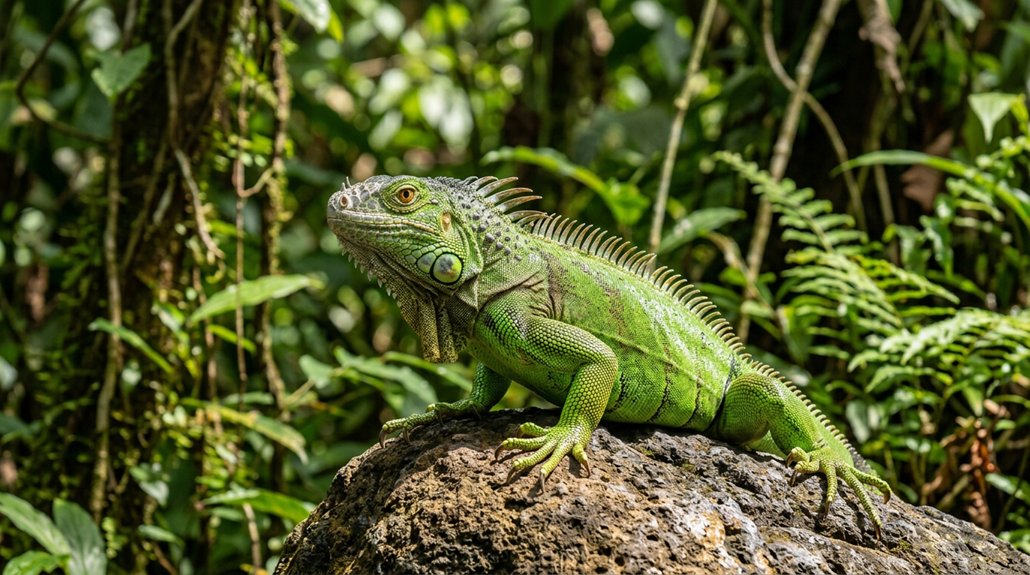
Iguanas aren’t ideal for beginners due to their complex care requirements. They need large enclosures, specialized diets of fresh greens, and regular veterinary care. Handling involves patience and understanding iguanas’ unique behaviors. Their enclosures require significant space, climbing structures, and controlled environments for health. Iguanas live long, demanding a lifelong commitment. If you want a pet that reflects your readiness for responsibility and detailed care, exploring further might reveal if an iguana suits you.
Key Takeaways
- Iguanas require large enclosures, at least 10ft x 5ft x 6ft, making them unsuitable for small living spaces.
- Their plant-based diet demands intricate preparation and knowledge of nutritional needs, including calcium supplementation.
- Regular veterinary care and preventive monitoring are essential, requiring time and financial commitment.
- Proper handling requires patience, as iguanas have strong tails and individual personalities affecting their stress and receptiveness.
- Long lifespans of up to 25 years demand a significant lifelong commitment from the owner.
Why Iguanas Appeal to New Reptile Owners?
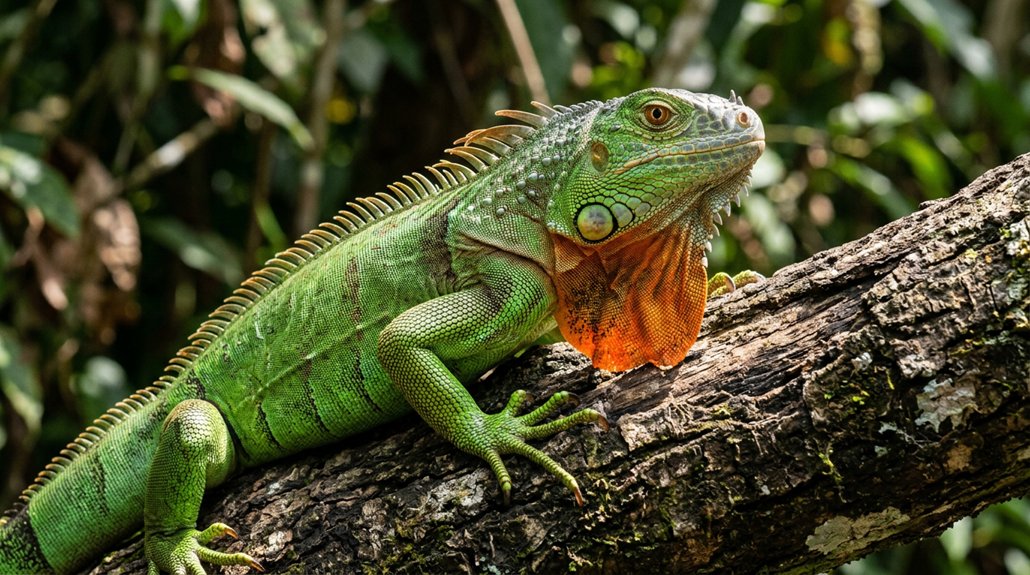
Even though choosing a pet can be an overwhelming decision, iguanas present an alluring option for new reptile owners due to their vibrant and intriguing appearance. Their colorful presence, especially in the common green iguana, captures the eye, offering an exotic appeal akin to housing a mini dinosaur. Iguanas boast a fascinating size, sometimes reaching up to 6 feet in length, adding to their fascination factor for those interested in larger reptiles. Their unique behaviors, especially their diurnal activity, allow for engaging daytime observation. Additionally, their plant-based diet can attract new owners who’d prefer herbivorous pets over carnivorous ones. This combination of visual splendor and intriguing traits can make iguanas initially appealing to the novice reptile enthusiast.
Understanding Iguana Care: A Beginner’s Challenge
Caring for an iguana demands significant space and resources, as providing a 10ft x 5ft x 6ft enclosure and managing specialized UVB lighting is essential for their health. You’ll need to accommodate their complex dietary needs with a variety of leafy greens and supplements, while also preparing for veterinary visits and health screenings. Handling an adult iguana’s defensive behaviors requires patience and informed socialization techniques, making it a rigorous commitment for any beginner.
Essential Iguana Care Skills
Iguana care requires a nuanced understanding of their specific environmental and dietary needs. Ensuring appropriate temperature regulation is essential; their enclosures must be capable of maintaining a temperature range between 75°F and 115°F. They also need UVB lighting for 10-12 hours each day to support their health. You’ll find dietary requirements challenging since iguanas are herbivorous, requiring a mix of fresh vegetables topped with calcium supplements. Avoid high-oxalate plants to prevent health issues. Additionally, iguanas demand large living spaces, with minimum dimensions of 10ft x 5ft x 6ft, to support their growth. Mastering these aspects, along with regular socialization efforts, can be overwhelming. However, these skills are critical for fostering a healthy and thriving iguana environment.
Commitment and Resource Needs
Mastering the basic care skills outlined earlier provides a solid foundation; however, venturing into the domain of iguana ownership reveals deeper layers of commitment and resource allocation. The housing requirements for an adult iguana are substantial, as they can reach up to 6.5 feet in length, necessitating an enclosure that’s at least 10 feet long, 5 feet wide, and 6 feet high. This substantial space can be difficult to provide for inexperienced owners. Beyond space considerations, iguanas necessitate a long-term responsibility, often living between 10 to 15 years, with some reaching 25 years or more. Their specific dietary needs, alongside the need for precise heating and UVB lighting, further add complexity. These factors together make iguanas a demanding pet choice.
Why Space Matters in Iguana Care
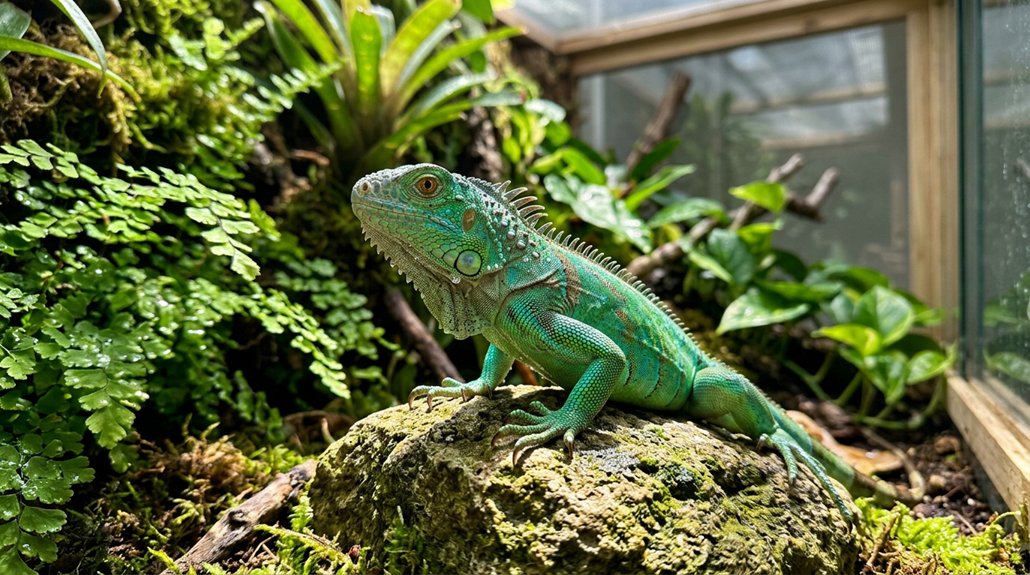
When considering iguana care, the amount of space you provide is a fundamental aspect that can’t be overlooked due to iguanas’ large size and arboreal habits. Effective enclosure design must meet specific space requirements to guarantee their health and comfort. Ideally, adults need enclosures at least 10 feet long, 5 feet wide, and 6 feet tall. Juveniles can use smaller settings initially but will soon outgrow them. You should consider:
- Climbing structures: Important for exercise and mimicry of natural environments.
- Ventilation: Facilitates airflow, essential for maintaining tropical climate conditions within.
- Secure decor placement: Prevents accidents, as iguanas explore and climb.
- Substrate choice: Use newspaper or paper towels to maintain hygiene, avoiding hazards of loose substrates.
Providing this space helps cater to their natural instincts.
The Challenges of Feeding Iguanas Right
While iguanas might appear as low-maintenance reptiles, feeding them right involves intricate details that novices often overlook. A critical diet strictly herbivorous in nature mandates various leafy greens, vegetables, and limited fruits, making food preparation complex. Fresh ingredients must be diced or shredded due to dietary misconceptions that iguanas chew their food, emphasizing precise food presentation. Failing to incorporate essential calcium supplements like Repashy Calcium Plus can compromise bone health, highlighting the challenges of dietary management. Dehydration concerns necessitate continuous access to fresh water and controlled humidity levels, which can be overwhelming for new keepers. Critical errors in dietary choices, such as high-protein foods or high-oxalate plants, could result in severe health issues, demanding thorough nutritional knowledge.
Handling & Behavior: What New Owners Face
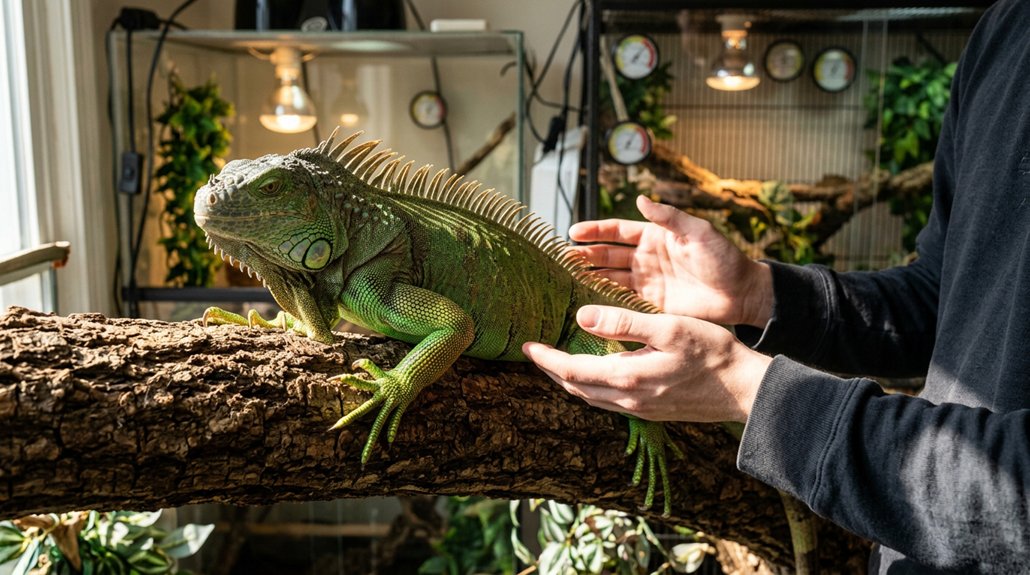
When handling iguanas, you’ll need to focus on trust building, paying close attention to their defense signals such as tail flicking or body flattening. Effective handling techniques involve gentle and consistent interaction, which is essential for fostering a sense of security and preventing aggressive responses. It’s important to approach each iguana as an individual with unique personality traits, as some may be more receptive to human touch than others.
Trust Building With Iguanas
Establishing trust with iguanas, essential for both their well-being and the owner’s handling experience, involves consistent, gentle interaction from an early age, allowing them to acclimate and lessen defensive behaviors over time. Successful trust development hinges on understanding and accommodating the iguana’s unique personality through tailored handling techniques. Resistance is common but patience combined with protective measures like wearing suitable clothing mitigates injury risk.
- Regular interaction: Encourage trust and enhance social behavior, reducing aggression.
- Handle with care: Be especially cautious with male iguanas due to potential aggressive tendencies when sexually mature.
- Use protective measures: Their strong tails can cause injury if they feel threatened or attempt to escape.
- Individual personality understanding: Critical for adapting your handling approach to each iguana, fostering positive outcomes.
Recognizing Defense Signals
Recognizing an iguana’s defense signals is essential for ensuring safe interactions and preventing unnecessary stress for both the owner and the animal. Iguanas exhibit defensive behaviors like biting, tail whipping, or scratching, especially when they perceive a threat. As your iguana matures, these behaviors may intensify due to dominance assertion. Understanding their body language is vital: puffing up, hissing, or flattening against surfaces are clear indicators of discomfort or fear. Such signals suggest the iguana needs space, and handling should be approached cautiously. Each iguana has unique personality traits; some tolerate handling better than others. Wearing protective clothing is wise since even tame individuals can whip their strong tails defensively if provoked or panicked.
Effective Handling Techniques
To effectively handle iguanas, you must consider several factors that impact their behavior and interaction with humans. Iguanas require regular, gentle coaxing to adapt, especially in their youth. As they age, their temperament may change, sometimes resulting in defensive actions. Here are key considerations for handling them:
- Wear protective clothing to safeguard against potential injuries from their strong tails.
- Observe for signs such as whipping tails or open mouth, indicating distress or hostility.
- Use gentle coaxing and patience, respecting individual differences in personality and receptivity.
- Maintain a calm environment to reduce stress and allow for positive interaction.
Consistent handling fosters trust, but be prepared for resistance and the commitment needed to guarantee effective socialization.
Is Owning an Iguana a Commitment You Can Keep?
How deeply have you considered the commitment involved in owning an iguana? Iguanas can live between 10 and 25 years, demanding serious owner responsibility over their lifetime. Their longevity requires creating large habitats, with enclosures at least 10ft x 5ft x 6ft, which involve both significant time and financial investments.
| Aspect | Requirement |
|---|---|
| Enclosure Size | Minimum 10ft x 5ft x 6ft |
| Diet | Variety of fresh, plant-based foods and supplements |
| Social Interaction | Daily interaction to build trust |
Their dietary needs are complex, requiring a variety of fresh foods and supplements daily. Iguanas need regular veterinary care to address health issues, like annual checkups. Additionally, they’re social animals that thrive with daily interaction, essential for building trust and reducing defensive behaviors. Understanding these responsibilities is vital to preserving their quality of life.
Frequently Asked Questions
Are Iguanas Good Pets for Beginners?
Iguanas aren’t good pets for beginners. They have complex dietary needs and extensive habitat requirements. You’ll need to manage a detailed diet plan and provide a large, climate-controlled enclosure, which demands considerable experience and commitment in reptile care.
Do Iguanas Feel Love for Their Owners?
Iguanas don’t feel love like mammals. Their behavior shows familiarity, not affection. They may recognize owners and seek company, but their interactions focus on trust, not emotional bonding. Understanding iguana behavior is essential for realistic expectations.
What Is the Problem With Iguanas?
The problem with iguanas is their demanding iguana care and habitat requirements. You’ll need ample space, precise nutrition, and consistent veterinary care. Inexperienced owners might find meeting these needs challenging, leading to health or behavioral issues in iguanas.
What Smell Does an Iguana Hate?
Iguanas hate citrus smells, vinegar, and strong herbs like rosemary and thyme due to their scent preferences. They have a strong aversion to these odors, so avoid exposing them to artificial scents or strong cleaning products.
Conclusion
Caring for an iguana requires dedication, knowledge, and resources. Did you know that iguanas can grow up to 7 feet long and may live for over 20 years? This statistic underscores the significant space, time, and financial commitment involved. Many new owners, unaware of these demands, find themselves overwhelmed. Therefore, while iguanas may appeal to beginners, they’re not ideal starters. If you’re considering one, make sure you’re fully prepared for this long-term commitment and the responsibilities it entails.