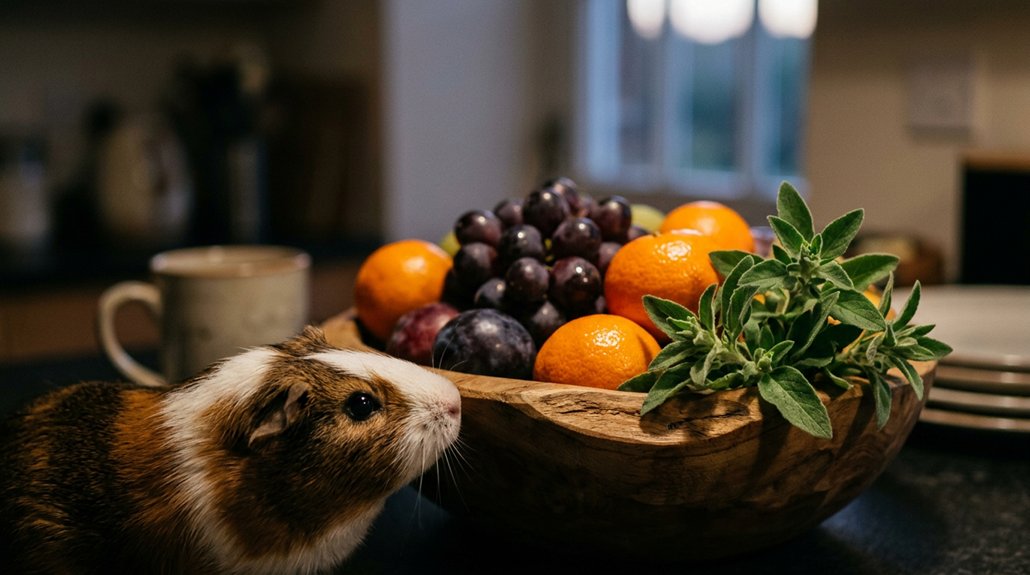
Guinea pigs shouldn’t eat certain foods like avocado, chocolate, iceberg lettuce, and rhubarb, as these can be toxic. Avocado contains persin, harmful even in small amounts. Chocolate and sugary treats can lead to digestive issues and obesity. Iceberg lettuce and rhubarb disrupt calcium absorption and pose other health risks. Stick to a balanced diet of safe, plant-based foods, mainly hay and dark greens, for your pet’s wellbeing. There’s more to discover about ensuring your guinea pig’s health.
Key Takeaways
- Avocado is toxic to guinea pigs due to the compound persin.
- Avoid allium species like garlic and onions, which can cause hemolytic anemia.
- Chocolate, with theobromine and caffeine, leads to diarrhea and tremors.
- Processed foods and dairy are harmful, causing obesity and gastrointestinal issues.
- Rhubarb risks kidney stones due to high oxalic acid content.
Why Some Foods Are Toxic to Guinea Pigs
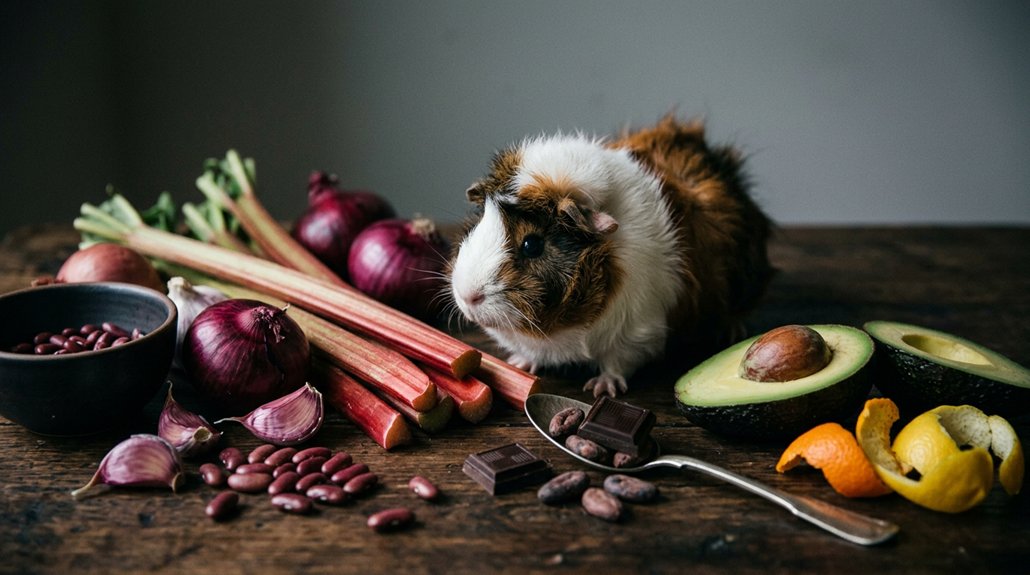
While guinea pigs may seem like they can nibble on anything, it’s vital to be aware of certain foods that pose serious health risks to these small pets. Foods like avocado contain toxic compounds such as persin, potentially leading to kidney failure and severe digestive distress. Allium species, like garlic and onions, pose a threat with compounds capable of causing hemolytic anemia, resulting in pronounced lethargy and weakness. In addition, chocolate is a notorious culprit, with theobromine and caffeine ushering in symptoms like diarrhea and tremors. Foods high in starches and sugars, including sugary snacks and certain fruits, can result in obesity and digestive problems. Avoid these hazards to guarantee your guinea pig stays healthy and robust.
Avoid Dangerous Vegetables Like Iceberg Lettuce and Rhubarb
When it comes to feeding your guinea pig, not all vegetables are created equal, and some can be downright dangerous. Iceberg lettuce, for example, should be completely avoided due to its minimal nutritional value and potential to cause digestive issues like diarrhea. This seemingly harmless leafy vegetable can disrupt calcium absorption, leading to further health complications. Opt for romaine or dandelion greens instead, providing more beneficial nutrients without the risks. Similarly, rhubarb poses serious rhubarb risks for your guinea pig. Its high oxalic acid content can result in kidney stones and other severe health problems. Ensuring your pet’s safety involves regular monitoring of their diet to prevent sneaky harmful vegetables like iceberg lettuce and rhubarb from causing havoc on their health.
Avoiding High Sugar Fruits and Unsafe Treats for Guinea Pigs
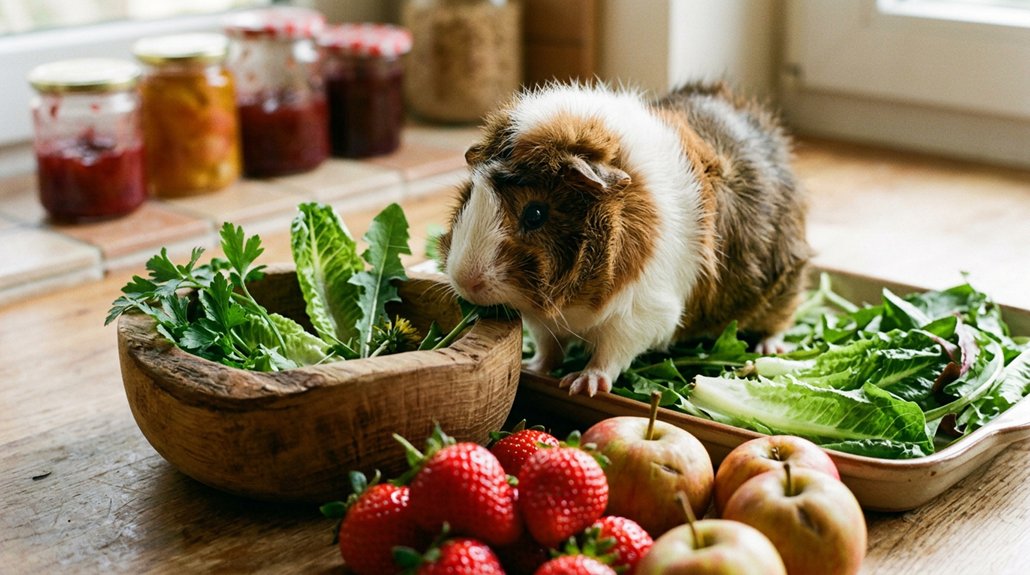
Beyond steering clear of hazardous vegetables like iceberg lettuce and rhubarb, it’s crucial to be cautious about the fruits and treats you offer to your guinea pig. High sugar fruits, such as bananas and grapes, should be given sparingly. Their high carbohydrate content can lead to obesity and digestive problems. Verify fruits make up only a small fraction, about 2%, of your pet’s diet to maintain balanced nutrition. It’s also important to avoid unsafe treats like yogurt drops or any sugary snacks. These can cause serious weight gain and health issues. Remember, treats should always be fresh and safe fruits or vegetables in small amounts. Keep an eye on the sugar content to help your guinea pig stay healthy.
Why Processed and Animal-Based Foods Are Harmful to Guinea Pigs
Even though guinea pigs are adorably curious creatures, their dietary needs are quite specific and should be carefully respected. As herbivores, they lack the digestive enzymes necessary to process animal-based proteins. Feeding them meat or dairy can lead to severe health risks, including gastrointestinal issues and potentially fatal outcomes, as their bodies simply aren’t equipped to handle such foods. Processed foods are also problematic; high sugars and starches in these items can cause obesity and metabolic disorders. Even small amounts of dairy can upset their digestion, thanks to their inability to process lactose. Treats like yogurt drops, containing both sugar and dairy, disrupt a guinea pig’s natural digestion. Therefore, sticking to their natural diet is essential.
Safe Plant-Based Foods for Guinea Pigs and How to Avoid Toxic Plants
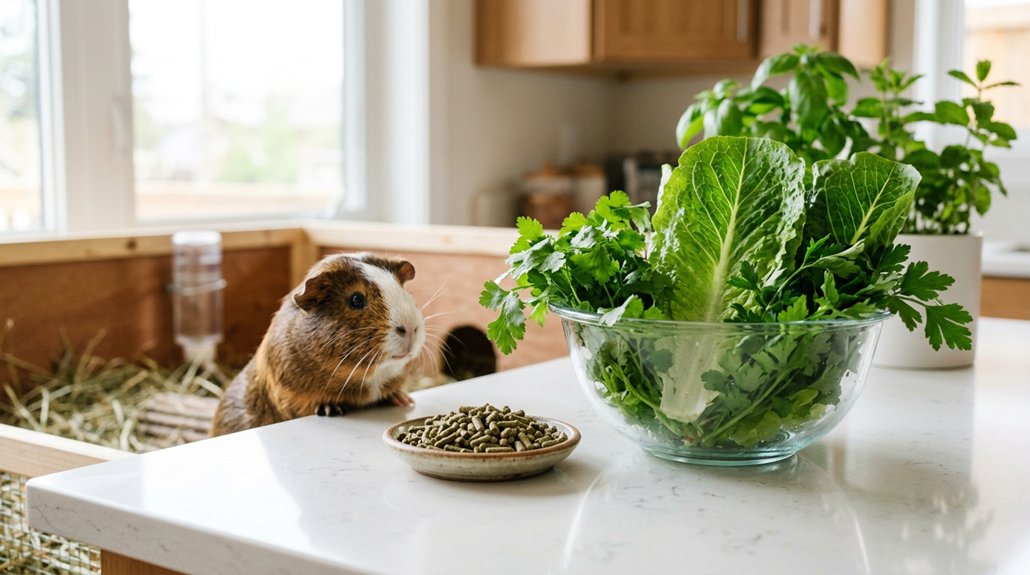
A crucial aspect of caring for your guinea pig is verifying their diet is primarily composed of safe, plant-based foods. Focus on feeding them dark leafy greens and quality grass hay—comprising 70% of their intake—to support digestion. Be cautious; some plants are detrimental. Avoid toxic flowers like those from allium species, and steer clear of hazardous plants such as rhubarb and ivy. Including small portions of safe fruits like apples, strawberries, and bell peppers is beneficial too, but make sure their seeds are removed. Washing produce thoroughly helps eliminate pesticides, enhancing safety. Regularly inspect your environment for dangerous plants like foxglove. Opt for organic selections whenever possible, assuring your guinea pig’s meals are nourishing and free from harmful contaminants.
Frequently Asked Questions
What Is the Most Toxic Food to Guinea Pigs?
You should avoid avocados as they’re one of the most toxic vegetables due to persin. Harmful fruits like chocolate, though not a fruit, contain theobromine, making both extremely dangerous for guinea pigs’ health. Stay cautious!
What Does Popcorning Mean in a Guinea Pig?
Popcorning in guinea pigs refers to their joyful leaps and twists, a clear sign of healthy, happy guinea pig behavior. It’s significant as it shows they’re comfortable, safe, and engaging socially. Encourage this behavior by fostering a positive environment.
What Is the Number One Cause of Death for Guinea Pigs?
Persistent pitfalls plague your pet’s health when you prioritize the wrong nutrients. Inadequate nutrition is the number one cause of death for guinea pigs. Guard against common diseases with a balanced, high-fiber diet and regular vet visits.
What Are 5 Signs Your Guinea Pig Is Happy?
You’ll see happy guinea pigs through their lively behavior: running, exploring, and popcorn jumping. Listen for joyful vocalizations like purring or wheeking. They seek interactions and relaxation, often lying with stretched legs, indicating contentment and safety.
Conclusion
To guarantee your guinea pig’s health, be cautious about their diet. Imagine if Daisy, a guinea pig, ate rhubarb. She’d suffer severe distress, even face life-threatening consequences. Always avoid iceberg lettuce, sugary fruits, processed, and animal-based foods, as they’re harmful. Instead, focus on safe plant-based options and protect them from toxic plants. By understanding what’s dangerous, you’re safeguarding Daisy’s well-being and fostering a life filled with vigor. Your guinea pig depends on informed choices for their nourishment.