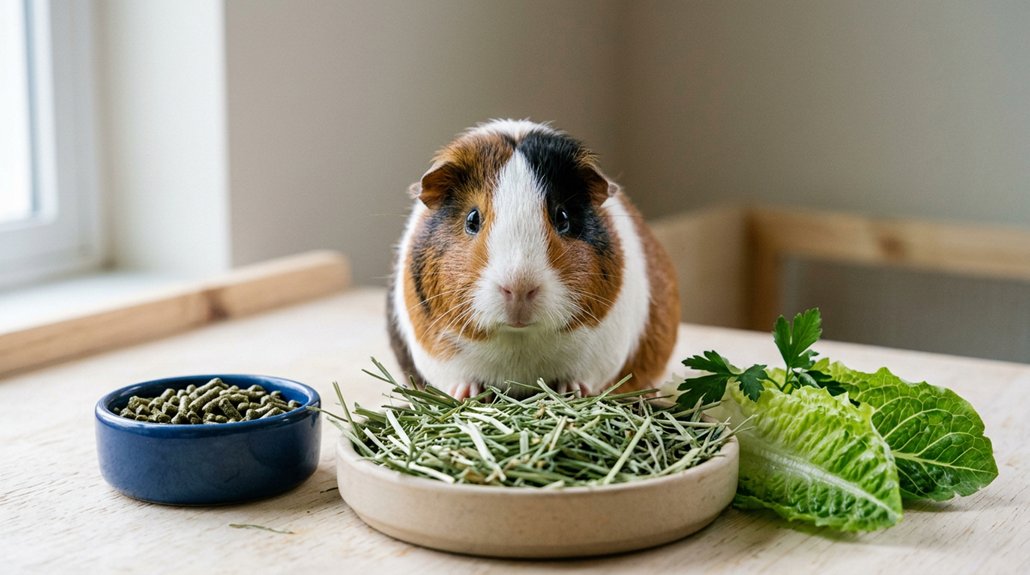
Your guinea pig’s diet should consist mainly of unlimited grass hay, making up 85-90% of their intake to support digestion and dental health. Fresh vegetables, essential for vitamin C, should be offered in varied choices like bell peppers and parsley, amounting to one cup daily. Limit pellets to ⅛ cup, ensuring they’re high-quality and free from fillers. Carefully balanced nutrition is key for peak health, with more insights available for enhancing your pet’s wellbeing.
Key Takeaways
- Guinea pigs require a diet of 85-90% unlimited grass hay, such as timothy or orchard grass.
- Fresh vegetables, especially bell peppers and tomatoes, ensure vitamin C intake, crucial for guinea pig health.
- High-quality pellets should be limited to ⅛ cup daily for adults, prioritizing grass hay as the primary ingredient.
- Gradually introduce new vegetables to avoid digestive disturbances in guinea pigs.
- Supplement guinea pig diets with chewable vitamin C tablets or drops to prevent deficiencies.
The Ideal Guinea Pig Diet at a Glance
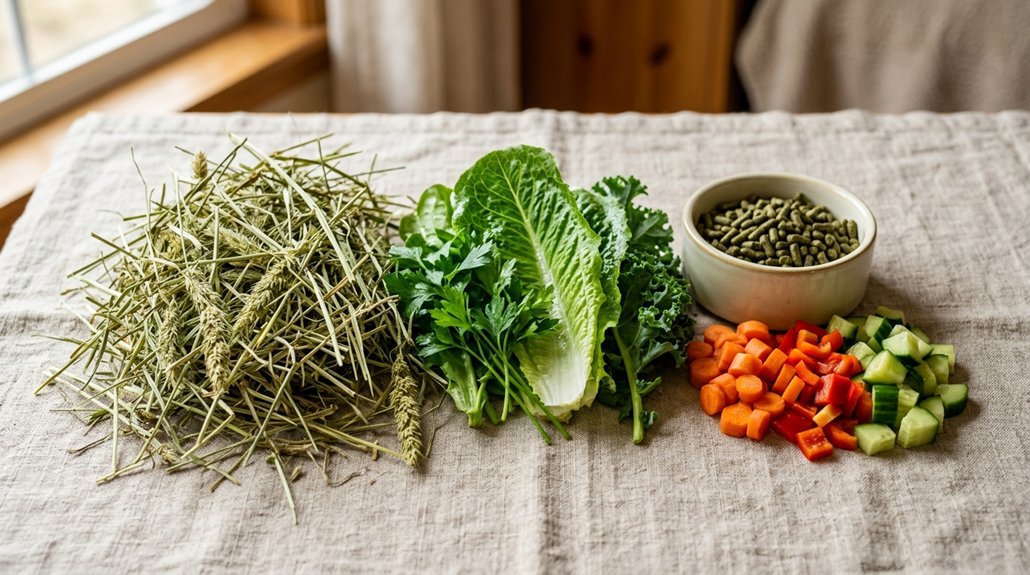
The ideal guinea pig diet is meticulously crafted to meet their unique nutritional needs. Contrary to popular misconceptions, guinea pigs require a well-rounded diet composed of hay, fresh vegetables, and pellets. Unlimited grass hay should satisfy 85-90% of their intake, supporting digestive health and dental wear, while vegetables and leafy greens provide vital vitamins. It’s important to include one cup of fresh produce daily to guarantee sufficient vitamin C intake. Pelleted food needs careful consideration; limit it to one tablespoon per day and choose formulations devoid of seeds, dyes, and fillers. Monitor feeding frequency carefully—small, consistent amounts of food prevent overeating and digestive issues. Introduce dietary changes gradually, minimizing the risk of digestive disturbances, thereby fostering strong overall health in your guinea pig.
Why Hay Is Essential for Guinea Pig Health
Understanding the anatomy of a guinea pig’s diet highlights the overwhelming significance of hay in their daily intake. Hay provides essential nutritional benefits, primarily from its high fiber content that guarantees proper digestive health and prevents gut stasis. It also supports the wear down of continuously growing teeth, averting dental complications. Additionally, fresh hay fosters natural foraging behavior, a positive mental stimulus fundamental for their well-being.
| Benefit | Description |
|---|---|
| Digestive Health | Rich in fiber, supports gut bacteria, prevents stasis |
| Dental Health | Encourages chewing, helps wear down teeth |
| Mental Stimulation | Promotes foraging, enriches the environment |
Unlimited access to quality hay like timothy or orchard grass is vital, comprising 85-90% of a guinea pig’s diet. Low-calcium hay suits adults, while alfalfa may benefit young, pregnant, or nursing situations.
Optimal Hay Choices for Guinea Pigs
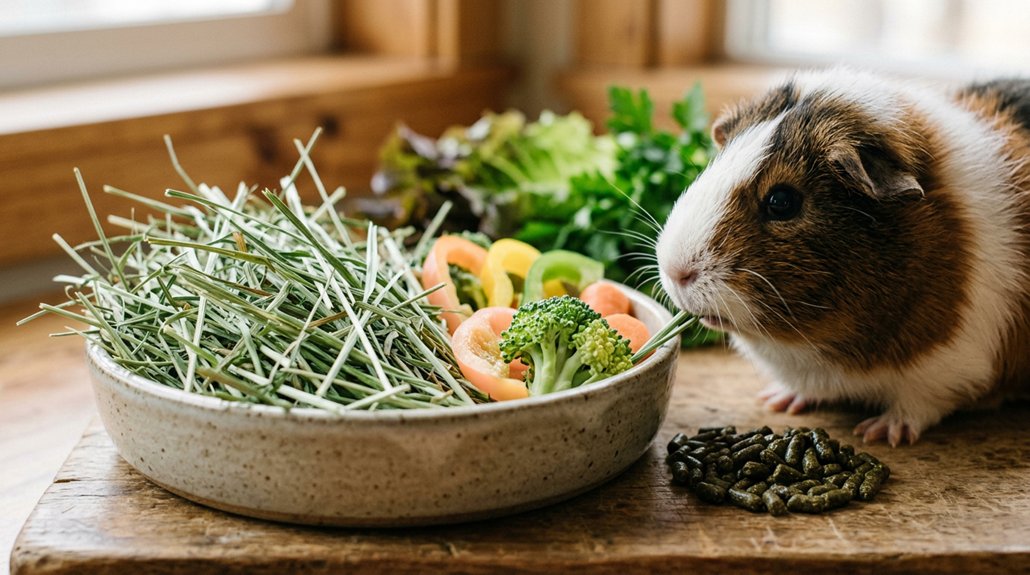
When selecting ideal hay for guinea pigs, prioritize timothy and orchard grass hay due to their superior fiber content, essential for digestive and dental health. Providing unlimited high-quality grass hay, which should compose 85-90% of their diet, supports a healthy gut and prevents digestive issues.
Alfalfa hay, unique among hay types, is suitable only for guinea pigs under one year, those pregnant, or nursing due to its elevated calcium levels.
To guarantee the best hay storage and maintain freshness:
- Store hay in a cool, dry, well-ventilated area.
- Avoid plastic bags; opt for breathable containers.
- Rotate stock to keep hay fresh and discourage mold.
- Regularly replenish hay to promote natural grazing behavior.
Always steer clear of mown grass clippings to prevent health complications.
Fresh Vegetables and Greens for Guinea Pigs
Incorporating fresh vegetables and greens into your guinea pig’s diet is essential for providing the necessary nutrients and vitamin C they require. Aim to offer approximately one cup of fresh produce daily, focusing on diverse vegetable portions. Key choices include bell peppers, broccoli, and a leafy green variety such as parsley and romaine lettuce, which are rich in vitamin C and fiber. It’s important to avoid iceberg lettuce due to its minimal nutritional value. Introduce new vegetables gradually to prevent digestive issues. Make certain your guinea pig’s diet features a variety of at least five to six different vegetables each day to support balanced nutrition and promote healthy eating habits. Reserve small fruit portions, like apples and pears, as occasional treats.
What Makes High-Quality Guinea Pig Pellets?
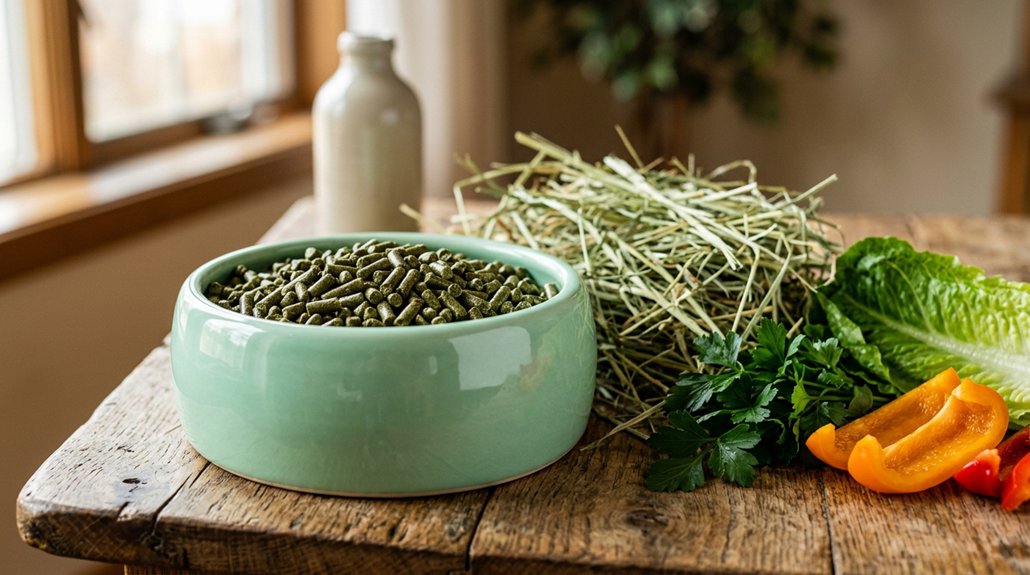
A fundamental component of a guinea pig’s diet is high-quality pellets, which must prioritize grass hay as their primary ingredient to verify the necessary fiber content for ideal digestive health. When choosing pellets, focus on those that are free from unnecessary and potentially harmful elements. Here are key factors to take into account:
- Pellet Ingredients: Confirm grass hay tops the list. Avoid dyes, fillers, seeds, and colorful pieces—they lack nutritional value.
- Storage: Maintain pellet freshness by storing them in a cool, dry, and dark place to protect critical nutrients.
- Portion Control: Limit adult guinea pigs to ⅛ cup daily; young ones need unlimited access for maximum growth.
- Freshness: Always check the “best before” date to validate nutritional effectiveness.
How to Meet Your Guinea Pig’s Vitamin C Needs
Balanced nutrition is paramount for keeping your guinea pig healthy, and alongside well-chosen pellets, Vitamin C plays an indispensable role. Guinea pigs, unable to synthesize Vitamin C, rely on specific dietary sources. Fresh vegetables such as bell peppers and tomatoes are excellent Vitamin C sources. Verify pellets designed for guinea pigs contain stabilized Vitamin C and consume them within 90 days for full potency. Supplementation methods are essential for young, ill, nursing, and pregnant guinea pigs. Chewable Vitamin C tablets or liquid drops are recommended and particularly effective. Avoid adding Vitamin C to water, as it alters taste and degrades rapidly, rendering it useless. Remember, they need 10 to 50 mg daily to stave off deficiencies, like scurvy.
Common Diet Mistakes Every Guinea Pig Owner Should Avoid
While caring for your guinea pig, it’s vital to avoid common dietary mistakes that can seriously impact their health. These dietary misconceptions can lead to severe nutrition pitfalls:
- Over-reliance on Pellets: Many owners make the mistake of using pellets as the primary food source. Fresh hay should comprise 85-90% of their diet.
- Rapid Introduction of Vegetables: Introducing new veggies too quickly can cause digestive upset. Gradual integration and monitoring are critical.
- Low-Quality Greens: Iceberg lettuce lacks important nutrients. Opt for high-quality leafy greens to guarantee adequate nutrient intake.
- Ignoring Vitamin C Needs: Failing to provide regular vitamin C supplementation can result in serious deficiencies like scurvy.
Avoiding these pitfalls guarantees your guinea pig enjoys a balanced, healthy diet.
Monitoring and Adjusting Your Guinea Pig’s Diet
To guarantee your guinea pig remains in ideal health, closely monitor and adjust their diet as needed. Conduct regular food observations to confirm unlimited access to hay and provide roughly one cup of fresh vegetables daily. Pay attention to diet changes, observing any signs of dietary discomfort or alterations in eating habits. A sudden refusal to eat or modifications in droppings can signal health issues linked to their diet. Adjust pellet quantities responsibly, limiting adult guinea pigs to about one tablespoon daily, with allowances for younger or pregnant ones. Always introduce new foods gradually, monitoring for digestive upsets. Regularly check and change their water supply, ensuring fresh accessibility. Through vigilant monitoring, you can effectively tailor their diet for peak health and well-being.
Frequently Asked Questions
Do Guinea Pigs Need Pellets if They Have Hay and Veggies?
Yes, your guinea pigs need pellets as well. Different pellet types provide essential health benefits, including stabilized vitamin C and minerals, not fully available in hay and veggies. This guarantees your guinea pigs receive thorough nutrition.
How Many Pellets Should a Guinea Pig Eat a Day?
Adult guinea pigs need about one tablespoon of grass-based pellet types daily. It’s essential to monitor portion sizes, ensuring fresh supply every day. For young cavies under six months, provide unlimited pellets to support their growth.
What Does Popcorning Mean in a Guinea Pig?
Can anything be more whimsical than popcorning? Popcorning behavior signals a guinea pig’s happiness, seen as playful jumps and twists. It reflects a healthy, content pet enjoying life, resembling popcorn kernels popping energetically. It’s incredibly fascinating to observe!
What Should a Guinea Pig’s Diet Consist Of?
Your guinea pig’s diet must meet strict nutritional requirements: primarily high-quality hay, daily fresh vegetables rich in vitamin C, and limited grass-based pellets. Establish a consistent feeding schedule, always providing fresh water to maintain their health.
Conclusion
In the domain of guinea pig care, diet reigns supreme. Without hay, their digestive system flounders. Choose the finest timothy or orchard grass. Fresh vegetables, vibrant and varied, are their health allies, but avoid harmful options. High-quality pellets round out their nutritional profile, but never substitute their essential greens. Guarantee their vitamin C needs are met—scurvy is the silent thief of guinea pig vitality. Don’t let common diet errors derail their health; your vigilance is their lifeline.