Owning a guinea pig involves initial setup costs of about $120 to $240, with a secure cage and bedding being priorities. Monthly expenses range from $100 to $200, covering high-quality pellets, Timothy hay, fresh vegetables, and bedding. Veterinary care, vital for dental and gastrointestinal health, averages $100 annually, with emergencies rising sharply to $5,000. An emergency savings plan and pet insurance are wise investments. Discover more about how to effectively manage these expenses.
Key Takeaways
- The initial setup, including a cage and shelter fee, costs approximately $120 to $240.
- Monthly expenses for food and supplies range from $50 to $100.
- Routine annual veterinary care typically costs around $100, with emergencies potentially reaching up to $5,000.
- Investing in pet insurance costs about $120 to $240 annually, aiding in significant healthcare costs.
- Plan for emergency savings since annual costs can vary between $500 and $3,000 per guinea pig.
What You Need to Know About Owning Your First Guinea Pig
Owning your first guinea pig entails more than just excitement; it requires a detailed understanding of their needs and a commitment to their well-being. Guinea pig personalities play a significant role in their health as they thrive on companionship. Their socialization needs are important; adopting at least two is recommended to guarantee psychological stability. Understanding these creatures requires acknowledging their inherent sociability and providing an environment conducive to interactions. Regular monitoring of their behavior and mood swings can signal health issues, requiring prompt attention. Securing their continuous engagement in social activities isn’t just beneficial but necessary for ideal mental health. Developing an early rapport is essential as it can prevent stress-induced health problems, emphasizing the need for careful and informed ownership from the start.
Setting Up Your Guinea Pig’s New Home: Costs and Essentials
While preparing to welcome your guinea pigs into their new environment, you’ll need to prioritize setting up a habitat that guarantees their well-being and safety. Cage selection is critical; opt for a secure cage of a minimum 8 square feet for two guinea pigs. Expect to invest between $90 and $200 in quality cages. Bedding options are equally crucial. Fleece liners, costing around $96 for two, are ideal due to their reusability and environmental benefits. Avoid traditional wood shavings, which can pose respiratory risks. Factor in proper containers for food and hydration to satisfy their physiological needs. Shelters might include essential startup supplies with an adoption fee ranging from $30 to $40, impacting initial setup costs. Considerations outlined:
| Essential | Cost Range |
|---|---|
| Cages | $90 – $200 |
| Bedding | $96 |
| Shelter Fee | $30 – $40 |
Managing Monthly Food Costs for Guinea Pigs
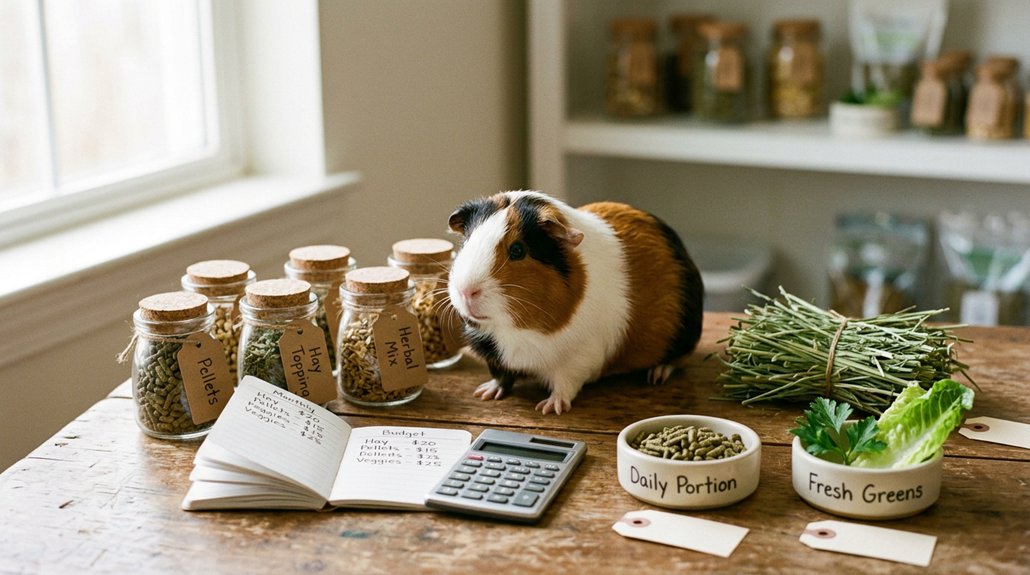
Managing the dietary needs of guinea pigs involves a carefully structured budget, typically ranging from $50 to $100 monthly. To prioritize health and longevity, guarantee their diet includes:
- High-quality pellets: Invest $30 to $50 monthly for nutritionally balanced pellets.
- Unlimited Timothy hay: Crucial for dental health and digestion, it costs $40 to $60 for a pair.
- Fresh vegetables: Budget $20 to $50, introducing bell peppers, carrots, and leafy greens gradually to enhance dietary variety while avoiding high-sugar options.
- Bulk purchasing: Buying hay and pellets in larger quantities reduces costs and provides a steady supply.
Monitor consumption patterns, adjusting as necessary to guarantee your guinea pigs’ well-being. Consistently revisiting and managing these nutritional requirements supports a cost-effective yet healthy diet.
Monthly Bedding Costs and Fun Stuff
As you navigate the monthly bedding expenses for guinea pigs, it’s essential to recognize the impact of bedding choices on both budget and pet health. Opt for bedding materials like fleece liners, a sustainable alternative to traditional wood shavings. They’re hypoallergenic, reducing respiratory risks and offering cost-efficiency over time. If you prefer disposable bedding, choose paper-based options to maintain a healthy environment. Expect to spend $30 to $36 monthly, ensuring frequent changes to avert health issues.
Beyond bedding, budgeting for enrichment options is important. Allocate $10 to $50 each month for toys, tunnels, and hideouts, which stimulate guinea pig cognition and wellness. Regularly renewing these items fosters an engaging habitat, vital for preventing stress-induced conditions. Remember, cleanliness and variety are key.
Why Regular Vet Visits Matter & What They Cost
Regular veterinary check-ups for your guinea pig are essential for preventative healthcare, allowing for early detection of health issues and typically costing around $100 annually. Routine visits can prevent pricey emergency treatments, which may escalate to thousands depending on the severity. Prioritize partnering with an exotic vet skilled in handling guinea pigs, ensuring specialized care and managing unforeseen medical expenses effectively.
Importance of Routine Checkups
While many pet owners might overlook the necessity of veterinary checkups for their smaller pets, understanding the significance of routine checkups for guinea pigs becomes essential. Regular vet visits are important for preventive healthcare. They guarantee your pet’s well-being by addressing specific needs such as dental maintenance. These checkups, typically costing between $50 and $100 annually, help in the early detection of potential health issues, allowing you to avoid costly emergencies.
Consider the key benefits of routine checkups:
- Early illness detection, which prevents severe complications.
- Professional dental maintenance, critical for their ever-growing teeth.
- Monitoring of nutritional intake, securing longevity and health.
- Exotic veterinarian expertise, specializing in guinea pig care.
Prioritizing routine veterinary care firmly supports the health and happiness of your guinea pig.
Managing Unexpected Vet Expenses
When unforeseen health issues arise, the cost of emergency veterinary care for guinea pigs can escalate rapidly, placing significant financial burden on pet owners. Emergency protocols are essential, but without regular vet visits, unexpected illnesses can be both overwhelming and expensive. Routine check-ups, costing around $100 annually, serve as critical preventative healthcare. They allow early detection and management of common conditions, potentially saving you from emergency visits that can range from $100 to $5,000.
Annual exams often include dental assessments, with dental work sometimes exceeding $200. This emphasizes the importance of routine veterinary care. Pet insurance can further mitigate financial risks, with premiums ranging from $120 to $240 annually, ensuring thorough care without draining your finances during emergencies. Prioritize your guinea pig’s health to prevent costly surprises.
Building an Annual Budget for Your Guinea Pig’s Needs
Crafting an annual budget for your guinea pig’s needs is essential for ensuring their health and happiness. Account for different budget categories and focus on essential supplies. Guinea pigs incur various costs throughout the year. To structure your financial planning effectively, consider these core components:
- Nutrition: Allocate $1,080 – $1,920 for premium pellets, fresh vegetables, and high-quality Timothy hay.
- Veterinary care: Plan for $500 – $3,000 annually, factoring in routine check-ups and potential emergency treatments.
- Environmental hygiene: Dedicate around $360 to bedding replacement and habitat sanitation to prevent health issues.
- Emergency fund: Establish dedicated savings for potential emergencies, as unexpected procedures can quickly escalate to $5,000.
Tips to Save Money While Owning a Guinea Pig
Although owning a guinea pig can feel financially challenging, savvy management and strategic decisions can reduce the burden. Prioritize guinea pig health with cost effective feeding by purchasing food and bedding in bulk, saving up to 25% monthly. Consider adoption benefits as shelters often charge less than pet stores or breeders. Opt for fleece bedding; reusable and environmentally sustainable, saving approximately $30 each month. Establish emergency planning by setting aside funds regularly for unforeseen veterinary care, ensuring long term care doesn’t break the bank. Enhance your setup with budget friendly supplies by exploring thrift store finds or second-hand gear, reducing initial expenses considerably. By integrating these strategies, you’ll manage costs effectively while ensuring your guinea pig thrives.
Emergency Costs? Here’s How to Plan and Prepare Now
Understanding the potential for unexpected veterinary expenses and establishing an emergency savings plan is essential for prioritizing your guinea pig’s health. By routinely setting aside funds, you’re better prepared for any sudden illnesses that could require specialized care, costing anywhere from $100 to $5,000. Additionally, investing in guinea pig insurance and familiarizing yourself with an exotic vet could greatly aid in managing unforeseen medical needs.
Unexpected Veterinary Expenses
While planning for your guinea pig’s unexpected veterinary expenses, it’s crucial to prioritize health preparedness through strategic financial planning. Guinea pig illnesses, such as dental issues or gastrointestinal problems, demand immediate intervention and can be costly. Emergency treatments might set you back anywhere from $100 to $5,000.
To mitigate these expenses, consider the following:
- Insurance Coverage: Invest in pet insurance with annual premiums from $120 to $240 to help offset severe health care costs.
- Routine Check-Ups: Regular veterinary assessments, averaging $100 annually, can identify issues before they become emergencies.
- Immediate Attention: Recognize symptoms early to avoid exacerbated conditions requiring costly interventions.
- Financial Preparedness: Understand that veterinary care costs fluctuate; prepare a budget that accommodates this variability.
Strategically planning now guarantees your guinea pig’s health remains a priority.
Building Emergency Savings
Planning for pet emergencies begins with establishing a robust emergency savings fund. An adept savings strategy is essential to safeguarding your guinea pig’s health. Monthly allocations are vital, as unexpected veterinary costs can range broadly from $100 to $5,000, contingent on the situation’s severity. Prioritize health by budgeting for routine checkups, averaging $100 annually but potentially rising for unplanned sick visits. Given the immediacy of emergency care, particularly from exotic vets, maintaining accessible emergency funds in your budget is imperative. Creating a dedicated savings account mitigates financial strain, with typical annual costs between $500 and $3,000. Additionally, consider pet insurance as a supplementary safety net, with premiums from $120 to $240 annually, ensuring thorough coverage for your furry friend’s unforeseen needs.
Frequently Asked Questions
Are Guinea Pigs Expensive to Maintain?
Maintaining guinea pigs can be costly. You’ll need to budget for essential guinea pig supplies. Veterinary expenses are vital for their health, with routine costs and potential emergencies adding up. Prioritizing health guarantees their well-being and longevity.
How Much Does It Cost to Keep a Guinea Pig per Month?
Keeping a guinea pig costs around $100 to $125 monthly. Prioritize quality guinea pig food and routine veterinary care to promote optimum health. Allocate funds for hay, pellets, vegetables, and bedding alongside unforeseen medical expenses for thorough care.
Can I Leave My Guinea Pig Alone for 7 Days?
You shouldn’t leave your guinea pig alone for 7 days. Prioritize their health by ensuring daily guinea pig care, especially during long-term absences. Arrange for someone to provide essential social interaction, feeding, and medical attention.
Should I Buy 1 or 2 Guinea Pigs?
Think of Watson and Crick—synergy’s key! You should adopt two guinea pigs to meet their companionship needs. They’re social animals, thriving in pairs. Providing companionship minimizes stress, ensuring ideal health and psychological well-being for your furry friends.
Conclusion
Owning a guinea pig isn’t just a whim—it’s a pledge to another living being. From habitat setup to vet visits, every detail is essential. Think of it like buying a small car for your pet, minus the wheels! Prioritize health with regular check-ups and well-balanced diets to guarantee your furry friend thrives. By planning for both routine and unexpected expenses, you’ll cherish the companionship of your guinea pig without financial stress.